

When I saw this title in my recommendation list, I paused for a moment while focusing intently on the cover. As a history lover, World War II (1939-1945) always fascinates me, but I also realized that the material I tend to read typically comes from the American point of view or from those who survived the horrors of the Third Reich. This book was a change of pace and allowed me to read about the war from the view of a soldier in the Soviet Union‘s Red Army by the name of Lyudmila Mikhailovna Pavlichenko (1916-1974). This is her story of how she joined the war effort and became one of the Soviet Union’s deadliest snipers.
The story begins in her native Ukraine in 1916 during World War I, and her childhood post-war is ordinary. But when she is introduced to a rifle, shooting becomes an addictive hobby. However, her life a sniper is still years away and she explains the changes in her personal life including her first husband Alexei and son Rostislav Alekseevich Pavlichenko (1932-2007). But everything changes for all of them when Nazi Germany invaded the Soviet Union on June 22, 1941 in “Operation Barbarossa“. Lyudmila answers the call and joins the military as a sniper determined to defeat the German menace. At this point in the story, the book changes gears as the ugliness of warfare takes center stage. Readers may find her candid discussions of the kill shots she takes to be shocking but it is crucial to remember that the war had affected and shaped her, and Germany atrocities against Soviet men and women had conditioned them to believe that Nazi deaths were the only options. In between her kill shots, she also suffers battlefield wounds, and one incident nearly claims her life. She revisits each one highlighting the danger snipers faced when out on their missions. Frankly, death was everywhere and I felt chills as she recalls the missions.
In between military missions, briefings and keeping her skills sharp, she also finds love in second husband Alexei Kitsenko. The relationship blossoms despite the chaos around them and their roles as snipers, but a series of events shatter everything between them, and as I read I could feel the grief in her words. The section about Alexei is both shocking and heartbreaking, and it also reinforces the words that war is hell. However, a war was still brewing, and Lyudmila’s job was far from finished. She was determined to leave her mark, and it is apparent from the awards she received and her record that she accomplished that goal. In the Soviet Union she becomes a star and is chosen to lead a delegation to visit the United States. Prior to reading this book, I had heard of Pavlichenko’s name, but her story was not familiar with me, and the section about her trip abroad was a surprise. But this is why I love reading as much as I do because there is always something to learn. And when visited America, it was the United States that something to learn.
Upon arriving in America she meets the first couple, President Franklin D. Roosevelt (1882-1945) and wife Eleanor (1884-1962). I enjoyed this part of the book, and learning about her experiences in Washington was fascinating. In the years before the Cold War, the Soviet delegation receives star treatment in America where they are seen as “ambassadors” of good will approved by Soviet Premier Joseph Stalin (1878-1953) himself. There are humorous moments during the visit and some moments which are bewildering, but it is her friendship with the first lady that stands out. It also continued after the war as readers will learn. Following the visit to America, it was off to England where Prime Minister Winston Churchill (1874-1965) and wife Clementine (1885-1977) were waiting for their Soviet guests. The British visit is equally as interesting, and as I read, I thought of the differences in culture and how we as people find common ground. The west was genuinely curious about these Soviet troops and in particular a female sniper which was unheard of in American and British military circles. Pavlichenko was a rarity, but she was appreciated back home, and when the delegation returns to the Soviet Union, she is summoned by Stalin himself who wants to know all about her trip. However, the meeting results in changes she did not expect but nothing negative.
After her service in the field, Pavlichenko is assigned other functions to assist the war effort until the Nazi defeat on April 30, 1945. We follow her after the war when she returns to civilian life and begins to reclaim the parts of her past the war had prevented her from embracing. And although she survived the war, she did not escape unscathed and carried both mental and physical scars with her. But throughout everything she remains humble and tells her story of a young woman from Kyiv (Kiev) who went on to became one of the deadliest snipers in Russian history. And I enjoyed reading her autobiography. Sadly, on October 10, 1974, Lyudmila Pavlichenko died at the age of fifty-eight following a stroke and is buried in Novodevichy Cemetery in Moscow. Post-Traumatic Stress Disorder, alcohol, and physical wounds combined to take their toll later in her life. Pavlichenko died prematurely but during her life, she served her nation as it fought for its survival in the deadliest war in history.
“To become a sniper, it is not only important to be able to shoot accurately. One other thing is important – a cold hatred for the enemy, so emotions are subordinated to calculation. Here the iron will of the soldier plays a role. Snipers did not take their eyes of the enemy by day or night, and information in reconnaissance log-books would often be verified through snipers’ operations. A sniper had to know by heart every bump in the ground, every bush in front of his or her position. ” – Lyudmila Pavlichenko
ASIN : B07B7MGZ4B
Publisher : Greenhill Books, January 24, 2020
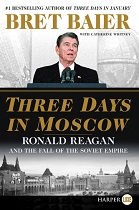 Readers old enough to remember the Soviet Union will recall the shock and disbelief that came with the Union of Soviet Socialist Republics (U.S.S.R.) flag being lowered for the last time on December 25, 1991. The “Cold War” had come to an end, but a long road lay ahead between the United States and Russia in coming to terms with each other’s way of life. On May 29, 1988, United States President Ronald Reagan (1911-2004) and First Lady Nancy Reagan (1921-2016) arrived in Moscow for a three-day summit with Soviet General Secretary Mikhail Gorbachev and his wife Raisa (1932-1999). It has been held as a triumph in American foreign policy and as an example of strong leadership. In less than three years, the Soviet Union dissolved, and Reagan was vindicated in his predictions of its demise. During the summit, Reagan spoke to the people of the Soviet Union at Moscow University and to this day it stands as a breathtaking moment in world history. But as always, there is more than meets the eye. Fox News host Bret Baier revisits the summit in this book about three days that impacted world history.
 On October 1, 1949, the People’s Republic of China was officially established as the ruling party in the nation. Mao Zedong (Mao Tse Tung) 1893-1976) assumed the position of Chairman, a title he held until his death in 1976. The Chinese Communist Party continues to rule the country and imposes its will on Hong Kong. Taiwan remains independent but is often the source of friction between Beijing and western powers. The story of the Chinese communists is a highly intricate tale that is often left out of discussions regarding the aftermath of World War II (1939-1945). Edgar Snow (1905-1972) spent twelve years in China and was able to observe the emergence of the Communist Red Army determined to liberate China both from Japanese imperialism and the control of the White Army, led by the Kuomintang Government (KMT) headed by the Generalissimo Chiang Kai-Shek (1887-1975). This book is a collection of those memories that take readers back in time to the era when Mao Zedong was beginning to establish himself as a leader and China found itself in the middle of political, economic and social turmoil.
 I have had many discussions with my father wherein he recalled his memories of the Cuban Missile Crisis in October, 1962. He explained with vivid detail how he and his classmates had to take part in daily air raid drills due to the increasing threat of a nuclear holocaust. The discovery by U.S. intelligence of Soviet missiles on Cuban soil, accelerated what was already a tense conflict. Today we refer to it as the Cold War but there were many things taking place that were anything but cold. And as former Secretary of Defense Robert S. McNamara remarked in Errol Morris’
  The life of Joseph Stalin (1878-1953), former dictator of the Union of Soviet Socialist Republic (“USSR”), has been the focus of endless books, articles and documentaries. His tyrannical reign over the Soviet Union resulted in the deaths of millions of Soviet citizens, persecuted for the slightest of offenses. The Gulag known in English as a forced labor camp, was the place most were exiled to in particular the Siberian region known for its desolate geography and brutally cold winters. The very word itself caused fear and stroked paranoia across the USSR. No one was safe, not even members of Stalin’s family, some of whom would find themselves banished to Siberia. This climate of distrust, violence and vengeance would cause a ripple effect that culminated with his daughter Svetlana Alliluyeva’s (1926-2011) defection to the United States in 1967. Undoubtedly, the news was explosive and if her father had been alive at the time, he surely would have issued an order for her death no matter where on earth she would have attempted to find refuge. When I saw the title of this book, I had to take a second look. I knew of Stalin’s family but I did not know the life story of his daughter Svetlana. In fact, in the books I had read that discuss him, his sons are mentioned but rarely his daughter. Rosemary Sullivan has changed all of that with this biography that is simply outstanding.
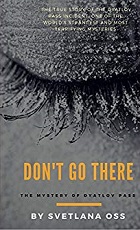 The deaths of nine hikers in the Ural Mountains of Siberia in February, 1959, endures as one the world’s most bizarre mysteries. The official explanation at the time was that their deaths were caused by an extraordinary force. Exactly what that means was never fully explained. As the hikers were found, autopsies were performed which revealed many disturbing facts and do not match the official explanation. The remains of the tragic hikers were buried at the direction of party officials without much or any input from their parents. Almost from the start, Moscow stepped in and gave orders that were to be followed strictly with no deviation. The official explanation still stands today but is that what really happened? Or was there a darker and more sinister reason for their shocking deaths?
 The Chernobyl Nuclear Power Plan was supposed to be the pinnacle of Soviet innovation and a testament to the drive inspired by the spirit of Lenin & Stalin. Its very construction was intended to be a statement that the western powers were no match for their Soviet counterparts. But on April 26, 1986, a meltdown at the Number Four reactor changed all of that and the course of world history. Moscow moved quick to suppress any information coming out of the Soviet Union. Initially the damage control was somewhat successful but before long, nuclear engineers in neighboring countries and across Europe realized that something was terribly wrong and all indicators pointed towards the Soviet Union. Officials were forced to issue a public admission regarding the incident, setting off alarm bells across the globe. I remember watching the news of the disaster with my parents and being in complete shock. My father could only watch and shake his head in disbelief. No one knew what would happen next but it was clear that this accident was unlike any that the world had ever seen before.
 The lone gunman theory remains the official position taken the United States Government with regards to the assassination of President John F. Kennedy (1917-1963). The alleged assassin, Lee Harvey Oswald (1939-1963) was convicted in the court of public opinion before standing trial in a Dallas courtroom. His assailant, Jack Ruby (1911-1967) permanently silenced Oswald forever and prevented Americans from knowing more about the former Marine that had once lived in the Soviet Union. The big question surrounding Kennedy’s death is who did it? The crime is similar to a black hole, puzzling even the most hardened researchers. The late Jim Marrs (1943-2017) once said that we know who killed Kennedy, we just have to look at the evidence. Author John M. Newman has joined the group of assassination researchers and has produced this first volume in what will be a multi-volume set about the deadly events in Dallas, Texas on November 22, 1963.
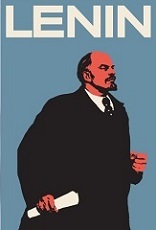 The dissolution of the United Soviet Social Republics (USSR) remains one of the most important and world changing moments in history. The lowering of the hammer and sickle on December 26, 1991, was the end of seventy-four years of Soviet dominance over Eastern Europe. But the remnants of the Soviet Union can still be found today and the ghost of its founder, Vladimir Ilyich Ulyanov (1870-1924), continues to haunt Russia. In Red Square, Moscow, Lenin’s corpse remains on permanent display and is maintained by a full-time staff of technicians. To believers in the old-guard and Marxism, Lenin is the eternal leader of the Bolshevik revolution. To his detractors, he was madman who unleashed a wave of terror and was outdone only by his successor Joseph Stalin (1878-1953). Undoubtedly, Stalin ruled the Soviet Union with an iron grip built upon fear, intimidation and murder. But those tactics were not new methods of operation, having been in use long before he took power. During the reign of the Soviet Union, information regarding Lenin’s private life was kept secret and only the most privileged of researchers were able to see any official records. The passage of time and change in attitudes had resulted in the disclosure of Soviet records that many thought would never be revealed. The thaw which began with Nikita Khrushchev (1894-1971) has allowed the world to learn the truth behind the Iron Curtain. Author Victor Sebestyen has taken another look at Lenin’s life in this well-researched and revealing biography of the iconic and infamous Soviet leader.
 On December 26, 1991, the world watched in shock as the Union of Soviet Socialists Republics (USSR) dissolved, splitting the once mighty Soviet Union into fifteen separate nations. I vividly remember watching the news broadcasts and seeing the flag of the Soviet Union lowered for the last time. It was the end of an era highlighted by the Cold War in which Washington and Moscow viewed each other as a threat to world peace. Paranoia, suspicion and espionage propelled the two to the brink of nuclear war on several occasions. In October, 1962, the world watched in gut-wrenching suspense as the Cuban Missile Crisis heated up and threatened to be the spark that ignited the next world war. President John F. Kennedy (1917-1963) and Soviet Premier Nikita Khrushchev (1894-1971) found their selves in a situation that could have resulted in the physical destruction of half the planet within a matter of minutes. Diplomacy eventually prevailed through the use of back door channels encouraged by the realization of figures in both governments that the looming showdown would produce no winners. Tensions between the two super powers cooled but never full subsided and as the dissolution of the USSR played out on television, Washington closely monitored the events while re-examining its global position as Russia emerged from the post-Soviet empire as the country to watch. Twenty-eight years later, the USSR is still recalled as one of the greatest powers in history. Its fall was earth shattering and left so many wondering, how and why did it happen?
 FREETHINKING BIBLIOPHILE
You must be logged in to post a comment.