
 It truly is amazing that a person can learn so much about the future by examining the past. In America, there are parts of our nation’s history that people find difficult to control. Race is at the top of the list and continues to find itself the topic of discussions as the country grapples with instances of systematic discrimination and overt acts by individuals. However, America is also a very great nation that has the courage to critically examine itself. The problems we have are not new but instead, more attention is now being paid to them. And I honestly believe that to remedy those issues, we must continue to look at the past for it provides many valuable lessons from which we can learn. I picked up this book because 1) I have been a fan of Lorraine Hansberry (1930-1965) for many years and 2) I knew that the book would contain a wealth of highly intellectual discussions about American society that have relevance, even today. And I can say unquestionably that this short book is a good look at Hansberry’s brilliant mind that was able to dissect America in ways that sets the stage for meaningful dialogue and change.
The title may give the impression that it is a one-on-one session with Hansberry but in fact, it is a collection of interviews and articles she wrote during the height of her fame. Some interviews were recorded for television and the audio for the discussion with Studs Turkel (1912-2008) in particular, can be found on YouTube. Further, she is sometimes a participant in group discussions that include a range of voices such as James Baldwin (1924-1987) and Langston Hughes (1902-1967). When they are all together, you can feel the energy in the text and each speaker shines in their assessment of being a Negro author and the social climate in America. Baldwin shines bright as always and his words are hauntingly accurate of the America he loved and sought to change during his lifetime. Those who are in the process of writing themselves will absolutely love the group discussion. But the focus here is on Lorraine and she is given her own platform so to speak to share her thoughts which are numerous and enlightening. What I found to be highly appealing is her ability to reveal herself in a way that instantly makes you feel as if you know her well. While I read through the book, I picked up a few things that I was not aware of before that added to the Hansberry story which truly is remarkable. And considering that she is now recognized as a great playwright, this quote might surprise some readers:
“I was not a particularly bright student. I had some popularity, and a premature desire, probably irritating, to be accepted in my circle on my terms. My dormitory years, which numbered only two at the University of Wisconsin, were spent in heated discussion on everything from politics to the nature of art, and I was typically impatient at people who couldn’t see the truth- as I saw it. It must have been a horror”
There are a couple of discussions where her role is quite minor. Whether they should have been included or not is not for me to say but I did find myself hoping that Hansberry would have more to say. But, putting that aside, I was more than satisfied with the statements and written words that came from Hansberry herself. If I had to find a crux in the book, it would definitely be her play A Raisin in the Sun, which is still one of the longest running plays in Broadway history. And in 2014, I had the honor of seeing Denzel Washington live as he took on the role of Walter Lee Younger. He was truly remarkable and captured the essence of Walter just as Sidney Poitier did many years ago. Here, she explains the back story to the play and her intentions when creating what became a masterpiece. And make no mistake, getting the play to Broadway was a feat. And surprisingly, it almost did not happen. In fact, what eventually came to be did so because of encouragement to become a dramatist by her former husband Robert B. Nemiroff (1929-1991), who preserved her works after her death. As Lorraine speaks, it can be seen just how simple of a person she was at times. She never comes across as superficial, egotistical or unrelatable. In fact, as she speaks, you cannot help but to like her even more. Physically she stood roughly five feet tall but, in this book, she is certainly larger than life. And when it comes to the Civil Rights Movement, she is spot on in her observations and honestly believed in peace. The constant struggle for civil rights was exhausting and this quote sums up the frustration and sense of depression that many found within it:
“The most shocking aspect of the whole thing”, Miss Hansberry concluded, ” is the waist of our youth – when they should be in school, or working, or just having fun, instead of having to ride Freedom buses, be subject to police brutality, go to jail, to get rights that should be unquestioned.”
The “Movement” as it is sometimes called, forced America to look in the mirror and make amends for a long and brutal history. Today in 2021, we are still confronting many dark aspects of our past, but the future truly is bright. America is changing again, and I always hope for the better. Hansberry, along with Baldwin, believed that in the future, America could be a place where anyone could live freely. And although she did not live to see just how far society has come, I believe that if she were alive, she would be both optimistic and dismayed at some of the things we see taking place. As someone who experienced racial violence firsthand, she knew all too well of the dangers that come with extremism. Throughout her life, she always believed that it was those dangers that caused her father’s demise. When discussing her past, she is frank about his last days:
“My father left the South as a young man, and then he went back there and got himself and education. He was a wonderful and very special kind of man. He died in 1945, at the age of fifty-one, of a cerebral hemorrhage, supposedly, but American racism helped kill him. He died in Mexico, where he was making preparations to move all of us out of the United States”
The family remained in the United States after his death and Lorraine soon found a home in New York City. And that move changed her life forever and resulted in the abundance of material she left behind. Her tragic and untimely death at only age thirty-four, silenced one of the movement’s strongest voices. However, the movement will never end for any of us regardless of what we look like or where we come from. The oppression of one human being by another is a constant blemish on mankind but it does not deter us from continuing to do right by each other and set examples for future generations. And no matter many years pass by, Lorraine’s voice will be as loud then as it is here and was many years ago.
ISBN-10 : 1496829646
ISBN-13 : 978-1496829641
 Quite some time has passed since my last post, mainly due to work matters and my being fully invested in finishing the book that is the subject of this review. Originally, I had planned on reading this three-part autobiography by William L. Shirer (1904-1993) one book at a time but Amazon also offers them combined and I decided to take the plunge. Shirer is by far, one of my favorite authors and there was no way I could pass this one up. Some of you may be familiar with him and recall that he is best known for his time as a CBS correspondent stationed in Nazi Germany during Adolf Hitler’s (1889-1945) rise to power. Upon returning to the United States, he moved to radio full time and lived the rest of his years as an author of historical non-fiction that has stood the test of time.
 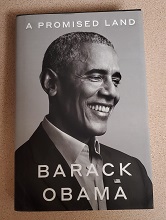 I believe that we can all agree that 2020 was a year unlike any other in modern history. The coronavirus, officially known as Covid-19, brought the world to a grinding halt and disrupted our lives in ways we could have never imagined. Here in the United States, we saw the pandemic take hold, social unrest erupt and the election of Joe Biden, Jr., as the next President of the United States of America. His swearing in on January 20, will mark the final stage in the transition between administrations. For some, it signals the return of politics largely void of the more extreme rhetoric that has gripped the country in recent years. Former President Barack Obama, will undoubtedly be called on for support and advice. I have often thought back to the Obama administration and the decisions that were made on a range of issues. But in particular, I have become even more interested in what life is really like as the Commander-In-Chief. This book, by the 44th President of the United States is exactly what I had been looking for. Not only does it provide an insider’s view into life within the White House, it is also a sobering account of life as a politician. There are highs and lows with a lot in between.
 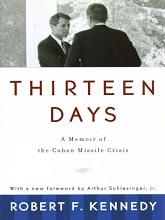 I have had many discussions with my father wherein he recalled his memories of the Cuban Missile Crisis in October, 1962. He explained with vivid detail how he and his classmates had to take part in daily air raid drills due to the increasing threat of a nuclear holocaust. The discovery by U.S. intelligence of Soviet missiles on Cuban soil, accelerated what was already a tense conflict. Today we refer to it as the Cold War but there were many things taking place that were anything but cold. And as former Secretary of Defense Robert S. McNamara remarked in Errol Morris’
  Earlier this week, my boss mentioned during a Zoom office meeting that Columbus Day needed to be re-examined. He had learned of many dark aspects of Christopher Columbus’ (1451-1506) arrival in the Caribbean. The movement to end the celebration of Columbus’ life has gained considerable traction over the past several years. Some states in America have renamed the Columbus Day to “Indigenous People’s Day”, in honor of the Native Americans who sufferend immensly at the hands of Spanish and other European explorers. It is a sound recommendation and one that may even happen here in New York City as it becomes harder for people to ignore the disturbing actions by Columbus and his group of marauders. Many of us learned in school that he was the man who “discovered America”. But is that what really happened? An uncontested fact is that Columbus never set foot on North American soil, making the claim of discovering America misleading. And we know today after many years of neglect by mainstream media, is that indigenous populations were decimated when exposed to the new visitors from abroad. The true story however, goes far beyond Columbus, who was just one of many bloodthirsty religious fanatics who favored violence over peaceful assimilation. David E. Stannard revisits the Columbus story in this eye-opening and chilling account that resulted in a stiff drink and a long moment of silence after I had finished reading.
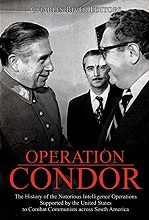 History has many dark secrets that some have wished remained hidden from the official record so that the history that has been portrayed remains sanitized and above reproach. But it is also said that what you do in the dark always comes to light. In the wake of the coup that saw the overthrow of Chilean President Salvador Allende (1908-1973) on September 11, 1973, the country was placed in a vice grip by his successor, Augusto Pinochet (1915-2006), who commenced a program of retribution against enemies, activist and those “suspected” of being part of the opposition to the new government. His regime was marred by human rights violations for which he was arrested by British Police in England on October 17, 1998. Pinochet was extradited back to his native Chile but never stood trial for his actions. He died on December 10, 2006 of congestive heart failure and pulmonary edema. His death marked the end of legal action to bring him to justice but it did not stop the prosecution of others who were complicit in the horrific actions that took place in the aftermath of the coup. Researchers continued to investigate Pinochet’s actions and those of fellow dictators in Argentina, Brazil, Paraguay and Uruguay. During one such expedition in Paraguay, a trove of documents were uncovered that shed light on a joint program created by several neighboring countries to track down those deemed enemies of the state with the purpose of execution. The program is known as Operation Condor and here Charles River Editors provides a concise summary of how and why the program came into existence.
 A colleague gave me this book as a gift during the holiday season, mainly due to his knowledge of my fondness for history. I quickly made a mental note to give it a read in the near future. When I saw the title, I was slightly puzzled at the term “The Forgotten 500”. I have read books on World War II but none mentioned any 500 forgotten soldiers. Upon closer inspection, I soon began to realize why I had not heard the story. At the time the mission occurred, it was carefully hidden by the State Department and Office of Strategic Services who did not wish to jeopardize the lives of any remaining U.S. soldiers still trapped behind enemy lines. Further, in the years that followed, the the story faded into the annals of military history regarding the second world war. Even my father, who is an ardent World War II buff, has never mentioned this story. Our next discussion will certainly be interesting.
 President John F. Kennedy (1917-1963) is known primarily from his time in the White House and untimely death but many forget that he was also an accomplished writer. In the well-received “
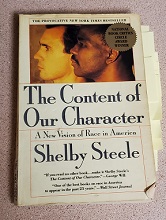 When I saw this book on Amazon, I was a skeptical as to what I found find inside of it. However, the nearly five star reviews convinced me to inspect it a bit further. I took the plunge and ordered it to see exactly what Shelby Steele had to say about race, a topic that continues to either unite or divide people in America. The phrase “content of our character” is known to many of us. It was the pivotal moment of Dr. Martin Luther King, Jr.’s (1929-1968) “I Have a Dream” speech on August 28, 1963. Fifty-seven years have passed since that monumental moment in American history and the question remains, do we judge each other on the content of our character? Further, have we progressed as a society or is America still the same place it was when Jim Crow made life miserable for millions of black Americans and others who emigrated to the United States in search of opportunity?
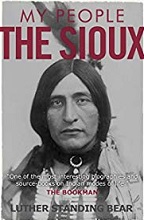 In the state of South Dakota, the Pine Ridge Reservation is home to the descendants of the Oglala Sioux Native American tribe. The children of Pine Ridge aspire to enroll in the Red Cloud High School with hopes of attending college. Many of their parent, suffer from alcoholism, a plague that has followed the Oglala Sioux since their first encounter with white settlers in the early 1800s. Poverty and discrimination have resulted in depression and despair which has yet to be fully addressed. The true story of the Native American experience remains misunderstood and in some cases neglected. They current day Oglala are the descendants of indigenous people whose home was a North American continent in which life was simple yet effective with languages largely unwritten and passed down through oral teaching. The Sioux were only one of hundreds of tribes, some of whom are now extinct such as the Canarsie Indians. Chief Luther Standing Bear (1868-1939) was born in Rosebud, South Dakota into the Oglala Sioux tribe and this is his story of his life and his people.
 FREETHINKING BIBLIOPHILE
You must be logged in to post a comment.