
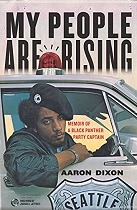
 On August 22, 1989, former Chairman of the Black Panther Party for self-defense Huey P. Newtown (1942-1989) was shot and killed in Oakland, California at the early age of forty-seven. The violent ending to his life is a reminder that the streets are unforgiving, and should one choose to embrace them, death is a constant threat. In prior years, Newton rose to fame with party co-founder Bobby Seale as the organization spread across America and became an unavoidable presence, catching the eye of Washington, D.C. The Panthers became so feared that former Federal Bureau of Investigation (“FBI”) Director J. Edgar Hoover (1895-1972) said “the Black Panther party, without question, represents the greatest threat to the internal security of the country.” Hoover refused to see that the Panthers had become an image solidarity and masculinity to thousands of Black youths who had seen and suffered racial discrimination. In the Pacific Northwest, a young man named Aaron Dixon listened to a speech by Bobby Seale and knew from that point on that he was destined to join the Black Panther Party. This book is his memoir of life on the West Coast and the ten years he spent as a Black Panther Party Captain.
It is not necessary to have extensive knowledge of the Black Panther Party before reading this book, but it will be helpful to know who the party’s leaders were. Bobby Seale enters the story quite early, and Dixon is clear that the speech he watched served as the moment when he knew he had found his calling. As a captain, he was required to make the acquaintance of party leaders such as Eldridge Cleaver (1935-1998), Fred Hampton (1948-1969) and Stokely Carmichael (1941-1998). However, they were assigned to other duties within the party and Dixon was dispatched to his hometown of Seattle. But before we get to the Seattle Chapter of the party, Dixon takes us down memory lane to his childhood. Readers will be surprised to learn that the author did not come from a broken home. And while things were not perfect, his background is not that of a child coming from dysfunction and gravitating to the streets. In high school he became a star athlete but the 1960s proved to be too scary, too unpredictable, and too painful for Dixon to focus solely on sports. But when he made the decision to see Seale speak, he did not know that his life would change forever.
When we think of the 1960s and America’s dark past of racial discrimination, images of the Deep South come to mind. But as Dixon shows, the South was not the only place where discrimination was an issue. And the stories that Dixon tells are crucial in understanding why the Panthers were so alluring and needed. From the start, he is fully committed to the party and emphatically says:
“For us, this was what putting on the Panther uniform was all about—standing up strong, refusing to be brushed aside and marginalized. We were dead serious when it came to the rights of the people. One thing was certain: if we had to die in the process, most of us were ready for that, too.”
Huey P. Newton once said that the first thing a revolutionary must understand is that he is doomed from the start. Success becomes subjective in the face of imprisonment and death. Dixon experienced both extensively before leaving the party but his memories of the people who changed history are recorded here and serve as an invaluable account of how the party functioned from day to day. The public saw black leather jackets and matching berets but in private, things were not always as glamorous as the author shows. One thing that stood out is that the party members did not always know where they would be from one day to the next. This inevitably made marriage and children difficult and resulted in strained relationships between party members. And the threat of infiltration and arrest kept everyone on high alert. Despite the risks, there are success stories in the book that offset the events that nearly shattered the party’s morale.
To anyone watching, it was only a matter of time before the FBI placed the party in its crosshairs. J. Edgar Hoover’s paranoia about Black unity, spurred him to go after anyone and any group that had the power to alter American society. The bureau relied on deception and coercion cloaked under the guise of the infamous Counterintelligence Program (“COINTEL”). The covert actions utilized by the FBI set into motion a series of events that fractured the party resulting in mass exodus and expulsion of people who had joined at its start. And the influence of illegal narcotics in Black communities cannot be understated. Even party members were not immune to their destructive effects. Newton’s battle with drugs is widely known and discussed here as the party slides further into turmoil. Newtown’s paranoia became fueled by drug use and the party saw one of its darkest moments when Newton and Cleaver had a falling out live on air. Dixon can only watch as the party he joined with hopes of changing America, comes apart at the seams.
Before I mentioned that party members found it difficult to have “normal” lives. Dixon is no exception. He is frank about where he went wrong in life and speaks freely of the challenges that came with fatherhood, marriage, and lack of focus on accountability. I am sure that if Dixon could go back in time, he would change his past actions. Joining the party is not one of them. Following the devastating effects of COINTEL, the party became a shell of its former self. Dixon explains how the party changed its focus while trying to hold true to its roots. The section about Elaine Brown and her effect on Bay Area politics is interesting but even she could not avoid the increasingly paranoid Newton. Dixon had a working relationship with Brown and despite their differences, he gives her the praise she is due. However, as the book moves forward, Newton begins his downward spiral. Dixon did know Newton but not intimately as he explains in the book. And while he was in awe of Newton, he was not oblivious to his escalating drug habit and distrust of anyone he thought to be subversive.
While reading Dixon’s account of the party’s decline, it was clear that the writing was on the wall. When he makes his exit, he has given ten years of his life to the party. But as we learn, his life after the party was anything but normal. In fact, there are unexpected twists and turns in the story including a manhunt by the U.S. Marshall Service. I found myself speechless while reading the book’s conclusion. But there is redemption in the story and Dixon did learn from everything he experienced. Further, he is alive today and continues his political activism. Though his days in the Black Panther Party are long gone he is still a Panther at heart. This book was a surprise, and I am glad that I decided to add it to my library. The Black Panther Party, borne in a turbulent time in American history, stands as an example of the people rising up and saying, “no more”.
“I have no regrets about my ten years as a soldier in the Black Panther Party. In the end it is the memories that make life worth living, particularly the good memories. My memories of Huey P. Newton are of a young, rebellious, brave, captivating, eloquent genius who ignited a flame that will never die. My memories of the Black Panther Party are of men and women rising in unison to carry that flame, taking up a position of defiance, of sacrifice, and of undying love, infused with passion and determination to write a new, bold future for Black America. That eternal beacon will shine on, lighting the way for future generations and illuminating the past, helping us remember a time when the possibilities for humanity were endless.” – Aaron Dixon
ASIN: B009UXSHD0
 On November 25, 1963, my mother prepared to celebrate her birthday, but everyone knew there would be little joy that day. While my mother prepared herself for that day, officials in Washington were making the final adjustments to the funeral of President John F. Kennedy (1917-1963). In Texas, the family of Lee Harvey Oswald (1939-1963) also made their adjustments to his funeral after he was shot and killed while in Dallas Police custody by nightclub owner Jack Rubenstein (1911-1967), known more commonly as Jack Ruby. Over the years, my mother has spoken about that day and has always said that it was the saddest birthday she can recall. The sorrow and tear-streaked faces of those around him are images that have been permanently embedded into my father’s memories that are still intact six decades later. Kennedy’s murder will continue to serve as a topic of debate but what is rarely discussed are his reasons for visiting Dallas and the warnings, he received not to travel to a city known for right-wing activity. Author William Manchester (1922-2004) was asked to author a book covering the Dallas trip from start to finish by former first lady Jacqueline (“Jackie”) Kennedy Onassis (1929-1994). And this account is a thorough explanation the five days in which America experienced the death of a president.
 In October 2002, a series of murders occurred between the states of Maryland and Virginia, and the federal District of Columbia that spread fear and panic across the United States. News reports of a sniper moving across the area and striking at will, left law enforcement scrambling and citizens seeking arms and shelter. I remember watching the nightly news in anticipation that the police had captured the person(s) responsible for the crimes. On October 24, 2002, the nation felt relieved when John Allen Muhammad (1960-2009) and Lee Boyd Malvo were arrested while sleeping in their Chevrolet Caprice near Myersville, Maryland. Both were tried and convicted, with Muhammad receiving the death penalty and Malvo being sentenced to life in prison due to his age at the time of the murders. Muhammad was executed on November 10, 2009, at the Greenville Correctional Center in Jarratt, Virginia and Malvo remains in prison today.
 The first time I watched the HBO film “
 On the evening of February 4, 1983, twenty-four-year-old Wanda Lopez arrived at the Sigmor Shamrock gas station in Corpus Christi, Texas, to begin her shift as a gas station attendant. She never finished that shift. After noticing a suspicious male brandishing a knife, Lopez called police not once but twice before she was savagely attacked and fatally wounded. In less than one hour, police arrested twenty-year-old Carlos Deluna and charged him with the murder. Deluna entered a plea of not guilty and chose to stand trial where he was convicted and later sentenced to death. On December 7, 1989, he was executed at the Texas State Penitentiary at Huntsville. Prosecutors had secured a conviction and put forth the notion that justice had been served in the State of Texas. However, Deluna maintained his innocence from the start and stated more than once that he knew who did kill Lopez. The name “Carlos Hernandez” became an area of interest, yet officials claimed that no such person existed, nor had he been incarcerated in Texas. But were they telling the truth? And was justice served in Deluna’s execution? James S. Liebman and the Columbia Deluna Project examined the Lopez murder and the fate of Carlos Deluna to uncover what really happened and find the truth behind a dark story that will send chills down the spine of readers.
 This review will be different from my normal write-up as I have stepped back into the world of fiction. This book came as a gift, and it is one that I will cherish infinitely. But before I continue, I want to point out that this book is long. In fact, it is over nine hundred pages in length and not for the faint at heart. If the length of the book does not deter you, then you will find an incredible story that will remain with you for years to come. And by the time the story ends, readers will be eager to learn more about the lives of the characters that come to life in this spellbinding tale.
 On March 25, 1985, the 57th Academy Awards ceremony was held at the Dorothy Chandler Pavilion, Los Angeles. During the ceremony, the category of best supporting actor was called, and the winner was Haing S. Ngor (1940-1996), a doctor born and raised in Cambodia, who had survived the Khmer Rouge dictatorship under the notorious Pol Pot (1925-1998). Ngor had starred as Cambodian journalist Dith Pran (1942-2008) in the 1984 film
  The history of America is dark at times, and those moments have been omitted or neglected for many years. However, they are crucial to understanding how and why the United States developed into the nation that it is today. As an American, I am constantly seeking to understand my own country and clarify the myths that have propagated with regards to its past. I am learning uncomfortable truths, but they have not diminished the love that I have for America. In the history of this country, the name of Frederick Douglass (1818-1895) remains a reminder of the institution of slavery that degraded human beings, served as the backbone of an economic system, and led America towards a civil war. Douglass was born into the slave system and became a free man as an adult. This is his story of his time in bondage, freedom from oppression and evolution into a public speaker.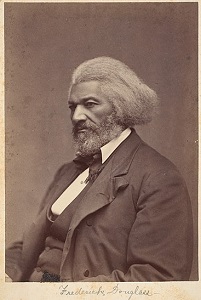
 During a recent flight from San Francisco to New York, the aircraft encountered rough air while making its descent into John F. Kennedy (JFK) Airport. The flight attendant began to speak on the intercom and informed all passengers to return to their seats and fasten their seat belts. He also added “don’t worry, the pilots are trained for this”. I thought to myself that it is good because if they are not, then we have a big problem on this plane. Thinking back on it today, I have come to realize that passengers place an enormous amount of trust in the hands of pilots across the globe every day. When we board an aircraft, we are confident that the people in the cockpit are sufficiently trained to do the job required of them. Air travel in the United States is the safest it has ever been with incidents becoming rarer by the day. But the reality is that there is always a certain level of risk associated with flying. On January 30, 1974, ninety-one passengers boarded Pan American (“Pan Am”) Flight 806 at Auckland International Airport in New Zealand for the short flight to Pago Pago International Airport, American Samoa. The aircraft was staffed with ten-person flight crew who were seasoned employees in the aviation industry. As the aircraft made its final approach to Pago Pago, it crashed short of the runway. Though the passengers survived the crash landing, eighty-seven of them perished as fire and smoke engulfed the plane. The disaster remains one of the worst accidents in commercial aviation history. This is the story of that crash and its relevance to air travel today.
  FREETHINKING BIBLIOPHILE
You must be logged in to post a comment.