
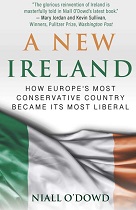
 In April 1916, Irish Republicans used the Easter holiday week to launch an insurrection against British rule in Ireland. Through the British regained control of Dublin and later conducted executions of selected participants, the uprising stands to this day as a pivotal moment in the movement for a united Ireland. When I visited Dublin in February 2016, I took a moment to observe murals dedicated to Irish history. I realized that the Ireland I was visiting had changed since the visit of U.S. President John F. Kennedy (1917-1963) in April 1963. Ireland was once known was the most conservative country in Europe but had now become the most liberal. As I walked the streets of Dublin, I heard accents from countries throughout the world and the diversity of languages reminded me of my hometown, New York City. But how did Ireland undergo such a drastic change? The answer can be found in this book that captures an important aspect of Irish history.
Books I have previously read about Ireland heavily focused on the conflict known as “The Troubles”. The struggle between Irish Republicans and Irish Protestants loyal to the British Parliament has left Northern Ireland with physical scars and dark memories. There is peace today but tensions between the two factions have never completely dissipated. And Britain’s exit from the European Union raised the question, what will happen to Northern Ireland? The future remains to be seen. It is not necessary to have an extensive knowledge of the Troubles to enjoy this book. The story at hand is truly remarkable but it is also filled with shocking and revolting moments that forced Ireland to look in the mirror.
I appreciated the discussion of Irish history that explains how religion evolved in Ireland. It quickly becomes apparent that Catholicism is viewed with suspicion and to be a Catholic could result in acts of violence and even death. I found myself speechless when I learned of the reaction to and persecution of Catholic Bishops. This part of the book is mortifying and not for the faint of heart. Irish Catholics also faced daily insults and risks but remained true to their faith. However, the potato famine in 1845-1846 resulted in the exodus of over one million Irish citizens. For the new emigrants, America became the primary destination and the men and women who moved to the United States would never forget their brethren back in Ireland. As the 1800s moved forward, the Irish Republican Brotherhood established itself as a new force to lead the movement for independence and freedom for Catholics. No one in Ireland could have known what was in store for the nation during 1900s when Ireland would see bloodshed, scandal, peace, and transformation. And it would not be until 1998 when both sides came together and signed the Good Friday Agreement.
I must disclose that for all the inspiring actions to support the Catholic faith, the dark side of the church rears its ugly head. Readers who are Catholic may find these parts of the book upsetting. I think everyone will find them disturbing. Before I had finished the book, the names Father Michael Cleary (1934-1993) and Bishop Eamonn Casey (1927-2017) were seared into my memory. Their stories form the nucleus of the turn away from faith and towards modernity. I cannot overstate how crucial their roles were in Ireland’s social fabric and readers will need a moment to digest what they learn. However, the darkest moment of the book is the story of Brendan Smyth (1927-1997) a Catholic priest from Belfast whose role is chilling. Frankly, steel yourself when you get to this part.
As a conservative republic, Ireland also faced the issue of gay rights. In an overwhelmingly religious environment, there was no safe have for the LGBT in Ireland and the murder of Declan Flynn (1952-1982) sent chills down my spine. The crime and its aftermath receive a section in the book and will leave readers speechless. But on a positive note, readers will also be surprised to learn of the LGBT community’s role in the Easter Uprising in 1916. I did not know of this previously and was surprised to learn of its involvement. In a moment of tense introspection, Ireland had to confront the subject of same-sex attraction as Catholic leaders fell from grace. As I read, I thought of the 2015 film “Spotlight” starring Michael Keaton and Mark Ruffalo, which I highly recommend.
The church’s fall from grace is only part of the story and Ireland still had to confront sexism and other draconian aspects of its culture that needed to be addressed if the country was going to move forward. The task was not easy, and the past continued to shape the future. Women were seen but still needed a voice. And in a country shaped by the legacies of men such as Eamon De Valera (1882-1975) and Michael Collins (1890-1922), the road to female politicians was filled with obstacles. However, Ireland was changing, and the election of Mary Robinson modified the country permanently. And the arrival of Leo Varadkar ensured that Ireland had passed the point of no return. Women’s rights were another hurdle to overcome but Ireland was up to the task and moved forward haunted by the ghost of Savita Andanappa Yalag (1981-2012) and other women in similar situations.
Today it is hard to imagine Ireland as Europe’s most conservative country. Upon returning to New York after my trip, I knew that one day I would return to Dublin and finish exploring the Irish Republic. I know that the country is far from perfect, and its dark past is never that far away. But Ireland stands as a shining example of a country that understands a fundamental concept: if you do not keep up, you get left behind. Those who want to understand the social fabric of Ireland and its history will find this book to be invaluable. Highly recommended.
“When you travel the world, you have to watch and you have to listen. We’re not going to come in to Ireland without an understanding that there’s a history that’s very sensitive.” – Chuck D
ASIN: B07TFB6WYS
 On June 3, 1968, artist, and film director Andy Warhol (1928-1987) was shot and severely wounded as he talked on the telephone in his office located at 33 Union Square West in Manhattan. He was rushed to the hospital and declared clinically dead by doctors before being resuscitated. He underwent grueling surgeries that left a myriad of scars across his torso and required him to wear a surgical corset for the remainder of his life. Hours after the shooting, a young woman walked up to a police officer in Times Square, handed over her weapons and confessed to shooting Warhol. She was arrested and booked for the crime. The public soon learned the name of Valerie Solanas (1936-1988). Today she is best remembered as the woman who shot Andy Warhol. Her actions were horrific and nearly took Warhol’s life, however her story is not as widely known. Breanne Fahs decided to change that and find out the truth about Solanas’ turbulent life. This biography explores the life of Solanas, her relevance to the radical feminist movement and her descent into anarchy after shooting one of the biggest pop icons in history.
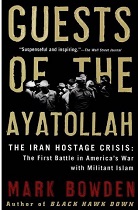 On November 4, 1979, university students seized the U.S. Embassy in Tehran, Iran and detained more than fifty U.S. Government employees. Though some were later released, the majority remained behind for four hundred forty-four days in what is known as the Iran Hostage Crisis. In 1953, Mohammad Mosaddegh (1882-1967) and the National Front Party gained political power in opposition to Mohammad Reza Shah (1919-1980). A twice elected member of Parliament, Mossadegh emerged as a popular figure but within days of the Shah’s exile in August of that year, Mossadegh was removed in a coup sponsored by the British Government and the United States. Mossadegh’s removal and the Shah’s return, inflamed tensions and in November 1979, Iranians decided that America must go. This is the story of the hostage crisis from start to finish in an account that provides a thorough discussion of America’s foreign policy mistakes and Iran’s inner struggle between traditionalism and modernity.
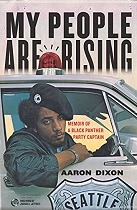 On August 22, 1989, former Chairman of the Black Panther Party for self-defense Huey P. Newtown (1942-1989) was shot and killed in Oakland, California at the early age of forty-seven. The violent ending to his life is a reminder that the streets are unforgiving, and should one choose to embrace them, death is a constant threat. In prior years, Newton rose to fame with party co-founder Bobby Seale as the organization spread across America and became an unavoidable presence, catching the eye of Washington, D.C. The Panthers became so feared that former Federal Bureau of Investigation (“FBI”) Director J. Edgar Hoover (1895-1972) said “the Black Panther party, without question, represents the greatest threat to the internal security of the country.” Hoover refused to see that the Panthers had become an image solidarity and masculinity to thousands of Black youths who had seen and suffered racial discrimination. In the Pacific Northwest, a young man named Aaron Dixon listened to a speech by Bobby Seale and knew from that point on that he was destined to join the Black Panther Party. This book is his memoir of life on the West Coast and the ten years he spent as a Black Panther Party Captain.
 On November 25, 1963, my mother prepared to celebrate her birthday, but everyone knew there would be little joy that day. While my mother prepared herself for that day, officials in Washington were making the final adjustments to the funeral of President John F. Kennedy (1917-1963). In Texas, the family of Lee Harvey Oswald (1939-1963) also made their adjustments to his funeral after he was shot and killed while in Dallas Police custody by nightclub owner Jack Rubenstein (1911-1967), known more commonly as Jack Ruby. Over the years, my mother has spoken about that day and has always said that it was the saddest birthday she can recall. The sorrow and tear-streaked faces of those around him are images that have been permanently embedded into my father’s memories that are still intact six decades later. Kennedy’s murder will continue to serve as a topic of debate but what is rarely discussed are his reasons for visiting Dallas and the warnings, he received not to travel to a city known for right-wing activity. Author William Manchester (1922-2004) was asked to author a book covering the Dallas trip from start to finish by former first lady Jacqueline (“Jackie”) Kennedy Onassis (1929-1994). And this account is a thorough explanation the five days in which America experienced the death of a president.
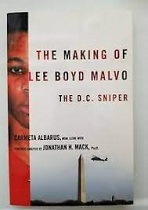 In October 2002, a series of murders occurred between the states of Maryland and Virginia, and the federal District of Columbia that spread fear and panic across the United States. News reports of a sniper moving across the area and striking at will, left law enforcement scrambling and citizens seeking arms and shelter. I remember watching the nightly news in anticipation that the police had captured the person(s) responsible for the crimes. On October 24, 2002, the nation felt relieved when John Allen Muhammad (1960-2009) and Lee Boyd Malvo were arrested while sleeping in their Chevrolet Caprice near Myersville, Maryland. Both were tried and convicted, with Muhammad receiving the death penalty and Malvo being sentenced to life in prison due to his age at the time of the murders. Muhammad was executed on November 10, 2009, at the Greenville Correctional Center in Jarratt, Virginia and Malvo remains in prison today.
 The first time I watched the HBO film “
 On the evening of February 4, 1983, twenty-four-year-old Wanda Lopez arrived at the Sigmor Shamrock gas station in Corpus Christi, Texas, to begin her shift as a gas station attendant. She never finished that shift. After noticing a suspicious male brandishing a knife, Lopez called police not once but twice before she was savagely attacked and fatally wounded. In less than one hour, police arrested twenty-year-old Carlos Deluna and charged him with the murder. Deluna entered a plea of not guilty and chose to stand trial where he was convicted and later sentenced to death. On December 7, 1989, he was executed at the Texas State Penitentiary at Huntsville. Prosecutors had secured a conviction and put forth the notion that justice had been served in the State of Texas. However, Deluna maintained his innocence from the start and stated more than once that he knew who did kill Lopez. The name “Carlos Hernandez” became an area of interest, yet officials claimed that no such person existed, nor had he been incarcerated in Texas. But were they telling the truth? And was justice served in Deluna’s execution? James S. Liebman and the Columbia Deluna Project examined the Lopez murder and the fate of Carlos Deluna to uncover what really happened and find the truth behind a dark story that will send chills down the spine of readers.
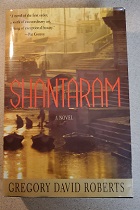 This review will be different from my normal write-up as I have stepped back into the world of fiction. This book came as a gift, and it is one that I will cherish infinitely. But before I continue, I want to point out that this book is long. In fact, it is over nine hundred pages in length and not for the faint at heart. If the length of the book does not deter you, then you will find an incredible story that will remain with you for years to come. And by the time the story ends, readers will be eager to learn more about the lives of the characters that come to life in this spellbinding tale.

You must be logged in to post a comment.