
 On March 9, 1954, CBS journalist Edward R. Murrow (1908-1965) prepared for a scheduled broadcast of the television program “See it Now“. In that episode he confronted the growing menace of the witch hunt for suspected communists in America. During the show, he stated that “no one man can terrorize a whole nation unless we are all his accomplices”. Viewers were aware that he was referring to Sen. Joseph McCarthy (1908-1957), whose hunt for communists had destroyed countless lives and reputations. Anyone even suspected of having communist affiliation was surveilled and, in some cases, forced to testify in front of the House Un-American Activities Committee. One witness was the screenwriter James Dalton Trumbo (1905-1976) who was blacklisted for his political beliefs and affiliations. The blacklisting of suspected leftist ended decades ago but Trumbo has remained forgotten, but during his era, he was one of the most sought-after screenwriters in Hollywood. In 2015, the biopic Trumbo was released with actor Bryan Cranston in the lead role. The film received high reviews and earned Cranston an Academy Award. What may surprise some is that one source of information for the movie is this biography of Trumbo written by Bruce Cook (1932-2003). The book was originally published in 1977 but has been re-published with a foreword by screenwriter John McNamara.
I have not seen the film and did not know what to expect when starting this book. That was a good thing as it allowed me read Cook’s story without any pre-conceived ideas about who Trumbo was. My ignorance of his contributions to the silver screen speaks volumes about his ordeal which is contained in the pages of this well-written and treasured biography. Cook sat down with Trumbo towards the end of the writer’s life as he was battling lung cancer. However, the book contains not just Trumbo’s words but is filled with interviews of those who knew him best, including his widow Cleo Trumbo (1916-2009). Through their words, the personal life of Dalton Trumbo takes shape. The late painter Charles White (1918-1979) talked with Cook and had this to say about his old friend:
“There are only two ways to relate to Dalton. You either love him or you hate him. Picasso is like that. Chaplin is, too. There are people in Hollywood, a lot of them, who hate Dalton.”
Trumbo’s life was anything but orthodox. His childhood is revisited through the memories of siblings and friends. His parents Orus (1876-1926) and Maud Trumbo (1885-1967) are pivotal figures in the story, and each influenced young Dalton. But Maud remained a crucial figure in his life until her death at the age of eighty-three. Orus exits the story early due to a series of events that clearly affected his son Dalton and his daughters. However, what Orus could not have known when he moved the family from Colorado to California, was that Dalton would find a place in an industry most people can only dream of. Some might argue that Trumbo was made for Hollywood and as Cook explains, his entry into screenwriting was not entirely by chance. In fact, what I learned about Trumbo’s early life make his entry into the film industry more understandable. But that is not to say that there were not obstacles along the way. What can be seen in the book is that the young Trumbo was quite the character and through anecdotes and research, the incredible tale is revealed with fitting detail.
The crux of the book is unquestionably the Hollywood blacklist. Cook goes into the matter but not simply to re-hash what has already been explained elsewhere but to focus on Trumbo’s actions and why he took the positions that he did. Trumbo could have chosen not to associate with leftists and maintain his place among the Hollywood elite, at least publicly. But he chose the path that was right for him, and never wavered in his beliefs. And as his widow Cleo tells cook, Trumbo never gave up once he had an idea in his mind. Yes, despite the harsh criticism and blacklisting by Hollywood, Trumbo was not an extremist by any means. He was driven for sure, but not an anarchist determined to rage against the machine. However, he was a firm believer in freedom of expression and constitutional rights. And to reinforce that image of Trumbo, Cook includes snippets of his testimony before the House Un-American Activities Committee (“HUAC”) and parts of a letter he wrote to a friend who had taken issue with a statement he made to the media. Prior witness testimony to the HUAC had set the stage for a showdown when Trumbo made his appearance and Cook explains that:
“Except for Lawson, Dalton Trumbo was probably the Committee’s least cooperative and most “unfriendly” witness. He came to the stand on October 28, 1947, at ten-thirty A.M., just one day after Lawson had caused such an uproar in the caucus room. Trumbo was met by hostility from Chairman J. Parnell Thomas, and he gave as good as he got.”
His statements and refusal to answer various questions resulted in a contempt of Congress conviction. Trumbo served his time at the federal prison in Ashland, Kentucky and upon his release, resumed his career as one of Hollywood’s most gifted writers. The blacklisting of public figures was still in full force and Trumbo resorted to slick maneuvers and loopholes to continue screenwriting. Some readers may be surprised to learn of Trumbo’s extensive involvement in several blockbuster films that are considered all-time greats. Frankly, Trumbo was all over the place lending his talent to a respectable number of filmmakers who needed the expertise of the master. It is a shame that Trumbo was prohibited from openly working in Hollywood when he had not committed any punishable offense prior to his congressional appearance. But the “red scare” was in full force, and it did not take much to see a career ruined completely.
Eventually the blacklisting crumbles and those who once could not find work openly in Hollywood begin to resurface and move on with their lives and careers. For Trumbo, recognition for his talents would take many years to become legacy. But this book and the biopic have vindicated him as a brilliant screenwriter who suffered immensely for seeing things a separate way. His story is a reminder of the dangers that come with baseless rumors and unfounded persecution. Hollywood had a mend to make when it came to the blacklist, and it did right some wrongs. As the book closes, Cook leaves us with this fitting note:
“But at last they did. In a kind of collective and symbolic act of contrition, the officers and board of governors of the Academy of Motion Picture Arts and Sciences on May 5, 1975, awarded replica number 1665 of the “copyrighted statuette, commonly known as ‘Oscar,’ as an Award for the Motion Picture Story—The Brave One (1956).” It has Dalton Trumbo’s name on it. That made it official: the blacklist, now acknowledged, was behind them all. Trumbo had done his job. He died a little over a year later on September 10, 1976.”
If you want to know more about the life of Dalton Trumbo, this is a good place to start.
ASIN: B00US1STWC
 When most of us hear the word “Kennedy” we immediately think of President John F. Kennedy (1917-1963) and former Attorney General Robert F. Kennedy (1925-1968). Although he was in office only for one thousand days, John F. Kennedy set into motion numerous plans, many of which became reality during the administration of his successor Lyndon B. Johnson (1908-1973). Kennedy was a gifted orator and skilled politician but struggled to move legislation through Congress. Johnson lacked the flair and polish of the Kennedys, but he was a master politician and he excelled in the one area that is crucial to presidential success: the Senate. The Kennedys knew that to move the Senate, the old guard would have to be removed one by one. And do that meant putting younger senators in office with moderate and liberal views. As part of this plan, the youngest of the Kennedy clan, Edward M. Kennedy (1932-2009) followed his brothers into politics and made the Senate his home. And though he never became president or even vice-president, Edward M. Kennedy or “Teddy” helped changed the course of American history during the forty-seven years he served in the U.S. Senate. In this first volume of a two-part biography, author Neal Gabler explores Edward Kennedy’s life from his birth in 1932 until the year 1975.
 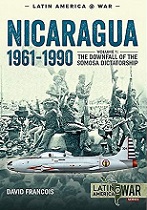 In June 1987, Lt. Col. Oliver North (Ret.) gave testimony in front of the Senate Select Committee on Secret Military Assistance to Iran and the Nicaraguan Opposition and the House Select Committee to Investigate Covert Arms Sales with Iran. The hearings had cast a dark cloud over Washington and the administration of President Ronald W. Reagan (1911-2004) doubled down on anything that could be conceived as illegal pursuant to United States law. I can still recall the shock on my father’s face when the news of the scandal broke across media outlets. The two of us watched the nightly news to learn more about a situation that had danger written all over it. Those who remember the Iran-Contra affair most likely have images in their minds of North testifying in his military dress before Congress. Details of the Reagan administration’s covert plans became unraveled but the full truth about the affair remained elusive for many years. The sale of weapons to foreign nations did not surprise me at all and military hardware has always been big business. But what did catch my attention was the atmosphere in Central America, a region that suffered extensively due to Washington’s support of dictatorships thirsty for blood and determined to crack down on all opposition.
 A few weeks ago, my family had its first gathering in nearly two years. The even took place at Jacob A. Riis Park in Queens, New York. As I walked the boardwalk next to the beach, I wondered how many people there knew the story of Jacob A. Riis (1849-1914) for whom the park is named. In 1890 this book by Riis was published and more than one hundred years later is stands as a crucial piece of writing about the island of Manhattan. At the time Riis wrote the book, the City of New York had yet to be incorporated. That occurred eight years later on January 1, 1898. His focus here is on the tenements in lower Manhattan and the different ethnic groups that inhabited the area. And though New York has changed significantly in the years since Riis wrote this book, the gap between the wealthy and poor still remains wide.
 In 1968, the race for the next President of the United States intensified as sitting President Lyndon B. Johnson (1908-1973) issued a public statement that he did not want, nor would he accept the nomination for his party’s candidate for the oval office. The announcement stunned the nation and took the election in a much different direction. The late David Halberstam (1934-2007) had been following the campaign of former Attorney General and then Senator Robert F. Kennedy (1925-1968)(D-NY). As he observed Kennedy’s evolution into a powerhouse figure, he noted that “Robert Kennedy was in many ways the most interesting figure in American politics, not only because he was a Kennedy, not only because so much of his education had taken place in the public eye—it could be traced by putting together film clips of this decade—but primarily because he was a transitional figure in a transitional year.” Kennedy was riding a wave of popularity and had resurrected the image of Camelot that was assigned to the presidency of his older brother John F. Kennedy (1917-1963).
 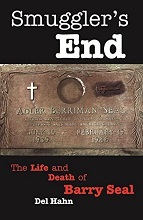 Americans in my age range and older will easily recall Nancy Reagan’s (1921-2016) advice to “just say no” to drugs. At the time, America had become fully engulfed in a deadly war against the rising trafficking and use of narcotics. The federal government continued to increase spending each year in the effort to combat drugs in America but regardless of the approach, the drugs kept coming and brought with them lengthy jail sentences, murder, and scores of addicts. However, the drugs did not arrive without help. Drug traffickers quickly realized that the growing market for cocaine and other hard drugs also produced large amounts of money. Drug routes began to sprout up all over the planet as traffickers continued to find ways to elude authorities. Stories of their exploits are plenty. And I believe everyone knows the names of the major drug kingpins such as Pablo Escobar (1949-1993) and Joaquin Guzman known as “El Chapo”. The bosses made the deals, but the groundwork was left to those willing to risk death and capture in a market worth billions of dollars. Among these fearless individuals was Adler Berriman “Barry” Seal (1939-1986). Fans of the Netflix show
 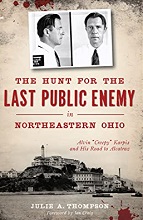 A few years ago, I visited San Francisco and decided to take the boat ride around the bay under the Golden Gate Bridge. As the vessel made its way back to the dock, it traveled around the eastern side of the defunct prison once known as Alcatraz. The facility has long been closed but seeing it in person puts the stories about it into a new perspective. To some, the prison was simply known as “the rock”. Regardless of what it was called, it was home to some of America’s most dangerous criminals. And make no mistake, a decision to send an inmate to Alcatraz was not made lightly. Further, inmates knew that if you were sent to Alcatraz, you better be prepared to spend a lot of years there. Alvin F. Karpis (1907-1979) spent three decades at Alcatraz and in the annals of American history, he remains one of the most prominent crime figures from the outlaw era that saw the rise of such as John Dillinger (1903-1934), George “Baby Face” Nelson (1908-1934) and the deadly duo of Bonny Parker (1910-1934) and Clyde Barrow (1909-1934). Unlike many other outlaws, Karpis not only survived the 1930s but was eventually released from Alcatraz. This is the story his time on the run, capture by the Federal Bureau of Investigation (“FBI”) and later years as a free man.
 On January 6, 2021, I and millions of people in America and abroad watched the events at the U.S. Capitol in which thousands of individuals breached security and entered the historic building in the belief that the 2020 Presidential Election had been stolen from Donald J. Trump. As I watched the video footage, a sense of gloom came over me due to the realization that the pillars of our vision of democracy were under siege. Personally, I have no political affiliation and regardless of which party we belong to, none of them are above reproach when our government is threatened from within or abroad. By evening, the dust had settled over Washington and officials began to piece together the chain of events that left several dead, dozens injured, and hundreds detained or the target of criminal investigation. Messages from family members and friends started to arrive on my phone with nearly if I had seen the events in Washington, D.C. The insurrection forced many of us to confront unsettling realities and acknowledge that threats exist all around us. Further, the day also showed how far America has strayed from the principles it professes to believe in.
  FREETHINKING BIBLIOPHILE
You must be logged in to post a comment.