
 Those of us who have visited the Museum of Modern Art in New York City, can testify to its seduction of visitors with a passion for treasured art. The second floor is home to Campbell’s Soup Cans and Other Works, 1953–1967, a collection of thirty-two pieces by the late Andy Warhol (1928-1987). February 22 will mark thirty-two years since his untimely death at the age of fifty-eight. Art students and museum aficionados have long studied his work as the shining example of the Pop Art movement that swept across the United Kingdom and United States during the 1950s. Warhol undoubtedly became the poster child for the movement with his sleek frame, white wig, large frame glasses and black sweater. His personal life, carefully hidden from the public, became a mystery to those seeking to know just who is and who was the real Andy Warhol? Bob Colacello worked for Warhol on their publication Interview, for twelve years and in this intriguing account of their time together, he reveals the Andy Warhol he knew with all his quirks, ingenuity and fears in life.
The book is not an autobiography and Colacello does not try to assess Warhol’s psyche. Further, this is Colacello’s story from start to finish but Warhol does play a critical role to the events that transpired in his life for obvious reasons. From the start, it is apparent that Andy is not the typical boss and writing for Interview will be no easy task. As Colacello explains, it was usually a test of wills with Andy believing everyone had a hidden story or “problem” and that Colacello should proposition them with the offer of a cover shot and even change his name to “Bob Cola” to sound more appealing. Their contrasting personalities and those of the other members of what Colacello refers to as the “factory”, created a magazine that grew into a serious contender and in the process, made Warhol’s name synonymous with modern pop art. His successes took him and his staff across several continents and through endless cities. Colacello was dutifully by his side along with a dedicated team of collaborators, each of whom would wage their own battles with Warhol over his eccentric behavior and domineering personality. They all recognized that within their boss was a visionary who straddled the fine line between genius and insanity.
Anyone who decides to read this book, probably has some inkling of who Andy Warhol was. His carefully crafted public facade, gave off an aura of chic that tabloids found irresistible. But behind the facade was a different person, and Colacello was there to witness those revealing moments when Andy let down his guard. The anecdotes from Colacello are amusing and in some cases puzzling as Andy’s behavior typically bordered on the surreal. Armed with his tape recorder which he called Sony and hindered by his social awkwardness, Andy sometimes became a square trying to fit into a circle. But yet, most could not resist being around him as his name grew in popularity. That fame resulted in a steady stream of film stars, foreign dignitaries and politicians giving Interview and Warhol the publicity they constantly needed. It was an unbelievable ride for the young artist from Pittsburgh, Pennsylvania, born to immigrant parents from the small region of Ruthenia. Some of you may be wondering, where on earth is Ruthenia? It is located in the Carpathian Mountains, sitting between the meeting point of the borders of Poland, Czechoslovakia, Hungary, Romania, and Russia. Sadly, Warhol never addresses his family’s ancestry and often said that “I come from nowhere”. Perhaps it was just Andy being Andy or was a sign of a deeper inner struggle that manifested itself in his work. We will never know for sure as Andy took that and many other secrets with him to his grave.
Every story about a famous figure has the proverbial “elephant in the room”. For Andy, it was sexuality, a theme that was found in many of his works and which fueled his belief that everyone had a juicy sexual secret they were hiding. As Colacello reveals, Warhol was entranced by gossip and in particular, the sex lives of celebrities. But was this a defense mechanism to deflect from his own love life? Colacello provides great insight into Andy’s love life or lack of it. And even with his revelations, many questions still linger about what type of love life he actually had. Maybe that was Andy’s plan, to keep everyone guessing, on their toes and confused. But there are two people who appear in the story and Colacello explains their importance thoroughly and how they affected Andy’s personal life. One of them, Jed Johnson, tragically perished on TWA Flight 800 in 1996, which exploded shortly after takeoff from New York City’s JFK International Airport. The flight was bound for Paris and all 230 passengers perished in the accident. Johnson was with Andy the longest and their relationship provides some clues as to why Warhol behaved as he did.
Towards the latter part of the book, Colacello focuses on his increasing dissatisfaction working for Warhol and the impact upon the lives of his colleagues as a result of their boss’s behavior. Like a master manipulator, Warhol would push their buttons and then later soothe their egos, dangling them on strings in the process. Alcohol and drugs became coping mechanisms and flowed freely in their circle that consisted of Hollywood stars, music stars and the famous Studio 54, where Andy became a fixture. The image that appears as Colacello discusses working conditions at the factory, is one in which Andy keeps his subordinates in check, at odds and never in a position to amass too much influence in affairs. This system of dysfunction pushed many to brink and over time, nearly all left to escape from Andy’s off-handed and in some cases, callous treatment. However they remained loyal to him and his legacy, even when they no longer worked for him. Their commitment to Interview, the factory and Andy’s films, created a bond that could never be broken, not even with his death on February 22, 1987. Theirs is a story of a family with a broken parent that many of them tried to diagnose and piece back together. But Andy could never be the same after being shot several times on June 3, 1968. Valerie Solanas nearly ended his life that day but Andy survived and carried with him the scars from multiple surgeries and a life-long fear of being in public. His physical condition and paranoia of being attacked again, nearly crippled his social life, resulting in him needed a chaperone for nearly everything. More often than not, Colacello was assigned this task. However, the role he assumed gave him a very intimate look into the fractured life of his boss.
The mystery of Andy Warhol will continue for years to come. I do not believe there is one simple explanation for his life. Colacello even states that although he was close to Andy, he’s not sure if they were really that close as personal friends. Andy carefully kept everyone at a guarded distance. He avoided hospitals and even funerals, including that of his own mother Julia. His lovers had separate lives and seemed to come and go as they pleased. Andy threw himself into his work, pressuring all that worked for him to make sacrifices that at times were unrealistic. We can only assume that his constant drive to work, accumulate gossip with Sony and his prevention of letting anyone become close to him, may have been his way of protecting himself. Before his death, he said to close friends that he did not want to go into the hospital because you do not come out. But as his gallbladder became inflamed to the point of possibly rupturing, he was faced with having no other choice but going into the one place that he dreaded. And tragically, his prediction came true. But there is far more to Andy’s life and death, covered beautifully by his former employee and star writer. And fittingly Colacello has given us a very-welcomed portrait of what he calls the holy terror. Warhol fans will love this book.
ASIN: B00GQAOL8A
 I decided to take a break from the reviews and address a question that I am often asked. “Why do you love to read?”, is the question I am presented with by people who are aware of my passion for books. I could offer a cliché answer but the truth is more intricate than that. I firmly believe that each bookworm, as we are often referred to, has their own personal reasons for reading and the category of material that he/she prefers. Regardless of the reason, their love of books is something that unites us.
 On July 21, 1979, the bodies of fourteen year-old Edward Smith and thirteen year-old Alfred Evans were found in Southwest Atlanta. Both had been murdered and authorities struggled to find a motive for the senseless killings. Over the course of the next two years, more than twenty children, adolescents and adults were found murdered in Atlanta. The homicides were dubbed by the media as the Atlanta Child Murders. Today, the crimes are a distant memory for many Americans but Atlantans will vividly recall the time period in which the primarily African-American areas of the city lived in fear as a killer was on the loose, preying upon young children, teens and adults. Less than forty years ago, a homicidal maniac terrorized the famed Southern Georgia city that served as the home of the 1996 Olympic Games.
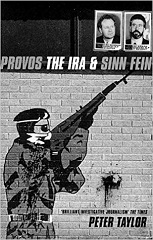 Britain is steadily moving towards the anticipated and dreaded exit from the European Union on March 29, 2019. For Ireland, the move comes with a mix of emotions, including fears of the re-ignition of a conflict that resulted in several thousands deaths over the span of several decades. The IRA has long been recognized as the extreme group responsible for dozens of bombs and acts of terrorism across Norther Ireland and London. But the reality is that many groups were involved in one of the world’s deadliest conflicts. I have been following Brexit since the referendum was held on June 23, 2016. The vote to leave the European Union sent shock waves throughout the world and left many wondering what would happen to both England and Ireland in its wake? I wanted to know more about the conflict in Northern Ireland and decided on this book by author Peter Taylor. And what I found inside its pages, has opened my eyes to a feud that would have dire consequences should it commence again.
 On September 1, 1939, the Second World War began as the German army invaded Poland as part of Adolf Hitler’s quest for world domination. Britain had warned Germany that any military action against Poland would result in England coming to the aid of its ally. Interestingly, Adolf Hitler (1889-1945) did not want to go to war with England, preferring to accomplish the annexation of Poland through diplomatic methods after having successfully partitioned Czechoslovakia in what is infamously referred to as the “appeasement at Munich”. But if Hitler did not want to wage war against Britain, knowing their intention to save Poland, then why did he give approval to the invasion that plunged the world into a major conflict? The answer to that question lies in the story of his Foreign Minister and Nuremberg defendant, Ulrich Friedrich Wilhelm Joachim von Ribbentrop (1893-1946).
 Theranos was supposed to the company that changed health care forever. The Silicon Valley startup had issued a bold proclamation that it had developed technology that could analyze a person’s blood and screen it against a multitude of known conditions, thereby providing early detection of sometimes fatal conditions. The startup attracted attention and investments from big name players, all highly interested in the potential of what promised to be a revolutionary product. Today, Theranos is gone, having officially become defunct in September, 2018. Its proposed device nicknamed “Edison”, never materialized into the product it was designed to be and the fall of Theranos left many with shock, frustration and anger. But why did a small company with such a game-changing idea, fail to live up to its potential? John Carreyrou is a journalist with the Wall Street Journal who received a tip about an obscure Silicon Valley startup plagued by internal problems and using deception as a tactic to accumulate investors. His investigation has resulted in this best-selling account of the rise and fall of Theranos.
 America often has an uncomfortable relationship with its past. The dark moments in the founding of the nation are sometimes left out of history books and never discussed in conversation. Native Americans are either viewed with empathy or disgust, typically depending on the observer’s knowledge of history. Alcoholism, depression and economic instability have continued to plague Native American reservations, given as a token gesture by the United States Government. In Hollywood, they have often been presented as wild savages determined to murder Americans, only to be repelled by heroic soldiers and cowboys seeking to preserve the union. The reality however, is that there is much about the Native Americans of North America that remains largely unknown. In the State of New York where I reside, virtually nothing is taught about the Lenape Indians who owned what is today the Tri-State area, in addition to other vast territories. In the South, the once mighty Cherokee nation owned land, lived under their own rules and were content with life before the arrival of new nation, created following the independence of 13 colonies from British imperialism. Today the Cherokees are an afterthought for most, but at one time, they ruled large parts of what became the future United States of America. This is their story and that of the infamous “Trail of Tears”, that would permanently change the lives the Cherokee Indians.
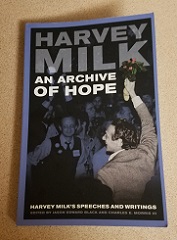 This past November marked forty years since the assassination of Harvey Bernard Milk (1930-1948), who is recognized as being the first openly gay politician to hold office in the United States. The 2008 film Milk, starring Sean Penn, brought Milk’s life back into public light, where public interest has continued to increase. In the City of San Francisco, he is revered as one of its greatest citizens and the Castro neighborhood where he operated his camera store and conducted his political campaigns, pays homage to him with a bar named in his honor. Throughout the streets of the Castro, his image can be found throughout and on occasion, tourists might be fortunate enough to encounter someone who knew Milk personally. On a visit to San Francisco a year ago, I did not have this fortune, but I did visit 575 Castro, the former site of his store which now serves as the base for the Human Rights Campaign. Standing in the middle of the floor felt surreal as the realization settled in that this was where Milk lived and worked nearly forty years prior. In the upstairs window at the front of the apartment where Milk lived, there is a full size image of him looking down at the street. It is as nostalgic as can possibly be. As I walked the Castro, I began to think, what if he were alive today? What would he think of progress made by the LGBTQ community? I think he would be proud but not satisfied, continuing to push for further advancement and acceptance of LGBTQ men and women in society.
 This past Saturday was the fifty-fourth anniversary of the death of the late American playwright and author Lorraine Vivian Hansberry (1930-1965). Her untimely death at the age of thirty-four silenced one of literature’s greatest voices. However, more than fifty years after her death, her masterpiece, A Raisin In the Sun, continues draw audiences curious to learn why the play is one of the longest running on Broadway. I personally attended a run starring Denzel Washington and his portrayal as Walter Lee Younger is as good as the original performance by the legendary Sidney Poitier. For some, Hansberry remains a bit of a mystery. and a throwback to an era long past. The younger generation of today largely have yet to discover her genius and her influence on the African-American experience. And what many of them are unaware of is that five decades ago, she was a voice advocating for the many freedoms they have today. Sadly, it has taken many years for her to be recognized for the gifted writer that she was. As we come to know her work more intimately, we must ask ourselves, who was the real Lorraine Hansberry? Imani Perry searched for and found her in this semi-autobiography and psychoanalysis. The book is an examination of Lorraine’s thoughts and writings while also adding recollections of historical events filled with larger than life figures who are no longer with us today. But make no mistake, this is about Lorraine, the woman who changed Broadway.
 The Democratic People’s Republic of Korea remains one of the most secluded nations on earth. To some, it is the best example of the society George Orwell described in his masterpiece,

You must be logged in to post a comment.