Sully-Chesley B.”Sully” Sullenberger with Jeffrey Zaslow

20180602_215650On January 15, 2009, US Airways Flight 1549, commanded by Captain Chesley B. “Sully” Sullenberger and first officer Jeffrey B. Skiles, made an emergency landing in New York City’s Hudson River.  The successful landing and evacuation of all passengers and crew became known as the miracle on the Hudson.   Sullenberger is now retired from US Airways but remains involved in the aviation industry.   His efforts that day in conjunction with those of Skiles remain a classic example of the necessity of extensive training and extraordinary ability to focus on the issues at hand.  Sullenberger has said that he does not consider himself a hero.  In his mind, he was doing what a well-trained pilot was supposed to do; fly the plane and try to land it while preserving the lives of everyone on board.   And on that day, that is exactly what happened.   Prior to the incident, his name was largely unknown outside of US Airways.  His face just another pilot that thousands of passengers walk past each day as they leave their flights.  The men and women who travel the skies are rarely acknowledged for a job that requires tremendous sacrifice, patience and dedication. But just who is Chesley Sullenberger?  And why is his story so amazing?

In this autobiography and memoir about the flight, Sullenberger opens up about his life that began in a small town called Denison, Texas. He realizes at an early age that flying is his passion and makes it his life’s mission.  As we know now, he accomplished that goal and will be remembered as one of the greatest pilots we’ve come to know.  But behind the skilled aviator is a simple man who leads a simple life who has been dedicated to aviation for nearly his whole life. And that is the true beauty of the book.  Sullenberger makes it easy to relate to him and does go out of his way to bring undue praise to himself.   His comments about the life of a pilot and bits of information about the airline industry are interesting and highlight the tremendous sacrifice pilots often have to make both personally and professionally.

After reading the book, I felt as if I knew Sullenberger personally.  And if I met him person, I would probably be tempted to call him simply “Sully”.   To the passengers of flight 1549, he will always be the best pilot they have ever flown with.  And while nearly none of them will probably ever see him again in person,  they are forever bonded by the events of that day.  What I truly loved about his story is that he remains a humble person in spite of the fame and notoriety.  And when he is not in the cockpit, he is a father and husband who struggles as he continues to learn how to be both.  His story is one that nearly all pilots can relate to and in telling his story, he is telling their story as well.

His mind is truly one of a seasoned aviator and his ability to analyze all components of a flight and the dynamics required to a successful flight are a testament to his career and accomplishments.   And because of this story, I have a deeper appreciation for all of the work that is required for a commercial aircraft to make it from one airport to the next.  I will be sure to say thank you as I pass the cockpit before exiting my flight. Each time I sit down before taking off, I will think back to his story and remind myself that the pilots at the controls have put their lives on hold so that I may enjoy mine.

ISBN-10: 0062564323
ISBN-13: 978-0062564320


Writing My Wrongs: Life, Death, and Redemption in an American Prison- Shaka Senghor

12

Shaka Senghor spent 19 years of his life in prison after being convicted for murder.   At the time of his release, he was 38 years old and had spent nearly half his life behind bars.  The Detroit native became a writer in prison and turned his thoughts and memories into this incredible autobiography of his life  which could be a case study of the path a young man takes in a life of crime and the redemption that can be found inside the walls of a prison. The City of Detroit stands out as one of America’s greatest tragedies.  The one time mecca of the automobile industry, Detroit has steadily declined and become a haven for crime, poverty and lack of hope. And as new president takes office, some are filled with optimism that Detroit can rebound from its dismal state and regain the prominence it once had.

Stories about life in prison are never easy to listen to.   The recollections told by former inmates reveal the brutal life inside of a correctional facility.  Murder, assault, rape and extortion are daily realities that test the sanity of even the most balanced prisoner. But what happens when a young man who is barely old enough to drink, enters the American penal system?  Shaka Senghor’s story is gripping from beginning to end and helps the reader to understand the true nature of incarceration and its devastating effects on the prisoners and their loved ones.    Senghor could have easily become just another statistic inside the penal system.  Thousands of young African-American men enter prison at a young age and spend a majority of their lives behind bars.  And when they are released later in life, several decades has passed and they struggle with integration back into society.   No doubt, his story is one of success but his battle for freedom did not come easily and I assure you that once you begin this book, you will find it nearly impossible to put down.

To say that it is incredible that he is still alive today is an understatement. By all estimates, he should have died many years ago.  But I believe that his fate was not to die a senseless death but to survive and write this phenomenal book that just might change the lives of those who read it whether they are on the streets in a life of crime or currently incarcerated.  As he traces his beginnings to his childhood , we see the chain of events that are put into place beginning with the separation of his parents.   He is introduced to the streets and before 16 years of age, a known drug dealer in the neighborhood.  Fast money, status and power are in his hands but a chance encounter with a regular customer changes his life forever and for many years, he would struggle to come to terms with the events of that day.

Those who remember the HBO drama Oz will feel reminded of that show as they read this book.  His memories show the ugliest parts of prison life and the descriptions of what happened are frank and to the point.  Some may shy away but in order to feel the power behind his words, it was necessary on his part to tell the stories as they happened with their gritty details involved.  By telling the stories in this way,  his transformation into the man we see today becomes even more remarkable. I cannot imagine that it was easy for Senghor to write this book but as he explains, writing became one of the tools he used to maintain his sanity and express his emotions.  And he would use writing as a means to gain his freedom after a long 19 years behind bars.

The beauty in this book is not only that he earned and gained his freedom, but in the process he reinvented himself and dives into the many social issues that have plagued minority communities for decades.  As a product of a broken home, he maintains a distinction as a first hand witness to the tragic results of dysfunction in the home. His entry into a prison system with disproportionate demographics,  helps to reinforce the notion that young Black and Hispanic men and women far too often fall victim to the prison system and its draconian design that attempts to strip individuals of their human existence.  Senghor spent nearly five years in solitary confinement, a punishment which is purely designed for isolation and to break the mind and spirit of the inmate.  Miraculously, he does not break and strengthens his resolve to one day walk out of prison a free man. His discovery of literature is a shining moment in the book.  Authors and figures such as Huey P. Newton, George Jackson, Assata Shakur and Angela Davis flood his consciousness with words that help him understand his existence in prison and his life in America.  Their writings prove to be invaluable in his transformation and emotional development as they provide a source of pride and hope in an environment full of toxic elements and deadly characters. His discovery of he Muslim faith is a story similar to that of other men of color who have experienced life inside of a prison and in search of an eternal creator.

Having found this book by accident, I can say that it is one of my best mistakes. His life is an incredible journey so if you have time to spare, grab a seat and follow Shaka from his childhood in Detroit to his life on the street, fatherhood, incarceration, awakening and finally redemption with success mixed in.  In the end it is a feel good story that originates on the worst of circumstances. But he reminds us that we have control over our actions, words and destiny.  The key is that we have to be willing to open our eyes, expand our horizons and reevaluate the path that we have taken in life.

ISBN-10: 1101907312
ISBN-13: 978-1101907313

Stonewall: The Riots That Changed the Gay Revolution-David Carter

20181205_225544On the nights of June 27 and June 28, 1969, riots occurred that changed the history of New York City and gave strength to the movement for equality and legal rights for gay men, lesbian women, transgender and transsexual people.  The incidents became known as the Stonewall riots, and took place in and outside of the Stonewall bar in Manhattan’s West Village neighborhood. The bar is no longer there, but on those hot summer nights in 1969, the LGBT community made a stand that shocked not only the New York City P0lice Department but an entire city.  The episode stands out as one of the movement’s most powerful moments that has never been forgotten. David Carter presents to us an investigative report of what really happened during the Stonewall riots and allows us to understand why and how they came to be.

Today it is hard for some to imagine the enormous struggle faced by gay men and lesbian women in their search for equality.   Same-sex marriage and strides in all sectors of society have removed the early struggle from public awareness.  However, less than 50 years ago, a new revolution based on the civil rights movement and inspired by its fallen heroes emerged as the LGBT community stood up and said no more.  Carter exhaustive researched the riots and spoke with many of the first hand witnesses including the late Seymour Pine, a former Inspector for the New York City Police Department, whose raids on the Stonewall served as the catalyst for the riots to follow.  Pine provided invaluable insight into the raids and up until the time of his death, made it clear the he was following orders and not a personal vendetta.

The beauty is Carter’s book is his ability to take us back into time to see what it was like to be a gay man or lesbian woman in New York City at a time when harassment, imprisonment, discrimination and acts of violence occurred regularly.  The incidents that take place in the book prior to the riots are ugly and shocking but reveal the true nature of the officers who patrolled the streets and the unfavorable light in which homosexuals were placed.  Carter also introduces us to the major characters in the book, some of whom are still alive today and serve as a part of the past which we should not forget.  The youth of today will not recognize their names but to an older generation of activists, the names of Harry Hay, Dick Leitsch, Randy Wicker, Frank Kameny and Martha Shelley are among the pioneers of an exceptional movement.   Their efforts and visions paved the way for the rise of  organizations that would play a central role such as the Mattachine Society, Homosexual League of New York, Gay Liberation Front and Gay Activists Alliance.

Sadly, many of the pioneers of the movement are no longer with us. The emergence of HIV and AIDS resulted in the deaths of thousands of gay men.  The gay cancer as it was known initially, claimed lives unrelentingly before Washington finally addressed the growing crisis. The epidemic served as one more major obstacle to be overcome by the LGBT community in their quest for equality.   The advancement of LGBT people today is a testament to the hard work and tireless efforts of thousands of men and women who risked their lives in the name of freedom.  Their struggle continues and as they continue to make strides and face uphill struggles, the events of Stonewall will remain fresh in the mind as a reminder of the power of resistance. Further, the events of those nights force us to examine our own actions and beliefs towards those who are different.

The village of today in New York City is a stronghold for the LGBT community.  For those who visit, it is to be understood that it is their haven and you are a visitor.  Their lifestyles are sometimes unconventional and in some cases shocking and in others, flamboyant.  But they do not ask for approval, only respect and understanding.  And if we are to forget that, then we run the risk of seeing the events of Stonewall replayed before our eyes.  This book is a good place to start for anyone seeking to understand the beginnings of the gay rights movement in New York City.

ISBN-10: 0312200250
ISBN-13: 978-0312200251


The Fabulous Sylvester: The Legend, The Music, The Seventies in San Francisco-Joshua Gamson

syl1

December 16, 1988-Surrounded by family and close friends, Sylvester James, Jr., takes his last breath, having succumbed from AIDS related complications at the age of 41.  The singer is another victim of the deadly outbreak of Kaposi Sarcoma, the disease which shook the United States to its core and served as the focus of Randy Shilts’ classic “And The Band Played On“.  James, who was known publicly as simply “Sylvester” rose to fame during the era of disco and gay liberation in San Francisco.  As Harvey Milk evolved into the Mayor of Castro Street and challenged Anita Bryant and John Briggs, Sylvester evolved as well and provided the anthem for the movement when he recorded the disco classic Mighty Real.   The song remains one of the best from the disco era and can be heard in Rob Epstein’s The Times of Harvey Milk, the documentary of Harvey’s life.  By the time of his death, Sylvester’s star as a disco legend had faded as the music industry changed gears and ushered in new genres of music. But for many people, he represented a time that was special, unique and composed of a sexual and personal freedom that had yet to be seen.  But just who was the real Sylvester? Who was the man behind the drag?

Joshua Gamson brings to us the story of Sylvester’s life, put together through interviews with those who knew him, interviews given by Sylvester on various occasions and public records. The result is a definitive biography of an unorthodox star who lived life on his own terms and faced death with unrelenting stoicism.  The temptation to label Sylvester is strong but as we make our way through the book, we come to see that he is not defined by any particular adjective.  His odyssey from cabaret singer to superstar was  a course not without adversity.  Yet his ability to see beyond the limitations placed upon him by society and willingness to step outside of social constrictions earned him a following and a legacy that continues even today.

His musical recordings speak on their own but his personal life rife with his struggle to find himself, love and a sense of being, reveal a side to his life that often went unnoticed. It has been said that artists of all types live in a different world from the average person. For Sylvester this rings true and is exemplified in the book in his relationships and encounters on the gay scene.   And the true tragedy is that for a man who brought love to so many and helped people discover their own happiness, his own life was one marred by sadness and rejection.  Up to the time of his death, he struggled to find that everlasting peace which so many of us seek to find.  Yet he remained the iconic Sylvester, a queen of the disco era and the man who supported the gay revolution with music that reigned supreme.

Enormous progress has been made for the LGBT community in the decades since Sylvester’s death.  Had he lived I think he would be satisfied by what he would see today.  His music and voice are still part of the revolution and he is truly one of the music industry’s most memorable stars, not only for his outlandish wardrobe but incredible singing voice that was like no other.  This is Sylvester, his story, the good, the bad and the tragic.  Gamson invites you to take a seat and partake on the ride that is the life of Sylvester.  In the end you will come to know another side of a music legend and understand why it is so important that you feel mighty real.

“Until I call you up and tell you that I’m dead, don’t believe it” -Sylvester

ISBN-10: 0312425694
ISBN-13: 978-0312425692

My Story-Marilyn Monroe with Ben Hecht

marilynMarilyn Monroe remains to this day one of Hollywood’s biggest sex symbols.  Her image continues to be promoted today through articles about her life, books, posters and even documentaries.  When she died suddenly on August 5, 1962, she left behind millions of fans, a career and a film industry in which she was at the top of its list of stars. Her marriages and love affairs have been documented relentlessly and her sex appealed is desired by young men looking to be the next great sex symbol in Hollywood. But just who was the real Marilyn Monroe?   When she died she was only thirty-six years of age, far too young to have written a complete autobiography or to have experienced all that life has to offer.  However, prior to her death, she had begun to tell her life story to friend and business associate Milton Green.  Green kept the manuscript along with thousands of photos he took of the late actress. His son Joshua, has preserved the images digitally restoring them in the process.  When he found the manuscript he had it published into this short but revealing book about the early life of Norma Jean Mortenson.

This book is her story told in her own words. Her story is not glamorous nor is it tragic. In fact, aside from her early childhood memories and living situation that changed regularly, there isn’t much that stands out in the way of chaos.  For the most part, she was a normal girl trying to have a normal life. I believe that is imperative that the reader abandon any preconceived notions about Monroe’s life.  Her marriage to Joe DiMaggio and later love affair with President Kennedy are fodder for gossip columns and distract from her life behind the camera.   In fact,  the images we see of her on film and in pictures do not come close to revealing the real Marilyn Monroe.

It is incredible that fifty-four years after her death that you can still find her face on posters at most stores.  Recently on a trip to IKEA, a poster with her image was among the many that the store sells.  In just thirty-six years, she created a legacy that is certain to last for an eternity.   Sadly, the book ends right after she marries DiMaggio.  She has just set out to entertain troops in Korea.  We know that there is more to her story and that her life took a darker and more sinister turn.  Rumors about the real cause or her death have survived since she passed and show no signs of slowing down.   It remains to be seen if we will ever know the truth about her death and why it happened.  And even if the truth is known,  the loss of the late icon will still be felt.

Her story is short but highly entertaining.  There are no pieces of gossip about other stars and it will be surprising for some to learn how unassuming she actually was at the time.  She is very candid about her experiences and gives of a welcoming charm that explains the never-ending infatuation the media has with her. I believe that if she had lived, she would have finished this manuscript and it would be by far one of the best autobiographies we have seen.  But even in its shortness, Marilyn does a good job of telling us her story.

ISBN-10: 1589793161
ISBN-13: 978-1589793163

The Final Judgment: The Missing Link in the JFK Assassination Conspiracy- Michael Collins Piper


515craojyrl-_sx319_bo1204203200_The murder of John F. Kennedy remains one of America’s darkest moments.  His assassination in Dealey Plaza and the murder of his alleged assassin two days later shocked the world and marked a turning point in American history.  The Warren Commission’s report is still the government’s official position on the murder.   It concluded that there was no conspiracy to murder John F. Kennedy and that Lee Harvey Oswald acted alone.  In 1966,  Mark Lane’s Rush to Judgment was released and became the first major book to challenge the Commission’s conclusions.  Lane became a pioneer in the process with his book being followed by more than 200 hundred others regarding the events of that day. Each has its strengths and weaknesses but all provide a window into what some have called the crime of the century.  There are literally dozens of theories as to how and why Kennedy was killed.  It is up to the reader to cross-reference the facts and reach a conclusion.  However, in the majority of the books regarding the murder, all tend to focus on the complicity of the U.S. Government and organized crime.  The Italian-American mafia has long been suspected in the assassination.  But like everything else regarding the murder, things are not always as they may seem.

Michael Collins Piper has composed this incredibly well researched account of what he calls the missing link in the JFK assassination.  As can been seen on the cover, the book has faced strong opposition resulting in enormous challenges faced by the author to have it published.   To some it may seem strange that a book on a crime that has been written about hundreds of time should face such stonewalling. But as the reader descends into the deep subject at hand, it becomes evidently clear why the book has had so much trouble going to press.  Piper’s missing link is the role of Israel and the Mossad in the murder of John Fitzgerald Kennedy.

Because Israel is a close ally of the United States and has a strong lobby with American borders, any discussion regarding a possible Israeli link to the murder of a U.S. President is bound to raise suspicion and cause adverse reactions.  Piper has been called a traitor and anti-Semite.  But if the reader has an open mind and considers the many angles to the crime, the book is an invaluable asset for anyone seeking to learn the truth about the forces behind Kennedy’s assassination.

What makes the book stand out is the revelation that takes place early in the book.  Piper is not the first to cover the material as he freely admits. But he is the first to connect many of the dots that have gone unnoticed by other researchers.  What we learn early in the book is a once hidden fact that President Kennedy had been involved in a behind-the-scenes war with Israel over its ability to develop nuclear weapons.  Kennedy had been pressuring Israel to dismantle its nuclear stockpile and made no attempt to hide his disdain.  This serves as the crux of the book and Piper does an incredible job of putting all of the pieces together to give the reader a picture of who benefited from Kennedy’s removal.

For some readers it will be hard to accept that Israel could have played a role in the crime or even that the Mossad is as dangerous as alleged.  But the key to understanding the authors contention is to read while having an open and highly attentive mind.  It should be pointed out that the author is by no means anti-Semitic.  He has simply researched a critical angle of a horrible crime that changed world history.  Through Piper’s work, we can see the spider-web of connections from some of the darkest figures in history.  He takes a closer look at the lives and actions of several well-known figures such as Jack Ruby, David Ben-Gurion, Mickey Cohen and Meyer Lansky, the legendary crime figure.  But he also reveals critical information about lesser-known figures that held parts of the world in an iron-grip which in turns exposes the underlying connections between the CIA, Mossad and even the SAVAK, the Iranian intelligence faction. We are introduced to Tibor Rosenbaum,  Max Fisher, Shaul Eisenberg and Louis Bloomfield.  All of these men are critical to the author’s story and the facts surrounding their actions will prove to be hard to refute.   But Piper does not stop there. In fact, the amount of notorious figures and interconnections between them is nothing short of staggering.  And forces us to reexamine everything we thought we knew about Kennedy’s death.  The book is not for the faint at heart but if the reader thinks clearly and rationally while reading this incredible book, it will become clear why this is indeed the final judgment.

ISBN-10: 0935036539
ISBN-13: 978-0935036534

When We Rise: Coming of Age in San Francisco, AIDS, and My Life in the Movement-Cleve Jones

Cleve1This past November marked thirty-eight years since City Supervisor Harvey Milk and George Moscone were shot and killed by Dan White. Their murders and the sentencing of Dan White to just five years in prison, led to the White Night Riots and filled the LGBT community of San Franciscans with shame and disgust.  After serving several years in prison, Dan White committed suicide in 1981.  Milk’s life was adapted for the silver screen in the Gus Van Sant directed biopic Milk. Sean Penn assumed the role of Milk in what became on his greatest performances. Josh Brolin took on the role of the film’s antagonist, Dan White and turned in an equally great performance.  They were joined in the cast by James Franco, Alison Pill, Diego Luna and Emile Hirsch who plays the role of activist Cleve Jones.  Jones is the most energetic character in the film and serves as Milk’s second in command as they take of Anita Bryant, John Briggs and Proposition 6.

Nearly forty years after their groundbreaking efforts, Jones has penned this autobiography which is not only the story of his life but also about that remarkable time in the Castro when men and women came together to effect profound change in the way Americans thought about sexuality.  And as one of Milk’s closest associates, he gives additional insight into how and why many of their decisions came about.   The film is about Milk and because Jones is a supporting character, his life is never explored except for the fact that he is from Phoenix, AZ. But was we learn in the book,  his life story is simply extraordinary and could easily be adapted for the silver screen itself.  Having been a first hand witness to all the major hurdles to be overcome in the movement, he is a treasure trove of history and knowledge.   And the revelations in the book about his life and those around him are intriguing and also surprising.   As an activist for the rights of the LGBT community, it is to be expected that he faced a severe amount of hate, bigotry and backlash for his efforts.  It is detailed in the book and will be tough for some readers to get through but it is necessary in understanding the importance of the movement in which he partook.

Incredibly, he came out to his parents at a young age, but as opposed to what is shown in the film, he had already traveled in and out of the United State and across it even before he formed his allegiance with Milk.  The early part of his life is incredible but will resonate with the hearts and minds of those who have the passion for travel. His meetings with Milk and subsequent involvement in Milk’s campaign signified the alignment of two minds united in a common cause.  Much younger than Milk, he becomes a student of the movement and quickly makes his mark.  And following Milk’s death, he became one of the loudest voices in keeping Milk’s memory and legacy alive. But what is overlooked is his life after Milk’s death which took on yet another critical turn with the onset of the AIDS epidemic.  While Milk is covered in the book, this is not the story of Harvey Milk, this is Jones story and this time, Milk is the supporting character.

Accurately portrayed in And The Band Played On, San Francisco became ground zero for the growing HIV epidemic originally believed to be a “gay cancer”.  Today we know that the term is pure nonsense and was fabricated by those ignorant of how HIV is spread. His account of the growing crisis which affect those around him is heartbreaking but an all too common story of hundreds or perhaps thousands of LGBT men and women who lived during the era.  He does not try to explain the crisis but does lend a voice to what he saw and heard through his experiences and relationships with many of the late leading figures such as activist Bill Kraus and author Randy Shilts.  And his own story is guaranteed to leave the reader both shocked and angered in regards to the political and social climate that once existed broadly in America and in some places still does.  In spite of everything that happened and his personal struggles, he is still here and his voice is still relevant. He is in an integral part in San Francisco and American history.

Jones is a lifelong activist and his work on behalf of the movement has never ended. In the second half of the book, he tells even more about the continuing movement, his role and life at the time.  The battle for marriage equality became the most important crusade and the Supreme Court’s decision deeming parts of Proposition 8 unconstitutional, became a landmark moment in the mission for true equality.  Jones was there as a witness and participant and his memories of the effort are important and a testimony that deserves both preservation and exploration.  Many years after he is gone, we will look back on his words to understand the enormous amount of work that goes into a movement and the courage that is required to face the daily threat of harm and death. This is his story, one that transcends across all social spectrums and is a historical record of pivotal times in the continuing evolution of the United States of America.

ISBN-10: 0316315435
ISBN-13: 978-0316315432

Revolutionary Iran: A History of the Islamic Republic-Michael Axworthy


iranAmerica still struggles to understand the Middle East and a large number of Americans have suspicion and fear of the religion of Islam. Acts of terrorism and reports of the extremes of Sharia law have caused many Americans to dismiss Islam as an archaic system of faith maintained by fear, intimidation and capital punishment.  Furthermore we are rarely exposed to the positive aspects of life in an Islamic state and are only shown the most extreme acts of aggression that occur.  It has been planted in our minds that Muslims around the world would like nothing more than to see the United States collapse.  Near the top of this list are the people of the Islamic Republic of Iran, a nation which shares a long and troubled history with the United States of America.

It is tempting to dismiss Iran as another nation controlled by radical Islamic fanatics determined to destroy America.  But the reality is that Iran is far from that and highly misunderstood by the west. Michael Axworthy dives into this topic and provides us with a history of Iran in an effort to explain how and why it is the nation it has become.  His efforts have resulted in an incredible and insightful look into a unique and revolutionary country.   As can be seen in the book, the key to understanding Iran and the Middle East are the Sunni and Shiite systems of belief.  They lie at the heart of much of the dissension between Iran and its neighboring Islamic nations for the largest number of Muslims are believers of the Sunni system. The conflict between the  two systems is explored throughout the book and helps the reader to understanding the forces behind Iran’s war with Iraq from 1980-1988.

Today, the focus is on Iran’s development of nuclear weapons and the incoming presidential administration will seek to enforce stricter measures than ever before.  But the question we have to ask ourselves is how much of a threat is Iran to the United States?  The answer just might surprise you.  As we learn in the book, Iran has for many years sought to emulate the western style of life. And this is one reason why the overthrow of the government of Mohammad Mossadegh was such a dark moment in U.S. foreign policy.  Mossadegh was a nationalist and believer in a free Iran but also believed in democratic processes. Shah Mohammad Reza Pahlavi returned from exile following the CIA backed coup of Mossadegh’s government and sought to modernize Iran even going as far as to try to remove the name Persia from all aspects of Iranian society. His efforts would prove to be futile and would also help engineer his downfall which came during the 1979 revolution in which Ayatollah Khomeini asserted his reign over Iran.  His administration was followed by several regime changes which resembled a comedy of errors culminating with the rule of Mahmoud Ahmadinejad, the brazen and outspoken president who seemed to walk a fine line between reality and make-believe.  Each of the rulers come with their own story and one of the highlights of the book is that their personal stories are told in detail.   At first it may seem overwhelming as a multitude of names appear throughout the book.  But they are critical for the reader because they all played a critical part in the development of modern-day Iran.

Remarkably, even with devout Islamist such as Khomeini in charge, Iran still retained some aspects of western society.  The true tragedy is the inability of the west, primarily the United States, to establish stronger diplomatic relations with the Iranian Republic. The attack on the U.S. embassy, overthrow of the Shah and war with Iraq, brought Iran into direct opposition to the United States.  What is often forgotten is Iran has never threatened American or executed any type of preemptive strike.  Their ability to inflict death and turmoil is far overblown.  But what stands out above all else is that we continue to make the same mistakes towards Iran and fail to understand the complex history of a truly remarkable nation that finds itself on the brink of modernity.  To help Iran along this trail of progression, it is imperative that the channels of communication remain open.  Some of us have friends, neighbors, co-workers and even family members of Iranian heritage.  We owe to them and to ourselves to learn the history of the place they call home. In the process we will not only learn more about them but about ourselves as well.

Iran continues to reexamine itself and look towards change.  The healing process from the war with Iraq and constant regime changes have left lasting impressions upon the Iranian people.  But they continue to hope for liberty and democracy, ideas that they have adopted from America. And as it continues to change, we can hope that the people of Iran move past the influences of despotic leaders, extreme ideology, suppression of freedom of expression, speech, women’s rights and a world opinion that has set neighboring countries against it. For those of us in the west determined to understand the true history of Iran and why it matters to us, Axworthy’s book is a good place to start.

ISBN-10: 0190468963
ISBN-13: 978-0190468965

Kennedy and Johnson-Evelyn Lincoln

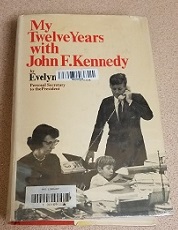
20180603_133855For twelve years Evelyn Lincoln served as John F. Kennedy’s devoted secretary.  Following Kennedy’s murder she penned a memoir of her time as his assistant under the title “My Twelve Years with John F. Kennedy”.  As his secretary she was a first hand witness to his daily routine and the decision making process behind some of the biggest moments in American history.  The relationship between Kennedy and Vice-President Lyndon Johnson has been documented in scores of books. But Lincoln’s account is a welcomed look into the unusual relationship between two polar opposite individuals.

It will be expected that Lincoln speaks fondly of her boss.  A good secretary becomes an extension of the person that is served listening to their gripes, anticipating their next move and putting the pieces back together again after a major fallout.  Lincoln is all of these but that is not the goal of this book.  This book is the record of what she saw and heard between John F. Kennedy and Lyndon Baines Johnson.   And what we learn in the book will either confirm what many felt all along or seem like the unsubstantiated ramblings of a secretary in mourning and bitter at the new Commander-In-Chief.   In her defense, never in the book does she show a personal vendetta against Johnson.  She only reports what she observed during her time with both of these legendary figures.

The book begins before Kennedy is elected to the presidency. In fact, in the early part of the book, he is about to declare his candidacy and gears up for what turned out to be a bitter campaign against Johnson for the Democratic nomination.  The animosity and sometimes vindictive methods employed during the primaries made it even more unusual that the two former enemies ended up working together in Washington.  But what is clear is that they were never “friends” in any sense of the word.  They established a cordial and professional working relationship that was sometimes fragile and tense.  Tragically it culminated with the events in Dallas.

Lincoln does shed light on two moments in JFK’s campaign that have been the subject of heavy debate for many years.   His decision to accept Johnson as the vice-president caused shock, suspicion and in some cases outrage for Johnson was not liked in many parts of the United States.  The often purported story is that Kennedy offered Johnson the nomination believing that he could help pull the southern states which resisted civil rights legislation and were wary of a Irish-Catholic nominee.  There is also the belief that Johnson blackmailed his way onto the ticket.  What the real reason was for Johnson’s inclusion we will never know for Kennedy took it with him to his grave.   But Lincoln does give us enough to see that Johnson’s version of the events leading up to his appointment as vice-president were way off base.

Towards the end of 1963 as Kennedy was preparing for his reelection campaign in 1964, he began to develop a series of agendas that he was determined to accomplish during a second term.   The biggest question surrounding his administration was if Johnson would remain on the ticket.   Scandals began to surround Johnson through affiliates with the most dangerous being the Bobby Baker debacle.  It has been said that Bobby Kennedy had been monitoring the cases building against Johnson who may have possibly landed in jail.  Apparently Jack had told him they would speak about it when he returned from Dallas.  What would have happened if he did return we will never know.  But what we do know from Lincoln’s journal is that before he left for Dallas he made it very clear exactly who would be his running mate for 1964.  Her admissions which we have no reason to doubt, serve as concrete statement on what was going through Kennedy’s mind in regards to the future of his administration.

The book is only 207 pages but within these pages is a good journal kept by an interesting woman who served one of the greatest political figures this world has ever seen.  And in his short time in office, he touched the lives of many including his own secretary who duly devoted twelve years of her life to him.

ASIN: B0006BUHQK

Dorothy Dandridge: A Biography-Donald Bogle

20180603_133915In 1955, Dorothy Dandridge was nominated for Best Leading Actress in a Leading Role for her performance in “Carmen Jones”.  Her nomination marked the first time an African-American woman had been considered for the prized recognition. Ten years later she was gone, having died of an accidental overdose of prescription pills on September 8, 1965.  She was forty-two years old.  Her rise and fall in Hollywood is one of the most tragic stories of the era and she joins the ranks of other fallen female greats such as Billie Holiday and Marilyn Monroe.  She left behind a legacy that is undeniable and she broke down barriers that other African-American female stars faced prior to her rise to stardom.  But for all of her success on the silver screen, Dandridge’s personal life as shown here in this definitive biography by Donald Bogle, shows a woman who struggled throughout her life with her childhood, motherhood, fame, success and love.  Her story is largely forgotten but at one point in America history she was one of Hollywood’s biggest actresses.

Today she is rarely mentioned and her name has faded into history.  Often eclipsed by the memories of Lena Horne, Diahann Carroll and the late Holiday,  she reached heights that few of her contemporaries could only dream of.  The pictures in the book and the descriptions given by those who knew her show prove that she truly was one of the most gorgeous women that the film industry had ever seen.  But hidden from the public light was the reality that an incredibly gifted artist was struggling with demons, some of which plague her up until her death.  Bogle did an exceptional job of capturing the essence of her life and remains biased throughout the book.  He is neither for against her but examines her life in its entirety.  Through his engaging writing style, he transports us back into time to an era where films featuring African-Americans and other minorities were considered to be “race films”.  A thoroughly segregated Hollywood in conjunction with prevailing attitudes at the time about race delegated African-American stars to stereotypical roles that gave them no recognition or opportunities to perfect their craft.  They were forced to suffer indignation on a recurrent basis and frequently barred from socializing in the very places in which they had just performed.   The plight of the African-American film and musical star during the era of Jim Crow policies cast the United States is a dreadful light in the eyes of the world.  Nonetheless it would be many years before the pioneering efforts of Dandridge and other stars paid off.  Today it is unfathomable to think that a performer cannot stay in the hotel in which they had just performed because of their skin color.  But for her and others that was the standard method of procedure.  The Last Frontier Hotel’s draining of its swimming pool to prevent Dandridge from swimming in it, is just one example of the extremes taken to keep segregation alive and heavily enforced.  But as her star rose and she gained famed, she began to possess the power to break down those barriers and she did so unapologetically.

She remain firmly committed to the cause of civil rights her whole life and despite the love she displayed for others, it was an area in which she struggled throughout her life.  And as we see in the book, he attempts at domestic happiness and motherhood are nothing short of heartbreaking.   Her failings and insecurities are explored in the book and the details about her childhood will shock many readers who are new to her story.   But the incidents, both positive and negative, are necessary in understanding exactly who Dorothy Jean Dandridge really was.  Bogle conducted extensive discussions with those who knew her including her late sister Vivian, friend Geri Branton and other Hollywood names.  Branton provides the bulk of the crucial parts of Dandridge’s life and stands out in the book as her closest supporter.

The book is an incredible account of the life of a fallen legend.  Her life was complex and cursed with a tragic fate.  But for those looking to learn the true story of Dorothy Dandridge, this is the place to begin.  So come along with Bogle and explore the life of one of Black America’s forgotten icons whose life was filled with fame, success, destitution, death and encounters with some of the biggest names in the 20th century film industry including, Otto Preminger, Phil Moore, Samuel Goldwyn, Peter Lawford, Harry Belafonte and the legendary Sammy Davis, Jr.  She is long gone but for a generation of older Americans, she lives on as the immortal Carmen Jones.  And for the younger generation of Americans, this is a place to learn about woman who transcended racial and gender lines to become a mythical figure in her own right.

ISBN-10: 1572972920
ISBN-13: 978-1572972926