
 I still remember the video footage taken during the live testimony of Lt. Col. Oliver North (Ret.), as Congress sought to unravel interconnected covert operations that revolved around Iran, Israel and Nicaragua. North appeared on television in full military dress, earing the sympathy and admiration of a large segment of American citizens. There were some who felt he should have been incarcerated and that his actions were a dishonor to the very uniform he had on. Regrettably, his testimony did little to help fully understand what had really taken place. And even my father who follows politics and news religiously did not fully understand what had taken place. What was clear, is that the administration of President Ronald Reagan (1911-2004) had engaged in questionable and possibly illegal activities that sent shockwaves of panic through Reagan’s cabinet and raised alarm bells on Capitol Hill. As more information came to light, the media began to call it the Iran-Contra scandal and even today, it is still known by that description. It remains one of the darkest moments of Reagan’s time in office. Author Malcolm Byrne revisits the Iran-Contra scandal to tell the full truth about how and why it developed, and the actions of a president abusing the powers of the Oval Office.
If you have decided to read this book, I am sure that there is a good chance that you are already familiar with the Iran-Contra scandal. But even if you are not, the story will still be of interest and easy to follow. The story begins by revisiting the events of October 5, 1986, when a C-123 plane carrying arms for the contras fighting the Sandinista government is shot down while over Nicaraguan airspace. Several days later, a revelation on Iranian television sent Washington in panic mode. Nearly everyone began to question the actions of Reagan and his cabinet. The full story was carefully hidden from the public through omissions and in some cases, deception. Here we have the whole account and Byrne take us on quite a ride as he peels back the layers of obfuscation employed by key officials close to the President.
Although prior knowledge of the events that gave way to the scandal is not necessary, I do believe that it will help if the reader has some prior knowledge of the political climate of Central America and the Middle East during the time period in which the scandal took place. In fact, the histories of Nicaragua, Honduras, Israel, El Salvador an Iran are all relevant to the information that Byrne is presenting to the reader. The fear of a communist expansion under the thumb of the Soviet Union, continued to shape U.S. foreign policy following World War II. The rise of left-leaning and popular figures across Latin America had caused Washington to pay close attention and subvert several governments through the Central Intelligence Agency. Central America became the next battle ground and as Byrne shows, Reagan intended to pull out all of the stops.
There are many acronyms in the book due to the complexity of Washington’s design with regards to intelligence and foreign policy. Several departments play a role in the story and Byrne keeps track of them all, keeping the story flowing smoothly. Chapters one through twelve alternate between Iran and Nicaragua. It was a good decision by the author, for it allows the reader to focus one part of the story before going to the next and then back again. The two tracks eventually merge but not before Byrne provides a ton of staggering and shocking information. When the tracks do merge, the book takes another turn as Reagan’s cabinet goes into damage control and the full weight of Congress comes down on his administration.
The hearings and testimony are summarized here so readers should not expect full transcripts but only snippets of the most critical statements. In fact, the section regarding the hearings and prosecutions by the Department of Justice do not make up a large portion of the book. The majority is devoted to the developments in Central American and the Middle East. But that in no way diminishes the importance of the later chapters and they are just as surprising as the rest of the book.
One section in the book that caught my attention was the discussion about Reagan’s health. Putting aside the attempted assassination in 1981, there were other health issues that arose during his presidency that caused many to question whether he was fit for office. His actions and later testimony provide evidence that the conditions he later suffered from, had began to manifest as early as the 1980s. Byrne does not give Reagan a pass because of this but is equally mystified at how he was able to function. He also makes a compelling point regarding Reagan’s mental state and his interactions with subordinates. It is certainly food for thought about the 40th President of the United States.
America has always said that it does not negotiate with terrorist. On the surface it sounds tough and gives off the impression that the United States can take as hardline of a stance as anyone else. However, the events described in this book, challenge that position and Byrne’s research shows that negotiation became as common as public denials. For many Americans, the scandal is an afterthought. Reagan died in 2004 and the suriving members from his cabinet who are still alive had faded out of the public light, well into their later years in age. However, I do believe that the story is still important in light of the recent events regarding the administration of Donald J. Trump. Impeachment and investigations are two words that give rise to fear and concern but the founding fathers knew early on that such a system of governing was needed if the United States would truly be a democracy. Future presidents may also want to read this book so that they too are never accused of abuse of power.
This account of the Iran-Contra scandal lays it all out for the reader to digest. It is an incredible and unnerving story about the very dark side of United States foreign policy. Highly recommended.
ISBN-10: 0700625909
ISBN-13: 978-0700625901
 Recently, I have become more interested in the Appalachia region in the Southern United States. What many of us have come to know as “coal country” is a region with a long story, often underrepresented in discussions about poverty and greed in America. The people of this region are sometimes the butt of jokes with images of “backwoods hillbillies” from the movie ‘Deliverance’ coming to mind. However, the true story of Appalachia and in particular the Cumberland region in Kentucky is an American tragedy with residual effects that continue to this day. The late Henry M. Caudill (1922-1990) looked into the lives of the miners and the region that have called home. And what he reveals in this book is sure to open the eyes to many and confirm for others, beliefs they have long held about coal country.
 I was browsing through recommendations on Amazon when this book caught my attention. As one would expect, the words Civil War stuck on the cover. However, the name LeRoy Wiley Gresham (1847-1865) did not sound familiar at all. My interest peaked and I decided to see why the book had earned a five star rating. And to say that it is a hidden gem would be an understatement. It is indeed special and the author did a remarkable job of putting it all together.
 In American folklore, there are two families whose names are recognized as being part of what is arguably the longest running feud to have ever taken place in the United States. The Hatfields and the McCoys have become ingrained in the American experience and the alleged feud between the two families has been re-told through films, documentaries, websites and books. In 2012, the History Channel released a multi-part miniseries about the feud starring Kevin Costner as William Anderson “Devil Anse” Hatfield (1839-1921) and the late Bill Paxton (1955-2017) as Randolph “Ran’l” McCoy (1825-1914). The series is highly rated but just how accurate was it? And were the Tug Valley in West Virginia and Pike County in Kentucky, really that deadly in the late 1800s? Thomas E. Dotson is a descendant of both families and here he rescues history and sets the record straight about what really did happen between the years of 1882 and 1888. And what he reveals will undoubtedly change the way you view the “feud” between the two famous families.
 America often has an uncomfortable relationship with its past. The dark moments in the founding of the nation are sometimes left out of history books and never discussed in conversation. Native Americans are either viewed with empathy or disgust, typically depending on the observer’s knowledge of history. Alcoholism, depression and economic instability have continued to plague Native American reservations, given as a token gesture by the United States Government. In Hollywood, they have often been presented as wild savages determined to murder Americans, only to be repelled by heroic soldiers and cowboys seeking to preserve the union. The reality however, is that there is much about the Native Americans of North America that remains largely unknown. In the State of New York where I reside, virtually nothing is taught about the Lenape Indians who owned what is today the Tri-State area, in addition to other vast territories. In the South, the once mighty Cherokee nation owned land, lived under their own rules and were content with life before the arrival of new nation, created following the independence of 13 colonies from British imperialism. Today the Cherokees are an afterthought for most, but at one time, they ruled large parts of what became the future United States of America. This is their story and that of the infamous “Trail of Tears”, that would permanently change the lives the Cherokee Indians.
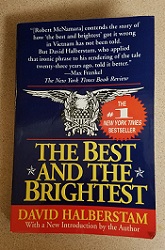 I have often wondered why my uncle and many other veterans that I have met, were sent to Vietnam. He and others never speak of the war, choosing instead to internalize their memories and feelings. But from the few things about being Vietnam that my uncle has told me, I cannot image what it was like to be fighting a war in a jungle 13,000 miles away from home. Today he is seventy-two years old and his memories of Vietnam are as sharp today as they were when he left the country to return home. And there is a part of him that still remains in Vietnam, never to leave its soil. He is one of five-hundred thousand Americans that served in a war that claimed fifty-eight thousand lives.
 Every summer, my parents make their annual visit to the Mashantucket Pequot Museum and Research Center in Ledyard, Connecticut to continue learning about the Pequot Indian tribe who lived in what is now the State of Connecticut. They are one of the many tribes that called North America home prior to the arrival of European settlers and the creation of the United States. Today, they can be found largely on reservations having been forced off of the only lands they knew to make way for a country that had liberated itself from British colonization. Far too often, their plight is ignored and history books have traditionally re-written the history of the foundation of the United States of America. This book by the late Dorris Alexander “Dee” Brown (1908-2002) challenges everything we thought we knew about our country and the scores of people often referred to simply as “the Indians”.
 When I think back on the history classes I attended in elementary school, high school and then college, I remember that it seemed as if it took forever to go through any topic. And that says a lot for someone like myself who has always loved the subject and still does. For most people, history is beyond mind-numbing and often revisits events in the past to which most people do not give a second thought. But as we are often reminded through history, we need to know our past in order to reach our future. In comparison to the history of Europe, Asia and other parts of the world, the United States is a very young nation that has been in existence less than three hundred years. Incredibly, in that short amount of time on the world stage, some of the most memorable events in modern history have taken place in North America and had reverberating effects across the planet. If we were to study American in its entirety, that would be a course that would last a couple of years at least. But what happens when you cram that history into a book that is three hundred nine pages long?
 On September 9, 1971, inmates at the Attica Correctional Facility in Attica, New York, staged a revolt in protest of the treatment they received by prison officials and the living conditions employed therein. Several days later, New York State Troopers regained control of the prison after approval from Governor Nelson Rockefeller (1908-1979). The siege had tragic consequences and ended with the deaths of nine hostages and twenty-nine inmates. The fallout from the retaking was swift and to this day the story of Attica is considered the worst prison uprising in American history. The riot caused sharp division among people with some believing in the inmates’ actions and others supporting the State of New York. In fact, among Rockefeller’s most ardent supporters was President Richard M. Nixon (1913-1994) who would himself resign in 1974 due to the Watergate scandal. The riot and its aftermath were so powerful that even Hollywood became interested and produced the television series Attica (1980) starring Morgan Freeman and Against the Wall (1994) starring Samuel L. Jackson (1948-) and Kyle MacLachlan (1959-). Both film productions earned award nominations and the stars in each film would go on to have successful careers in Hollywood. However, the questions always remain, how much did the producers get right, how much did they get wrong and how much did they leave out? Further, how much do we, the public know about one of New York State’s darkest days?

You must be logged in to post a comment.