
 During a trip back to New York from Miami this week, I was browsing the books at the terminal’s newsstand and came across this book by Anderson Cooper and his mother Gloria Vanderbilt. Like most Americans, I know Cooper from CNN and the years of journalism that he has provided to us. I was not aware of his mother’s story or that she is still going strong at ninety-three years of age. I decided to purchase the book and I am delighted to say this New York Times Bestseller was worth the investment. The title is quite self-explanatory but there is so much more in this book which is a collection of correspondence between Cooper and his mother. It takes place over a period of time and through electronic means. The story of their lives is fascinating and contains an interesting history of its own.
The beauty in this book is the newfound relations ship that develops between mother and son as they try to heal old wounds and find out who the other person really is. To say that I learned a significant amount of information about them would be an understatement. The Vanderbilt name is among the most famous in American history. At her age, she is direct link to the family’s storied past. Her memory of her family lineage at her age is astounding but also a testament to her longevity and ability to analyze herself. As Anderson throws the questions her way, she opens up extensively about the periods in her life and what they meant to her. Many years have passed since she has seen or heard the voices of her late Aunt Gertrude, Dodo, Naney and even her own mother. And all of the stars she was acquainted with as a young starstruck teenager on the west coast are deceased. Nonetheless, her memories of her time with Howard Hughes, Frank Sinatra, Sidney Lumet and her last husband Wyatt Cooper are enlightening and precious.
However, not all the story is happy and there are many tragic moments as well including the passing of her father, the death of Wyatt and the suicide of Anderson’s older Carter in July, 1988. In spite of the many deaths that have surrounded her throughout her life, Gloria does not fear it but provides an interesting look at what she knows could come for her at any time. Her ability to accept her mortality and live the most rewarding life that she can, is an example which we all should strive to follow. Some of us will live to the age of ninety-three and some of us will not. But it is not about the number of years we live but how we live them. That is a lesson which Gloria seeks to reinforce to the reader. I truly enjoyed her story but it is only part of the book. This is Anderson’s show too and he also opens up about his own life and struggles.
I found that I was able to relate to this story as I have a sibling who is also gay and went through a process of coming out to our mother. Like Gloria, my mother also had her feelings on sexuality that have softened over time. But in the beginning things were not always so easy and many rough patches existed that had to be paved over. Today my mother and brother have an even stronger relationship than they ever did. In reading Anderson’s story I saw my brother and the personal decisions he has been forced to make because of his orientation. But as the older brother, I have long realized that it is my job to reassure him and stand in his corner throughout thick and thin. The main difference however, is that my brother is still alive while Cooper’s brother died nearly thirty years ago. The death of Carter Cooper comes up towards the end of the book and is clearly a tough topic for both mother and son. I do not believe that either will ever completely heal from his death or the death of Wyatt Cooper, their father and Gloria’s last spouse. Wyatt reminds me of my own father in the way that he approached life which we see through Gloria’s words. His death in 1976 came far too soon and left many what-if questions. Mother and son touch on these questions but ultimately accept what is and focus on the time they still have left and that is the most touching part of the book. In fact, reading has made me appreciate both of my parents even more but especially my mother who also shares a unique bond with her son(s). If you are a fan of Anderson Cooper this is a must read.
ISBN-10: 0062454943
ISBN-13: 978-0062454942
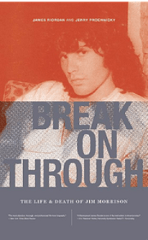 In death several musicians have become in a sense larger than life. Their recordings, writings and interviews become collector’s items catapulting them to legendary status. A cruel irony in life is that some of the greatest artist and performers to have graced a stage, died a young age before reaching their full potential. James Dean (1931-1955), Tupac Shakur (1971-1996), Janis Joplin (1943-1970), Jimi Hendrix (1942-1970) and Jim Morrison (1943-1971) are just a handful of names of talented individuals who rose to fame and were gone before thirty years of age. Morrison, with his band The Doors, had become a sex icon and the poster boy for the anti-establishment movement sweeping across the United States. His death on July 3, 1972 concluded a chaotic life that seemed to get even more bizarre as it continued. Eerily, Morrison joined the group of musicians who died at twenty-seven. Joplin, Hendrix and Brian James of The Rolling Stones all died at the age of twenty-seven. And Morrison’s long-term girlfriend Pamela Courson (1946-1974), also died at the age of twenty-seven. The dark coincidences highlights the fragility of life and its unpredictable nature for we are here one day and sometimes gone the next. In death, Morrison became an even bigger legend and still has millions of adoring fans across the globe. But for all of his wild antics on stage, some of which nearly resulted in his incarceration for an extended-stay, the real Morrison proved to be a mysterious and confusing character as evidenced by this informative and well-researched biography by James Riordan and Jerry Prochnicky.
 In this third volume, we catch up with Eleanor in 1939 as German Chancellor Adolf Hitler is making his presence felt in Europe and threatening to turn the continent into a German Reich. Her husband and president, Franklin, finds himself at odds over the growing German menace. ER is right by his side serving as both a voice of reason and cabinet adviser as FDR determines the position of the United States in regards to the looming crisis across the Atlantic. In this manner the book differs from
  Jazz music is as American as apple pie and fireworks on the 4th of July. Its popularity has resulted in jazz festivals around the world . The festival in Berlin is among the most popular in the world. Some of the greatest musicians in history made their names famous through their talents of the wide range of instruments that gave us the many great songs that have been studied and imitated to decades. Among these legendary artist is the late John Coltrane, who performed with the all time greats such as Miles Davis, Thelonious Monk and Charlie “Bird” Parker. Davis is still the best-selling artist in jazz history with his 1959 album
  On October 10, 2016, the Taj Mahal Casino in Atlantic City, New Jersey, closed its doors after 21 years in business and just hours after the second debate in the 2016 presidential race. The casino was the vision of Donald J. Trump that became a reality. At the time it opened, it was the largest casino in Atlantic City and rivaled the highlights of the Las Vegas Strip. Its closing closed another chapter in the sad history of Atlantic City, the coastal town that was once the gambling mecca of the east coast of the United States and home to many of the greatest boxing events during the 1980s. Today, the town is a remnant of its former self. Several well-known casinos closed years ago never to be replaced resulting in large sections of Atlantic City having no structures in place at all. The life that was once the backbone is now gone having been replaced by a feeling of dread and desertion. Only time will tell what will happen to the struggling city and it remains to be seen if the current president will do anything to help the place in which he earned and lost millions of dollars.
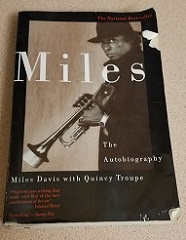 In July, 1992, my father purchased the album Doo Bop, the last studio album completed by the late Miles Dewey Davis, III. Through my father and uncles, I had been exposed to jazz music and knew the names of many of the greatest artists to ever perform. I grew to love the music and that has not changed to this day. In fact, I still listen to the album when I get in the mood to hear Miles’ songs. When he died on September 28, 1991, I remember my uncle and dad being devastated. Both he and my father were huge fans of Davis but were also aware of the chaotic life Davis had led. They would often spend hours discussion Miles, jazz and the other legends of the genre over wine, rum and cigars. When Miles he died he was less than 70 years of age and his death seemed surreal at the time. Today, many years after his death, his legacy lives on and his music continues to be study for inspiration and analysis. In 2016, the movie Miles Ahead starring Don Cheadle was released to select theaters to mixed reviews. I saw the film and thought that Cheadle captured Miles’ character quite well. There were points in the film where I had to remind myself that it was actually Cheadle on screen and not Davis himself. However, the film moves around too much and the story line fails to deliver. The result is a haphazard biopic that does not help the viewer to understand the life of one of jazz’s greatest musicians. Hollywood is always prone to taking liberties when making films and with on 90 minutes of film to work with, it would be quite challenging to capture all of his life on the silver screen. A saving grace is this autobiography which was written with the assistance of Quincy Troupe, who conducted extensive interviews with Davis and those who knew him. And the rest is one of the best autobiographies I have ever read. Miles is frank by nature and he holds nearly nothing back in the book regarding his life. His story is so engaging that I finished the book in only two days. Simply put, his story is quite the experience and we can be eternally grateful that he did tell his story before he died.
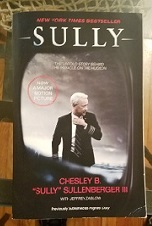 On January 15, 2009, US Airways Flight 1549, commanded by Captain Chesley B. “Sully” Sullenberger and first officer Jeffrey B. Skiles, made an emergency landing in New York City’s Hudson River. The successful landing and evacuation of all passengers and crew became known as the miracle on the Hudson. Sullenberger is now retired from US Airways but remains involved in the aviation industry. His efforts that day in conjunction with those of Skiles remain a classic example of the necessity of extensive training and extraordinary ability to focus on the issues at hand. Sullenberger has said that he does not consider himself a hero. In his mind, he was doing what a well-trained pilot was supposed to do; fly the plane and try to land it while preserving the lives of everyone on board. And on that day, that is exactly what happened. Prior to the incident, his name was largely unknown outside of US Airways. His face just another pilot that thousands of passengers walk past each day as they leave their flights. The men and women who travel the skies are rarely acknowledged for a job that requires tremendous sacrifice, patience and dedication. But just who is Chesley Sullenberger? And why is his story so amazing?

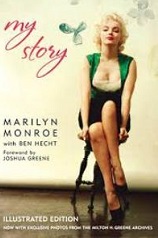 Marilyn Monroe remains to this day one of Hollywood’s biggest sex symbols. Her image continues to be promoted today through articles about her life, books, posters and even documentaries. When she died suddenly on August 5, 1962, she left behind millions of fans, a career and a film industry in which she was at the top of its list of stars. Her marriages and love affairs have been documented relentlessly and her sex appealed is desired by young men looking to be the next great sex symbol in Hollywood. But just who was the real Marilyn Monroe? When she died she was only thirty-six years of age, far too young to have written a complete autobiography or to have experienced all that life has to offer. However, prior to her death, she had begun to tell her life story to friend and business associate Milton Green. Green kept the manuscript along with thousands of photos he took of the late actress. His son Joshua, has preserved the images digitally restoring them in the process. When he found the manuscript he had it published into this short but revealing book about the early life of Norma Jean Mortenson.
 FREETHINKING BIBLIOPHILE
You must be logged in to post a comment.