Meyer Lansky: The Thinking Man’s Gangster – Robert Lacey

LanskyIn September 1971, reputed mobster Meyer Lansky (b. Maier Suchowljansky)(1902-1983) was denied Israeli citizenship by Dr. Yosef Burg after a careful review of the evidence presented to him. Prior to his ruling, he had consulted with Prime Minster Golda Meir (1898-1978) who proclaimed, “no Mafia in Israel”. Lansky was dejected and continued to seek out ways to live abroad beyond the reach of the U.S. Government. His next stop was South America but there he refused entry and accepted his fate as he returned to the United States. When he arrived at Miami International Airport, I am sure onlookers wondered what the commotion was regarding one man who stood about five feet four inches. The media dubbed him “the Mob’s Accountant” due to his uncanny ability to process figures in his head. And rumors have persisted that he once had three hundred million dollars hidden from investigators. The allegations are grandiose, but the truth is that Lansky was a figure of his era, nothing more and nothing less. Robert Lacey first published this book in 1991 under the title ‘Little Man: Meyer Lansky and the Gangster Life‘. It was republished in 2016 under the current title and includes an updated account by the author. It is by far, a definitive biography of the late Lansky.

Mob aficionados will know Lansky’s story and readers who have viewed ‘The Godfather Part II‘ (1974) will recognize the inspiration for the fictional character “Hyman Roth” which was based on the real-life Lansky. Lee Strasberg (1901-1982) nailed the role and as Lacey discusses in the book, Lansky contacted the actor following the film’s release to discuss the portrayal of himself on screen. Lansky must have been thrilled to serve as an inspiration for a character in a film but the belief that he was a larger-than-life mobster who bankrolled La Costra Nostra may be misleading. In fact, the real story, as presented here, shows a complicated life that was anything but glamorous. There is more than meets the eye. Two marriages, a son with special needs and emotionally dysfunctional children are only parts of the Lansky story which begins in Grodno, Belarus in 1902. Like his contemporaries, Lansky emigrated to the United States as a child and the family settled in New York City. Max Lansky (1879-1939) found a new life for his family in the Brownsville section of Brooklyn. I took notice of this part because the author touches on a part of the borough’s long forgotten history. In comparison to the Brownsville that exist today, known for a high crime rate and low income, the area was once a hotbed for Jewish immigrants. However, the story is just beginning and the move to the Lower East Side in Manhattan changed all their lives for good.

The section about Meyer’s childhood in Manhattan is key for it is here that he forms the alliances he would keep for decades with other immigrants, Italian and Jewish, who learned the way of the streets and the money to be made. The most famous of these friends are Charles “Lucky” Luciano (1896-1962) and Benjamin “Bugsy” Siegel (1906-1947). Lacey takes us back in time to the era of prohibition and crime fighting politicians such as former Governor Thomas E. Dewey (1902-1971) and former New York City Mayor Fiorello LaGuardia (1882-1947). Luciano fell victim to Dewey’s administration and was convicted on prostitution charges on June 7, 1936, and subsequently incarcerated. But his story was far from over. In fact, the United States Government would later need Luciano as the war effort heated up. And at the center of the events was Lansky himself. The covert operation and Lansky’s role are covered in the book and show that when it came to defeating the Axis powers, all avenues were open.

As his underworld life evolved, Lansky also became a family man, and that story is far more complicated and unglamorous than his criminal exploits. His two marriages and the three children he had with first wife Anna (1910-1984) provide some of the most emotional parts of the story. The family’s struggle is nothing short of heartbreaking and the private side of Lansky’s life stands in stark contrast to the public facade of the seasoned mogul who helped build casinos and fill the Mafia’s coffers. Lansky’s oldest son Buddy has a story of his own in the book and the trials and tribulations of father and son are difficult moments. Second son Paul and daughter Sandra are equally chaotic, and Sandra plays another role in the book that will shock readers. And throughout the story is the importance of Judaism and Lansky’s adherence to his faith. It can be argued that his life was anything but Jewish and one that no believer would subscribe to. But in his defense, he was one of hundreds of Jewish mobsters in the early 1900s. There is never a shortage of gangsters in America.

On New Year’s Eve, January 1959, Cuban President Fulgencio Batista (1901-1973) fled the country, evading capture by Fidel Castro (1926-2016) and his Revolutionary Army. For Lansky and other gangsters, the source of income Cuba had become was now over. The events of that night were fictionalized for the Godfather Part II and Lacey provides additional facts about Batista’s last flight from the island which I was unaware of. I also noticed that after Castro seizes power in Cuba, there are no further moves by Lansky that could be considered “big”. In fact, I saw the opposite. Aside from investments and miscellaneous sources of income, there is nothing in the book that alludes to him being a financial mogul with streams of hidden income. Even when Lansky moves to Florida later in the book, the belief that he had hundreds of millions of dollars in unclaimed income continued to haunt him. The stress from relentless investigations combined with his failing health only added to the tragedy his life slowly became. His second wife Teddy (1907-1997) stayed by his side, but also found herself under the prying eyes of the press. Her response to the press upon her return to Miami International Airport following Meyer’s failed attempt to establish residence in South America, was captured by television cameras and must be seen to be believed.

Despite the increased pressure by investigators, Lansky evaded prosecution for major crimes and that is one of the ironies in the book. If he was a criminal mastermind, he shrewdly kept himself out of long prison sentences. The reality I gleaned from the book is that Lansky was not the person he was portrayed to be. He did have dealings with mobsters and earned significant amounts of cash, but the only section in the book that shows extravagance is when he took his second wife Teddy on a first-class European vacation. Lansky did have income and the author provides details of his earnings as the story progresses, but the figures are well short of what would be expected from the “mob’s accountant”. Added to Lansky’s financial woes in Florida are the struggles each of his children had throughout their lives. This is a sobering reality in the story; Lansky could control hardened gangsters but struggled with his own kids. And what we see in the book about the Lansky home is all too familiar in mobster stories. Long nights out, weeks away from home and secrets of the streets combine to strain even the most committed marriages and bonds between a father and his children.

Lansky’s life in Miami during his final years closes out the story, but before it is over, the decline of the aging mobster plays out in the final act. Years of chain smoking and stress took their toll, and the decades-long health issues he endured came to a head. He dutifully walked Teddy’s dog Bruzzer but on the inside, his body was slowly breaking down. Readers will see the writing is on the wall and that Lansky does not have much time left. But when death comes for him, there are no last words in the form of a confession but instead Lansky affirmation that he was ready to go. He lived and died on code as the thinking man’s gangster. This is the legacy and tragedy of Meyer Lansky.

ASIN:‎ B01CZXARGG

The Far Side of Paradise: A Biography of F. Scott Fitzgerald – Arthur Mizener

fitzOn the morning of December 21, 1940, American writer Francis Scott Key Fitzgerald (1896-1940), better known as F. Scott Fitzgerald, was reviewing the Princeton Alumni Weekly when he felt discomfort in his chest before succumbing to a heart attack at the youthful age of forty-four. The author who had published The Great Gatsby and This Side of Paradise had struggled with his health in the years before his death. In the years following his untimely passing, his novels have gained popularity and Fitzgerald is considered one of the greatest writers of the twentieth century. In 2013, actor Leonardo DiCaprio starred in the Hollywood production of The Great Gatsby, which earned mixed reviews. Fitzgerald remains a literary icon, but I could have never imagined the turmoil that existed in his personal life. I saw this book in my recommendation list and was intrigued by the high ratings. Having finished the book, I can say that it was worth the purchase and revealed a side of the author that highlights the lines between genius, insanity, and tragedy.
This book was originally published in 1951, eleven years after Fitzgerald’s death but reading it on an electronic device removes the sense of time and the story flows as if it were written today. However, there are clues in the form of now outdated terms that set the time definitively. Mizener’s account is written beautifully and after revisiting Fitzgerald’s childhood spent between St. Paul, Minnesota, and New York City, we are introduced to the writer who made a name for himself in his shorty yet extraordinary life. And the person that emerges is a complicated figure in a complicated life. As the author points out, 

“There never was,” as Fitzgerald said in his Notebooks, “a good biography of a good novelist. There couldn’t be. He’s too many people if he’s any good.”

Thus, the search begins for the real F. Scott Fitzgerald. His friend and author Ernest Hemingway (1899-1961) provides his observations of Fitzgerald in the story as do several others. But surprisingly, it is Scott himself who provides an open window into his innermost thoughts due to the collection of materials he left behind. Like every great writer, he was both tormented and encouraged by his success. And he was not immune to the seduction of intoxicants. This is undoubtedly one of the darker aspects of the book in addition to the impact of his wife Zelda (1900-1948), whose story is equally as tragic as Fitzgerald’s but not as widely known. In fact, Mizener accurately points out that, 

“A good deal of injustice has certainly been done the Zelda of the twenties because she later went insane and it is difficult not to let the knowledge that she did so affect one’s view of what she was like before 1930.”

As I read the book, I could not help but to notice the stark contradiction between the successful writer known the public and the financially inept and abusive person under intoxicated. For all his success, he is always close to destitution throughout the story. And the tumultuous relationship between him and Zelda should not be overlooked. Fitzgerald comes across as Dr. Jekyll and Mr. Hyde, but he was aware of his insecurities and struggles. However, he could not overcome his demons and that theme forms the crux of the narrative. Regardless of whom he was interacting with, Fitzgerald could be his own worst enemy. And as can be seen in the book, his unpredictable nature and dark habits resulted in scandalous situations and the involvement of law enforcement. The story is not easy to read, and a forgotten victim is the couple’s daughter whose voice does not appear in the story. Paradoxically, Fitzgerald was devoted to her and his concern for her well-being despite his own fragile condition is heartwarming. 

Zelda plays a crucial role as his wife in the story, for better and worse. When her symptoms first appear, it is not clear why she is having issues, but the author slowly reveals her plight. And as their conditions deteriorated, they became co-dependent and continued to exist in a relationship that is nothing short of surreal. Readers will see the writing on the wall and following their decline is like waiting for a car wreck to happen. We know they will not come out of this the same way but to say that they had rough lives would be an understatement. They lived fast and died young but along the way, they also left their mark. Towards the end of the story, Zelda is removed from the story for reasons readers will discover and later in life, Fitzgerald became involved with gossip columnist Sheilah Graham (1904-1988). Their relationship was no less turbulent than his marriage with Zelda, as the story reveals. Sheilah’s appearance in the story is brief but she remained with Fitzgerald until the end. Despite their differences, she did have a positive influence over him. Ironically, at the time of his death, he had finally come to terms with the demons he had been fighting and repaired strained relationships. But the damage he had done to his body was extensive. Even Sheilah could not prevent the inevitable. 

Though the book is a biography, Mizener does discuss selected works of Fitzgerald’ and the back stories behind them. But he makes sure not to let the book become a critique of Fitzgerald’s work and keeps the focus on his life, and despite the tragedy playing out, there are bright moments in the book, and when not under giving in to his demons, Fitzgerald shines brightly in personality and creativity. Sadly, he did not think he would live to old age and in the end he was right. The warning signs had been there, but Fitzgerald lived on his own terms. The roaring twenties were a remarkable sight and for F. Scott Fitzgerald, some of the best times in his life. His story, as told by Arthur Mizener, is one of success, tragedy, self-sabotage, and the painful reality of addiction. The genius in him left us with books that have stood the test of time. But the insanity that became his life, resulted in him leaving the world before his time. After his death, Zelda has a rare moment of clarity about her late husband. Mizener relays the fitting quote, 

“Though she was ignorant of much of Fitzgerald’s life after 1934, Zelda was substantially right when she wrote, a few days after his death, “Scott was courageous and faithful to myself and Scottie and he was so devoted a friend that I am sure that he will be rewarded; and will be well remembered.”

More than seventy years later, he is still remembered. 

ASIN: B085WZXMKY

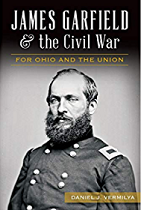
James Garfield & the Civil War: For Ohio and the Union -Daniel Vermilya

GarfiledOn September 19, 1881, United States President James A. Garfield (1831-1881) died in Elberon, New Jersey seventy-nine days after he was shot and mortally wounded by Charles J. Guiteau (1841-1882) on July 2, 1881. The assassin, motivated by a desire to see Chester A. Arthur (1829-1886) become president. Arthur did become the next president, but Guiteau was on borrowed time and was executed on July 30, 1882. Garfield was shot after two months in the White House and died in less than one year as president. His remarkably short tenure as president is often overlooked by history but there was far more to his story that has been taught in history classes. The story of his life is equally as intriguing as its ending and in this short but concise examination of the late president, Daniel Vermilya focuses on Garfield’s early life and his time as a Union officer in the American Civil War (1861-1865).

Admittedly, my knowledge of Garfield’s life was restricted to his assassination which placed him in the group of presidents cut down before their time. I was not aware of his service in the Union Army. It became clear as I started the book that I was in for a history lesson. Although the story is not a definitive biography of Garfield, there is enough information regarding his life to provide readers with an image of who he was behind the photographs. Of course, Garfield’s early life in Ohio is discussed and the tragic demise of his father Abram, whose death affected the family in profound ways. The story picks up in pace as Garfield matures, becoming a lawyer in 1861 and turning his focus to politics. But that all changed on April 12, 1861, when Confederate troops opened fired at Fort Sumter. To anyone paying attention, it was clear that the war was on. And Garfield could not have known that his life would change permanently.

The section about his Civil War experiences is the crux of the book and the author brings the past alive with a writing style that keeps the story moving at the right pace. Not once did I feel my attention waning and was in awe of the material becoming known to myself regarding Garfield’s service. I knew none of this as a student in school. Interesting, Garfield was one of several former Union officers who later became president. In fact, the author is far blunter in his assessment when he states:

“Without his service during the war, James Garfield never would have enjoyed the postwar political career that he did. His status as a leading Republican in the later 1860s and 1870s was based on his military record above all else.”

His posting, however, was in Ohio with the 42nd Infantry Regiment and the battles in which they engaged were among the war’s most important. All are discussed here showing the savagery of the war. Further, Garfield was a dedicated abolitionist and his commitment to slavery’s destruction is on full display. And fittingly, the late John Brown (1800-1859) enters the story in years preceding the war.

Regarding the war, the elephant in the room is undeniably the assassination of Abraham Lincoln (1809-1865) shortly before the war’s bloody conclusion. Garfield had admired Lincoln, but as Vermilya shows, the relationship was not without its issues. Garfield had a strong moral compass and anyone who did not measure up was subject to his judgment. Expectedly, Garfield is crushed by Lincoln’s death but satisfied at the South’s defeat. His time in the Union ended and the book moves on to his next destination in politics. I found myself surprised at Garfield’s accomplishments which occurred in a remarkably brief period. His belief in the destruction of slavery and change in America was not just rhetoric. The author summarizes this in explaining that:

“In the time he had, Garfield appointed African Americans to positions within the federal government, including making Frederick Douglass the recorder of deeds in Washington, D.C. Garfield believed strongly that a federally backed education system in the South would be the key to helping to lift Arican Americans from poverty and degradation.”

We can only wonder about the other things he would have done had he lived. He was far from the only Republican focused on civil rights and rebuilding the South but sadly, opportunities were lost through the failure of the Reconstruction Acts failed and rise of Jim Crow. Garfield would have been disappointed had he survived yet we can only guess as to what he would have been able to do following his time as president. However, his service record and time in the White House provide strong clues. If you are in search of an enjoyable book about the Civil War and the life of James A. Garfield, this is a good place to start.

ASIN:‎ B01A6061A

Donovan: America’s Master Spy – Richard Dunlop

DonovanIn December 1963, one month after the assassination of U.S. President John F. Kennedy (1917-1963), former President Harry S. Truman (1884-1972) authored an op-ed piece in the December 22, 1963, edition of the Washington Post about the Central Intelligence Agency (CIA) and its role in America. While reflecting on what the CIA had become, he stated “there is something about the way the CIA has been functioning that is casting a shadow over our historic position and I feel that we need to correct it.” The agency had been established through the National Security Act of 1947 which was intended to both centralize and simplify national defense and the intelligence apparatus. Five years before the National Security Act was signed into law, President Franklin D. Roosevelt (1882-1945) had also addressed the need for foreign intelligence and through Executive Order 9128 on July 13, 1942, he formally established the Office of Strategic Services (OSS). And to lead the new agency, he turned to former director of the Coordination of Information (COI), the legendary William Joseph “Wild Bill” Donovan (1883-1959). Though he was never director of the CIA, Donovan is credited as being the father of intelligence. Author Richard Dunlop examines Donovan’s life in this intriguing biography and historical account of how the intelligence community came to exist.
Dunlop provides a thorough discussion of Donovan’s early life in Buffalo, New York, and it soon becomes clear that Donovan is a person of action and determination. His life changes with the start of World War I, a conflict in which Donovan would play a direct role as soldier in the U.S. Army. His exploits on the battlefield and recognition by others give credence to the name Wild Bill as readers will learn. Following his service in the military, Donovan returned home to resume his law practice. But as he would see, fate had other ideas for his life. After being appointed U.S. Attorney for the Western District of New York, Donovan became a rising star in Washington circles as a prosecutor with an impeccable record. But unbeknownst to American citizens, a dark cloud was forming over Europe in the form of a young Austrian name Adolf Hitler (1889-1945) and his political party, the National Socialist German Workers’ Party (N.S.D.A.P.). As the Nazi threat became real, Washington realized that it needed information about Europe and the truth about its future. Donovan had foreseen things to come and as Dunlop explains:

“Donovan was convinced in the late 1920s that Poland would be the first European nation to be torn apart by the next war in Europe.”

As part of his duties as a traveling businessman, Donovan came face to face with individuals who later played crucial roles in World War II. One meeting in Berchtesgaden will catch the attention of readers. America did not formally enter the war until December 1941 but prior to that the White House was deeply concerned with the events unfolding. Roosevelt knew that America could not ignore the conflict. And this action he took as explained by Dunlop set the stage for the future of intelligence:

“On July 11, 1941, President Roosevelt established the Office of the Coordinator of Information (COI), making Donovan its chief. When the COI was transformed into the Office of Strategic Services (OSS) in 1942, Donovan continued as America’s wartime intelligence master.” 

On the surface it was just what America needed but as the author shows, not everyone was on board with a central agency. Readers with an affection for U.S. history will know that no one escaped the wrath of former Federal Bureau of Investigation (FBI) Director J. Edgar Hoover (1895-1972). The tension between the two is on full display and exemplifies Hoover’s thirst for power and obsession with controlling every aspect of gathering intelligence both domestically and abroad. To say that Hoover was displeased with the new intelligence agencies would be an understatement. And his threats to the Republican party that he would release damaging information is a move all too familiar. I found this passage by the author regarding events after the attack at Pearl Harbor to be a perfect example of the disdain held by Hoover towards any type of intelligence apparatus:

“On Tuesday, December 9, Roosevelt ordered Donovan to coordinate all North American intelligence agencies, including the recalcitrant FBI. The lesson of Pearl Harbor was fresh in his mind: The welter of conflicting intelligence agencies had contributed to the tragic unpreparedness in the Pacific. But when J. Edgar Hoover refused to cooperate with Donovan, Roosevelt backed off and on December 23 lamely reaffirmed the authority of the FBI.” 

Hoover could not control the war and regardless of his personal ambitions, the war mandated a different approach to intelligence and Donovan was the man Roosevelt and Truman turned to. Dunlop discusses the triumphs of the OSS but does not fall into the trap of going into too much detail. There is sufficient information to provide readers with an understanding of its importance without taking the story away from Donovan who is the central figure. And while leading the OSS, he provided the blueprint for the CIA. His agents came from all social classes and the OSS conducted missions that were unbelievable. Donovan was far ahead of his time and realized that intelligence was a vital component if America were to remain secure and powerful.

Following the defeat of Germany, Italy and Japan, the days of the OSS were numbered. However, Donovan knew that his work and that of others following his path was far from over. Truman knew that intelligence was vital and that there was no turning back. Another war was possible, and America could not afford to be caught off guard. Donovan’s importance cannot be overstated, and his legacy is captured with the author’s remark that:

“When on September 18, 1947, almost two years to the day after his OSS had been abolished, the Congress authorized the Central Intelligence Agency, Donovan was delighted. The new CIA in most important respects followed the blueprint that he had submitted to Franklin Roosevelt three years before.” 

In the wake of the dissolution of the OSS, Donovan returned to his private life but remained connected to the intelligence community, issuing warnings and advice. His statement about Vietnamese icon Ho Chih Minh (1890-1969) and his communist organization sent chills down my spine. When Donovan died on February 8, 1959, America lost one of its greatest intelligence assets. The former intelligence chief was far from perfect and the information about his personal life stands in contrast to his professional life. Tragedy, marital issues, and time away from home, took their toll on Donovan at times. But he never wavered in his service to America. This book by Dunlop is an important story that needed to be told about a man who helped change American history.

ASIN: B00I2G6RJM

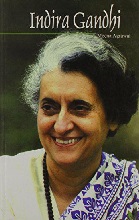
Indira Gandhi – Meena Agarwal

IndiraFew places are as fascinating as the nation of India. Its constitution officially recognizes twenty-two languages. English continues to serve as a critical method of communication in the business sector. Natives will proudly tell you that India is one of the most diverse countries in the world. Yet, despite the diversity, social issues such as poverty, corruption, and overpopulation are a reminder that India’s long struggle for success is far from over. Recently I was reading only and came across the name of Indira Gandhi (1917-1984), the former prime minister who was assassinated on October 31, 1984. Her father, Jawaharlal Nehru (1889-1964), served as the nation’s first prime minister after India gained its independence in 1947. Both father and daughter left behind legacies that remain with India to this day.
The death of Indira Gandhi sent shockwaves across the world. The nightly news broadcast covered the crime in detail and readers who are too young to remember the events can find videos on YouTube that provide a step back in time before breaking news went viral on the internet. As I thought of Indira Gandhi, I realized that my knowledge of her personal life needed an adjustment. I purchased this book by author Meena Agarwal who provides a good primer for an examination of the late leader’s life. There are more extensive books to be found about Gandhi, but this biography is just what is needed by readers searching for a concise account of the historic figure.

I did notice that the book is short at around one hundred seventy-six pages, which is short compared to most biographies of political leaders than can easily stretch to nearly one thousand pages. Nonetheless, the information contained in the book is more than sufficient to provide readers with a fair amount of knowledge about who Gandhi was and why she is important in India’s history. The recap of her early life was the right amount of information needed for the story we read. The author does not go into every minute detail but explains the crucial events in her life that changed India’s history and world history. The deaths of her mother Kamala Nehru (1889-1936) and prime minister Lal Bahadur Shastri (1904-1966) changed her life forever with the latter placing her in the position to become India’s first and only female prime minister.

Gandhi’s time in office was not perfect by any means. Though she was progressive in her thinking, there were mistakes along the way. But what I found is that she genuinely loved India and despite the mounting opposition to her administration, she continued to move forward when possible. But as the book progresses, it becomes clear that the opposition is not only growing but becoming more extreme. And their rage culminated with the events at the Golden Temple, the holiest site in Amritsar, Punjab, for followers of the Sikh faith.

Between June 1 and June 10, 1984, Indian security forces conducted Operation Blue Start to remove Damdami Taksal, Jarnail Singh Bhindranwale, and their followers from the buildings of the Golden Temple. The operation was successful but in the eyes of devout Sikhs, Gandhi had committed a mortal sin. She was not oblivious to the tensions caused by the mission and sought to soothe them. But the seed had been planted and her opponents began to plot her demise. The author revisits the events surrounding Operation Blue Star and the time leading up to October 31, 1984, Gandhi’s last day on earth. The murder and its aftermath as discussed but she does not go into extensive detail about the legal proceedings and results. One assassin was killed immediately after Gandhi’s murder, thus escaping the justice system.

Following the assassination, the story winds down but the author is far from done. She pays homage to Gandhi by including quotes and short statements which show her devotion to India. Some might say she was ahead of time and others may say she was taken before her time. I would argue that both are fair assessments. Indira Gandhi survived heartache on multiple occasions. The losses of her mother Kamala, husband Feroze Gandhi (1912-1960), and son Sanjay Gandhi (1946-1980), were always with her as reminders of the unexpected twists and turns that come in life. She will forever be remembered as a trailblazing woman in world politics. And as India continues to examine itself to improve, Gandhi’s legacy is a reminder of what was and what is possible moving forward.

“The meaning of independence is not only to have one’s own government, but its true meaning is that we should be able to take decisions ourselves. These decisions may be wrong, but they should be our decisions, they should be the decisions of India” – Indira Gandhi

ASIN ‏ : ‎ B06W55L1ZV

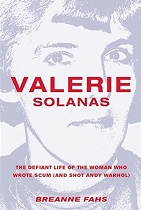
Valerie Solanas: The Defiant Life of the Woman Who Wrote Scum (and Shot Andy Warhol) – Breanne Fahs

SolanisOn June 3, 1968, artist, and film director Andy Warhol (1928-1987) was shot and severely wounded as he talked on the telephone in his office located at 33 Union Square West in Manhattan. He was rushed to the hospital and declared clinically dead by doctors before being resuscitated. He underwent grueling surgeries that left a myriad of scars across his torso and required him to wear a surgical corset for the remainder of his life. Hours after the shooting, a young woman walked up to a police officer in Times Square, handed over her weapons and confessed to shooting Warhol. She was arrested and booked for the crime. The public soon learned the name of Valerie Solanas (1936-1988). Today she is best remembered as the woman who shot Andy Warhol. Her actions were horrific and nearly took Warhol’s life, however her story is not as widely known. Breanne Fahs decided to change that and find out the truth about Solanas’ turbulent life. This biography explores the life of Solanas, her relevance to the radical feminist movement and her descent into anarchy after shooting one of the biggest pop icons in history.
I must point out that the book is not heavily focused on the Warhol shooting or on the artist himself. Readers who are learning about Warhol for the first time will find a wealth of information in Bob Colacello’s “Holy Terror: Andy Warhol Close Up“. There, Colacello does discuss the shooting and its aftermath but also provides an invaluable glimpse into the private side of Warhol. The author here discusses the shooting as expected but does not let it consume the book. In fact, the shooting is only part of the story, and we quickly learn that Solanas’ life was more chaotic and mysterious than one might expect. It is all on display here. Readers who are fans of Warhol may find this book difficult to read and wonder why anyone cares about her life. I struggled with this question too but decided to read the book and learn who she was and what propelled her to commit such a heinous crime. I received more than I bargained for.

Valerie Solanas is tragedy herself and I could not find one word to describe her. Her mental state is both well-known and well-documented but surprisingly she was also a college graduate and known to be highly intelligent. It has been said that there is a fine line between genius and insanity.  Her belief in radical feminism is also on display and culminates with the publication of the SCUM manifesto. The Society for Cutting up Men (SCUM) became Solanas’ crown jewel and part of her legacy. But her statements about the male species and desire for an all-female society have all the markings of fanaticism. And while she was moving forward with her manifesto, she was also coming apart at the seams, beginning a downward spiral that led her to shoot Warhol. Following her arrest, the need arose for legal counsel, yet her crime was so horrific that even hardened feminists second guessed supporting her and Valerie soon found herself persona non grata within the movement she believed in. The struggle over the moral issues at play are discussed in the book and readers may find themselves angered by the support that Solanas did receive. As my dad has always said “the 60s were a crazy time”.

I found myself saddened and surprised at what Fahs discovered regarding Solanas’ early life. Clues to her actions as an adult are in abundance and no one should have been surprised that she committed an act of violence. Years after shooting Warhol, she gained her freedom but would never have a normal life. And what we witness in the story, is the dark side to mental illness. I warn readers that her final descent into mental instability is disheartening. And her final days in San Francisco, California serve as the final curtain on a performance that was horrific and earth shattering.

Despite her brilliance, Valerie ensured that her legacy would be the attempted murderer of Andy Warhol. She was a gifted writer and aspiring filmmaker, but she could not overcome her demons and the mental illness that prevented her from living a stable and productive life. In fifty-two years, she authored a book, worked with a pop-culture icon, and even became a mother of two.  Her adult years would be consumed by a nomadic lifestyle in and out of homelessness.  However, she managed to keep moving until time was no longer on her side. To this day, Andy Warhol is a topic of conversation, and his art remains on display in Manhattan galleries. But if we discuss Warhol, we also must discuss Valerie Solanas. Thirty-three years have passed since her death, yet her actions and writings will live forever in infamy but also as part of American history. This is the definitive account of Valerie Solanas’ life and a time in America when social change was taking the United States into unchartered waters.

“Valerie’s truth was lost to the world of mental health diagnoses, treatment, imprisonment, abuse, and ultimately, descent into the intensifying paralysis of paranoia and self-destruction.” 

ASIN:‎ B00IWGQAG2

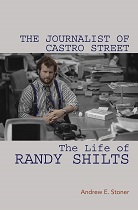
The Journalist of Castro Street: The Life of Randy Shilts – Andrew E. Stoner

shiltsThe first time I watched the HBO film “And the Band Played On“, I found myself speechless after it had finished. The AIDS crisis had grown exponentially and the invisible enemy that was originally thought to be a “gay disease” had shown the world that it did not discriminate. The HIV virus that can develop into AIDS spread fast and furiously, claiming the lives of people no one would have expected to succumb to it. Among those figures were movie star Rock Hudson (1925-1985), tennis great Arthur Ashe (1943-1993) and music legend Freddy Mercury (1946-1991). And no one can forget the story of teenager Ryan White (1971-1990), whose experience captivated America. I personally will never forget the announcement on national television by former NBA star Ervin “Magic” Johnson that he had tested positive for HIV. The HBO film was a success and the adaptation of the book by journalist Randy Shilts (1951-1994) for the silver screen has continued to honor his legacy decades after his death. Prior to writing “the Band” as it is called in this biography, Shilts had also written “The Mayor of Castro Street” about the life of the late San Francisco City Supervisor and gay rights activist Harvey Milk (1930-1978). Having read both books, I instinctively knew that this biography of Shilts was a book that I needed to read.

Admittedly, there was much about Shilts’s life that I did know prior to reading this book. I was aware that he had succumbed to AIDS. But his personal life still held an aura of mystery. This book removes the mystique and peels back the layers to Shilts’s short but incredible life that began in Davenport, Iowa and ended in Guerneville, California. At the time of his death, Shilts was only forty-two years old and had authored his final book titled “Conduct Unbecoming”, about the experience of LGBT personnel in the military. Here, author Andrew Stoner takes us back to Aurora, Illinois where we are given an inside look into the home of Bud and Norma Shilts who raised six sons. At first the story feels like a typical mid-western account. We soon learn that the Shilts household has its problems that would affect everyone within.

It is evident early in the story that Randy is “different” from his siblings. But he was able to maintain relationships with them to varying degrees. It was here that I learned the story of all six sons for the first time and what the author reveals is interesting and mystifying. In fact, readers may find themselves puzzled as the story of brother Ronald Shilts is told. The boys’ parents also have their own demons to confront but it is a story that we have seen many times before. But despite the issues at home, Shilts never wavered in his love towards them and in later years comes to understand them in separate ways. But I do believe his childhood experiences explain in part why he left home in search of acceptance. Ironically, he later finds acceptance from one person I did not expect. As Shilts gets older, his life takes unexpected turns and when he lands in San Francisco, the story quickly picks up in pace. I do not believe that he had any idea how San Francisco would change his life and American history.

Shilts soon finds himself working for the San Francisco Chronicle, writing about issues in the gay community of which he is a part. As I read this section of the book, I felt as if I were transplanted back in time to Castro Street as Harvey Milk and others were challenging the establishment emboldened by the actions of anti-LGBT activist Anita Bryant. Shilts is a first-hand witness and covered the issues extensively while at the same time struggling to confront his own demons and vices that threaten to derail his life and career. The author left no stone unturned and allows us to see the battle in private that Shilts was waging against himself. Happiness became a lost item in his life as one challenge after another presented itself. And lurking in the shadows was a virus that would leave death and devastation in its wake as it ravaged communities and exposed the dark side of politics and the health care industry.

In some ways this biography rivals the story told in “the Band”. In particular, the complicated situation Shilts found himself in must have been difficult and emotionally draining. As the issue of the bath houses comes to a boiling point, Shilts nearly becomes an enemy of the state in the LGBT community. Readers will find his interactions with both Harvey Milk and former California State Senator John V. Briggs (1930-2020) highly interesting. The AIDS epidemic continues to gain speed and it becomes clear that it is a threat no one had seen before. Shilts eventually makes the decision to author the book that catapulted him into the national spotlight but the path to complete was anything but simple. Further, the author provides an interesting assessment of the patient zero origin and the truth about Gaëtan Dugas (1953-1984), the Air Canada flight attendant who was demonized and accused of intentionally spreading HIV. In October 2016, news reports surfaced that Dugas did not spread HIV to the United States. However, at the time of Shilts’s work on the book, the flight attendant was believed to be the main person responsible for the destruction in San Francisco’s gay community. Shilts did not live to see Dugas vindicated but I believe that if he had lived, he would have regretted the turmoil press reports caused the Canadian until his death on March 30, 1984.

Shilts’s masterpiece did have its flaws but has stood the test of the time as a literary classic. But the HIV virus spared no one, not even Shilts himself. Exactly when he learned he had HIV is lost to history but as the virus progresses and develops into AIDS, his life becomes a race against the clock. His decline and realization that he cannot escape his fate spurs him to author his final book. If you have read other books that describe death from AIDS, you know that this story will not be easy to finish. The information presented about the final years of his life as he struggled with his health and the raging AIDS crisis will remind older readers about a time in history when no one knew how to interact with someone who had AIDS yet many of us knew someone who had contracted HIV. Today the virus that causes AIDS is no longer a death sentence but in the 1980s, the diagnosis of Kaposi sarcoma and a positive HIV test result meant a trip to the grave as doctors struggled to develop medication to combat the growing menace. If Shilts were alive, he would have the benefit of modern medicine and the ability to live a full life. He is gone but his work will never be forgotten. And I am glad that I decided to read his life story which has left me with a better understanding of what inspired him to author the classics that continue to give knowledge and wisdom to new readers. This is a good look at the life of Randy Shilts.

ASIN: B07SHLKGZ1

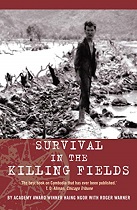
Survival in the Killing Fields – Haing S. Ngor

ngorOn March 25, 1985, the 57th Academy Awards ceremony was held at the Dorothy Chandler Pavilion, Los Angeles. During the ceremony, the category of best supporting actor was called, and the winner was Haing S. Ngor (1940-1996), a doctor born and raised in Cambodia, who had survived the Khmer Rouge dictatorship under the notorious Pol Pot (1925-1998). Ngor had starred as Cambodian journalist Dith Pran (1942-2008) in the 1984 film The Killing Fields starring Sam Waterston, John Malkovich, and Craig T. Nelson. The movie is tough to watch due to its sensitive subject matter but also an important work of art that captured a time in world history when a revolution nearly destroyed an entire nation permanently.
I was familiar with the Khmer Rouge before starting the book and I have seen the film more than once. I have also read Loung Ung’s First They Killed My Father, a gripping account of life under the Khmer Rouge. Her story was adapted for the big screen and in 2017, Netflix released the film of the same name directed by Angelina Jolie. Though there are some modifications to the story in the film, it is follows the book fairly closely and shows how Cambodian society was turned upside down during the tyranny of the Khmer Rouge. Ngor is even more blunt in how life changed for Cambodians:

“The truth was that under the communists the country was much worse off than it had ever been during my lifetime. We had no electricity. No clocks or automobiles. No modern medicines. No schools. No religious worship. Very little food. And we lived in constant fear of the soldiers.”

The book begins with Ngor remembering his early life and fragile relationship with his father. A volatile temper and determination to resist anything he felt was unfair, resulted in Ngor going through a series of inconvenient situations, including one with his father that placed their relationship under great strain. However, he eventually graduates from medical school and begins to practice medicine. Life as a doctor is good and at home, his wife Huoy performs the traditional duties of a wife in Cambodian society. On April 17, 1975, their lives were changed permanently when Pol Pot and his revolutionaries seized control of Cambodia under the guise of rebuilding society. Millions of Cambodians had no idea what would come next as the extremists dismantled society piece by piece. To give the reader an idea of how extreme their ideloogy was, Ngor explains that:

“The Khmer Rouge wanted a complete change of society, from top to bottom. Gone was everything that had governed our lives in the old times. Lon Nol was gone, airlifted to America before the fall; Sihanouk was gone, his fate a mystery. The monks were gone.” 

Following the takeover, families were uprooted and forced to move, typically to distant parts of the country to engage in heavy manual labor. Famine, inhumane treatment, and lack of crucial resources gave rise to disease, hunger, and death in work camps across the country. Ngor himself suffered illness on more than one occasion as he explains in the book. Had it not been for his medical training which he kept secret for reasons also disclosed in the book, he surely would have perished. The aid of his wife Huoy was invaluable and she served as his guardian angel on more than one occasion. But her fate and that of those around them, are among the difficult moments in the book. And when not facing death from hunger or disease, workers were reminded through vicious and bloodthirsty guards that Angkar was  watching. This system of surveillance gave men and women incentive to spy on each other and tell what they saw, even if it meant death to those accused. Ngor becomes a first-hand witness to the brutal system of torture that Angkar notoriously used to break the spirit of those needing “reformation”.

As time progressed, cracks in the surface began to show and Ngor realizes that the regime is slowly falling apart. The Khmer Rouge’s idea of transforming society was a complete failure and in its attempt to flex its muscle, it had angered the North Vietnamese Government which soon made it a goal to deal with Cambodia. In April 1979, the Vietnamese invaded and put an end to the reign of the Khmer Rouge. But for Ngor and millions of his fellow citizens, the occupation by Vietnam did not end their ordeal overnight. Cambodia had been freed of one communist government only to be replaced by another. Those who were able realized the only option was to cross the border into Thailand. The journey was not easy and bandits along the way were just as ruthless as the Khmer Rouge if not worse at times. But in Thailand, the full weight of his ordeal comes crashing down when he reflects that:

“By 1979 Cambodia was utterly destroyed. Next door in Thailand were paved roads, beautiful temples and more rice than the people could eat. As a refugee, the more I saw of Thailand, the angrier I became. It was the anger of a man who finds out he has been lied to all his life.” 

After arriving in Thailand, Ngor slowly puts his life together and through a series of chance encounters, he befriends John Crowley of the Joint Volunteer Agency who paves the way for his next journey to the United States where he is joined by his adopted niece Sophia. His entry into America was rough at first but it is clear from the start that in comparison to the Cambodia he had left behind, America was a brand new and welcomed experience. And luck was on his side again when he was scouted and picked to star in the Killing Fields. His performance and win at the Oscars transformed Ngor into a celebrity but the experiences in Cambodia remained fresh in his mind and a heavy burden to bear. Ngor never ceased to labor on behalf of those still in Cambodia who never wanted to see another Khmer Rouge takeover. IN spite of his fame and success, Ngor remained haunted by what he saw and experienced. He reminds the reader that the Khmer Rouge destroyed nearly every part of Cambodian society. And I believe that this sombering statement bythe author sums up the experiences of those held under the iron grip of the Khmer Rouge:

“The Cambodian holocaust ripped through our lives, tossing us randomly, leaving none of us the way we were. You can blame who you want, the outside powers for interfering, or our own internal flaws like corruption and kum, but when the talking is over we still do not know why it had to happen. The country is still in ruins, millions have died and those of us who survived are not done with our grieving.”  

The book closes with more reflection by Ngor of Cambodia and his life in America. By this time, Sophia had moved out and the two had not spoken. In the epilogue, we learn more of their relationship and future interactions. Also, more information is provided about Ngor’s return to Cambodia, his business dealings and difficulties in life while living in Los Angeles. After finishing Ngor’s heartbreaking account of his life, readers will need to prepare for another difficult part in the book: Ngor’s final days.

On February 25, 1996, Ngor was returning home when he drove past three Asian street gang members. The trio was high on crack cocaine and saw him as their next target to score more cash. It is believed that after asking for his money and other valuables, the thieves also wanted a chain he wore which contained a locket holding a picture of his late wife Huoy. Ngor undoubtedly would have refused, and readers will understand why after finishing his story. Prosecutors stated that shots were fired and Ngor fell to the pavement gasping for air. He died on the scene at the age of fifty-five. It should be noted that the killers did not take Ngor’s car or money, leading people to believe that the killing was related to his past in Cambodia. It is difficult to say but there is one clue provided in the epilogue related to the political climate in Cambodia at the time that might explain who would have wanted him dead. We may never know the real motive for his death, but the shooter was sentenced to life in prison and his accomplices each received a sentence of twenty-five years to life.

In the future when I watch The Killing Fields again, I will now have a deeper appreciation for Ngor’s performance. I wish I had known more about him upon viewing the film for the first time. However, my lack of knowledge regarding his personal life does not detract from the viewing experience. The film is haunting as it should be to show viewers the danger of poisonous rhetoric. Voltaire had it right when he wrote that “any one who has the power to make you believe absurdities has the power to make you commit injustices“. Haing S. Ngor was witness to one of history’s greatest crimes and lived to tell the tale of Cambodia’s darkest days. And even today, this book can server as reminder of the dangers that come with extremism and importance of addressing extreme ideology before it is too late.

ASIN ‏ : ‎ B019NFEM42

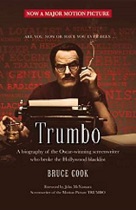
Trumbo: A Biography of the Oscar-Winning Screenwriter Who Broke the Hollywood Blacklist – Bruce Cook

Trumbo2On March 9, 1954, CBS journalist Edward R. Murrow (1908-1965) prepared for a scheduled broadcast of the television program “See it Now“.   In that episode he confronted the growing menace of the witch hunt for suspected communists in America. During the show, he stated that “no one man can terrorize a whole nation unless we are all his accomplices”.  Viewers were aware that he was referring to Sen. Joseph McCarthy (1908-1957), whose hunt for communists had destroyed countless lives and reputations. Anyone even suspected of having communist affiliation was surveilled and, in some cases, forced to testify in front of the House Un-American Activities Committee.   One witness was the screenwriter James Dalton Trumbo (1905-1976) who was blacklisted for his political beliefs and affiliations.  The blacklisting of suspected leftist ended decades ago but Trumbo has remained forgotten, but during his era, he was one of the most sought-after screenwriters in Hollywood.  In 2015, the biopic Trumbo was released with actor Bryan Cranston in the lead role.  The film received high reviews and earned Cranston an Academy Award.  What may surprise some is that one source of information for the movie is this biography of Trumbo written by Bruce Cook (1932-2003).   The book was originally published in 1977 but has been re-published with a foreword by screenwriter John McNamara.

I have not seen the film and did not know what to expect when starting this book.  That was a good thing as it allowed me read Cook’s story without any pre-conceived ideas about who Trumbo was.  My ignorance of his contributions to the silver screen speaks volumes about his ordeal which is contained in the pages of this well-written and treasured biography.  Cook sat down with Trumbo towards the end of the writer’s life as he was battling lung cancer.  However, the book contains not just Trumbo’s words but is filled with interviews of those who knew him best, including his widow Cleo Trumbo (1916-2009).  Through their words, the personal life of Dalton Trumbo takes shape.  The late painter Charles White (1918-1979) talked with Cook and had this to say about his old friend:

“There are only two ways to relate to Dalton. You either love him or you hate him. Picasso is like that. Chaplin is, too. There are people in Hollywood, a lot of them, who hate Dalton.”

Trumbo’s life was anything but orthodox.  His childhood is revisited through the memories of siblings and friends.   His parents Orus (1876-1926) and Maud Trumbo (1885-1967) are pivotal figures in the story, and each influenced young Dalton.  But Maud remained a crucial figure in his life until her death at the age of eighty-three.  Orus exits the story early due to a series of events that clearly affected his son Dalton and his daughters.  However, what Orus could not have known when he moved the family from Colorado to California, was that Dalton would find a place in an industry most people can only dream of.  Some might argue that Trumbo was made for Hollywood and as Cook explains, his entry into screenwriting was not entirely by chance.  In fact, what I learned about Trumbo’s early life make his entry into the film industry more understandable.  But that is not to say that there were not obstacles along the way.   What can be seen in the book is that the young Trumbo was quite the character and through anecdotes and research, the incredible tale is revealed with fitting detail.

The crux of the book is unquestionably the Hollywood blacklist.  Cook goes into the matter but not simply to re-hash what has already been explained elsewhere but to focus on Trumbo’s actions and why he took the positions that he did.  Trumbo could have chosen not to associate with leftists and maintain his place among the Hollywood elite, at least publicly.  But he chose the path that was right for him, and never wavered in his beliefs.   And as his widow Cleo tells cook, Trumbo never gave up once he had an idea in his mind.  Yes, despite the harsh criticism and blacklisting by Hollywood, Trumbo was not an extremist by any means.  He was driven for sure, but not an anarchist determined to rage against the machine.   However, he was a firm believer in freedom of expression and constitutional rights. And to reinforce that image of Trumbo, Cook includes snippets of his testimony before the House Un-American Activities Committee (“HUAC”) and parts of a letter he wrote to a friend who had taken issue with a statement he made to the media.  Prior witness testimony to the HUAC had set the stage for a showdown when Trumbo made his appearance and Cook explains that:

“Except for Lawson, Dalton Trumbo was probably the Committee’s least cooperative and most “unfriendly” witness. He came to the stand on October 28, 1947, at ten-thirty A.M., just one day after Lawson had caused such an uproar in the caucus room. Trumbo was met by hostility from Chairman J. Parnell Thomas, and he gave as good as he got.” 

His statements and refusal to answer various questions resulted in a contempt of Congress conviction.  Trumbo served his time at the federal prison in Ashland, Kentucky and upon his release, resumed his career as one of Hollywood’s most gifted writers.  The blacklisting of public figures was still in full force and Trumbo resorted to slick maneuvers and loopholes to continue screenwriting.   Some readers may be surprised to learn of Trumbo’s extensive involvement in several blockbuster films that are considered all-time greats.  Frankly, Trumbo was all over the place lending his talent to a respectable number of filmmakers who needed the expertise of the master.  It is a shame that Trumbo was prohibited from openly working in Hollywood when he had not committed any punishable offense prior to his congressional appearance.  But the “red scare” was in full force, and it did not take much to see a career ruined completely.

Eventually the blacklisting crumbles and those who once could not find work openly in Hollywood begin to resurface and move on with their lives and careers.  For Trumbo, recognition for his talents would take many years to become legacy.  But this book and the biopic have vindicated him as a brilliant screenwriter who suffered immensely for seeing things a separate way.  His story is a reminder of the dangers that come with baseless rumors and unfounded persecution.  Hollywood had a mend to make when it came to the blacklist, and it did right some wrongs.  As the book closes, Cook leaves us with this fitting note:

“But at last they did. In a kind of collective and symbolic act of contrition, the officers and board of governors of the Academy of Motion Picture Arts and Sciences on May 5, 1975, awarded replica number 1665 of the “copyrighted statuette, commonly known as ‘Oscar,’ as an Award for the Motion Picture Story—The Brave One (1956).” It has Dalton Trumbo’s name on it. That made it official: the blacklist, now acknowledged, was behind them all. Trumbo had done his job. He died a little over a year later on September 10, 1976.” 

If you want to know more about the life of Dalton Trumbo, this is a good place to start.

ASIN:‎ B00US1STWC

Catching the Wind: Edward Kennedy and the Liberal Hour, 1932-1975 – Neal Gabler

GablerWhen most of us hear the word “Kennedy” we immediately think of President John F. Kennedy (1917-1963) and former Attorney General Robert F. Kennedy (1925-1968).  Although he was in office only for one thousand days, John F. Kennedy set into motion numerous plans, many of which became reality during the administration of his successor Lyndon B. Johnson (1908-1973).  Kennedy was a gifted orator and skilled politician but struggled to move legislation through Congress.  Johnson lacked the flair and polish of the Kennedys, but he was a master politician and he excelled in the one area that is crucial to presidential success: the Senate.   The Kennedys knew that to move the Senate, the old guard would have to be removed one by one.  And do that meant putting younger senators in office with moderate and liberal views.  As part of this plan, the youngest of the Kennedy clan, Edward M. Kennedy (1932-2009) followed his brothers into politics and made the Senate his home.  And though he never became president or even vice-president, Edward M. Kennedy or “Teddy” helped changed the course of American history during the forty-seven years he served in the U.S. Senate.  In this first volume of a two-part biography, author Neal Gabler explores Edward Kennedy’s life from his birth in 1932 until the year 1975. 

I do warn readers that the book is a behemoth and not light reading. However, the author’s writing style keeps the narrative flowing smoothly and it never feels like a standard delivery of biographical facts.  Instead, Gabler makes the book feel like a journey and in many aspects, it is, but the journey of Edward Kennedy from an aspiring athlete to a U.S. Senator who would have a profound impact on crucial legislation.  And while there is a wealth of interesting information about Kennedy himself, the author takes us back in time to an era when America was undergoing significant social change.  The early part of the book rightly focuses on the Kennedy household and the dynamics as play between parents Joseph P. Kennedy, Sr. (1888-1968), Rose F. Kennedy (1890-1995) and their nine children.  Readers who are looking for a book that provides a good analysis of the Kennedy family will find this to be what they are searching for.  True, it is Teddy’s story but without telling the Kennedy story, there is no way to fully recall his life.  Behind the cameras, speeches and glamour, the Kennedys had their issues like thousands of other families.  And that part of the story is why the book is so good. Through Gabler’s words, they become more relatable as they go through trials, tribulations, and tragic deaths of siblings.  Behind the money, there was an enormous amount of grief, insecurities, and family secrets.  Teddy comes of age and his life would a mix of many things known all too well to the Kennedy family. 

Kennedy was the youngest of the family but in time he became one of the most important. His early life is interesting and Gabler left no stone unturned.  Some of the information is widely known but there are some tidbits of information that even season readers will appreciate. Inevitably politics comes in play and as Jack once said about his own entry in politics: “It was like being drafted,” Jack said. “My father wanted his eldest son in politics. ‘Wanted’ isn’t the right word. He demanded it.”  Teddy’s battle ground would be back home in Boston against the McCormack family.  This early battle in Kennedy’s political career is crucial for many reasons but served as his starting point to a career in the U.S. Government.  And to give readers an idea of just how important and bitter the feud was, Gabler states: 

“There was no love lost between the McCormacks and the Kennedys. If the Kennedys boiled with resentment at the Protestant establishment, the McCormacks boiled with resentment at the lace-curtain Irish Kennedys. In the hurly-burly of Boston Irish politics, the two clans had fought over the Democratic State Committee in 1956, when Jack attempted a takeover to reform the state party and John McCormack counterattacked.” 

Of course, we know that Kennedy was eventually elected to the U.S. Senate, and it is here that the book picks up in pace. With Jack in the White House and Bobby in charge of the Justice Department, Washington was under the thumb of what author David Halberstam (1934-2007) called “the best and the brightest”. But while his older brothers were battling the Soviet Union, the Joint Chiefs of Staff and right-wing elements within their own party and the Republican party, Teddy was sharpening his skills as a Senator determined to move America forward.  But his plan would not be easy and there were setbacks along the way. But Teddy never gives up and his determination to his causes epitomizes the true meaning of committed.   He would have help in the form of legendary figures in Senate history such as the liberal leader Mike Mansfield (1903-2001) (D-MT) and segregationist James Eastland (1904-1986) (D-MS).  Some readers may be wondering how a figure like Eastland could have helped Kennedy.  That is explained in the book and what transpires highlights the unusual alliances needed at times to get bills passed. 

In any Kennedy story, there are always the elephants in the room in the form of Jack and Bobby’s murders.   The events in Dallas and Los Angeles nearly shattered Kennedy completely.  Compounded with his grief was the state of his wife Joan, who struggled with her own demons which are discussed in the book.   Further, Ted Jr.’s health issues are one more piece of the puzzle that became Teddy’s life.   Another person might have given up on everything, but Teddy Kennedy did not and could not.  Kennedys don’t lose as they have always maintained.  Regardless of how strong he was, Teddy was not immune to demons as well and his personal struggles are also discussed. Gabler pulls no punches in revealing the darkest aspects of his life and revisits Teddy’s brushes with death.   And things become very dark when Kennedy decides to visit Chappaquiddick.  

On July 18,1969, Kennedy was visiting Chappaquiddick to attend a small meeting that included former members of Robert Kennedy’s campaign staff.  At some point during the night, he decided to leave and agreed to give a lift to former Kennedy staffer Mary Jo Kopechne (1940-1969).  While crossing the Dike Bridge, the vehicle went over the side and plunged into the murky waters below. Kennedy survived but Kopechne did not.  Her death and the aftermath would haunt Kennedy for the rest of his days.  There are many stories about Chappaquiddick but was Kennedy negligent that night?  Was he too intoxicated to drive?  And was he romantically involved with Kopechne?  Gabler tackles each question and I leave it up to readers to decide what they believe is the definitive version of the Chappaquiddick story.   Readers who are interested in Kopechne’s life might enjoy Georgetta Potoksi and William Nelson’s Our Mary Jo, which is a short but delightful book about a remarkable young woman that died too young. Whatever one believes, the tragedy made it certain that Kennedy would never be president.  And it had also drawn the eye of the most paranoid man to ever hold of the office of the presidency, Richard M. Nixon (1913-1994).   I had no idea how bitter the rivalry was between Nixon and the Kennedy family.   Gabler quickly clears that up with this summary of Nixon’s rage: 

“It was incontestable that a disproportionate amount of Nixon’s underhandedness and abuse of power had been directed at Ted Kennedy, and it was even arguable that Nixon’s so-called dirty tricks were hatched by his attempts to destroy Ted after Chappaquiddick, leading to Nixon’s later subversions of democracy.” 

To say that the two loathed each other would be an understatement.  Teddy does not show his disdain as much, but Nixon’s obsession knew no bounds and his willingness to subvert democracy to punish rivals us what contributed to his downfall.  The Watergate saga and Teddy’s battles in the Senate to press the White House play out in the book and it is spellbinding.  I now understand more why older relatives used to say that Nixon had to go.  But before he did, he did his best to punish Ted Kennedy for his own insecurities and shortcomings, one of which was undoubtedly his loss to Jack Kennedy in the 1960 election.  Quite frankly, Nixon was a very dark person, and it becomes clear who Ted Kennedy was so determined to prevent him from reaching the White House.   Although that effort failed, Nixon did their work for them by engaging in behavior both illegal and unprecedented. His resignation still stands as one of the most shocking moments in American history.  His successor Gerald R. Ford (1913-2006) enters the picture and seems to be the breath of fresh air needed after Nixon’s dark reign.  But Ford pardons Nixon which sends shockwaves through Washington.  Kennedy is among the many senators appalled by the act as Nixon’s crimes were still fresh in the public’s consciousness.  The book finishes with Kennedy returning to his home state of Massachusetts to do battle over the issue of integration.  Readers sensitive to descriptions of racial discrimination may find this part of the book difficult to go through.  Personally, I had no illusions about integration and my father has told me stories of the nightmare it was for him, my uncles and others sent to all-white schools in accordance with federal law.  But the venom with which the Irish in Boston react to integration is disturbing and a reminder that America is not that far removed from a time when racial violence and prejudice were unrestrained.   That is not to say that it does not exist currently.  We all know discrimination is a problem not just in America but in every country on earth.  But I do believe that Robert Kennedy had the right mindset when he would quote Aeschylus whose quest to “tame the savageness of man and make gentle the life of this world” is as important now as it was then.   Ted Kennedy embodied those words through his time in the Senate which will continue in the next installment of this exceptional biography.  I cannot wait for the second volume. Highly recommended.  

As a bonus, I strongly recommend that readers fascinated with the 1960s and America’s political landscape during that time, should take a good look at Richard Goodwin’s (1913-2018) Remembering America: A Voice from the Sixties, which is an invaluable look into the biggest political moments during that decade. 

ASIN:‎ B085BW13XF