
 When most of us hear the word “Kennedy” we immediately think of President John F. Kennedy (1917-1963) and former Attorney General Robert F. Kennedy (1925-1968). Although he was in office only for one thousand days, John F. Kennedy set into motion numerous plans, many of which became reality during the administration of his successor Lyndon B. Johnson (1908-1973). Kennedy was a gifted orator and skilled politician but struggled to move legislation through Congress. Johnson lacked the flair and polish of the Kennedys, but he was a master politician and he excelled in the one area that is crucial to presidential success: the Senate. The Kennedys knew that to move the Senate, the old guard would have to be removed one by one. And do that meant putting younger senators in office with moderate and liberal views. As part of this plan, the youngest of the Kennedy clan, Edward M. Kennedy (1932-2009) followed his brothers into politics and made the Senate his home. And though he never became president or even vice-president, Edward M. Kennedy or “Teddy” helped changed the course of American history during the forty-seven years he served in the U.S. Senate. In this first volume of a two-part biography, author Neal Gabler explores Edward Kennedy’s life from his birth in 1932 until the year 1975.
I do warn readers that the book is a behemoth and not light reading. However, the author’s writing style keeps the narrative flowing smoothly and it never feels like a standard delivery of biographical facts. Instead, Gabler makes the book feel like a journey and in many aspects, it is, but the journey of Edward Kennedy from an aspiring athlete to a U.S. Senator who would have a profound impact on crucial legislation. And while there is a wealth of interesting information about Kennedy himself, the author takes us back in time to an era when America was undergoing significant social change. The early part of the book rightly focuses on the Kennedy household and the dynamics as play between parents Joseph P. Kennedy, Sr. (1888-1968), Rose F. Kennedy (1890-1995) and their nine children. Readers who are looking for a book that provides a good analysis of the Kennedy family will find this to be what they are searching for. True, it is Teddy’s story but without telling the Kennedy story, there is no way to fully recall his life. Behind the cameras, speeches and glamour, the Kennedys had their issues like thousands of other families. And that part of the story is why the book is so good. Through Gabler’s words, they become more relatable as they go through trials, tribulations, and tragic deaths of siblings. Behind the money, there was an enormous amount of grief, insecurities, and family secrets. Teddy comes of age and his life would a mix of many things known all too well to the Kennedy family.
Kennedy was the youngest of the family but in time he became one of the most important. His early life is interesting and Gabler left no stone unturned. Some of the information is widely known but there are some tidbits of information that even season readers will appreciate. Inevitably politics comes in play and as Jack once said about his own entry in politics: “It was like being drafted,” Jack said. “My father wanted his eldest son in politics. ‘Wanted’ isn’t the right word. He demanded it.” Teddy’s battle ground would be back home in Boston against the McCormack family. This early battle in Kennedy’s political career is crucial for many reasons but served as his starting point to a career in the U.S. Government. And to give readers an idea of just how important and bitter the feud was, Gabler states:
“There was no love lost between the McCormacks and the Kennedys. If the Kennedys boiled with resentment at the Protestant establishment, the McCormacks boiled with resentment at the lace-curtain Irish Kennedys. In the hurly-burly of Boston Irish politics, the two clans had fought over the Democratic State Committee in 1956, when Jack attempted a takeover to reform the state party and John McCormack counterattacked.”
Of course, we know that Kennedy was eventually elected to the U.S. Senate, and it is here that the book picks up in pace. With Jack in the White House and Bobby in charge of the Justice Department, Washington was under the thumb of what author David Halberstam (1934-2007) called “the best and the brightest”. But while his older brothers were battling the Soviet Union, the Joint Chiefs of Staff and right-wing elements within their own party and the Republican party, Teddy was sharpening his skills as a Senator determined to move America forward. But his plan would not be easy and there were setbacks along the way. But Teddy never gives up and his determination to his causes epitomizes the true meaning of committed. He would have help in the form of legendary figures in Senate history such as the liberal leader Mike Mansfield (1903-2001) (D-MT) and segregationist James Eastland (1904-1986) (D-MS). Some readers may be wondering how a figure like Eastland could have helped Kennedy. That is explained in the book and what transpires highlights the unusual alliances needed at times to get bills passed.
In any Kennedy story, there are always the elephants in the room in the form of Jack and Bobby’s murders. The events in Dallas and Los Angeles nearly shattered Kennedy completely. Compounded with his grief was the state of his wife Joan, who struggled with her own demons which are discussed in the book. Further, Ted Jr.’s health issues are one more piece of the puzzle that became Teddy’s life. Another person might have given up on everything, but Teddy Kennedy did not and could not. Kennedys don’t lose as they have always maintained. Regardless of how strong he was, Teddy was not immune to demons as well and his personal struggles are also discussed. Gabler pulls no punches in revealing the darkest aspects of his life and revisits Teddy’s brushes with death. And things become very dark when Kennedy decides to visit Chappaquiddick.
On July 18,1969, Kennedy was visiting Chappaquiddick to attend a small meeting that included former members of Robert Kennedy’s campaign staff. At some point during the night, he decided to leave and agreed to give a lift to former Kennedy staffer Mary Jo Kopechne (1940-1969). While crossing the Dike Bridge, the vehicle went over the side and plunged into the murky waters below. Kennedy survived but Kopechne did not. Her death and the aftermath would haunt Kennedy for the rest of his days. There are many stories about Chappaquiddick but was Kennedy negligent that night? Was he too intoxicated to drive? And was he romantically involved with Kopechne? Gabler tackles each question and I leave it up to readers to decide what they believe is the definitive version of the Chappaquiddick story. Readers who are interested in Kopechne’s life might enjoy Georgetta Potoksi and William Nelson’s Our Mary Jo, which is a short but delightful book about a remarkable young woman that died too young. Whatever one believes, the tragedy made it certain that Kennedy would never be president. And it had also drawn the eye of the most paranoid man to ever hold of the office of the presidency, Richard M. Nixon (1913-1994). I had no idea how bitter the rivalry was between Nixon and the Kennedy family. Gabler quickly clears that up with this summary of Nixon’s rage:
“It was incontestable that a disproportionate amount of Nixon’s underhandedness and abuse of power had been directed at Ted Kennedy, and it was even arguable that Nixon’s so-called dirty tricks were hatched by his attempts to destroy Ted after Chappaquiddick, leading to Nixon’s later subversions of democracy.”
To say that the two loathed each other would be an understatement. Teddy does not show his disdain as much, but Nixon’s obsession knew no bounds and his willingness to subvert democracy to punish rivals us what contributed to his downfall. The Watergate saga and Teddy’s battles in the Senate to press the White House play out in the book and it is spellbinding. I now understand more why older relatives used to say that Nixon had to go. But before he did, he did his best to punish Ted Kennedy for his own insecurities and shortcomings, one of which was undoubtedly his loss to Jack Kennedy in the 1960 election. Quite frankly, Nixon was a very dark person, and it becomes clear who Ted Kennedy was so determined to prevent him from reaching the White House. Although that effort failed, Nixon did their work for them by engaging in behavior both illegal and unprecedented. His resignation still stands as one of the most shocking moments in American history. His successor Gerald R. Ford (1913-2006) enters the picture and seems to be the breath of fresh air needed after Nixon’s dark reign. But Ford pardons Nixon which sends shockwaves through Washington. Kennedy is among the many senators appalled by the act as Nixon’s crimes were still fresh in the public’s consciousness. The book finishes with Kennedy returning to his home state of Massachusetts to do battle over the issue of integration. Readers sensitive to descriptions of racial discrimination may find this part of the book difficult to go through. Personally, I had no illusions about integration and my father has told me stories of the nightmare it was for him, my uncles and others sent to all-white schools in accordance with federal law. But the venom with which the Irish in Boston react to integration is disturbing and a reminder that America is not that far removed from a time when racial violence and prejudice were unrestrained. That is not to say that it does not exist currently. We all know discrimination is a problem not just in America but in every country on earth. But I do believe that Robert Kennedy had the right mindset when he would quote Aeschylus whose quest to “tame the savageness of man and make gentle the life of this world” is as important now as it was then. Ted Kennedy embodied those words through his time in the Senate which will continue in the next installment of this exceptional biography. I cannot wait for the second volume. Highly recommended.
As a bonus, I strongly recommend that readers fascinated with the 1960s and America’s political landscape during that time, should take a good look at Richard Goodwin’s (1913-2018) Remembering America: A Voice from the Sixties, which is an invaluable look into the biggest political moments during that decade.
ASIN: B085BW13XF
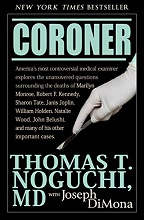 This may come as a shock to some, but I have always found the topic of death fascinating. I find it so because how we leave here often explains how we lived when we were alive. I am sure we have all asked the same question upon hearing of someone’s death: what was the cause? To determine the cause, care and faith is entrusted to the talents of forensic pathologists who become masters at unraveling the mysteries behind the final moments in the lives of humans. In the City of Los Angeles, pathologists have often faced heavy workloads in a city has seen its share of violent crime. For many years, Dr. Thomas Noguchi was the lead coroner in the County of Los Angeles and was tasked with performing some of the most important autopsies in history. In this short but highly engaging account of the cases that stand out, he explains what he found as he examined the bodies of larger-than-life figures Senator Robert F. Kennedy (1925-1968)(D-NY), actress Marilyn Monroe (1926-1962) and several other Hollywood stars. And though there are no “smoking guns”, Noguchi does a masterful job of explaining the forensic approach and how mysteries are sometimes simpler than they appear.
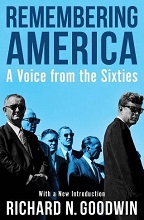 On more than one occasion my father has commented that the 1960s was the scariest decade of his life. The threat of Nuclear War, increasing tensions in Southeast Asia and the growing Civil Rights Movement captivated American society and the world. During one conversation he turned and said to me “at the time of the Cuban Missile Crisis, we didn’t know if we would live to see tomorrow or die in a nuclear exchange with the Soviet Union”. The assassinations of several activists and politicians spread fear across the nation and to many, it seemed as if America was on the verge of total anarchy. Richard N. Goodwin (1931-2018) worked in the administrations of Presidents John F. Kennedy (1917-1963) and Lyndon B. Johnson (1908-1973) and helped draft some of the most memorable speeches given by the iconic figures. In 1988 he completed this memoir which was re-published in 2014, of the decade he spent in politics with two presidents and two presidential candidates. And the result is a spellbinding account of a critical time in American history during which the country underwent profound heartache and change.
 While reviewing my list of books to read, I did a double take as I read the title of this memoir by Pat Conroy. I had added it for a reason yet at the time, I could not recall why. But I put that aside and decided that there is no time like the present and it might be a hidden gem. It turns out that I was right in my assessment. However, I was not prepared for the incredible story within by Pat Conroy (1945-2016) that sheds light on the lives of those who have been forgotten even in the most powerful nation on earth. I knew that the story centered around education but of course, teaching is never as simple as writing on a blackboard. In fact, what is revealed in the book should remove all doubt that teaching is by any means as easy task. Some of us are naturally gifted to handle a classroom full of students, each with their own peculiar personality. In many ways, the teacher is conductor working the orchestra to fine tune all the instruments and produce a symphony that is pleasing to the ears. Conroy is the conductor here and what he accomplished on Yamacraw Island, South Carolina, will leave you sad, angry, and happy at the same time.
  The Chileans have a saying that the Andes do not give back what they take. The survivors of Uruguyan Air Force Flight 571 are reminded of this each year as the anniversary of their ordeal is observed. On October 12, 1972 athletes from the Old Christians Rugby Club and selected family members departed from Montevideo, Uruguay en route to Santiago, Chile for a scheduled match. Inclement weather forced a stopover later that day in the Argentine city of Mendoza. On Friday, October 13, their plane departed Mendoza for the final leg of the trip but none of the passengers could have known that their flight would never reach its final destination. At 3:34 p.m., the plane impacted the mountains below causing the aircraft to break apart, killing several passengers nearly instantly. As the fuselage came to a rest, survivors found themselves in the valley of a mountain during the winter season and in unfamiliar territory. And for the next seventy-two days, the fuselage became their home as they struggled to keep going in the face of severe adversity. Eduardo Strauch was on the plane that day and survived the crash. But for more than thirty years, he has kept his silence about what he remembers and how it impacted his life. This short but poignant memoir is his account of what is known as the “Miracle in the Andes”.
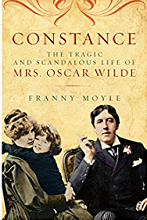 It is no secret that I absolutely love books and this blog is proof of that. The discovery of new reading material literally gives me a dopamine rush that only fellow bookworms can understand. When I saw this book about Constance Wilde (1858-1898), the wife of the late playwright Oscar Wilde (1854-1900), I knew that I had to purchase it. I often quote Wilde in conversation and when writing. He had a keen sense of human nature and his quotes still hold true today. At the height of his career, his plays were a hit, and the money was rolling in. But a scandal surrounding his sexual orientation changed all of that and left him a bitter and broken man. His story is complicated but what is often left out of it, is the role of his wife Constance whose own story is equally as moving. Author Franny Moyle takes a look at her life in this biography that just might make you look at the Wildes in a very different light.
 Every time I board a flight at New York’s John F. Kennedy International Airport, I am amazed at the concept of flight. And while I do understand how an aircraft works from a technical standpoint, the process of taking off, cruising and landing still fascinates us and captivates our attention. Today, we reap enormous benefits from the trials and errors of those before us who sometimes gave their lives in the pursuit of flight. In June, 1939, a German pilot named Erich Warsitz (1906-1983) flew an aircraft named the Heinkel He – 176, equipped with a rocket booster for extra lift and speed. The flight was successful and the result of many years of dangerous tests. The pilot and the engineers around him had just changed history forever and ushered the world into the jet engine era. This book is a look back at that miraculous time and Warsitz’s life as presented by his son Lutz.
  If you look at cover of this book, you will see of deeply concentrated eyes staring back at you and it becomes instantly clear that behind those eyes is a long story yearning to be told. When I saw this book in my list of recommendations on Amazon, I did not recognize the face. I had heard the name but admittedly, did not know anything about his life. Those of us who find solace and deep interest in the arts are probably familiar with the life of Jean-Michel Basquiat (1960-1988), who in death has earned a place on the list of the best artists from the 1980s. In this stunning biography, author Phoebe Hoban explores Basquiat’s brief and unorthodox life. And it is a story that is both hard to accept and difficult to ignore.
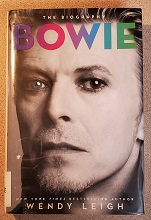 On January 11, 2016, the music legend David Bowie (1947-2016) died peacefully at his home with his family by his side following a nearly two year battle with cancer. His passing deeply affected fans and he is fondly remembered as one of the most eccentric stars in music history. His high profile marriage to former model Iman, is one of the visions most recalled by fans of the late star. But prior to finding his soulmate in Iman, David Bowie had crafted a persona over the course of several decades and to say that it was a wild ride would be an understatement. Author Wendy Leigh takes a look at his life in this biography that is sure to keep you asking for more.
 FREETHINKING BIBLIOPHILE
You must be logged in to post a comment.