 There are a number of adjectives that come to mind to describe the late Eldridge Cleaver. (1935-1998) If I had to choose one in particular, my choice would be unpredictable. His voice is legendary among the most prominent of the Civil Rights Movement. He co-founded the Black Panty Party but was later expelled by Huey P. Newton due to ideological differences. In 1954, he was convicted of possession of Marijuana and sentenced to slightly over two years at Folsom Prison in Represa, California. He began to write letters in his cell and those writings form the basis of this book considered be a classic text on revolution, racism, sexuality and the future of America. The book was published in 1968 after Cleaver had served a second prison term for an attempted rape with assault conviction. Married by then to Kathleen Cleaver, the marriage eventually fell apart due to his erratic behavior and philandering ways. In later years following his split from the Panthers, he distanced himself from his Muslim faith, ran for President, created the “penis pants” and eventually joined the Mormon church. He died on May 1, 1998 in Pomona, California. The cause of death was withheld from the public. Today he is still a controversial figure and his writings and the confessions within have resulted in a split of opinion; readers either like him or hate him. However, the fact remains that he was a valued and highly intellectual voice within the movement that attempted to manifest the issues that faced Black and White America.
But what is it about the book that gets favorable reviews? Cleaver was an extreme figured and is to be expected, he is extreme at some points during the book. At two hundred ten pages, the book is shorter than others by figures such as Newton but within the pages of this book are passages that will cause even the most hardened mind to think deeply. From the beginning Cleaver pulls the reader in with his seductive writing style and deadly accurate analysis of society. Reading about racial discrimination and America’s dark past is always tense but the part of the book is Cleaver’s admission to becoming a rapist in an attempt to get revenge against white men. For all of his creative genius, expert analysis on revolution and highly perceptive mind, his biggest shortcoming by far is his admission to being a sexual predator. The trauma endured by minorities throughout America’s history is tragic and regrettable but it does not excuse the violence and sexual exploitation of women. Furthermore, the truly baffling part is that Cleaver admits that he was wrong but is then convicted in 1958 of attempted rape. Additionally, he is believed to have fathered several children out-of-wedlock. That caused me to ask myself if he truly did have remorse for his past actions. Putting that part of the book aside, the other parts are highly introspective but require an open mind to truly see the genius in his writing.
He touches on several topics and dissects them thoroughly. The youth of today may have extreme difficulty in understanding Cleaver’s points. America has changed in many ways since the 1960s. Vietnam is a relic in the past for the millennial generation with names such as Johnson, Nixon and Mao only discussed history textbooks. But at the time of the publication of this book, they were all very real and Cleaver, like millions of other African-Americas watched the struggles around the world develop as they continued to face their battles at home.
The book has many highlights and Cleaver is a shining star and an example of what could have been if creative and intellectual minds had continued in the right direction. Religion is a central theme early in the book in particular during his time at Folsom. He is a Muslim but attends classes in the prison. He describes his daily life behind bars and the challenges faced by inmates to retain their sanity and optimism that they will one day see freedom. Moving on he touches on the death of Malcolm X, who at first earns the wrath of the Nation of Islam by disavowing the Honorable Elijah Muhammad. But after returning from Mecca, changing his ideology and creating the Organization for Afro-American Unity, Malcolm gained old and new followers, Cleaver included. His death at the Audubon Ballroom on February 21, 1965 was a heavy blow to the Civil Rights Movement and the hearts of the men and women who considered him their black shining prince. Vietnam is not spared nor is the administration of Lyndon Baines Johnson. The personal conflict within the hearts and minds of black soldiers returning from combat to a country that refuses to grant them their rights is truly one of the saddest moments in American history and in the book.
It would have been nearly impossible for Cleaver to analyze social conditions without examining the issue from an opposing view. He writes about white heroes and their extinction due to the changing mindset of the young white youths of America whom he says have rejected the ways of their elders and embraced the culture of their fellow Black Americans. Never straying too far from his Muslim faith at the time, Cleaver gives an interesting portrayal of Muhammad Ali and his importance to the struggle for equality. In fact, Cleaver refers to him at point as the “Fidel Castro of Boxing.” The unfortunate scapegoat in this case is Floyd Patterson who is not able to defend himself. He also gives attention to James Baldwin and his opinions of the late author could be considered controversial. Those who believe Baldwin to be beyond reproach will have a hard time accepting Cleaver’s criticism. And while I do not agree with everything he said about Baldwin, I respect his opinion for Baldwin also attacked Richard Wright and according to many, in a highly unfair manner. Sadly, both Baldwin and Cleaver are deceased but I would love to see them sit down today and have a discussion about the current state of America.
Cleaver in his ideology and writings was aligned with Marxists and his name is mentioned along those such as Guevara, Lenin, Mao and Castro. He does avoid the topic of imperialism and its devastating effects around the world. Particularly close attention is paid to the hypocritical policies of a government that publicly declares support for freedom of foreign nations but struggled to give equality to its own citizens. This chapter in the book is among the strongest and highlights an argument made repeatedly by those committed to an end to colonialism. America has many dark secrets but no shortage of those wishing to expose them. In exposing them, we can see where policy goes wrong and what it is truly needed to correct it.
Towards the end of the book, Cleaver touches on two topics which are sure to cause a range of emotions. It is imperative to remember that these are his beliefs and can be rejected or accepted. In his analysis of male and female relations he has composed four characteristic traits; the Ultrafeminine, the Amazon, the Omnipotent Administrator and the Supermasculine Menial. There is some truth to what he says but there always exceptions to the rule. Nonetheless it is an interesting take on the relationships between men and women. This relationship is carried over into his exploration of the connection between white women and black men. Setting the stage, Cleaver explains that he is with two acquaintances he calls Eunuchs. They are joined by the Infidel who they believe to be a fraud and not aligned with the movement. The dialogue quickly turns to the topic of interracial couples and apparent dysfunctional relationship that the infidel says exists due to the system of slavery. Incredibly, it was not until 1963 that laws against interracial marriage were ruled unconstitutional paving the way for the rescinding of miscegenation laws by states in the union that had not done so. While I do not deny that there are many stereotypes affixed to couples of mixed background, the youth of today are unable to relate to the times in which Cleaver lived. Furthermore, as someone who has dated women that are from many parts of this world, Cleaver through the voice of the Infidel would be off base today. But this was the 1960s and a completely different time in America. And I would be foolish to deny that there are in fact some of us who are exactly what that section of the book discusses. If there is one thing I have learned about love, it is that it strikes us when we least expect it and we never know to whom it will be directed. But when it does happen, all that we can do is go with it and see where it takes us.
It is undeniable that Cleaver was a polarizing and truly mystifying figure. Is this book outdated? Maybe. But it is still a guide that many youths lived by during those turbulent times. And if America seeks to move forward and improve itself, then we will need to revisit the past on occasion so that we do not make the same mistakes again. Eldridge will be with us as one of those voices to reminds of the failure that awaits those who do not study the past.
ASIN: B01ELOLI6U

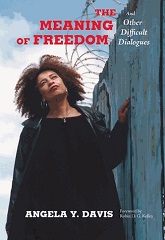 Freedom is a term that is often used but not always understood. The costs associated with it are often high and some of us have paid and will pay the ultimate price to obtain it. Here in the United States, we like to think that we are free but the truth of the matter remains in question. Perhaps we are still in a state of denial of about freedom’s true meaning and its role in the American way of life. Angela Davis is one of the brightest voices to emerge from the Civil Rights Movement and has established herself a political activist, an author and professor whose many speeches and writings are some of the best society has ever seen. While the book is not an autobiography, this is clearly Davis’ show and a collection of selected speeches in which she discusses topics that she rightly refers to as difficult dialogues. But her ability to not only discuss these topics but provoke thought in the reader, is what makes this book so special. And I can state with full conviction that I wished I had discovered this gem much earlier in life.
 Every year that I age, I have noticed that I have a growing appreciation for classic literature and the works of other authors that are no longer with us. James Baldwin (1924-1987) is near the top of my list of authors whose books are critical to American history and the current day state of affairs in the United States. The Harlem native who took his last breath in France, stands out as a commentator on race in America. His observations which he then put into words, were sharp, analytical and deeply profound. Baldwin lived what could only be described as an eventful but complicated life. He was a Black American and homosexual in a time in which both were considered to be crimes of the highest nature. America had yet to see the passing of the Civil Rights Act of 1964 and homosexuality was still considered a crime against nature in many states. Baldwin was both and carried himself with an aura of confidence and intellect that has remained impressive many years after his death. In this short but intriguing book, Baldwin comments on race in America based off of his experience and encounters with White Americans and even Elijah Muhammad and the Nation of Islam. He never joined the nation but his account of his meeting with Muhammad is one of the highlights of the book. Racial discrimination is never an easy topic to discuss and many of us would prefer to discuss more pleasant issues. But Baldwin was a master of taking a explosive topic and relaying it to the reader in a way that forces one to do deep soul-searching if they are not African-American and reevaluate their own existence if they are.
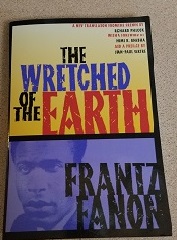 On July 1, 1962 a referendum was held that paved the way for Algerian independence from the government of France. The complete cessation of armed conflict marked the end of war that lasted seventeen years. The Algeria movement for freedom stands out as a success story similar to the legendary revolutionary campaigns in the Caribbean and Latin America. It is also a case study for those seeking to go down the path of revolution as a method to enforce social reform. No revolution is complete without a defining text and in this case, the struggle was analyzed and transcribed the famed revolutionary, writer, philosopher and psychiatrist, Frantz Fanon. (1925-1961) The book was finished shortly before his death and published not long after. Originally written in French, it has been translated by Richard Philcox for English readers.
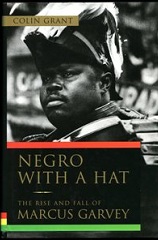 In the Bedford-Stuyvesant section of Brooklyn lies Marcus Garvey Blvd, a street named after the late iconic figure in the African-American struggle for civil rights in the United States and abroad. The native son of Jamaica and former resident of London, England, made his name famous on the streets of Harlem, New York through the formation and activities of the Universal Negro Improvement Association (UNIA). The organization’s purpose to build up the moral, economical and social status of Black Americans, combined with his “back to Africa” movement, remain defining movements in the African-American experience. At the time of his death on June 10, 1940, Garvey was a shadow of his former self after several severe strokes had taken their toll on his aging body. His death dealt a sever blow to the strengthening movement for equality. And 76 years after his death, his writings, speeches and life, are still remembered, quoted and analyzed for they remind us of the importance of standing up for what we believe in. Garvey remains one of most magnetic figures of the 20th century.

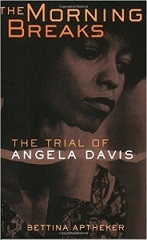 October 13, 1970-Angela Davis is arrested in New York City and extradited to Marin County, California, where she is charged with conspiracy to commit murder. The charge stems from the death of Judge Harold Haley, taken hostage by Jonathan Jackson and accomplices in an effort to free the Soledad brothers and all political prisoners from United States federal prisons. Davis’ arrest and trial became a focal point in the struggle against an unjust and discriminatory judicial system in which the privileged often found themselves defenseless in frivolous trials resulting in equally absurd prison sentences.
 April 4, 1968-Dr. Martin Luther King, Jr. is assassinated as he stands on the balcony in front of room 306 at the Lorraine Hotel in Memphis, Tennessee. That same night, Senator Robert F. Kennedy (D-New York) gives what is considered by many to be the best speech of his career on the back of a pickup truck to a crowd of stunned and angry supporters. A drifter and ex-convict by the name of James Earl Ray is arrested at Heathrow Airport in London after a manhunt and extradited back to the United States. Following his indictment, he pleads guilty to the crime, but many questions about his motive and actions continue to go unanswered. The murder of Dr. King and of President Kennedy would be the subject to investigation by the House Select Committee on Assassinations. And although the investigations revealed new evidence in both murders, new suspects and evidence of a probable conspiracy in President Kennedy’s murder, the complete truth about both murders continues to elude the American public.
 FREETHINKING BIBLIOPHILE
You must be logged in to post a comment.