
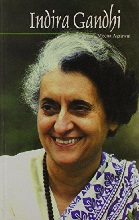
 Few places are as fascinating as the nation of India. Its constitution officially recognizes twenty-two languages. English continues to serve as a critical method of communication in the business sector. Natives will proudly tell you that India is one of the most diverse countries in the world. Yet, despite the diversity, social issues such as poverty, corruption, and overpopulation are a reminder that India’s long struggle for success is far from over. Recently I was reading only and came across the name of Indira Gandhi (1917-1984), the former prime minister who was assassinated on October 31, 1984. Her father, Jawaharlal Nehru (1889-1964), served as the nation’s first prime minister after India gained its independence in 1947. Both father and daughter left behind legacies that remain with India to this day.
The death of Indira Gandhi sent shockwaves across the world. The nightly news broadcast covered the crime in detail and readers who are too young to remember the events can find videos on YouTube that provide a step back in time before breaking news went viral on the internet. As I thought of Indira Gandhi, I realized that my knowledge of her personal life needed an adjustment. I purchased this book by author Meena Agarwal who provides a good primer for an examination of the late leader’s life. There are more extensive books to be found about Gandhi, but this biography is just what is needed by readers searching for a concise account of the historic figure.
I did notice that the book is short at around one hundred seventy-six pages, which is short compared to most biographies of political leaders than can easily stretch to nearly one thousand pages. Nonetheless, the information contained in the book is more than sufficient to provide readers with a fair amount of knowledge about who Gandhi was and why she is important in India’s history. The recap of her early life was the right amount of information needed for the story we read. The author does not go into every minute detail but explains the crucial events in her life that changed India’s history and world history. The deaths of her mother Kamala Nehru (1889-1936) and prime minister Lal Bahadur Shastri (1904-1966) changed her life forever with the latter placing her in the position to become India’s first and only female prime minister.
Gandhi’s time in office was not perfect by any means. Though she was progressive in her thinking, there were mistakes along the way. But what I found is that she genuinely loved India and despite the mounting opposition to her administration, she continued to move forward when possible. But as the book progresses, it becomes clear that the opposition is not only growing but becoming more extreme. And their rage culminated with the events at the Golden Temple, the holiest site in Amritsar, Punjab, for followers of the Sikh faith.
Between June 1 and June 10, 1984, Indian security forces conducted Operation Blue Start to remove Damdami Taksal, Jarnail Singh Bhindranwale, and their followers from the buildings of the Golden Temple. The operation was successful but in the eyes of devout Sikhs, Gandhi had committed a mortal sin. She was not oblivious to the tensions caused by the mission and sought to soothe them. But the seed had been planted and her opponents began to plot her demise. The author revisits the events surrounding Operation Blue Star and the time leading up to October 31, 1984, Gandhi’s last day on earth. The murder and its aftermath as discussed but she does not go into extensive detail about the legal proceedings and results. One assassin was killed immediately after Gandhi’s murder, thus escaping the justice system.
Following the assassination, the story winds down but the author is far from done. She pays homage to Gandhi by including quotes and short statements which show her devotion to India. Some might say she was ahead of time and others may say she was taken before her time. I would argue that both are fair assessments. Indira Gandhi survived heartache on multiple occasions. The losses of her mother Kamala, husband Feroze Gandhi (1912-1960), and son Sanjay Gandhi (1946-1980), were always with her as reminders of the unexpected twists and turns that come in life. She will forever be remembered as a trailblazing woman in world politics. And as India continues to examine itself to improve, Gandhi’s legacy is a reminder of what was and what is possible moving forward.
“The meaning of independence is not only to have one’s own government, but its true meaning is that we should be able to take decisions ourselves. These decisions may be wrong, but they should be our decisions, they should be the decisions of India” – Indira Gandhi
ASIN : B06W55L1ZV
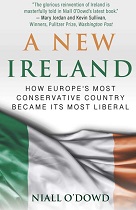 In April 1916, Irish Republicans used the Easter holiday week to launch an insurrection against British rule in Ireland. Through the British regained control of Dublin and later conducted executions of selected participants, the uprising stands to this day as a pivotal moment in the movement for a united Ireland. When I visited Dublin in February 2016, I took a moment to observe murals dedicated to Irish history. I realized that the Ireland I was visiting had changed since the visit of U.S. President John F. Kennedy (1917-1963) in April 1963. Ireland was once known was the most conservative country in Europe but had now become the most liberal. As I walked the streets of Dublin, I heard accents from countries throughout the world and the diversity of languages reminded me of my hometown, New York City. But how did Ireland undergo such a drastic change? The answer can be found in this book that captures an important aspect of Irish history.
 On June 3, 1968, artist, and film director Andy Warhol (1928-1987) was shot and severely wounded as he talked on the telephone in his office located at 33 Union Square West in Manhattan. He was rushed to the hospital and declared clinically dead by doctors before being resuscitated. He underwent grueling surgeries that left a myriad of scars across his torso and required him to wear a surgical corset for the remainder of his life. Hours after the shooting, a young woman walked up to a police officer in Times Square, handed over her weapons and confessed to shooting Warhol. She was arrested and booked for the crime. The public soon learned the name of Valerie Solanas (1936-1988). Today she is best remembered as the woman who shot Andy Warhol. Her actions were horrific and nearly took Warhol’s life, however her story is not as widely known. Breanne Fahs decided to change that and find out the truth about Solanas’ turbulent life. This biography explores the life of Solanas, her relevance to the radical feminist movement and her descent into anarchy after shooting one of the biggest pop icons in history.
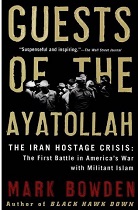 On November 4, 1979, university students seized the U.S. Embassy in Tehran, Iran and detained more than fifty U.S. Government employees. Though some were later released, the majority remained behind for four hundred forty-four days in what is known as the Iran Hostage Crisis. In 1953, Mohammad Mosaddegh (1882-1967) and the National Front Party gained political power in opposition to Mohammad Reza Shah (1919-1980). A twice elected member of Parliament, Mossadegh emerged as a popular figure but within days of the Shah’s exile in August of that year, Mossadegh was removed in a coup sponsored by the British Government and the United States. Mossadegh’s removal and the Shah’s return, inflamed tensions and in November 1979, Iranians decided that America must go. This is the story of the hostage crisis from start to finish in an account that provides a thorough discussion of America’s foreign policy mistakes and Iran’s inner struggle between traditionalism and modernity.
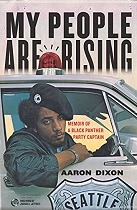 On August 22, 1989, former Chairman of the Black Panther Party for self-defense Huey P. Newtown (1942-1989) was shot and killed in Oakland, California at the early age of forty-seven. The violent ending to his life is a reminder that the streets are unforgiving, and should one choose to embrace them, death is a constant threat. In prior years, Newton rose to fame with party co-founder Bobby Seale as the organization spread across America and became an unavoidable presence, catching the eye of Washington, D.C. The Panthers became so feared that former Federal Bureau of Investigation (“FBI”) Director J. Edgar Hoover (1895-1972) said “the Black Panther party, without question, represents the greatest threat to the internal security of the country.” Hoover refused to see that the Panthers had become an image solidarity and masculinity to thousands of Black youths who had seen and suffered racial discrimination. In the Pacific Northwest, a young man named Aaron Dixon listened to a speech by Bobby Seale and knew from that point on that he was destined to join the Black Panther Party. This book is his memoir of life on the West Coast and the ten years he spent as a Black Panther Party Captain.
 On November 25, 1963, my mother prepared to celebrate her birthday, but everyone knew there would be little joy that day. While my mother prepared herself for that day, officials in Washington were making the final adjustments to the funeral of President John F. Kennedy (1917-1963). In Texas, the family of Lee Harvey Oswald (1939-1963) also made their adjustments to his funeral after he was shot and killed while in Dallas Police custody by nightclub owner Jack Rubenstein (1911-1967), known more commonly as Jack Ruby. Over the years, my mother has spoken about that day and has always said that it was the saddest birthday she can recall. The sorrow and tear-streaked faces of those around him are images that have been permanently embedded into my father’s memories that are still intact six decades later. Kennedy’s murder will continue to serve as a topic of debate but what is rarely discussed are his reasons for visiting Dallas and the warnings, he received not to travel to a city known for right-wing activity. Author William Manchester (1922-2004) was asked to author a book covering the Dallas trip from start to finish by former first lady Jacqueline (“Jackie”) Kennedy Onassis (1929-1994). And this account is a thorough explanation the five days in which America experienced the death of a president.
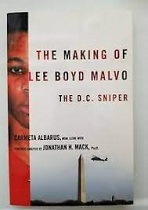 In October 2002, a series of murders occurred between the states of Maryland and Virginia, and the federal District of Columbia that spread fear and panic across the United States. News reports of a sniper moving across the area and striking at will, left law enforcement scrambling and citizens seeking arms and shelter. I remember watching the nightly news in anticipation that the police had captured the person(s) responsible for the crimes. On October 24, 2002, the nation felt relieved when John Allen Muhammad (1960-2009) and Lee Boyd Malvo were arrested while sleeping in their Chevrolet Caprice near Myersville, Maryland. Both were tried and convicted, with Muhammad receiving the death penalty and Malvo being sentenced to life in prison due to his age at the time of the murders. Muhammad was executed on November 10, 2009, at the Greenville Correctional Center in Jarratt, Virginia and Malvo remains in prison today.
 The first time I watched the HBO film “
 On the evening of February 4, 1983, twenty-four-year-old Wanda Lopez arrived at the Sigmor Shamrock gas station in Corpus Christi, Texas, to begin her shift as a gas station attendant. She never finished that shift. After noticing a suspicious male brandishing a knife, Lopez called police not once but twice before she was savagely attacked and fatally wounded. In less than one hour, police arrested twenty-year-old Carlos Deluna and charged him with the murder. Deluna entered a plea of not guilty and chose to stand trial where he was convicted and later sentenced to death. On December 7, 1989, he was executed at the Texas State Penitentiary at Huntsville. Prosecutors had secured a conviction and put forth the notion that justice had been served in the State of Texas. However, Deluna maintained his innocence from the start and stated more than once that he knew who did kill Lopez. The name “Carlos Hernandez” became an area of interest, yet officials claimed that no such person existed, nor had he been incarcerated in Texas. But were they telling the truth? And was justice served in Deluna’s execution? James S. Liebman and the Columbia Deluna Project examined the Lopez murder and the fate of Carlos Deluna to uncover what really happened and find the truth behind a dark story that will send chills down the spine of readers.

You must be logged in to post a comment.