
 On December 11, 1978, Robert Jerome Piest (1963-1978) was finishing up his shift at Nisson Pharmacy when an older man approached him with the offer of a job in his contracting company. Piest told his mother Elizabeth that he would only be a few minutes. That was last time anyone saw Robert Piest alive. Police would soon learn that the older gentlemen observed conversing with Piest was a local named John Wayne Gacy (1942-1994), a well-respected but peculiar figure who owned a company named PDM Contractors. Gacy initially denied any knowledge of Piest or his whereabouts that night but detectives felt that he was certainly hiding something. Although he was only a person of interest at that time, none of the detectives could have known then that in only two years, the worst serial killer in American history would be convicted of multiple counts of murder. Terry Sullivan was Supervisor of the Cook County State’s Attorney’s Third District office and here he teamed up with Peter Maiken (1934-2006) to bring us the inside story of the effort to bring John Wayne Gacy to justice.
I believe that it goes without saying but I will say here that readers should use discretion when deciding whether to read this book. The subject is sensitive and anyone who knows even slightest bit of information regarding John Wayne Gacy, knows that the story does not have a happy ending. In fact, it is dark, disturbing and one of the most extreme true crime stories that you will ever read. But that is also what makes it so appealing. However, if you are not able to read descriptions of violent acts that result in death and post-mortem examinations, then you may want to give this book a pass. But if you prefer true crime and have questions about Gacy’s story, then you have essentially hit pay dirt. The book is a good as it gets and from start to finish, and is a roller coaster ride that will leave readers speechless.
Similar to most serial killers, Gacy was described as successful, charming and sociable. His charm is on full display as he engages with a cat and mouse game with the police officers assigned to tail him as a person of interest. Undoubtedly, much of what she says and does if overly flattering but the seductiveness of his charm when turned on is apparent and gives the book an even darker chill as the descriptions of his crimes come to light. In an almost Dr. Jekyll and Mr. Hyde routine, John would be friendly, overly helpful and a town role model but the darker John, cruised the streets at night, turning his city into his hunting grounds in which young men were fair game. And between 1972 and 1978, he engaged in a reign of terror that took the lives of at thirty young men.
The book certainly reads like a true crime story and Sullivan moves us along in chronological order. But it is interesting to see how the officers on the case and the district attorney’s office worked together to develop their file on Gacy, whom they all suspected of being in involved with the disappearance of Robert Piest. However, as we see in the book, authorities had no idea at that time, that Gacy was hiding far darker deeds. As their file grew, detectives began to learn more about Gacy and his criminal past which included a sodomy conviction and prison time at Anamosa State Penitentiary. Detectives began to take note of odd things at Gacy’s house, most importantly personal items that did not belong to him and a rancid odor emanating from the kitchen and bathroom area. After obtaining a second search warrant to search Gacy’s house, detectives and forensic personnel made a grisly discovery that changed American history. Coincidentally, Gacy had paid a visit to his attorneys’ office and what he would tell them left both men shaking. The walls were closing in on Gacy and after he was in custody, the true nature of the horror detectives had uncovered became strikingly real.
It was clear to all involved that Gacy had in fact murdered a staggering amount of people, but detectives were also faced with the task of identifying the remains found and finally solving disappearances that had authorities baffled. And although the crimes are horrific, what is really spine chilling is the casual manner in which Gacy discusses his actions. He recalls each crime as if it was part of his regular routine and no big deal. This alone should remove all doubt as to just how cold and calculating Gacy truly was. At some parts of the book, I found myself staring in disbelief at what I was reading. While I knew of Gacy’s actions, there is a wealth of information that might be new information for some readers. The story is simply mind-blowing and far better than any documentary I have seen.
After Gacy was firmly in custody, prosecutors then had to come up with a strategy to secure a conviction in a court of law. Their case was built around Robert Piest but Gacy faced multiple charges of homicide. And while no one doubted that he had killed, including his own lawyers, the defense’s case rested upon the insanity defense. This is the crux of the legal action and Sullivan shows the opposing points of view between the prosecution’s experts and the defense’s experts. As someone who works in the legal field, I am keenly aware of the important of expert witness testimony and how it can make or break a case. And reading their testimony here, sometimes made the hair on my neck stand up not because of any graphic descriptions but because their words would decide whether Gacy would go to a mental hospital and possibly be released or whether he would meet his maker on death row. Today we have the hindsight of 20/20 vision and know Gacy’s fate. But at that time, there was a good possibility that an insanity defense just might work and Sullivan expresses his concern as he discusses the expert testimony. It is a good analysis of trial procedure in what was unquestionably a high profile case.
Sullivan and his squad of prosecutors eventually prevailed and the final moments in their crusade for justice are captured in the book and show just how much effort went into preparing the case against Gacy. And for prosecutors, securing a sentence of death was the “icing on the cake”. On May 10, 1994, John Gacy was executed at the Stateville Correctional Center, near Joliet, Illinois. But surprisingly, the story was not yet over. In fact, Sullivan provides a discussion on DNA evidence examined in 2011 that brought even more closure to the families of Gacy’s victims. Perhaps we may never know the full number of victims and their locations. Gacy took many secrets with him to the grave but he was wrong about one thing, clowns do not always get away with murder.
ASIN: B00BPVV2T6
 On August 27, 1975, news reports began to emerge that Tafari Makonnen, known to the world as Haile Selassie I (1892-1975), had died at the Jubliee Palace in Addis Ababa, Ethiopia. The man who ruled Ethiopia for forty-four years and who had served as the icon of the Rastafarian movement was eighty-three years old. Selaisse had lived his final years in exile after being deposed in a coup that took place in September, 1974. The world-renown leader was a larger than life figure although he only stood 5’2″. He was recognized on the world stage and helped Ethiopia modernize itself as the wave of independence swept over the African continent in the 1960s. However, his reign was not free of controversy and Selassie was viewed by some as a greedy tyrant who used his position of power to enrich himself and those closest to him. Ryszard Kapuściński (1932-2007) was a Polish journalist who traveled to Ethiopia and interviewed former members of Selassie’s administration. This book is a collection of what they remember from their time in office with regards to the emperor’s daily routine, his achievements and also his downfall.
 On January 24, 1989, the executioner on Florida State Prison’s stepped forward to exercise his duty in carrying out orders of the state. But this was no ordinary execution. In fact, it was one that no one would ever forget. At 7:16 a.m., Dr. Frank Kilgo declared the prisoner deceased and his announcement provided the conclusion to the final chapter in the life of American serial killer Theodore Robert “Ted” Bundy (1946-1989). During his incarceration, Stephen G. Michaud and Hugh Aynesworth conducted a series of interviews with Bundy in an attempt to understand thoughts and motives, and to clear up mysteries surrounding his crimes. The result is this intimate look at Bundy through the eyes of the authors who came face to face with a killer who is firmly entrenched in the annals of American criminal history.
 On June 8, 2020, the Democratic People’s Republic of Korea (North Korean Government) cut all lines of communications with the Republic of Korea (South Korean Government). Eight days later, an explosion destroyed the joint liaison building which had been used to host meetings between the two governments. The bombing was instantly seen as an act of aggression by North Korea and prompted a sharp response from its South Korean counterpart. Fears of an armed conflict gripped neighborhood countries as tensions continued to rise. Many eyes in both China and the United States were watching for the events very well could have led to the re-ignition of the Korean War (1950-1953), a conflict that never officially ended. I am constantly amazed at the expressions of surprise people display upon learning this fact. It seems surreal but the fact is that the Korean is still an “open” conflict that is only contained by the 39th Parallel and the watchful eyes of several foreign countries over North and South Korea. The war itself is often reserved for military buffs and overshadowed by both World War II and the Vietnam War. However, the reality is that the conflict in Korea nearly evolved in World War III. Author Hampton Sides is here to tell us about the role of the United States Marines and their experience in the Battle of the Chosin Reservoir.
 January 30, 1933 – Adolf Hitler (1889-1945) becomes Chancellor of Germany and his National Socialist German Workers’ Party becomes the dominant political party in Germany. As Hitler marched through the streets of Germany under the banner of the Third Reich, millions of Germans watched the history unfolding before them with both anticipation and apprehension. Among them was a young Germany boy named Hans-Jürgen Massaquoi (1926-2013), who was born to a Liberian father and German mother. Over the next twelve years, he witnessed the transformation of German society in a bastion of racial ideology founded on Hitler’s unrelenting thirst for world conquest. This is the story of his life growing up black in Nazi Germany.
 This past April marked 108 years since the RMS Titanic collided with an iceberg on its maiden voyage from Southhampton to New York City. By the time the SS Carpathia had arrived to rescue passengers, the Titanic had sank and more than 1,500 passengers lost their lives. It is still one of the deadliest maritime disasters in history. Survivors of the Titanic have given interviews and written their memoirs. Among them was
  On May 12, 1898, the United States Military invaded the island of Puerto Rico, the Caribbean island once under the control of the Spanish Empire. The occupation by the United States ended hopes of an independent Puerto Rico, the dream of Dr. Ramón Emeterio Betances Alacan (1827-1898) whom author Armando Pacheco Matos calls the “Father of the Puerto Rican Motherland”. Betances died in Neuilly-sur-Seine, France on September 16, 1898, and did not live to see what would become of the island he loved. Had he lived, he would have been appalled at the annexation of Puerto Rico by the United States and its designation as a commonwealth. Betances’ goal from the start was complete independence of Puerto Rico from the bruality of the Spanish empire. Today, his name is rarely mentioned but if we want to have a discussion about Puerto Rico’s history, he must be part of the conversation. To understand why, it is necessary to read this book which captures Betances’ life and how it impacted the history and culture of Puerto Rico.
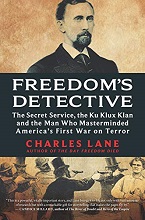 Yesterday America once again celebrated its independence from British Colonialism. Cookouts and fireworks were held all over the country as people sought out even the smallest amount of happiness during what are surreal times. The Coronavirus Pandemic and murder of George Floyd (1973-2020) have placed America at a crossroads. As a nation we are forced with both an invisible enemy that spreads from person to person and a highly visible one which has festered in our nation for far too long. But what is paramount to remember is that America has faced these enemies before but what we do moving forward will truly define what type of country we wish to have. I found this book on Amazon while browsing through a list of daily recommendations and the cover caught my attention instantly. I do confess that did not have the slightest idea who the person on the cover was and why he is important in American history. All that changed as I opened the pages of this book and learned a history lesson that I have never seen in any textbook.
 On April 30, 1945, the Soviet Union Red Army, had reached within several blocks of the Reich Chancellory. Realizing that their fates were sealed, Reich Chancellery Adolf Hitler (1889-1945) and Eva Braun (1912-1945) took their own lives instead of risking capture by Allied forces. Over the next two days, those who had chosen to remain with them in the underground bunker made their way to surface and attempted to flee Berlin. Among them was one of Hitler’s personal secretaries, Gertraud “Traudl” Junge (1920-2002). As a close assistant to the Führer, she found herself in a unique position to observe the daily routine of one of the most powerful men in world history. This is her memoir of the time she spent with the man who lit the spark for the second world war.
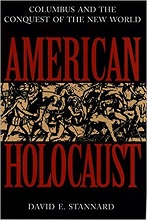 Earlier this week, my boss mentioned during a Zoom office meeting that Columbus Day needed to be re-examined. He had learned of many dark aspects of Christopher Columbus’ (1451-1506) arrival in the Caribbean. The movement to end the celebration of Columbus’ life has gained considerable traction over the past several years. Some states in America have renamed the Columbus Day to “Indigenous People’s Day”, in honor of the Native Americans who sufferend immensly at the hands of Spanish and other European explorers. It is a sound recommendation and one that may even happen here in New York City as it becomes harder for people to ignore the disturbing actions by Columbus and his group of marauders. Many of us learned in school that he was the man who “discovered America”. But is that what really happened? An uncontested fact is that Columbus never set foot on North American soil, making the claim of discovering America misleading. And we know today after many years of neglect by mainstream media, is that indigenous populations were decimated when exposed to the new visitors from abroad. The true story however, goes far beyond Columbus, who was just one of many bloodthirsty religious fanatics who favored violence over peaceful assimilation. David E. Stannard revisits the Columbus story in this eye-opening and chilling account that resulted in a stiff drink and a long moment of silence after I had finished reading.
 FREETHINKING BIBLIOPHILE
You must be logged in to post a comment.