
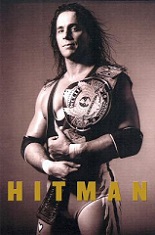
 Baseball has long held the title of America’s pastime. The NBA and NFL have respectable followings of their own. However there is also the world of sports entertainment that has been made famous by the phenomenon of professional wrestling. My father has always called it “rassling” and when I walked around the house doing my best impersonations of the stars of what was then called the World Wrestling Federation (“WWF”), he always shook his head in laughter. In spite of the wisdom he possessed about the spectacle I was obsessed with, not once did he ever try to dissuade me from watching the heroes that I came to believe in. And when he and my uncle took my brother and I to Madison Square Garden to see Hulk Hogan live in person, it was if we had been transported to wrestling heaven. As I aged, my view of wrestling changed and so did the characters I found to be standouts. Among them, was Bret Hart, known as the Hitman and leader of the Hart Foundation, the heel group that had an enormous following of fans. When he retired not long after suffering a devastating concussion in the ring, I and many fans looked back on the many matches he took part in with sadness knowing he would never set foot in the ring again. I always wondered what really went on behind the scenes and when I saw that he had written this autobiography, I knew that I had to read it. And I am happy to report that the book did not let me down and it is one of the best books about the wrestling industry that I have ever read.
Those of us who are wrestling fans accept some of the truths about it, mainly that it is entertainment. But every wrestler will tell you in person that there are some parts of the industry that are very real and lives are affected. The life of a pro-wrestler is a crazy one, based on traveling over three hundred days per year, nagging injuries, backstage politics, fame, success and attempts at maintaining a “home life” while mostly away from home. The fans rarely see the sacrifices the stars make to bring joy and excitement to the millions of wrestling fans around the world. And when the show is over, some stars ride off into the sunset while others struggle to survive after stepping out of the squared circle. For Bret Hart, it is a mix of both but in ways that no one could have expected when he first started out in what he calls the cartoon world of wrestling.
As to be expected, the story begins in Canada at the Hart family home where patriarch Stu Hart (1915-2003) and Helen Hart (1924-2001) raised Bret and his eleven siblings. He takes us back in time behind closed doors to witness that daily events in the Hart household. From the beginning, he makes it clear that the Hart siblings have some serious dysfunctional relationships. Their father is a wrestling promoter and the family struggled with the highs and lows of the business. Hart is open about the times of poverty the family endured and the other times when money flowed in. Some of the Hart children sought to make their own careers but the family was a wrestling dynasty and before long, Bret himself laced up the boots and began a career that was nothing short of extraordinary.
The book is captivating from the start and Hart has no shortage of anecdotes about growing up in a large family under a man feared by anyone who dared to get close enough to Stu’s dungeon. The story flows very well and we begin to see Hart’s life taking shape. The story takes the biggest turn when Vince McMahon, Jr. enters the story. It is at this point that life is never the same from Bret or professional wrestling. McMahon realized early on that in order to pull ahead, regional wrestling promotions would have to fold and to achieve this, he purchased a number of them, guaranteeing an iron grip on the East Coast. Bret soon faced the decision that many wrestlers of his time had to make and decided to take a chance and go to work for the WWF. The book picks up speed here and the things we learn about backstage production will more than satisfy wrestling buffs. All of the big names are in the book but sadly many of them are no longer with us. But through Bret’s stories, we can revisit the era ruled by stars such as Andre The Giant (1946-1993), Bobby Heenan (1944-2017), Adrian Adonis (1953-1988) and Chief Wahoo McDaniel (1938-2002). Throughout the book, Hart never loses focus even in the midst of so many larger than life characters. In the land of the giants, he rises to the top and eventually becomes the WWF champion. His ascension was by no means easy and his relationship with Vince is examined in detail. Hart pulls no punches and thoroughly explains his view of the Montreal Screwjob, his brother Owen’s death and how McMahon handled each situation. Those two moments in the book might change the way many view the minds behind the business. Wrestling fans will be familiar with both events but it is worth reading what Hart has to say.
The successes in the ring are offset by the events in his personal life which he discusses frankly. Professional wrestling is filled with many demons and Hart was not immune, Performance enhancing drugs, pain killers, infidelity, alcohol and acts of aggression are the devil’s brew that can dismantle the life of even the strongest of the strong. Hart discusses each one and in the process reveals the many struggles that can serve as the downfall of a wrestling star. The stories are sad and in some cases tragic. One that stands out in the book is that of Tom Billington (1958-2018) known by fans as the Dynamite Kid. His story is one of the most tragic that I have come across from the crazy world of wrestling. There is more to his life that Hart could not cover but Billington’s story can easily be found on the internet. Hart was one of the lucky ones and as friends died, he lived and counted his blessings. But two events happened that forced him out of the ring and changed his life in ways he could have never imagined.
During a routine match with superstar Bill Goldberg, Hart suffered a career ending concussion. I remember the match and it was clear that Hart had been seriously injured. However, no one watching that night knew just how serious the injury was but that would soon change. Hart recalls the profound changes in his life and the excruciating effects it inflicted up his body. His life became a daily struggle to do the most mundane tasks and when things seemed to be stable, he suffered another medical emergency that completely changed his future. For fans of the Hitman, this part of the book will be tough to get through. But I can say that throughout it all, he never stops being the Hitman and the story does have its shining moments. This autobiography is a treasure trove of information about the business and it is nothing short of seductive. I literally could not get enough of the stories about the older wrestling stars. They lived wild lives but also made their names as legends in the squared circle. Bret Hart is among those that have managed to survive but he carries with him many scars, both physically and mentally from his time in the business. This is his story, one of success, fame, love, heartbreak, tragedy and redemption. And I am sure that it will leave you at times speechless and at others, cheering Hart along in support. Wrestling fans will love this book.
ASIN: B001FA0OZU
 On the morning of February 26, 1993, Ramzi Yousef and a team of terrorist drove a bomb laden van into the basement of the World Trade Center complex in New York City. As I watched the news from across the river in Brooklyn that morning, I felt a sense of shock and vulnerability. America had been attacked. When Ramzi Yousef was captured and extradited to New York to stand trial, many New Yorkers breathed a sigh of relief. The Hon. Kevin Duffy sentenced Yousef to life with no parole plus an additional 240 years which he is currently serving at the ADX Florence Supermax facility in Fremont County, Colorado. Eight years later on September 11, 2001, America was attacked again when terrorists hijacked four commercial airliners, crashing two into the World Trade Center, one into the Pentagon and the final aircraft outside of Shanksville, Pennsylvania. The response from Washington was swift and a show of force nearly unparalleled in modern times. The mission to capture those responsible and root out terrorists, led to Afghanistan, a land-locked country in South-Central Asia. Images of U.S. troops and the enemy Taliban flashed across news screens as reports of successes in the mission to root out terror were triumphantly proclaimed. To many Americans, Afghanistan was another far away place across the world where people lived in ways that seemed to be from ancient times, going against “American ideals”. Today, Afghanistan is nearly completely forgotten by the American public. There has been no news about what America’s current role is and plans to withdraw American forces have been cast aside as yet another victim of the focus on what has become reality television politics. The story of Afghanistan and its importance to world history is often misunderstood and in some cases not even recognized. But there is far more that meets the eye and author Steve Coll explores this topic in this New York Times bestseller that tells the full story what did happen in Afghanistan between the Soviet Invasion and the deadly attacks on September 11, 2001.
 The Second World War remains one of the most studied and brutal conflicts in the history of man. The rise and fall of Adolf Hitler and the Third Reich have become a case studies for history buffs and students learning about a war that nearly resulted in the complete destruction of Germany and the continent of Europe. It is true that Hitler had many supporters but he also had large numbers of detractors, some of whom were serving in his own army. The attack of personal liberties and treasured institutions, caused shock and consternation across Germany. The persecution of the Catholic church by the National Socialists is among Hitler’s darkest deeds. Throughout the war, Hitler would ramp up his attacks on the church and his bloodthirsty purge of religion knew no bounds. The horror with which the clergy watched the rise of the Third Reich spurred many to action and they were determined to rid Germany and the world of the man they saw as the very incarnation of evil. Among them was Dietrich Bonhoeffer (1906-1945), the man who became a pastor, martyr, prophet and spy.
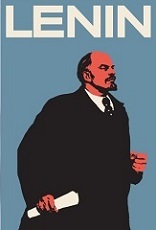 The dissolution of the United Soviet Social Republics (USSR) remains one of the most important and world changing moments in history. The lowering of the hammer and sickle on December 26, 1991, was the end of seventy-four years of Soviet dominance over Eastern Europe. But the remnants of the Soviet Union can still be found today and the ghost of its founder, Vladimir Ilyich Ulyanov (1870-1924), continues to haunt Russia. In Red Square, Moscow, Lenin’s corpse remains on permanent display and is maintained by a full-time staff of technicians. To believers in the old-guard and Marxism, Lenin is the eternal leader of the Bolshevik revolution. To his detractors, he was madman who unleashed a wave of terror and was outdone only by his successor Joseph Stalin (1878-1953). Undoubtedly, Stalin ruled the Soviet Union with an iron grip built upon fear, intimidation and murder. But those tactics were not new methods of operation, having been in use long before he took power. During the reign of the Soviet Union, information regarding Lenin’s private life was kept secret and only the most privileged of researchers were able to see any official records. The passage of time and change in attitudes had resulted in the disclosure of Soviet records that many thought would never be revealed. The thaw which began with Nikita Khrushchev (1894-1971) has allowed the world to learn the truth behind the Iron Curtain. Author Victor Sebestyen has taken another look at Lenin’s life in this well-researched and revealing biography of the iconic and infamous Soviet leader.
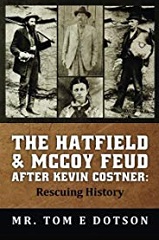 In American folklore, there are two families whose names are recognized as being part of what is arguably the longest running feud to have ever taken place in the United States. The Hatfields and the McCoys have become ingrained in the American experience and the alleged feud between the two families has been re-told through films, documentaries, websites and books. In 2012, the History Channel released a multi-part miniseries about the feud starring Kevin Costner as William Anderson “Devil Anse” Hatfield (1839-1921) and the late Bill Paxton (1955-2017) as Randolph “Ran’l” McCoy (1825-1914). The series is highly rated but just how accurate was it? And were the Tug Valley in West Virginia and Pike County in Kentucky, really that deadly in the late 1800s? Thomas E. Dotson is a descendant of both families and here he rescues history and sets the record straight about what really did happen between the years of 1882 and 1888. And what he reveals will undoubtedly change the way you view the “feud” between the two famous families.
 In 1993, Loud Records released an album that re-defined the rap music genre. A group of nine lyricists from the borough of Staten Island in New York City joined together and created Enter the Wu-Tang (36 Chambers). The album was a smash hit and before long, millions of hip-hop fans knew the names of each member by hard. As a New York City native, I remember when the single Protect Ya Neck was released and the buzz surrounding this new group that was in your face, raw and uncut. To some, the group was just another rap entourage from the streets, that was profane and too rough around the edges for mainstream society. But to fans, they represented a new concept and sound that no one had ever seen before from rap artists. The latter won out and through many albums, tours and even television appearances, the group cemented their legacy as one of rap’s greatest acts. But for all of the glitz and glamour, there also existed a behind-the-scenes story that was playing out in ways that no fan could have ever guessed.
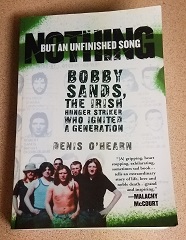 Recently, I have become fascinated with the troubles in Northern Ireland, a culmination of long-simmering tensions between Catholics and Protestants in Ulster Province. The conflict is among the longest running in the world and has claimed the lives of thousands. In each of the books that I have read, I kept coming across the name Bobby Sands (1954-1981). I knew he was one of several prisoners at the Long Kesh correctional facility who died following a hunger strike in protest of the conditions at the jail and the policies of London. However, I did not know much about his life. I became focused on him and eagerly searched online for whatever I could find. Amazon delivered yet again with this definitive biography of Sands’ life by author Dennis O’Hearn that is nothing short of riveting.
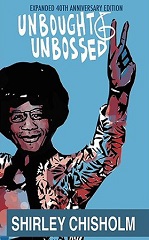 Many years before Hilary Clinton decided to run for the office of President of the United States, there was another politician who had eyes on the White House. And although she did not win the Democratic nomination, she earned a significant amount of votes and in the process, showed that a women candidates were more acceptable to society than many have long believed. Her name was Shirley Anita Chisholm (1924-2005) and through sheer determination, she launched a political campaign that challenged many accepted norms in American society and helped to break down barriers, even today. In January, 2019, thirty-six women joined the House of Representatives following the success by Democrats in the 2018 mid-term elections. The number is now the record for the most women in the House of Representatives and if current trends are an indication, that number will continue to grown through future elections.
 Several years ago, I visited Dublin to finally see Ireland for myself. And while I admit that I was not swayed by the Irish breakfast, there were many other things about Dublin that made up for the first morning and I left Dublin with a sense of warmth and humbleness. During my visit, I stopped by the General Post Office (“GPO”) to send out a few postcards. As I stood on line with other tourists, I marveled at the beauty of the building. After some time, I and the other customers departed and went our separate ways. But I do not believe that many of us on line that day, recalled or were aware of the historical significance of the post office. On April 24, 1916, members of the Irish Republican Brotherhood (“IRB”), staged an uprising across Dublin to force an end to the rule of the British Crown (“the Crown”) across Ireland. The GPO was one of many occupied buildings but is recognized as “ground zero” for the various seizures that occurred. The events of that day have become known as the Easter Rising and contained within the pages of this book, is the story from start to finish by author Tim Pat Coogan.
 FREETHINKING BIBLIOPHILE
You must be logged in to post a comment.