
 In the early morning hours of April 26, 1986, engineers at the Chernobyl Nuclear Power Plant in Pripyat, Ukraine, began the process of conducting a test of Reactor No. 4. Unwilling to postpone the test another year, engineers pushed forward under questionable circumstances that proved to have deadly consequences. Within minutes, disaster struck as a thunderous roar and cataclysmic explosion were felt and heard throughout the facility. The eruption of the reactor resulted in a complete implosion and the propulsion of a radioactive dust cloud into the atmosphere. Instantly, Soviet officials set in motion an official coverup of the disaster in an attempt to keep the news of the reactor’s meltdown from reaching western news outlets. On the surface, the Politburo maintained the image of business as usual, but behind the scenes it was pandemonium. In the days and weeks that followed, the people of Pripyat looked death in the face as the reality of the nuclear fallout become terrifyingly clear. Within days, cross-winds moving across Europe carried the dust cloud across several countries, setting off alarm bells as radiation dosimeters showed readings that were literally off the charts. Before long, it became clear that a nuclear disaster had occurred and the most likely source was somewhere in the Soviet Union. Soviet authorities pulled out all the stops in denying anything was amiss but the truth began to leak out and forced Moscow to make troubling admissions. These events an those that followed have become known as the Chernobyl disaster and that story is told here again by author Adam Higginbotham who tells what is perhaps, the full story behind the world’s worst nuclear disaster.
More than thirty years have passed since the tragedy at Chernobyl and the names of those who responded to the emergency have faded over time. Some of them are still alive but many others are no longer here, having joined the long list of victims who lost their lives from exposure to radiation in the wake of the meltdown. Their stories are told here, showing the many sides of a tragedy that shocked the world. And by the end of the book, their names will become seared into the reader’s memory as the key figures that are forever tied to the legacy of Chernobyl. The author has done a great service in keeping their memories alive and in the process ensures that they are never forgotten as time passes and the world continues to move forward.
The amount of research that went into this book is staggering and Higginbotham was able to personally interview several individuals including the former director of Chernobyl, Viktor Brukhanov, who has publicly stated that officials covered-up the disaster for twenty years. Brukhanov was not there the night of the test but his position as director resulted in his conviction for negligence and a ten-year prison sentence of which he served five. His conviction was one of several obtained by officials as scapegoats became the focus of Moscow. The reality is that the meltdown was the result of a series of events that Higginbotham explores in detail leading up to that fateful night. And the true story is simply astounding.
Undoubtedly, the disaster itself is the focus of the story but the book is also a step back into the closed-door mindset of the USSR and its iron grip over the Soviet Republics. The policies of Mikhail Gorbachev were put to the test as old-school hardliners battled younger party members who saw the world through a different lens. Communism, the Cold War, deception and gross negligence all play a role in the story and will cause readers to stare in disbelief. Those of us who are old enough to remember the events as they played out will recall the events that transpired as news of the meltdown trickled out of the USSR. But as Higginbotham shows, the information that became known to western nations was only part of the story. And even former International Atomic Energy Agency director Hans Blix, did not know the full extent of the damage. Figures put forward by Moscow were often intentionally skewed in an effort to downplay the severity of the reactor’s destruction. The Politburo was determined to restrict as much information as possible and the fierce battles between party members highlights the system of dysfunction that existed, partly based on the belief in Soviet superiority over its U.S. counterpart.
From start to finish, I found myself glued to the book as the story continued to unfold. And although I vividly remember the story as it broke in 1986, I learned a significant amount of new information in the book. To help the reader, Higginbotham provides detailed explanations regarding radiation exposure which are crucial to understanding the severity of the recovery effort and the physical deterioration of those who directly participated in saving the plant. None of the workers and responders were able to completely recover and struggled in later years with failing health and painfully slow deaths. Thousands of men, women and children were exposed to radiation but the full number is probably far higher than Soviet officials were ever willing to admit. Incredibly, officials resisted calls to evacuate Pripyat, believing such an act would be an admission that the situation was grave. But as the truth became clear, officials were left with no choice and forced to evacuate the city which remains abandoned to this day.
Chernobyl has become the poster child for disasters involving nuclear disasters with its Ferris wheel and main building become bone-chilling landmarks from the city that is uninhabitable. Pripyat has become so embedded in pop culture that it served as the setting for one of the chapters in the hit game Call of Duty: Modern Warfare. Today, there are those who visit Pripyat as explorers curious to see the fallout of a nuclear disaster in person. And while the fourth reactor has been encased since 1986 in a protective shell to contain radiation, the surrounding areas still contains various amounts of contamination. Images and videos from visitors, show the dark and desolate landscape of a once thriving city. The sadness with which residents left Pripyat is captured by the author showing the multiple effects of the fallout, even to those who had not been exposed to lethal dosages of radiation.
Engineers have made significant advancements in safety procedures used to secure nuclear facilities. Nuclear power, when used correctly, is considered a clean technology. It emits no carbon dioxide in the atmosphere but a meltdown as shown here, would have devastating consequences. The average person has little reason to think about nuclear power, but less than forty years ago, the horror of a nuclear meltdown became frighteningly real and forced every nation that uses nuclear power to rethink its course going forward. The danger of another Chernobyl has not left us and a meltdown could once again happen at some point in the future. But I believe that if we remember the story of Chernobyl, re-told beautifully in this excellent compendium by Higginbotham, then we do have a high chance of preventing another Chernobyl before it has a chance to happen.
Towards the end of the book, the author also shows how the effects of Chernobyl played a role in the disintegration of the USSR as the Soviet Republics moved for independence. Ukraine’s struggle is well-known and to this day, Russia has continually tried to exert its influence over its smaller-sized neighbor. Chernobyl revealed a significant crack in the official facade of Soviet invincibility and changed the way the world viewed nuclear power. Those who want to know what really happened on the night of April 25, 1986, and in the months that followed, will find the answers they seek and more here in this well-written and highly informative account of an event that should never be forgotten.
ASIN: B07GNV7PNH
 My father recommended this book at the end of a conversation during one of my typical weekend visits. He commented that he had read the book during his late teen years and always remembered it for standing out as unforgettable. When I arrived back home, I went online to begin my search and quickly found it on Amazon. The book is fiction, which I rarely read, but my father generally has great recommendations on all types of media. And I am happy to report that once again, he did not let me down. I have already called him twice to discuss this short but powerful book by the late Samuel Eldred Greenlee, Jr. (1930-2014). The title alone is enough to raise eyebrows and at first glance, seems politically incorrect. But behind the cover page is a story that takes the ingredients of Washington, the Central Intelligence Agency (CIA), Civil Rights Movement and Black militancy and combines them into tale that is sure to be remembered for years to come by all who have opened the pages of this book.
 In 1974, the feelings of innocence and safety that were pillars of Icelandic society, eroded when two men disappeared and were later presumed dead. The crimes brought home the reality to thousands of Icelanders that even their nation could experience what was believed to only happen in other places such as America. On January 27, 1974, Gudmundur Einarsson disappeared after leaving a nightclub in the area known as Hafnarfjordur. Ten months later, Geirfinnur Einarsson disappeared after receiving a phone call from an unknown caller. He left home in a hurry and his car was later found abandoned by authorities. The bodies of both men have never been found. The cases would have remained cold if not for the arrest of a young couple for embezzlement. Erla Bolladottir and Saevar Ciesielski’s apprehension by police eventually set into motion a chain of events that resulted in the convictions and imprisonment of six people whose names continue to carry the stigma of Iceland’s worst killers. Kristjan Vidar Vidarsson, Tryggvi Runar Leifsson, Albert Klahn Skaftason and Gudjon Skarphedinsson joined Erla and Saevar as defendants in the cases that polarized an entire nation. At first glance, the story seems simple, two kids were caught committing a crime and then confessed to other crimes wherein they implicated previously unknown co-conspirators. But upon closer inspection, many problems arise with the official story and to this day, there are many unanswered questions. Anthony Adeane traveled to and from Iceland for several years conducting research for this book and what is contained in its pages has caused me to take an even deeper look at a case that had already caught my attention.
 In December, 1991, the unthinkable happened as the Union of Soviet Socialist Republics (USSR) dissolved into fifteen separate countries. Known informally as the Soviet Union, the USSR seemed at times indestructible to those viewing the union from abroad. But within dissension had been brewing for many years in the wake of the tyrannical reign of Joseph Stalin (1878-1953). His successors embarked on a period of de-Stalinization that thrived under the administration of Nikita Sergeyevich Khrushchev (1894-1971). The Soviet Union remained a superpower and in direct competition with arch-rival the United States. It dissolution shocked the world and left the future of the former Soviet republics in limbo. In the aftermath of the monumental and historic collapse, the individual republics established their own rights to self-governance and in some cases, completely rejected Russian rule. Tensions between many of the nations continues to this day. Currently, Vladimir Vladimirovich Putin serves as the President of Russia, and is as much of a controversial figure as many of his predecessors. His appointment by late President Boris Nikolayevich Yeltsin (1931-2007) gave many Russians hope that a new direction was in store for the beloved country. Today, as we look back at the time that has passed since he was chosen to lead Russia, we can see a tortured nation still suffering from systematic oppression and what is rightly described in this book as totalitarianism.
 Legends never die, that is an absolute fact. Some legends never live past fifty years of age, often leaving their mortal coil through tragedy or illness. For Alexander Fu Sheng (1954-1983), a single car accident was the cause of his demise and in the early morning hours of July 7, 1983, he died at the young age of twenty-eight. He left behind grieving parents, siblings and his widow Jenny Tseng, an accomplished Hong Kong singer who has also performed abroad. At the time of his death, he had risen to become one of the most popular stars to come out of the legendary Shaw Brothers Studio. Before ceasing film production in late 1985, Shaw Brothers had released several hundred films which had been locked away until Celestial Pictures bought the rights to the films and digitally remastered the majority of the collection. As a long-term fan of the martial-arts film genre, I had amassed a large collection of films which included all of Fu Sheng’s movies. My favorite is the film that catapulted him to international stardom,
  In spite of their infamous reputations, there is something about serial killers that compels society to revisit their crimes and re-live what could best be described as nightmares by the families of victims, survivors of the crimes and law enforcement who worked countless hours in their attempts to bring the killers to justice. Netflix recently premiered
  On January 11, 2019, Netflix released ReMastered: Massacre at the Stadium, a look back at the violent coup in September, 1973 in which President Salvador Allende (1908-1973) was overthrown by the Chilean military. In his place, General Augusto Pinochet (1915-2006) assumed power and unleashed a reign of tyranny that lasted sixteen years and caused the deaths of thousands of Chileans. His reign came to an end when Patricio Aylwin (1918-2016) was elected as the next President of the Republic of Chile. Pinochet was arrested in October, 1998, by British intelligence and repatriated to Chile on March 3, 2000. He died on December 10, 2006, without having served a day in prison for the human rights violations that occurred during his time in office. Today he is largely recognized as one of Latin America’s most infamous tyrants. The story of his rise to power and fall are covered beautifully in Peter Kornbluh’s
  The United States and Iran share a long and storied past, defined in moments that changed world history. The removal of Mohammad Mossadegh in 1953, followed by the reinstatement of the Shah and the Iran Hostage Crisis in 1979, set the stage for decades of tension between the two nations. And incredibly, it was under this tension that the administration of U.S. President Barack H. Obama engaged in talks that resulted in the The Joint Comprehensive Plan of Action, simply known as the Iran Nuclear Deal. The deal was both heralded as a landmark achievement and a kowtow of the worst kind. But what many Americans did not know, was that there was far more taking place behind the scenes, including the release of U.S. prisoners held in Iranian jails. Among those prisoners, was American born journalist Jason Rezaian, of The Washington Post. You may remember him from his appearance on Anthony Bourdain’s (1956-2018) hit show No Reservations. The episode was beautifully done and Rezaian and his wife Yeganeh, appear as voices of insight into Iranian culture. At the conclusion of the episode, there is a message on the screen that they both had been taken by Iranian intelligence. The episode is my second favorite, the first is Vietnam in which President Obama makes a surprise appearance and enjoys a meal with Bourdain in Ho Chih Minh City. On January 16, 2016, Rezaian was released was repatriated to the United States. Joining him were his Iranian born wife and his mother who never stopped fighting for her son’s release.
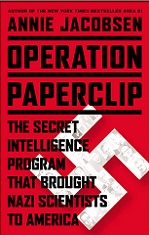 On April 30, 1945, Adolf Hitler fatally shot his wife Eva Braun and then turned the gun on himself as it became evidently clear that allied forces were closing on the führerbunker. The fear of falling into Russian hands and a subsequent trial for war crimes proved to be too much for the top echelon of the Third Reich that remained in Berlin. Many top-ranking officials had previously fled and others had left Germany after realizing that all hope for a victory in the war had been lost. As allied forces move in and occupied the country, the true horrors of the Nazi reign became clear and soldiers were faced with the grim discoveries of concentration camps, emaciated and dead prisoners. The Final Solution had been revealed for the entire world to see. In the aftermath of the war, several hundred Nazi party members were executed by allied forces. Others were acquitted or had their death sentences commuted to long-term imprisonment. Another group consisting of scientists and doctors, found their way to America with the help of the United States Government in what became known as Operation Paperclip. Their story is the focus of this incredible book by author Annie Jacobsen.
 Those of us who have visited the Museum of Modern Art in New York City, can testify to its seduction of visitors with a passion for treasured art. The second floor is home to Campbell’s Soup Cans and Other Works, 1953–1967, a collection of thirty-two pieces by the late Andy Warhol (1928-1987). February 22 will mark thirty-two years since his untimely death at the age of fifty-eight. Art students and museum aficionados have long studied his work as the shining example of the Pop Art movement that swept across the United Kingdom and United States during the 1950s. Warhol undoubtedly became the poster child for the movement with his sleek frame, white wig, large frame glasses and black sweater. His personal life, carefully hidden from the public, became a mystery to those seeking to know just who is and who was the real Andy Warhol? Bob Colacello worked for Warhol on their publication Interview, for twelve years and in this intriguing account of their time together, he reveals the Andy Warhol he knew with all his quirks, ingenuity and fears in life.

You must be logged in to post a comment.