
 The death of Idi Amin Dada on August 16, 2003, caused a stir of emotions in Uganda, the country he once ruled with an iron fist. His name is infamous and the crimes of his regime are endless. He ranks high among the worst dictators in world history and is a case study of the rampant abuse of power by a malevolent tyrant. Actor Forest Whitaker brilliantly played the late dictator in the 2006 film The Last King of Scotland. The film was fictionalized in part, but Whitaker capture the essence of Amin’s character and his performance was nothing short of phenomenal. The real Idi Amin was far worse as we know and there is a chance that the true number of the crimes committed by him and his henchmen will never be known. The fates of hundreds of Ugandans remain a mystery with no sense of closure in sight. Nearly four decades have passed since Amin fled into exile but he is a permanent part of Ugandan history. In this book by journalist Andrew Rice, we take a different look at the Amin regime, not through his life but through the lives of those who served him. The lives and stories intersect around the murder of Eliphaz Laki, the former county chief of Ibanda, Mbarara. In 1972, he was apprehended by Amin’s enforcers, led by Yusuf Gowon, assisted and abetted by Nasur Gille and Mohamed Anyure. His murder was covered up until his son Duncan returned to his native country in a quest to find his father’s killers. Duncan emigrated to the United States, settling in New Jersey with his wife. Their union produced four children and Laki supports his family as a lawyer. But the laws of the United States are different from Uganda as we see in the book. This is his story and a step back into time as we revisit the Protectorate of Uganda under the all watchful eye of Amin.
Before you open this book, I recommend that you remove any pre-conceived notions about Uganda. Personally, I found that after reading this book, there was much about the African nation that I did not know. In contrast to the picture of Africa being a land of savages, the truth is that colonialism, tribalism and corruption combined to eliminate any semblance of a properly functioning society. As Rice follows Duncan on his mission to bring his father’s killers to justice, the complex web of jealousy and suspicion ignited by Amin’s paranoia becomes evidently clear. Tragically, what could have been a great country, seemed to regress upon finally gaining its independence. In the book, as each character is introduce, Rice retraces their history, explaining in detail why they’re relevant to the current story. Expectedly, former leader Milton Obote appears throughout the story as he and Amin end up on a collision course for control of the country. The book develops into a history lesson on Ugandan politics and is a social study of the issues that continue to plague it today. It should be pointed out that the book is not a biography of Amin. In fact, as Rice points out, Amin’s early life is highly obscure and his exact date of birth was never been attained. The focus instead is on Duncan’s investigation with the help of a local investigator, Alfred Orijado. Their investigation leads them to the three suspects who are arrested and interrogated before signing confessions explaining their role in Eliphaz Laki’s death. And similar to the former Nazi officials, the Nuremberg defense once again rears its ugly head.
The trial eventually reveals the many flaws in the Uganda system while highlighting the progress that had been made administratively under the direction of former President Yoweri Museveni. Along with Amin and Milton Obote, Museveni is a permanent fixture in Ugandan history with the distinction of having served thirty-one years as the ruler of Ugandan. He has been called a dictator and if he should move to change the law to exempt him from retiring at the mandatory age of seventy-five, the accusations will hold more weight. Nonetheless, he is a walking piece of history at the age of seventy-one, having witnessed Uganda’s darkest times first hand. His prominence is slowly slipping as younger Ugandans look towards a brighter future with change in a new direction.
Westerners may find it hard to relate to the events in the book. For those of us lucky enough to have grown up in the United States, a civil war is unknown to us personally and something we have read about in textbooks. But for immigrants from Uganda who remember Amin’s reign, the terror remains with them every day reminding them of how tragic their lives once were. And while the ending is not what the reader may expect, the book is invaluable is showing what life was like in Uganda during that era. In death, Amin has joined the ranks of Hitler, Stalin, Lenin and other dictators whose dark legacies continue to haunt the nations they once ruled. Uganda continues to heal and the story of Eliphaz and Duncan Laki, is just one of thousands to be told about the maniacal Idi Amin Dada.
ISBN-10: 0312429738
ISBN-13: 978-0312429737
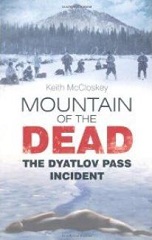
 On January 23, 1959, Igor Dyatlov (1936-1959) and several of his classmates at the Ural Polytechnic Institute in the City of Sverdlosky, board a train as they commence their hiking expedition to the Otorten Mountain in the Northern Urals in Siberia. On February 12, they are expected to return from their trip but there is no sing of the explorers, some of whom are as young as twenty years of age. Eight days later, a formal search team is put together to find the missing hikers. Over the next several weeks, their remains are found and returned back home. Lev Ivanov is assigned to investigate their deaths and to this day, the official explanation is that they died due to some “unknown force”. The incident that has become known as the Dyatlov Pass, remains one of history’s darkest mysteries. Donnie Eichar, a film producer and author revisits the incident in this chilling look into a mind-boggling event that is nothing short of surreal.
 On Tuesday, June 27, 2017, Argentine President Mauricio Macri of Argentina and Michelle Bachelet of Chile met in Santiago, Chile to discuss a trade agreement between the two South American nations. A trade agreement would be a boost to the economies of both nations and help the Argentine economy recover from years of devaluation of the peso and loans on which the country was forced to default. In three weeks I will revisit the Argentine Republic, landing in Buenos Aires, appropriately called the “Paris of South America”. As of today, the exchange rate between the United States Dollar and Argentine Peso is
  On January 23, 2007, E. Howard Hunt died in Miami, Florida at the age of 88. Hunt is best remembered for his conviction as a result of his role in the Watergate scandal that helped end the presidency of Richard M. Nixon. Hunt was also a prime suspect in the murder of John F. Kennedy. His son St. John, spoke with his father prior to his death and their discussion is referred to as his deathbed confession about what he knew about the events in Dallas, Texas. In the years following his death, truths about his role in the Central Intelligence Agency and the events in Dallas disproving his claim to be just a ‘bench warmer” in the crime. Next to Hunt throughout the Watergate crisis was his first wife Dorothy who perished when United Flight 553 crashed on December 8, 1972 as it approached Chicago Midway Airport to make its landing. The NTSB attributed the crash to pilot error but researchers have long suspected sabotage in the crash and have alluded to a long number of disturbing facts surrounding the crash. On the surface, it seems to be just a tragic accident that killed a housewife en route to visit acquaintances. But upon deeper examination of the crash and her life as revealed by her son in this book, the real story of the life of Dorothy Hunt is nearly as intriguing as that of her husband.
 Today, sixty-four years after his death in, Joseph Stalin (1878-1953) remains one of the most polarizing and studied figures of the 20th century. As the leader of the Soviet Union during the Second World War, he enforced the legendary Red Army as it fought off a German onslaught and helped the Allies put an end to Germany’s Third Reich. Following the war, tensions between the United States and the USSR escalated giving birth to the Cold War. In 1991, the USSR collapsed and today Russia is under the control of Vladimir Putin, undoubtedly one of the world’s most controversial figures. Stalin’s reign may seem to be in Russia’s distant past but it was less than one hundred years ago that Stalin ruled with an iron fist, striking fear into the hearts of not only his enemies but those closest to him. Rumors have surfaced over the years regarding everything including his love life, health, mental state and bungled policies. But who was the real Joseph Stalin? Born Ioseb Jughashvili in Gori, Georgia on December 18, 1878 to Besarion “Beso” Jughashvili (1850-1909) and Ketevan “Keke” Geladze (1858-1937), few could have imagined that the young child would grow up to rule an entire nation. His life in later years became mysterious to those inside and outside of Russia. Misconceptions and falsehoods have spread, causing even more confusion about the truth. Stephen Kotkin has takes on the late leader’s life in a multi-part definitive biography that is simply outstanding.
 America is often referred to as the land of opportunity for anyone wishing to start a new life far away from home. Since the days of Amerigo Vespucci, the territory we now call the United States has been a primary destination for world travelers. In recent years, legislation regarding immigration has been an important topic which provokes fierce debate. Every country has its issues with immigration and none has a perfect regarding the same. However America has been the place where millions of immigrants have made a new home. The late John F. Kennedy, formerly the Thirty-Fifth President of the United States, left us with many writings, interviews and speeches before his untimely death in Dallas, Texas. His sharp wit, uncanny foresight and fierce independence catapulted him to the top of the list of Americans whose names live on forever. As the descendants of Irish settlers from Ireland escaping the potato famine, his family came to America in search of a new life. Their journey was long and their assimilation into a new society rough, with prejudice and xenophobia forming substantial obstacles to peace and happiness. Their plight was never forgotten and is told again in this short but engaging book that clarifies his position that America truly is a nation of immigrants.
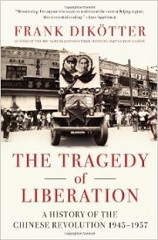 Today, the People’s Republic of China continues to feel the effects of the policies of it most popular leader, the late Mao Zedong (1893-1976). Known as Chairman Mao, his successful campaign against the Nationalist led by Chiang Kai-Shek (1887-1975) set the stage for the founding of the People’s Republic of China on October 1, 1949. Mao ruled the nation until his death on September 9, 1976 at the age of eighty-two. During his tenure he came a controversial figure and is credited with causing millions of deaths through the failed policies of collectivization and the infamous “Great Leap Forward.” The aura of promise and hope that surrounded the commencement of his administration subsided as millions of Chinese endured long periods of poverty and famine while Mao enjoyed unlimited perks through his role as Chairman. Propaganda is a power tool used by the darkest of dictators to enforce their will on the masses of people they wish to control. An official story of triumph supported by an unwavering commitment to the revolution by ordinary men and women, helped cast an illusion of a progressive new China, modeled on its Soviet counterpart. In reality, the story is far different and in some cases, horrific as can been seen in this study of the early years of the Chinese Revolution by Dutch historian Frank Dikötter. (1961-)
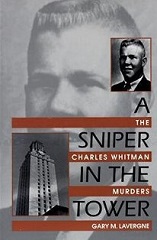 On August 1, 1966, the citizens of Austin, Texas woke up to yet another brutally hot summer day. The heat was typical for the summer season but that day would be remembered for more than just the temperature. At 11:35 a.m., Charles Whitman (1941-1966), a former United States Marine and student at the University of Texas, ascended to the observation deck of the UT Tower and unleashed a deadly shooting assault on suspecting civilians below. In ninety-six minutes, Whitman murdered fourteen people and wounded at least thirty-one before he was shot and killed by responding law enforcement officers Houston McCloy and Ramiro Martinez who were joined by civilian Allen Crum. The shooting left the city shocked and ushered in a new concept in American history; the mass shooting spree.
 More than twenty years have passed since the deaths of rap stars Tupac Shakur and The Notorious B.I.G. (Christopher Wallace). The two rappers were both under thirty years of age and left behind grieving friends and family members who struggled to come to terms with such a sudden and tragic loss. Officially, both murders are still open investigations. Fans of the fallen artists have expressed shock that the murders have remained unsolved for so many years. Theories have been presented surrounding their deaths but no final conclusion had been reached. Following Shakur’s death, his mother Afeni successfully sued Death Row records for control of her son’s master recordings, unpaid earnings and royalties. The parties reached a
  FREETHINKING BIBLIOPHILE
You must be logged in to post a comment.