
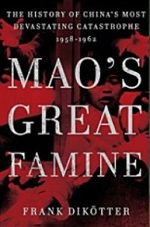
 Previously, I reviewed Frank Dikötter’s The Tragedy of Liberation: A History of the Chinese Revolution 1945-1957 and The Cultural Revolution: A People’s History, 1962-1976, investigative accounts into life under the rule of Chairman Mao Zedong (1893-1976). In the first volume, Tragedy of Liberation, we learned about the transformation of China following the defeat of Chiang Kai-Shek (1887-1975) and his Kuomintang Nationalist party. In the third volume, The Cultural Revolution, the behind the scenes political battles are put on display revealing the dysfunction that had engulfed Mao’s inner circle. Here in Mao’s Great Famine, Dikötter takes us back in time to the Great Leap Forward and its catastrophic failure between the years of 1958 and 1962. I feel the need to point out that by far, this part of the trilogy was the most difficult to read. As usual, Dikötter’s writing style is to the point and very concise. The difficult part is the material at hand. Today we know a fair amount about the Great Leap Forward and how it failed to transform Chinese society. The famine that ensued is known but what may not be known are the facts about what really happened behind the closed doors of China as a government struggled to move a nation forward as widespread hunger decimated its population.
If you are a reader with a sensitive stomach or easily disturbed, this may not be the book for you. But if you are a reader that is able to digest material that is emotionally and mentally difficult to accept, then this book will be one that you can add to your reading list. Some may wonder why a book such as this is needed. I believe it is important because it reveals to us what many probably did not and do not know. The details are sometimes gory and all around tragic. At several points in the book, I wondered to myself how human beings could do the things that they did to each other. The policy of collectivization and the labor mandated by the government devastated the country in ways from which it is still recovering. Mao’s grip over China was relentless and his failure to first grasp the severity of the situation and his lack of action to halt the descent is mystifying and infuriating. And considering what was known to have occurred in counties across the country, I am astounded that he was able to sleep at night with the blood of millions of Chinese on his hands. Perhaps towards the end of his life and in closed-door meetings, he did voice concern and repulsion about what was transpiring. But if that did happen, those facts have remained secret and are locked away from public view. One day we may find out more of the truth but for now we can only assume.
In between the descriptions of famine and violence, I did pick up a possibly unintended message in the book; we should all be grateful for the privileges and comforts in life that we have. I personally have never had the experiences detailed by Dikötter. And I can only imagine what life for them was like. Through his work, I now know their stories and can see their pain but I can never say that I know their struggle. Daily episodes of gratuitous violence, sexual assault, exhaustion, inhumane living conditions and death occurred with no reprieve. And when people did try to make their voices heard, they were met with severe resistance by cadres unwavering in their adulation to the Chairman. Lives were ended and others had their career ruined as the Red Guard made its presence felt throughout the country. Those who did not succumb to violence, often had to deal with extreme hunger, disease and mental degradation. The number of deaths that occurred is not known for sure but as we see in the book, it is believed that over 40 million Chinese people died during the Great Leap Forward. It is by far the worst case of systemic mass murder the world has ever seen and hopefully never will see again.
Today, Mao’s picture can still be found across China and his tomb in Beijing is open to the public. But as we come to know more about the Great Leap Forward and the Cultural Revolution, we will be forced to reexamine what we thought we knew about the Chairman and the legacy that lives decades after his death. This book is a hard look at the Great Leap Forward and all of its infamy.
ISBN-10: 0802779239
ISBN-13: 978-0802779236
 On June 8, 1967, the USS Liberty was on a reconnaissance mission in the Mediterranean Sea near Sinai, Egypt. The morning started off normally until members of the ship’s crew noticed Israeli fighter jets circling above. The process was repeated several times more before a full-scale attacked was launched upon the unsuspecting ship. Thirty-four men perished in the attacks. Nearly all of the survivors were severely wounded with injuries that could only be described as horrific. The attack caused international outrage as the American and Israeli governments acted to contain the fallout from the nefarious attack. The official statement was that the attack was a grave error committed by Israeli forces upon a ship that allegedly had no clear markings identifying it as a United States Naval vessel. Members of the crew disputed this and some have made their voices heard in an attempt to tell what they know about that day tragic day in June, 1967. James M. Ennes, Jr., was a member of the crew and survived the attacked with a severely broken leg and other mental and physical injuries. He was one of the lucky ones and never wavered in his conviction to tell the truth about what he remembers from that day. Here he tells us the story from his recollections on record for the reader to digest and form an informed opinion.
 The Second World War remains the most brutal conflict in history. The number of those who perished is still up for debate and there are many secrets of the war that have been lost to history forever. In the United States, foreign-born citizens with roots in any of the countries part of the Axis powers, found their selves under suspicion and in the case of the Japanese, placed into concentration camps. Although not as inhumane and deadly as the camps in Germany and Poland, they resulted in the rise of resentment among Japanese-Americans toward the United States Government and the country they called home. The dropping of the Atomic bombs further heightened the feeling of resentment and was the first and only time a nuclear weapon was used in warfare. Survivors of the bomb attacks can still be found today, advanced in their years but tragically familiar with the barbarity of modern warfare. Across the pacific, Japanese-American veterans of the war remember the tragedy that befell Japan, the nation to which their families trace their origins. But what happens when half of a family is in Japan and the other half is in the United States? Or what do you do when one son is part of the Japanese Imperial Army and the other is part of the United States Armed Forces? And when the war is over, how do you come to terms with the effects war has had on your family and yourself? This is the story of the Fukuhara family whose lives are the answer to those questions. Written by Pamela Rotner Sakamoto and containing snippets of interviews conducted with those relevant to the story, Midnight in Broad Daylight is a heart wrenching story of a family struggling to survive, having been affected by a war in more ways than one.
 The name Idi Amin remains among the most infamous our world has ever known. Following the overthrow that removed Milton Obote (1925-2005) from power, the late despot ruled Uganda with relentless brutality as he enriched himself at the peril of hundreds of thousands of Ugandans. In January, 1979, the Ugandan National Liberation Army forced him into exile with the help of the Tanzania People’s Defense Force and former Libyan dictator Libya’s Muammar Gaddafi (1942-2011). Amin spent the last years of his life in Jeddah, Saudi Arabia, where he died on August 16, 2003. Today, nearly fifteen years after his death, he is still reviled by those who remember a dark period in the history of Uganda.
 The 2016 presidential election remains an event that bordered on the surreal and shocked not just American citizens but people around the globe. Donald J. Trump, the political outsider and least likely candidate to win, secured the Republican nomination and the electoral votes needed to become the 45th President of the United States of America. As we begin 2018 we can look back on his first year and office and reach various conclusions depending on our political outlook and beliefs about the state of the nation. What is certain, is that from the start, his administration has been plagued with allegations of collusion with nefarious figures hailing from Russia. Prior to his election, he often showed admiration for Vladimir Putin and since taking office, has taken a passive stance on the country that is believed by intelligence experts to have interfered in the elections of several nations. Former FBI Director Robert Mueller has been appointed Special Counsel to investigate the Trump campaign’s ties to Russia and as of today, the investigation is still ongoing. And while there is no fire yet, there is a lot of smoke.
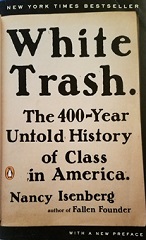 When I first saw the title of this book, I felt my body slightly recoil. In fact, the book was recommended to me by my boss who is a White-American. Previously, Amazon had placed the book on the list of recommended titles for my purchase but I had yet to take the plunge. This time around, I gave in and decided to see what was contained in the pages of this book. Having finished, I can say without a doubt that Nancy Isenberg has produced an eye-opening account of what truly is the untold 400- year history about class and race in America. At first glance, it may seem as if the book is a racist attack on people perceived to be of a lower social class. But in fact, the opposite is true. Isenberg brings light to the suffering and exploitation of a social class that is still disdained and mocked even today. The 2016 Presidential election brought the subject back into the public light provoking fierce debates about the success of the Republican Party and the election of Donald J. Trump. But the question truly remains, what does it mean to be called white trash?
 The American Civil War remains a key turning point in United States history. The nation nearly tore itself apart as the Union and Confederacy engaged in deadly conflict over several issues including States’ rights, secession, and the system of slavery. Prior to its conclusion, President Abraham Lincoln (1809-1865) met his tragic end on April 15, 1965, falling victim to assassin John Wilkes Booth at Ford’s Theater in Washington, D.C. Andrew Johnson, then Vice-President and Democrat, succeeded Lincoln as the 17th President of the Unite States of America. He would only serve in office through 1869 when Lincoln’s term would have ended, but in that short period, his administration would be the center of one of the most critical trials in United States history.
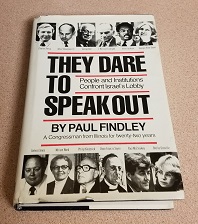 The title alone is enough to grab a person’s attention. Because of the subject matter, it was bound to stir controversy for it touches a topic that remains taboo thirty-seven years after its publication. And with the events this past week regarding the U.S. Embassy in Jerusalem, the contents of this book are as important now as they were then. Before you attempt to read this book, it is critical to understand the difference between Judaism and what is referred to as Zionism. There is a fundamental difference between the two that is often forgotten as charges of anti-Semitism and anti-Israel bias are leveled against those who dare to speak out. However, what I have learned from this book, is critical to understanding how our world functions and why peace is seemingly an impossible objective to accomplish in the Middle East.
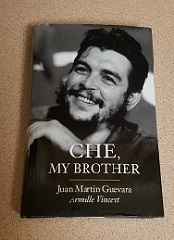 October 10, 1967 – Argentine newspaper Clarin announces that Ernesto “Che” Guevara (1928-1967) has died in Bolivia on October 9 after being capture with a group of guerrilla fighters attempting to spread revolutionary ideology throughout Latin America. In Buenos Aires, his family receives the news of his death and is completely devastated. Juan Martin, his younger brother, races to his father’s apartment where his mother and siblings have gathered as they attempt to piece together the last moments of Ernesto’s life. Che was secretly buried in an unmarked grave and his remains remained hidden for thirty years before author Jon Lee Anderson convinced a retired Bolivian general to reveal the grave’s location. His remains were returned to Havana on July 13, 1997 where he was buried with full military honors on October 17, 1997. In death, Che’s legacy grew exponentially and even today in 2017, he is the icon of revolution around the world. But after his death, what happened to his family and where did their lives take them? Juan Martin, at seventy-two years old, has decided to tell his story and reveal to us many facts about the Guevara family that have sometimes been overlooked by history.

You must be logged in to post a comment.