
 Every year that I age, I have noticed that I have a growing appreciation for classic literature and the works of other authors that are no longer with us. James Baldwin (1924-1987) is near the top of my list of authors whose books are critical to American history and the current day state of affairs in the United States. The Harlem native who took his last breath in France, stands out as a commentator on race in America. His observations which he then put into words, were sharp, analytical and deeply profound. Baldwin lived what could only be described as an eventful but complicated life. He was a Black American and homosexual in a time in which both were considered to be crimes of the highest nature. America had yet to see the passing of the Civil Rights Act of 1964 and homosexuality was still considered a crime against nature in many states. Baldwin was both and carried himself with an aura of confidence and intellect that has remained impressive many years after his death. In this short but intriguing book, Baldwin comments on race in America based off of his experience and encounters with White Americans and even Elijah Muhammad and the Nation of Islam. He never joined the nation but his account of his meeting with Muhammad is one of the highlights of the book. Racial discrimination is never an easy topic to discuss and many of us would prefer to discuss more pleasant issues. But Baldwin was a master of taking a explosive topic and relaying it to the reader in a way that forces one to do deep soul-searching if they are not African-American and reevaluate their own existence if they are.
Too often, it is assumed that books about racial inequality are attacks against White Americans. That is not Baldwin’s goal. In fact, Baldwin’s social circle was very diverse, consisting of White Americans, Black Americans, Europeans and Turkish individuals among others. In fact, in the book there is a part in which he feels conflicted about his White friends and his own social situation in America. His experience is not meant to demean or drive a wedge between friends but highlights the inner conflict that can engulf anyone. The key to appreciating Baldwin’s work is to remember that it was written in a time period that is much different from 2017. Jim Crow, voter suppression, poverty and class based war made life deplorable for minorities and poor White Americans. And before the courage of the Loving family, interracial marriage was illegal throughout the country. Every great movement needs voices like Baldwin, to remind of us where we come from and what we need to do in order to move forward. It is a shame that today, his voice has been largely forgotten by a generation that has no connection of one of the greatest writers in American history.
I truly wish Baldwin had completed more books before his death. His mind was uncanny and we are fortunate to have the works that he left behind. This book is not just for Black or White Americans, but for anyone who wishes to examined and understand America’s unpleasant history with racial equality. History is not always pleasant but the darkness in it, helps us not to make the same mistakes again but to try a different path that works and exemplifies what progress truly is. Baldwin does it again with another classic.
ISBN-10: 003055442X
ISBN-13: 978-0030554421
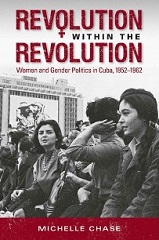 The Cuban Revolution has served as a blueprint as a successful campaign for independence from imperialism. Fidel Castro (1926-2016), Ernesto Che Guevara (1928-1967) and Raul Castro (1931-) became legendary figures in Cuba and around the world. Raul is remaining member of the trio and is currently the President of the Council of State of Cuba and the President of the Council of Ministers of Cuba following Fidel’s retirement in 2008. In March, 2016, United States President Barack Obama made a historic visit to the island in an effort to restore severely strained diplomatic relations between the two nations. Time will tell if Washington and Havana continue down that path.
 Harlem, New York has been and still is crucial to New York City politics. The area that was home to the majority of African-Americans has been affected by the wave of gentrification that has reached nearly every major city across the nation. Musicians, actors, gangsters and politicians have found fame and fortune in the neighborhood with a storied past. And of all of the colorful characters to use Harlem as their base of activity, perhaps none is as famous as the late Adam Clayton Powell, Jr. (1908-1972) There is a street named in his honor in the area but sadly, the generation of today is largely unaware of his story and his contributions to American society. He has been described as flamboyant, stubborn, cunning and of great intelligence. He earned the affection of his congregation and millions of minorities and the wrath of presidents and senators determined to put an end to his career. Forty-five years have passed since his death on April 4, 1972. Cancer proved to be his biggest opponent, taking his life at the age of sixty-three. But who was the real Adam Clayton Powell, Jr? And why is he so important to the Civil Rights Movement and the African-American experience? Wil Haygood has researched Powell’s life and compiled this definitive account of the late congressman’s life.
 The death of Idi Amin Dada on August 16, 2003, caused a stir of emotions in Uganda, the country he once ruled with an iron fist. His name is infamous and the crimes of his regime are endless. He ranks high among the worst dictators in world history and is a case study of the rampant abuse of power by a malevolent tyrant. Actor Forest Whitaker brilliantly played the late dictator in the 2006 film The Last King of Scotland. The film was fictionalized in part, but Whitaker capture the essence of Amin’s character and his performance was nothing short of phenomenal. The real Idi Amin was far worse as we know and there is a chance that the true number of the crimes committed by him and his henchmen will never be known. The fates of hundreds of Ugandans remain a mystery with no sense of closure in sight. Nearly four decades have passed since Amin fled into exile but he is a permanent part of Ugandan history. In this book by journalist Andrew Rice, we take a different look at the Amin regime, not through his life but through the lives of those who served him. The lives and stories intersect around the murder of Eliphaz Laki, the former county chief of Ibanda, Mbarara. In 1972, he was apprehended by Amin’s enforcers, led by Yusuf Gowon, assisted and abetted by Nasur Gille and Mohamed Anyure. His murder was covered up until his son Duncan returned to his native country in a quest to find his father’s killers. Duncan emigrated to the United States, settling in New Jersey with his wife. Their union produced four children and Laki supports his family as a lawyer. But the laws of the United States are different from Uganda as we see in the book. This is his story and a step back into time as we revisit the Protectorate of Uganda under the all watchful eye of Amin.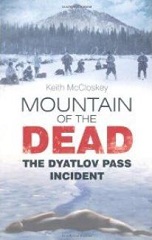
 On January 23, 1959, Igor Dyatlov (1936-1959) and several of his classmates at the Ural Polytechnic Institute in the City of Sverdlosky, board a train as they commence their hiking expedition to the Otorten Mountain in the Northern Urals in Siberia. On February 12, they are expected to return from their trip but there is no sing of the explorers, some of whom are as young as twenty years of age. Eight days later, a formal search team is put together to find the missing hikers. Over the next several weeks, their remains are found and returned back home. Lev Ivanov is assigned to investigate their deaths and to this day, the official explanation is that they died due to some “unknown force”. The incident that has become known as the Dyatlov Pass, remains one of history’s darkest mysteries. Donnie Eichar, a film producer and author revisits the incident in this chilling look into a mind-boggling event that is nothing short of surreal.
 On Tuesday, June 27, 2017, Argentine President Mauricio Macri of Argentina and Michelle Bachelet of Chile met in Santiago, Chile to discuss a trade agreement between the two South American nations. A trade agreement would be a boost to the economies of both nations and help the Argentine economy recover from years of devaluation of the peso and loans on which the country was forced to default. In three weeks I will revisit the Argentine Republic, landing in Buenos Aires, appropriately called the “Paris of South America”. As of today, the exchange rate between the United States Dollar and Argentine Peso is
  On January 23, 2007, E. Howard Hunt died in Miami, Florida at the age of 88. Hunt is best remembered for his conviction as a result of his role in the Watergate scandal that helped end the presidency of Richard M. Nixon. Hunt was also a prime suspect in the murder of John F. Kennedy. His son St. John, spoke with his father prior to his death and their discussion is referred to as his deathbed confession about what he knew about the events in Dallas, Texas. In the years following his death, truths about his role in the Central Intelligence Agency and the events in Dallas disproving his claim to be just a ‘bench warmer” in the crime. Next to Hunt throughout the Watergate crisis was his first wife Dorothy who perished when United Flight 553 crashed on December 8, 1972 as it approached Chicago Midway Airport to make its landing. The NTSB attributed the crash to pilot error but researchers have long suspected sabotage in the crash and have alluded to a long number of disturbing facts surrounding the crash. On the surface, it seems to be just a tragic accident that killed a housewife en route to visit acquaintances. But upon deeper examination of the crash and her life as revealed by her son in this book, the real story of the life of Dorothy Hunt is nearly as intriguing as that of her husband.
 Today, sixty-four years after his death in, Joseph Stalin (1878-1953) remains one of the most polarizing and studied figures of the 20th century. As the leader of the Soviet Union during the Second World War, he enforced the legendary Red Army as it fought off a German onslaught and helped the Allies put an end to Germany’s Third Reich. Following the war, tensions between the United States and the USSR escalated giving birth to the Cold War. In 1991, the USSR collapsed and today Russia is under the control of Vladimir Putin, undoubtedly one of the world’s most controversial figures. Stalin’s reign may seem to be in Russia’s distant past but it was less than one hundred years ago that Stalin ruled with an iron fist, striking fear into the hearts of not only his enemies but those closest to him. Rumors have surfaced over the years regarding everything including his love life, health, mental state and bungled policies. But who was the real Joseph Stalin? Born Ioseb Jughashvili in Gori, Georgia on December 18, 1878 to Besarion “Beso” Jughashvili (1850-1909) and Ketevan “Keke” Geladze (1858-1937), few could have imagined that the young child would grow up to rule an entire nation. His life in later years became mysterious to those inside and outside of Russia. Misconceptions and falsehoods have spread, causing even more confusion about the truth. Stephen Kotkin has takes on the late leader’s life in a multi-part definitive biography that is simply outstanding.
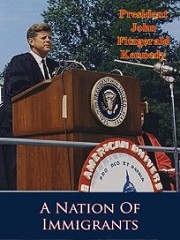 America is often referred to as the land of opportunity for anyone wishing to start a new life far away from home. Since the days of Amerigo Vespucci, the territory we now call the United States has been a primary destination for world travelers. In recent years, legislation regarding immigration has been an important topic which provokes fierce debate. Every country has its issues with immigration and none has a perfect regarding the same. However America has been the place where millions of immigrants have made a new home. The late John F. Kennedy, formerly the Thirty-Fifth President of the United States, left us with many writings, interviews and speeches before his untimely death in Dallas, Texas. His sharp wit, uncanny foresight and fierce independence catapulted him to the top of the list of Americans whose names live on forever. As the descendants of Irish settlers from Ireland escaping the potato famine, his family came to America in search of a new life. Their journey was long and their assimilation into a new society rough, with prejudice and xenophobia forming substantial obstacles to peace and happiness. Their plight was never forgotten and is told again in this short but engaging book that clarifies his position that America truly is a nation of immigrants.

You must be logged in to post a comment.