
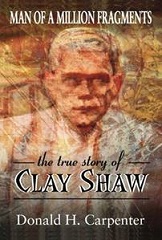
 In December, 1991, Warner Brothers pictures released Oliver Stone’s JFK, the film adaptation of the investigation by New Orleans District Attorney Jim Garrison (1921-1922) into the death of President John F. Kennedy. The film is filled with an all-star cast and remains one of Stone’s greatest accomplishments. Reviews of the movie are generally favorable but there are many critics who have voiced their dissatisfaction with the film believing that Stone omitted crucial information and glorified Garrison on screen. The famed director did an incredible job of bringing the past of life and his effort paid off immensely as more records related to President Kennedy’s assassination were released to the public. The actors that took part in the landmark film all did an incredible job in making the story one that will continue to spark curiosity. From history, we know that Lee Harvey Oswald (1939-1963) was the alleged assassin but was murdered himself before he could stand trial. Several years later, Garrison began his own investigation, focusing on what he believed to be a plot in his own City of New Orleans to murder Kennedy. His investigation resulted in the arrest and prosecution of local businessman Clay L. Shaw (1913-1973). The trial became infamous for its absurdity and Shaw was exonerated in March, 1969. Garrison later tried Shaw on the charge of perjury and Shaw subsequently filed a civil suit against Garrison and others for the violations of his civil rights. These matters and others were unresolved at the time of Shaw’s death from lung cancer on August 15, 1974.
But just who was Clay Shaw and what really was his significance in the murder of John F. Kennedy? In the film we do not know much about Shaw’s past and the focus remains on his alleged connections to Oswald and David Ferrie (1918-1967). The impression that can be made from the movie is that a plot to kill Kennedy evolved among homosexual right wing extremists determined to see the President removed from office. Curiously, nearly none of the popular books on the assassination regard Shaw as a conspirator in the President’s murder. The reality of the case, as shown by Donald Carpenter in this phenomenal biography of Shaw, is that his life was far different from what we have been led to believe and the real Clay Shaw really was a man of a million fragments.
Carpenter researched Shaw’s life over a period of eighteen years before completing the book. Interviews with those who knew Shaw were conducted and Carpenter also reviewed Shaw’s surviving documents, newspaper clippings, statements given by Shaw on screen and other important notes and memorabilia. The final story is simply one of amazement and sheds light on a man who lived a incredible life. For those of us who have visited the French Quarter in New Orleans, we can attest to the level of enjoyment that awaits all of those who pay visit to the legendary Bourbon Street. Today Shaw’s name is an afterthought but at one time, he was a well-known, respected and beloved resident of the French Quarter whose efforts to transfer the neighborhood paid off well and earned him a permanent place in the City’s history.
For all of the shortcomings that plagued JFK, the film was correct regarding the issue of Shaw’s sexual orientation. And in the book it is a reoccurring subject which follows Shaw throughout his life and takes center stage during his trial. The true motives for Garrison trying Shaw remain somewhat elusive and the “evidence” of Shaw’s guilt was fragile at best. Further, rumors about Garrison’s own sexual conduct become fodder for conversation peaking with an incident involving a minor at an athletic club in 1969. I had previously read about Garrison’s indiscretions which are directly addressed by the late Kent “Frenchy” Brouilette (1936-2015) in his autobiography Mr. New Orleans: The Life of a Big Easy Underworld Legend. If Brouilette is truthful, which appears to be the case, then the anecdotes contained within this book carry more clout and shed light on Shaw’s statement to more than one friend that he would tell them the real motive behind his persecution after the trial was completed. As far as we know and the author has concluded, there is nothing in Shaw’s handwriting or oral statements by him addressing the issue.
Carpenter did an immaculate job of chronicling Shaw’s life providing a staggering amount of information on the late star of the International Trade Mart. In particular, he dives into the topic of Shaw’s affiliation with the Central Intelligence Agency bringing more clarity to the issue while also refuting unfounded conspiracy rumors. Shaw’s life is covered from beginning to end and it was an incredible journey that included service in World War II, a stint in New York City, a career with foreign trade, restoration of the French Quarter and a showdown with a controversial district attorney whose case threatened the foundation of the U.S. legal system. There are many things that we do know about Shaw’s life, but there are many more that went with him to his grave. This is by far the most accurate detailed analysis of Shaw’s life that I have read to date. And if you have watched Stone’s groundbreaking film, are planning to or are curious about Clay Shaw, this is the place to start.
ISBN-10: 0692226419
ISBN-13: 978-0692226414
 On September 1, 1939, Adolf Hitler’s Third Reich invaded Poland and started the Second World War. In violation of the terms of the Treaty of Versailles, Germany had rearmed itself and under the determination of Hitler, set its eyes upon conquering all of Europe. The looming threat of German domination had been lingering for quite some time before the outbreak of the war. But sadly, many of the nations that would later be opposed to Germany did not think that Hitler would be brazen enough or have the resources to initiate a world conflict. In hindsight, we know that way of thinking was short-sighted and later highly regrettable. The actions of the British government in response to Hitler’s annexation of Czechoslovakia, resulted in the condemnation of Prime Minister Neville Chamberlain and established Germany as a legitimate threat to world peace. The episode has been recalled in history books and documentaries and continues to provoke discussion about how Hitler could have been stopped before his army invaded neighboring Poland.
 Throughout our lives we sometimes find ourselves in search of the meaning of life and where we go after our time on earth reaches its conclusion. Religion has played a central role in the question, giving millions a sense of calm and relief that upon death, there is an afterlife awaiting us where we continue to live for an eternity. There are those among us who do not believe in any God or Deity, but feel that it is up to humans to create heaven on earth. Judaism, Hinduism, Christianity and Islam are the world’s dominant religion with each having millions of followers. There are thousands of other deities worshiped throughout the world and dozens of separate faiths. Hinduism reigns as one of the world’s oldest religions predating Christianity by thousands of years. Its ancient scriptures are prized and studied for guidance through life by Hindus and others seeking spiritual enlightenment. Among these cherished scriptures is The Bhavagad Gita, the classic of Indian spirituality that earned the love of readers world-wide. It is rare for me to pick up any book on religion but I decided to give this a read following the completion of a biography of J. Robert Oppenheimer. (1904-1967) Having finished the text I can see why it is loved by many.
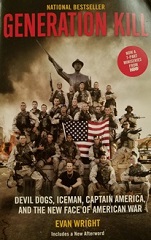 Fourteen years have passed since the United States military invaded the nation of Iraq and deposed its former ruler Saddam Hussein. President George W. Bush had declared Iraq America’s number one enemy and vowed to remove Hussein from power. Hussein fled but was captured in December, 1993 and eventually executed for his crimes against his own people. For many Iraqis and Americans, his death was long overdue and they bid farewell to one of history’s worst dictators. Critics of the war remain and remind us that our military is still in Iraq and no clear permanent solution to establish true democracy is in place. The war is as controversial as those that precede it. But for the men and women that served in the war, their stories are often unnoticed. However in this phenomenal story, Evan Wright brings their story to light for the world to see what warfare was like for thousands of troops. In March, 2003, he accompanied the First Reconnaissance Battalion as the invasion begins. The group becomes known as First Recon and is tasked with clearing town after town until the Iraqi army capitulates. Baghdad eventually falls, Hussein escapes and the marines have done their job for the time being. America celebrates and Bush stands stoically as the armed forces once again succeed. The infantry soldiers return to civilian life or choose to remain enlisted. Their stories fade in time and their names are often never heard of by the mainstream public. But just who are these brave souls and why do they voluntarily put their lives on the line? Wright explores this and more in the book that became a New York Times Bestseller and inspired the HBO hit series of the same name.
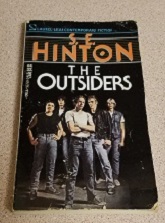 This past weekend I had the fortune of becoming re-acquainted with two of my teachers from the eighth grade. One of them has now turned eighty and looks as sharp as she did when I was a thirteen year-old kid. During the conversation, I mentioned that I still had my copy of The Outsiders, the book we read as a class that has remained with me to this day and occupies a space on my bookshelf. I find it incredible that after nearly twenty-five years, I still love the book and remember passages from the book in their entirety. It is a classic story given to us as a gift that keeps on giving by famed author S.E. Hinton (1948-). The book is popular among many of my peers and my former teacher has recently given a copy to her grandsons so that they may find joy in the book. I had the pleasure to meet both of them and believe that they will turn out to be fine young men. Many years from now, they took will look back on The Outsiders as one of the greatest books they have ever read.
 There are a number of adjectives that come to mind to describe the late Eldridge Cleaver. (1935-1998) If I had to choose one in particular, my choice would be unpredictable. His voice is legendary among the most prominent of the Civil Rights Movement. He co-founded the Black Panty Party but was later expelled by Huey P. Newton due to ideological differences. In 1954, he was convicted of possession of Marijuana and sentenced to slightly over two years at Folsom Prison in Represa, California. He began to write letters in his cell and those writings form the basis of this book considered be a classic text on revolution, racism, sexuality and the future of America. The book was published in 1968 after Cleaver had served a second prison term for an attempted rape with assault conviction. Married by then to Kathleen Cleaver, the marriage eventually fell apart due to his erratic behavior and philandering ways. In later years following his split from the Panthers, he distanced himself from his Muslim faith, ran for President, created the “penis pants” and eventually joined the Mormon church. He died on May 1, 1998 in Pomona, California. The cause of death was withheld from the public. Today he is still a controversial figure and his writings and the confessions within have resulted in a split of opinion; readers either like him or hate him. However, the fact remains that he was a valued and highly intellectual voice within the movement that attempted to manifest the issues that faced Black and White America.
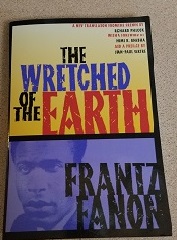 On July 1, 1962 a referendum was held that paved the way for Algerian independence from the government of France. The complete cessation of armed conflict marked the end of war that lasted seventeen years. The Algeria movement for freedom stands out as a success story similar to the legendary revolutionary campaigns in the Caribbean and Latin America. It is also a case study for those seeking to go down the path of revolution as a method to enforce social reform. No revolution is complete without a defining text and in this case, the struggle was analyzed and transcribed the famed revolutionary, writer, philosopher and psychiatrist, Frantz Fanon. (1925-1961) The book was finished shortly before his death and published not long after. Originally written in French, it has been translated by Richard Philcox for English readers.
 Wagner Moura became one of Netflix’s most memorable faces when he assumed the role of infamous drug czar Pablo Escobar in the hit series Narcos. The series, while based off of true events, is also a fictional account of the late kingpin’s life as a cocaine trafficker and public enemy number one in Colombia. The received rave reviews and I enjoyed it immensely. I was aware of Escobar’s story before watching the show and knew that the producers would tweak some parts of the story to enhance its seduction. The created a hit that will remain one of the best products of the digital behemoth. But some of us may be asking ourselves, how much did Netflix get right? And what did they change as they filmed the show? Shaun Attwood goes behind the camera and revisits the real story of Pablo’s rise and downfall that lead to his death on December 2, 1993 in the city of Medellín.
 Today it is hard to imagine that less than fifty years ago, New York City was once considered one of the most dangerous cities in America. Rising crime, poverty, budgetary mismanagement and police corruption combined to turn the Big Apple into a city that took more than it gave. The New York City Police Department was tasked with maintaining order in the concrete jungle in the face of budget cuts and incredibly layoffs in the late 1970s. The officers who survived those dark years carry with them endless memories about their time on the streets of New York City. Tom Walker, who retired in 2004, spent several years of his career at the 41st Precinct in the South Bronx, nicknamed by the officers as “Fort Apache”. The name sounds heroic but as we learn in the book, it was for darker and more tragic reasons that the station was referred to as a fort. Outside the walls of the precinct existed a world that bordered on the surreal and gave a glimpse into what hell must really be like.
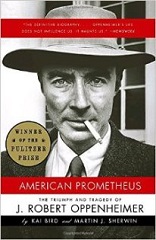 In August, 1945, the course of modern warfare was changed forever when the United States dropped two atomic bombs on Japan, striking the cities of Hiroshima and Nagasaki. Following the successful deployment of the bomb, the Soviet Union and other nations enhanced their own programs to develop a nuclear weapon. The nuclear arms race produced a fear in mankind that still exists today as war continues and dictators drunk on power set their eyes on world domination and a test of egos. It has often been said that the next major world war will be the last war mankind will ever fight. Humanity now has the absolute power to destroy itself literally at the push of a button. Thankfully, since the second world war, there has been no further use of atomic weapons in an armed conflict. But the danger still exists and there have been many who have warned against the escalation of nuclear armament. One of these voices was that of J. Robert Oppenheimer (1904-1967), referred to as the father of atomic bomb and in this excellent biography, an American Prometheus. Kali Bird and Martin J. Sherwin have captured Oppenheimer’s life splendidly making sure that his life is recorded for history.
 FREETHINKING BIBLIOPHILE
You must be logged in to post a comment.