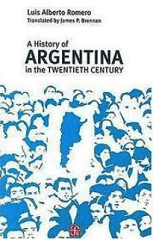
A History of Argentina in the Twentieth Century-Luis Alberto Romero

untitledOn April 6, 2017, The Global Confederation of Labor (CGT) conducted a one-day general strike in protest of the policies of the administration of President Mauricio Macri. (1959-) Inflation, high taxes, low wages and job cuts have constrained the people of Argentina into an economic vice grip as the president attempts to steer the country away from a looming economic crisis.  The strike is just one in many that have taken place during the last one hundred years in one of South America’s most popular countries. In July, 2017, I had the privilege to visit Buenos Aires, the city that has been called the Paris of South America.   In July of this year I will return to the nation that is home to world-famous steaks, milanesa, wine, asado and dozens of culinary delights that make the heart flutter and the mouth water.  I do not know what the political climate will be like when I visit but I can be sure that the people of Buenos Aires will show me the same hospitality that they did in the past and in the process help to create memories that will remain with me for the rest of my life.  My favorite Argentine presented this book to me as a gift, a gift that keeps on giving.  This book is a history of the Argentine Republic during the twentieth century. And what is contained in the pages of this book is essential in understanding modern-day Argentina.  James P. Brennan has translated the work of Luis Alberto Romero (1944-), who became a Professor of History at the University of Buenos Aires in 1967. The book is written as only a professor could but presents the reader with a wealth of critical knowledge that is invaluable.

The story begins towards the end of the 1800s as Argentina sees an influx of foreign immigrants, a trend that continued forming the blend of culture that became a signature to this day.  Politically, the nation is still in early stages at attempts to embrace democracy.  In 1916, the course of the nation changed forever with the election of Hipólito Yrigoyen (1852-1933), the “father of the poor” and co-founder of the Unión Cívica Radical.  He is seen as a reformist and one of the nation’s best leaders.  He was succeeded by Marcelo Torcuato de Alvear before being elected for a second time in 1928.  On September 6, 1930, he was deposed in a coup by the military, a trend that would continue for decades to come and cast a dark light on the future of Argentine politics.  Several military officials followed and assumed the office of the presidency. But in 1943, Argentina’s history was forever changed once again with the assumption of power by the late Juan Perón.   His reign over the nation, subsequent political activity up until the time of his death and the party that bears his name,  became permanently fixed in Argentine politics making it extremely hard for opponents of the party to exist as they attempt to transform society.

While the story of Argentina is complex and volatile as shown intricately in the book, there were other players involved in the development of the country.  The United States and Great Britain played critical roles in Argentine society in more ways than most Americans or Brits may be aware of.  Personally I learned a few things about my own government’s actions in Latin American and in particular Argentina that help explain how and why the nation still struggles with its economy.  When President Barack Obama visited Argentina in February, 2016, it was crucial step in repairing relations to two nations that were once more closely aligned.  Moving forward, it is hoped that both countries continue the effort and solidify a growing bond that will benefit both parties.  But in order to do so, it is necessary to revisit and reconcile the past not only with America but with England as well.  The conflict over the Malvinas Islands, instigated by then president Leopoldo Galtieri and the rise and fall of the export of beef, are dark moments in Argentina’s history that are examined in detail in the book.

The role of the military is not overlooked and throughout the book, its presence is continuously felt as one president after another is deposed and replaced by the next general in line.  And during the rule of Galtieri, the plague of the “disappeared” during the Dirty War that resulted in the deaths of thousands of Argentines with the final number possibly as high at thirty-thousand people.  The nefarious actions of the government would result in the formation of the Madres de Plaza de Mayo, the organization of Argentine mothers who demanded answers into the final destinations of their children and loved ones.  The group is supported by the Abuelas de Plaza de Mayo.  The true number may never be known but what is certain is that many lost their lives as the government enforced a crackdown on all forms of opposition.  Their efforts proved to be futile as opposition parties continued to flourish as legitimate threats to the crown of the highest office.   The elections of Carlos Menem and Fernando de la Rúa marked a stark change as neither candidate was a military official at the times of his election.   However, each left office in controversy with the latter being forced to leave quite unceremoniously.  He was succeeded by Adolfo Rodríguez Saá (1947-), Eduardo Duhalde (1941-), Néstor Kirchner (1950-2010) and Cristina Fernández de Kirchner (1953-) before Macri’s successful campaign as the candidate of the Republican Proposal (PRO) party.  Macri’s future is unknown at the moment but he finds himself in the position of former presidents who have struggled to maintain control of the country while attempting to balance the budget, promote economic growth and curtail the rising rate of inflation that has plagued Argentine society for several decades.

The highlight of Romero’s work is the attention paid to the economic policies that nearly crippled the economy and threatened to cause the country to self-destruct.  Seemingly, the ministers of finance were replaced as often as the deposed presidents.  Martinez de Hoz (1925-2013) and Domingo Cavallo (1946-) stand out in the book as pioneering reformists and also contributors to the woes of Argentines. They are two among dozens that have tried without long-lasting success to complete fix the nation’s problems.  Romero’s investigation into their policies and their effects serve as a lesson in economics that can be revisited in the future by other ministers of finance.

For those wishing to understand the political history of modern-day Argentina, this is the place to start.  So take a seat and follow Romero has he steps back in time revisiting the pivotal moments in the Republic’s history that has and continues to confound its citizens and those abroad.

Argentina is amazing” – Arjun Kapoor

ISBN-10: 0271021926
ISBN-13: 978-0271021928

The Rainbow Comes and Goes: A Mother and Son on Live, Love and Loss-Anderson Cooper and Gloria Vanderbilt

VanderbiltDuring a trip back to New York from Miami this week, I was browsing the books at the terminal’s newsstand and came across this book by Anderson Cooper and his mother Gloria Vanderbilt.  Like most Americans, I know Cooper from CNN and the years of journalism that he has provided to us.  I was not aware of his mother’s story or that she is still going strong at ninety-three years of age. I decided to purchase the book and I am delighted to say this New York Times Bestseller was worth the investment.  The title is quite self-explanatory but there is so much more in this book which is a collection of correspondence between Cooper and his mother.  It takes place over a period of time and through electronic means.  The story of their lives is fascinating and contains an interesting history of its own.

The beauty in this book is the newfound relations ship that develops between mother and son as they try to heal old wounds and find out who the other person really is.  To say that I learned a significant amount of information about them would be an understatement.  The Vanderbilt name is among the most famous in American history.  At her age, she is direct link to the family’s storied past.   Her memory of her family lineage at her age is astounding but also a testament to her longevity and ability to analyze herself.   As Anderson throws the questions her way, she opens up extensively about the periods in her life and what they meant to her.   Many years have passed since she has seen or heard the voices of her late Aunt Gertrude, Dodo, Naney and even her own mother.  And all of the stars she was acquainted with as a young starstruck teenager on the west coast are deceased.  Nonetheless, her memories of her time with Howard Hughes, Frank Sinatra, Sidney Lumet and her last husband Wyatt Cooper are enlightening and precious.

However, not all the story is happy and there are many tragic moments as well including the passing of her father, the death of Wyatt and the suicide of Anderson’s older Carter in July, 1988.  In spite of the many deaths that have surrounded her throughout her life, Gloria does not fear it but provides an interesting look at what she knows could come for her at any time. Her ability to accept her mortality and live the most rewarding life that she can, is an example which we all should strive to follow.  Some of us will live to the age of ninety-three and some of us will not.  But it is not about the number of years we live but how we live them.  That is a lesson which Gloria seeks to reinforce to the reader.  I truly enjoyed her story but it is only part of the book.  This is Anderson’s show too and he also opens up about his own life and struggles.

I found that I was able to relate to this story as I have a sibling who is also gay and went through a process of coming out to our mother. Like Gloria, my mother also had her feelings on sexuality that have softened over time.  But in the beginning things were not always so easy and many rough patches existed that had to be paved over. Today my mother and brother have an even stronger relationship than they ever did.  In reading Anderson’s story I saw my brother and the personal decisions he has been forced to make because of his orientation.  But as the older brother, I have long realized that it is my job to reassure him and stand in his corner throughout thick and thin.  The main difference however, is that my brother is still alive while Cooper’s brother died nearly thirty years ago.  The death of Carter Cooper comes up towards the end of the book and is clearly a tough topic for both mother and son.  I do not believe that either will ever completely heal from his death or the death of Wyatt Cooper, their father and Gloria’s last spouse.  Wyatt reminds me of my own father in the way that he approached life which we see through Gloria’s words.  His death in 1976 came far too soon and left many what-if questions.   Mother and son touch on these questions but ultimately accept what is and focus on the time they still have left and that is the most touching part of the book. In fact, reading has made me appreciate both of my parents even more but especially my mother who also shares a unique bond with her son(s).  If you are a fan of Anderson Cooper this is a must read.

ISBN-10: 0062454943
ISBN-13: 978-0062454942

A History of Modern Palestine: Second Edition-Ilan Pappe

PappThe crisis that exists between Israel and the area that was once the nation of Palestine has evolved into one of the most tragic the world has seen.  Anger on both sides and the failure of mediation on more than one occasion has resulted in the continuation of the long feud.  Each side has its supporters and detractors refusing to abandon their beliefs and stance of the matter.  My interest in the conflict propelled me to acquire this high recommended book on the issue written by Israel historian and social activist, Ilan Pappe (1954-).  Pappe was born in Haifa and continues to educate millions about the true origins of the raging battle.   This phenomenal account of the history of Palestine and its current day status is a must read by anyone seeking to understand the origins of the matter.  To be fair, Pappe is not anti-Israel, but he does however, confront many facts about the history of Palestine that are often very uncomfortable.  But any good researcher should do just that and it is in this area that Pappe shines through.
The book begins in the early 1800s in Palestine before the appearance of large numbers of Europe’s Jews. This is a history that is often neglected and unknown by many.  The Palestine we see is far different from the one that exist today.   As a part of the Ottoman Empire, Palestine is protected by the ruling authorities in Istanbul intent on maintaining the empire’s domain at any costs.   Incredibly, even then, there existed smaller religious minorities freely allowed to practice their faiths.  But sadly at the 1900s approached,  the future of Palestine took a dark turn, one that is fully explored by Pappe and is sure to leave the reader speechless.  But his research and conclusions are critical to understanding the cause of the Palestinian people and the effects of Zionism on foreign territory and domestic policy.

The term Zionism and Judaism are sometimes believed to be the same thing. But as we learn throughout the book, they are in fact two different things and not necessarily operating in the same spectrum.   In the book, we are introduced to the founder of the Zionist cause, Theodor Herzl (1860-1904) and his successors that carried the Zionist cause setting their sights on a Jewish homeland. Palestine became their choice and their mission created a conflict that continues to this day.   Pappe does a meticulous job of exploring all of these polarizing figures and their role in the affair.  But what is often left out of the conflict is the role of the British government, heavily complicit in the developments in the area and subsequently in the deadly aftermath.  The relationship between the British Government, Palestinian rulers and the new Zionist immigrants proved to be a power keg determined to detonate at any minute. Two world wars and three agreements later paved the way for the creation of Israel in 1948 and the loss of land by the native Palestinians.  It was the beginning of a war that has claimed thousands of lives and brought shame to those involved and resulted in the meddling by several foreign nations allied to the Israeli or Palestinian cause.

On December 23, 2016, the UN passed a resolution ordering Israel to stop building settlement east of Jerusalem in Palestinian territory.  The order has been ignored by Israel which continues to build settlements.  The abstinence of the United States in voting on the resolution strained the relationship between Israel and its American ally.  The decision by the White House to abstain is in direct contrast to the policy of the US for several decades which actively supported the Israel government.  America’s complicity in the conflict, as well as that of Great Britain, France and other Arab nations seeking to exploit the situation,  created a power vacuum which has no clear ending in sight and helped plunged the Middle East into a cycle of revolution, mayhem and death.  Today it remains to be seen if a two-state solution will ever truly work between the two battle nations.

Throughout the book, many figures make an appearance and their roles in the conflict are explored in-depth.  Forgotten name such as Menachem Begin (1913-1992), David Ben-Gurion (1886-1973), Yitzhak Rabin (1922-1995), Gamal Abdel-Nasser (1918-1970), Chaim Weizmann (1874-1952), Yasser Arafat (1929-2004) and Fayṣal al-Awwal ibn al-Ḥusayn ibn (1883-1933)(Faisal I of Iraq) will jump out at some readers triggering an avalanche of dormant facts and others unknown.  But their names, actions and stories are beyond critical in understanding the evolution of the tragedy.  And like a jigsaw puzzle, the back door political deals, covert operations, overt discrimination, greed and betrayal help set the stage for the region as we know it today.   Right-wing and left-wing groups proliferate on each side of the conflict rendering a peaceful solution seemingly unattainable.  But regardless, the United States continues to condemn the Israeli occupation and has added allies from dozens of countries and even domestic groups in Israel in opposition to the government’s expansionist policies.  Pappe refers to it as the post-Zionist era in which literature and film seeks to tell the real story of the Zionist cause and its devastating effects on the people of Palestine. For them, their struggle continues but they too deal with domestic right-wing groups, the most famous of which are the PLO and Hamas.   Their objectives and those of the Likud, lead by Binyamin Netanyahu, serve as fuel to a towering inferno.

Perhaps in the next decade or two we will finally see peace between Israel and Palestine.  I certainly hope it occurs before more death and destruction of the land they both call home occurs.  Attempts to form a settlement have ultimately fell short time and time again but I and many in the world remain optimistic.  For those who are unsure of what really needs to be done or are unaware of the origins of the dispute, this book by Pappe, is the place to start.

ISBN-10: 0521683157
ISBN-13: 978-0521683159

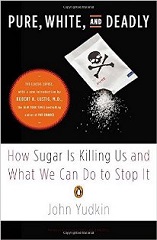
Pure, White and Deadly: How Sugar is Killing Us and What We Can Do to Stop It-John Yudkin, M.D.


51c9korfd6l-_sx325_bo1204203200_

In the United States, heart disease and cancer are the leading killers of Americans each.  As of 2017, heart disease was attributed to 614,348 deaths and cancer, an almost equally staggering 591,699. Diabetes and other metabolic ailments plague millions of others each year.  Doctors have made great strides in learning the root causes of these diseases and appropriate methods of treatment.  Diet is always a factor in any treatment plan and for many cultures, it can also be a main factor in the development of the condition.  Most of us can fondly remember our parents and relatives warning us about the intake of excess salt and sugar to avoid high blood pressure and a trip to the dentist.  While it was known by many not to eat too much sugar, exactly why has always remained elusive to most.  Dr. John Yudkin (1910-1995) was a British physiologist and nutritionist associated with the Queen Elizabeth College in London and an early voice warning humanity about the dangers of sugar consumption. This book which he aptly titled Pure, White and Deadly, investigates the overwhelming inclusion of sugar in the average diet and how our consumption can lead us to early graves.  The book was written in 1972, decades before the explosion of diabetes across the globe. But what is contained in the pages of this book is still relevant today for those who choose to listen.

As health crisis continue to grow, Yudkin is vindicated repeatedly as more diseases and other health issues are linked the consumption of sugar.   As a physiologist and nutritionist, Yudkin was at an advantage over most of us; he was able to study the effects of sugar as part of his work giving him an inside look into one of the most dangerous substances ever created.  What I found to be very admirable about Yudkin is that he does lecture the reader. He does however, relay the results of his findings and leaves it up to the reader to make a personal decision.  And in a moment of admission, he even discloses that he overcame his own sugar addiction.  The author also confesses to overcoming a sugar addiction many years ago and can relate to everything written in this book.  We have the freedom to indulge in any food that we like but we will do ourselves a favor to take a closer look at what we eat, why and how it affects us.  Sugar has quickly become the most widely consumed product and can be found in nearly every food that can be bought in a store of supermarket. Manufacturers have long realized the potential of sugar to affect sales and solidify a large consumer base.  Yudkin explores this side of the matter in addition to the scientific data. And what we see is a behemoth industry that shows no signs of slowing down.  The question remains however, at what cost?

To say that Yudkin had amazing foresight would be an understatement. As I read articles and watch those around me suffer from highly preventable diseases I often find myself repeatedly examining their eating habits to see if their diet is playing a part in the quality of life.  And sadly, more often than not, sugar is a main culprit.   Yudkin is vindicated many times over and his legacy is continued through the work of Dr. Robert Lustig, who actively encourages the elimination of sugar from the diet.  If Yudkin were alive today, he would probably shake his head in disgust and seethe at the amount of sugar that is consumed today.   Undoubtedly, he would be considered an enemy of the state by the sugar industry and blackballed in without question. But the reality is that even in 1972, he was keenly aware of the dangers of sugar consumption and left us this classic that takes a look at the modern creation of sucrose and other forms of sugar.  If you have concerns about sugar and how it affects your health, this is a good place to start in the struggle that may ultimately save and extend your life.

ISBN-10: 0241965284
ISBN-13: 978-0241965283

Polio An American Story: The Crusade That Mobilized the Nation Against the 20th Century’s Most Feared Disease-David Oshinsky

0Epidemics have been a part of mankind for thousands of years.  At some point in time, humanity has been threatened with the possibility of extinction in the form a new disease that had not yet been understood by doctors and government officials.  In the United States, there was a disease that caused widespread panic and afflicted millions of Americans before it was contained.  Its most-famous victim was former President Franklin D. Roosevelt who became known as the “Wheelchair President”.  The disease was officially designated poliomyelitis or polio for short.  To this day, it remains one of America’s deadliest epidemics next to AIDS and cancer which continues to claim lives each year.   The origins of polio are mysterious and the successful creation of a vaccine was the result of the hard work and dedication of the greatest virologists who rose to the occasion to save the nation from a deadly disease.  Today the disease is largely forgotten and taken for granted.  A diagnosis of polio is exceedingly rare and in the event it is detected, vaccines are readily available to contain the virus and give the patient a long and happy life.  However, less than sixty years ago the race to find a vaccine was hotly contested as Americans and the world lived in suspense at the possible eradication of a silent killer.  Two doctors on opposites ends of the spectrum are forever linked with the disease and the successful campaign to eliminate it;  Albert Sabin and Jonas Salk.  This is the story of polio and the two physicians that have become legends in American history. The book is presented to us by David Oshinsky, author and Pulitzer Prize winner who also published  Bellevue: Three Centuries Of Medicine And Mayhem At America’s Most Storied Hospital.  Contained within these pages is the incredible story of the monumental effort to find a cure for the disease that threatened to eliminate the population of an entire nation and struck fear in the hearts and minds of households everywhere.
Albert Sabin died in 1993 and Jonas Salk two years later in 1995.  By the time of their deaths, polio had nearly been eradicated in the United States with isolated cases appearing on occasion. If they were alive today, I believe they would both feel vindicated even more by the rare existence of the polio disease in the United States today and in most parts of the world except for countries in Africa which still continue to struggle with the deadly disease.   The true irony of Sabin and Salk as we see through the account by Oshinsky, is that although they both sought a vaccine to save people from polio, they did so from opposite ends and maintained their stances until their deaths.  Salk became the first to claim popularity through the creation of his killed virus vaccine.  Several years later, Sabin would be the hero with his live virus vaccine.  The vaccines pitted them against each other in a long and protracted battled from which they would never reconcile. Once colleagues and later adversaries, both would be vindicated years after their deaths.

Oshinksy’s research is beyond reproach and readers familiar with his other works will readily agree. The book is engaging from the start as we trace the origins of the epidemic and learn a multitude of facts about the virus that will challenge common held beliefs.   Social status, wealth, ethnicity and professional competition serve as regrettable undercurrents that on occasion caused setbacks and put the battle for a cure in a negative light.  And the actions of the Eisenhower administration towards the disease are shocking and mind-boggling.  The behind the scenes trivialities that occur serve as a premonition of the AIDS epidemic in which political ambitions and career advancements take center stage nearly overshadowing the main goal.  Thankfully, the doctors were successful and polio is no longer the killer in America that it once was.

This book is a step back into time in an era in America that would shock most readers today.  World Wars, racial and class discrimination in the early stages of the fight but the revelation of how polio affected people challenges all of the notions that were held about social status and health.   It also reinforces the point that viruses do not discriminate and epidemics claim victims across all cultures.  And in some cases, the relatives of those tasked with finding the cure are also afflicted highlighting the severity of the growing crisis.  Furthermore, the battle between the National Foundation for Infantile Paralysis and Health, Education and Warfare Department cast a dark blemish on the cause.  The scandal of Cutter Laboratories and new cases of polio following the inoculations of the vaccines nearly caused a new widespread panic.  As we know through history, the government and the doctors pressed on with Sabin’s live virus vaccine becoming the standard for over thirty years before Salk’s killed virus once again rose to prominence in 2003.  Regardless of the order of introduction or range of administration, both vaccines played a crucial role in the eradication of the disease and cemented Sabin and Salk’s legacies.  Oshinsky has done a service to both physicians in telling the story of their never-ending efforts to save America.

ISBN-10: 0195307143
ISBN-13: 97895307146

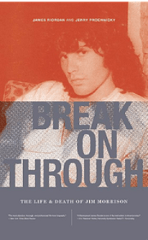
Break on Through: The Life and Death of Jim Morrison-James Riordan and Jerry Prochnicky

morrisonIn death several musicians have become in a sense larger than life.  Their recordings, writings and interviews become collector’s items catapulting them to legendary status. A cruel irony in life is that some of the greatest artist and performers to have graced a stage, died a young age before reaching their full potential. James Dean (1931-1955), Tupac Shakur (1971-1996), Janis Joplin (1943-1970), Jimi Hendrix (1942-1970) and Jim Morrison (1943-1971) are just a handful of names of talented individuals who rose to fame and were gone before thirty years of age.   Morrison, with his band The Doors, had become a sex icon and the poster boy for the anti-establishment movement sweeping across the United States. His death on July 3, 1972 concluded a chaotic life that seemed to get even more bizarre as it continued.  Eerily, Morrison joined the group of musicians who died at twenty-seven.   Joplin, Hendrix and Brian James of The Rolling Stones all died at the age of twenty-seven. And Morrison’s long-term girlfriend Pamela Courson (1946-1974), also died at the age of twenty-seven.  The dark coincidences highlights the fragility of life and its unpredictable nature for we are here one day and sometimes gone the next. In death, Morrison became an even bigger legend and still has millions of adoring fans across the globe. But for all of his wild antics on stage, some of which nearly resulted in his incarceration for an extended-stay,  the real Morrison proved to be a mysterious and confusing character as evidenced by this informative and well-researched biography by James Riordan and Jerry Prochnicky.

Capturing the essence of Morrison is critical for any biography and the authors do an outstanding job of presenting to the reader the real Jim Morrison in all of his glory and infamy.   The native of Melbourne, FL, starts off life similar to most all-American kids in the 1940s.  But as he matures and makes his way through high-school and college, his life begins to take on its own dynamics which would carry him all the way through to his death in Paris, France. He exemplified living outside the box and seemed to thrive on controversy.  While The Doors created musical hits, their leader and singer lived life on a fine line between genius and insanity often dabbling between the two.  Through interviews and critical research, Morrison’s most outrageous antics are covered and some are beyond shocking.  The demons that he developed during his life take center stage and it is unfathomable to realize that in only twenty-seven years, Morrison had a life that could have spanned several decades. As a rock star he was unable to resist the many temptations faced by stars. His compulsive nature, spirituality and indulgence in excess served as a confluence of factors that nearly pushed the rock icon completely off the deep end.

It will seem absurd and possibly unbelievable that such a talented individual lead a life of severe self-destruction. But Morrison, like other great performers, typically viewed life through a different lens than the average person.  Substance abuse has long been a common ailment among the world’s greatest performers. For some it was used to keep things in focus and for others, as an escape from the pressures of stardom and personal struggles they sought to avoid.  For Morrison, it may be have been a combination of both or one of the other. The real reasons went with him to the grave and shall never be known. As he rose to fame, he became a force on his own and then no longer belonged to himself. He belonged to the fans who refused to allow him to be anything other than the Jim Morrison who turned out arenas and caused mass riots.  For them, he was their icon and The Doors was their band providing a leading voice for social change and the rage against the establishment.

It has been said that death is not the true tragedy in life, what is tragic is what dies in inside of us while we are still alive.  Tragically, towards the end of his life, Morrison had begun to come full circle and even began to talk about his parents from whom he remained detached through nearly his entire career.  Like a Shakespearean tragedy, Paris became the place where he collided with fate and his life ceased to exist giving birth the eternal legacy of James Douglas Morrison and band known as The Doors. For fans of  the pioneering group whose example has been followed by countless others, this is a must read.

ISBN-10: 0688119158
ISBN-13: 978-0688119157

Eleanor Roosevelt Volume 3: The War Years and After 1939-1962-Blanche Wiesen Cook

blanche-wiesen-cook-eventIn this third volume, we catch up with Eleanor in 1939 as German Chancellor Adolf Hitler is making his presence felt in Europe and threatening to turn the continent into a German Reich. Her husband and president, Franklin, finds himself at odds over the growing German menace. ER is right by his side serving as both a voice of reason and cabinet adviser as FDR determines the position of the United States in regards to the looming crisis across the Atlantic.  In this manner the book differs from Volume I and Volume II which focus on her early, the people who formed the core of close friends and FDR’s successful campaign.  The close nexus of friends return and once again we come across Hick, Esther Lape, Elizabeth Read, and Earl Miller.  Like characters in a novel, they all have their roles in her life and each makes their departure from the stage as Eleanor’s life comes full circle.  We also see up close the changes that occur in the relationship between husband and wife and how it shaped the policies of the government.  The stage had been set in volume two and in this volume, it comes to fruition in its entirety. Some of it is good, some bad and even more unfortunate.  But throughout the thick and then, they remained Franklin and Eleanor.

While readers may be tempted to think that Cook has strayed far off course in this third part, that is not the case.  In fact, the volume closes ER’s story appropriately for she was no longer First Lady following FDR’s death in 1945.  Cook does address her life post-Washington but it is clear that her highest moments came occurred during her tenure in the White House.  Nonetheless, this look into FDR’s administration and ER’s role in it, is fascinating and reveals the long process that eventually pulled the United States into the war.  Operating in a male dominated and openly discriminatory social climate, she became a beacon of hope as she wage the war for Jewish refugees, anti-discrimination legislation, ant-lynching legislation and equal rights for America’s women. Sadly, her efforts paid off many years after her death.  Had she lived, I believe she would have been in awe at the election of Barack Obama in 2008.  His election would have been seen by her as a testament to the cause for civil rights and the advancement of America’s African-American citizens who faced discrimination daily in their lives.

Following FDR’s death, she continued to work on behalf of all Americans and never wavered in her crusade for equality for everyone.  In 1962, she was appointed by President Kennedy to be the head of the Presidential Commission on the Status of Women. The appointment spoke volumes about her accomplishments and vision. She remained the chairwoman until the time of her death.  When she died on November 7, 1962, a shining light was extinguished that was one of America’s brightest.  She is no longer with us but her story is through the efforts of Blanche Wiesen Cook.  And through her words, we can relive the life of the pioneering former First Lady.

“No one can make you feel inferior without your consent” – Anna Eleanor Roosevelt

ISBN-10: 0670023957
ISBN-13: 978-0670023950

In Grandma We Trust


jean-williams-franks-2Grandmothers are one of the most sacred parts of the family structure. In some cases, the grandmother also takes on the role of the child’s mother. Their wisdom gained through years of rearing children and watching them grow into adults gives them a unique perspective of life. My maternal grandmother, Jean Williams Franks (November 18, 1934-February 14, 2017) departed from this earth on Valentine’s Day at the age of eighty-three.  She died peacefully at home after two years of declining health.  She resisted to the end but was unable to overcome the conditions that continued to plague her. She is survived by many relatives, friends and others who knew her in passing.


This blog is for book reviews and this post will seem unusual but there are a couple of reasons why it is her.  You see, my grandmother was a secretary for several decades at SUNY Downstate Medical Center.   She was an excellent typist and highly detailed.  And she encourage all of us to focus on our reading and writing skills.  Her home always had its share of books. In fact, I have one of her most-cherished; a book from the famed Pan Am Airlines that was published in 1958.  In addition, she also had in her possession, license plates from the states of New York and New Jersey that were over forty years in age. To say that she was nostalgic would be an understatement.

In addition to her interest in reading and writing, she also allowed me to perfect my typing skills through the endless use of her computers as I moved through college.  She would hear me typing and comment here and there on what I need to work on.  I will never forget her admonishment towards my brother and I to drink more water and use our minds. Today, I do both of these extensively.  Travel was one of her true passions and from her, I have gained my love of traveling which has influence my selection of reading material that appears on this blog.  Whenever I saw her, she would always ask how long it would be before I was out of the country yet again.  No matter where I was going, she was always happy that I was going somewhere.  Throughout her life, she never let anything stop her from seeing the world and she truly loved people.   Conversation was her love and she engaged anyone who was willing to listen and respond.  Tomorrow she will be laid to rest and that act will be the final stage in the changing of the guard for my aunt and mother will now assume the roles that she once assumed.

The beauty in her life was that she gave something to everyone that she met in many different forms.  Though she never was able to really see this blog, I know she would be thrilled that her first-born grandchild had tapped into the gifts of reading and writing to apply them towards a positive cause.  As I write, I can see her smiling in satisfaction that her endless efforts to keep us on the right track did in fact pay off over time.   And in the future, as I continue to write, she will appear in my thoughts repeatedly.  She is no longer in pain and has moved to a place which we all shall see one day.   But until then, we will serve ourselves best by living the life that we have and enjoying each day.

Tupac Shakur once said “death is not the greatest loss in life. The greatest loss is what dies inside while still alive”.  Our time on this earth is limited and we do not know when we will take our last breath.  We come into the world, learn from those who are already here and through our experiences as we age and mature.  And at some point, we leave behind our friends, family and those who we have crossed paths with. But our actions, words and thoughts stay behind and live on in the memories of those we have touched.  And in that sense, we all have the ability to live forever.

“For Whom The Bell Tolls, It Tolls For Thee”- John Donne

Chasin’ The Trane: The Music and Mystique of John Coltrane-J.C. Thomas

20180602_215638Jazz music is as American as apple pie and fireworks on the 4th of July.  Its popularity has resulted in jazz festivals around the world .  The festival in Berlin is among the most popular in the world. Some of the greatest musicians in history made their names famous through their talents of the wide range of instruments that gave us the many great songs that have been studied and imitated to decades. Among these legendary artist is the late John Coltrane, who performed with the all time greats such as Miles Davis, Thelonious Monk and Charlie “Bird” Parker.   Davis is still the best-selling artist in jazz history with his 1959 album Kind of Blue.  And his influence on jazz continues decades after his death.  However, true fans will be quick to remind you that while Davis is a legend in his own right, there were others who left a lasting legacy on jazz.  While he had an unassuming presence, John Coltrane is always named among the top recording artists of his time and has influence a legion of musicians.  But behind the saxophone, who was the real John Coltrane?
J.C. Thomas explores the life of Coltrane in this biography of the late star.  The book does not follow a traditional biography format.  What Thomas has done is to mix biographical data with recollections from those who knew Coltrane.  The unusual approach makes the book even more enjoyable and helps the reader grasp the mystique of a legend. Coltrane did not leave an autobiography and tragically he died many years before he could complete one. His sudden passing on July 17, 1967 at the age of 40 caused the jazz world to reel in shock at the loss of a legend in the making.  However, Thomas was able to examine his music and converse with those closest to him to give us the most complete picture of this short and incredible life that began in Hamlet, North Carolina and ended in Huntington, New York.

Music is a central theme in the book for obvious reasons, however we also learn about the many struggles that plagued Coltrane throughout his life and might have played a role in his gradual decline and eventual death.  There are successes in the book that cause the reader to breathe a sigh of relief. But his tragic fate also causes us to wonder what if he had lived.  His belief in faith and enthusiastic study of other religions placed him on a spiritual plane that was manifested in his songs which became more dynamic as he aged and matured.  Thomas takes us on this ride with Coltrane as we learn about spirituality in a different way from which we are used to.  The application of his newfound spiritual beliefs to his music enable him to be in  a place resulted in his ascension as one of the true pioneers of his genre.

Reviewers of the book have given favorable ratings and one even said this was the cliff notes version of his life.  While that statement is not far off the mark, the book was not intended to be the end all account of Coltrane’s life.  In fact,  I think the book serves him well and allows us to step inside the mind of the master himself.  Personally, I enjoyed the anecdotes throughout the book. Some were downright hilarious and others interesting for they show the mystery that surrounded Coltrane and still does to this day.  His widow Alice said that he did not speak often but when he did he said quite a lot.  Methodical, controlled and visionary, Coltrane remains a musical icon.  His albums A Love Supreme and Blue Train are ranked 27 and 28 on the list of best-selling jazz albums by the RIAA.  His fans would undoubtedly rank them higher than that and I would hard pressed to argue against it.  For those who want to know more about his fascinating and brief life, this is the place to start to learn about the man they called Trane.

ISBN-10: 0306800438
ISBN-13: 978-0306800436

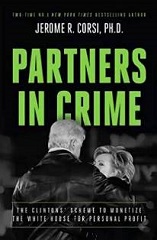
Partners In Crime: The Clinton’s Scheme To Monetize The White House For Personal Gain-Jerome R. Corsi, Ph.D.

maxresdefault

The 2016 presidential election campaign will be remembered by voters as one of the most bitter and comical races ever seen.  The actions of both candidates ranged from disappointing to the surreal.   The Democratic nominee, former Secretary of State and Senator from New York, Hillary Clinton, was often referred to as a liar and criminal by her adversary.   Her supporters believed that the charges were unfounded and amplified by a Republican candidate that capitalized on fear, despair and paranoia.  But the question remains even after the election, what was really going on behind closed doors in the Clinton campaign and was criminality involved?  Jerome R. Corsi, Ph.D., examines the history of the former first couple in this investigative report that dives deep inside the Clinton Foundation and its many ties to corporations, crooks, thieves and the power-hungry elite.

Supporters of the Clintons will find this book hard to accept.  However, Corsi has done his homework and details the complicated web of financial deals and exploits that have resulted in millions of dollars in revenue.  For those who voted against Clinton, many of the facts in this book might already be known. And for others, the book will leave them indifferent towards Clinton.  In fact, it could be argued that in spite of the information in the book, she could have been a good president.  As it stands now, that is something we will never know. What we do know through Corsi’s book, is that there is more than meets the eye with regards to Bill and Hillary Clinton.

The story begins in 2001 following the devastating earthquake that struck Gujarat, India on January 26, 2001.  Out of this tragedy came the American India Foundation and the beginning of a long list of shadowy figures, questionable acquisitions, offshore accounts, nearly non-existent bookkeeping, insufficient auditing and a very dark legacy.  Corsi has carefully researched each and explains all of them in detail.  The revelations are shocking and eye-opening.  Incredibly, Corsi states that the reason behind his book was to prevent future first couples from following the lead of the Clintons once they have left office. He is not a law enforcement offer and does not have any legal authority to bring charges against the Clintons or commence any investigative committee.  But he does a provide a voice of reason in trying to make sense of how the Clintons have become exceedingly wealthy following their time in the White House.

Following his service as president, Bill Clinton became an even bigger celebrity bringing celebrity star power and political clout to charity groups worldwide.  And as valued public speaker, he found himself in high demand at organizations, school and other public events worldwide.  His travels and speeches have earned him great wealth, far more than most would believe.   To say that it is unreal would be an understatement. And after the reader has finished this book, he or she will see the former commander-in-chief in a different light.  In this review I make no attempt to demonize Mr. and Mrs. Clinton.  It is not my place nor my intention.  Corsi also does not appear to have a personal vendetta.  In fact, he never mentions his political affiliation if any.   But he does make it clear that he feels that what has happened as a result of their actions, is both regrettable and unfortunate.  And also highly suspicious and in some cases possibly illegal.

The Clinton Foundation and it subsidiaries formed a nucleus of companies determined to make as much money as possible regardless of those affected.  The American India Foundation is the tip of the iceberg and is followed by other scandals such as UNITAID, the Haiti earthquake relief effort, Ranbaxy, the 2004 Tsunami, Uranium One and the email scandal that erupted during her second presidential campaign.  The information is sobering and absurd but it is necessary in understanding how charities are supposed to operate and why many people feel that they never have good intentions.  Sadly, this book confirms what many have believed about global initiatives and the true nature of the Clinton family.

Today, Hillary is out of the public spotlight on a daily basis.  It should be noted that she did in fact win the popular vote by several million votes.  And while she did not win the needed 270 electoral votes, she earned the votes of millions of Americans who believed she was better for the country in the long run.  Have millions of people read this book? Probably not.  Would they have voted differently if they had? Possibly.  Now that the election is long done and she is not in the oval office, most will not care about the book at all for it is not relevant to the current state of the union.  However, I feel that the target audience of this book is America’s youth for they are the future of this nation and will become the politicians of tomorrow that hopefully not make the same mistakes made by the power couple.   This is the inside story of the Clinton empire as dark as it gets.

ISBN-10: 1944229337
ISBN-13: 978-1944229337