
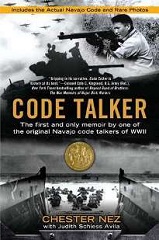
Alan Turing is famously remembered for developing the machine used to crack the encrypted messages of the German military during World War II. However, in the Pacific, where fighting against the Japanese army and navy was just as brutal, coded messages sometimes meant the difference between life and death. U.S. military officials, looking to gain the advantage in the battles against Japan, decided to use a language unknown to the Japanese that could be used to transmit highly important messages between soldiers and commanders. Officials decided to try a new approach and selected members of the Navajo tribes. Chester Nez (1921-2014), one of the original Navajo code talkers, presents his autobiography with the help of Judith Schiess Avila.
A native of New Mexico, Nez begins his odyssey when he and fellow Navajo tribe members enlist into the United States Marine Corps. They are told they will have to develop a secret code based of their native tongue. But just how do you develop a code from a language which isn’t written in any shape or form? Navajo is a rare language in that it is taught by word of mouth and not through books. The young code talkers start working and as we see in Chester’s memories, they develop a code that proved to be unbreakable throughout the entire war. The code was so secret, that it wasn’t declassified until 1968. And even today, their story is still largely unknown and many of them remain unsung heroes in the story of World War II.
In 2001, Nez received the Congressional Medal of Honor from then president, George W. Bush. As he explains in the book, it was one of his proudest moments and he proudly served the nation he’s always called home. His courage and patriotism are remarkable considering that in grade school at Fort Defiance, the students were prohibited from using their native Navajo language and were subjected to physical punishment as a result. But when the Marines came calling, Chester and his friends answered the call and in the process would change the course of World War II. His story is an invaluable part of American history as today, Native Americans still struggled with the dark history of the United States which includes acts of extreme violence and prejudice to those of Native American heritage. This book should be required reading by all students and for those who find English to be a second language, his courage and acts of heroism can serve as positive reinforcement for anyone concerned about the acceptance of their heritage among their peers.
In 2002, John Woo directed Nicholas Cage in ‘Windtalkers’, the story of a Marine designated to protect a Navajo code talker. As expected from Hollywood, the effects and actions sequences are visually stunning. But the focus of the film lies in the wrong place and doesn’t come close to telling the whole story of the code talkers. To date, this is the only biography of a code talker and many of them are now deceased. In fact, Chester was the last living code talker until he died on January 4, 2014. He life is an example of those who proudly serve their country even when their country doesn’t serve them. The courage and never-ending efforts to protect the lives of American soldiers shown by the code talkers while risking theirs on the battlefield, make them true American heroes.
ISBN-10: 0425247856
ISBN-13: 978-0425247853
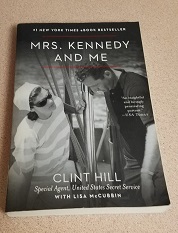 The workplace in a sense becomes a second home to the majority of us, and for some of us, they become even closer to us than those with whom we have a biological link. But what happens when you’re an agent in the Secret Service? There is no set eight-hour workday for agents assigned to the first family. Instead, their hours are often unpredictable, long and extremely fatiguing. Nevertheless, the agents do their jobs to the best of their abilities and in the process create bonds with the members of the first family that sometimes remain in place many years after their service has ended. Clint Hill, long retired from the Secret Service, is best remembered by many people from the Zapruder film, in which he is the sole agent that attempts to come to the aid of the president as jumps on the back of the motorcade as the Secret Service transports a mortally wounded John F. Kennedy to Parkland Memorial Hospital. He has written several books on his time as a Secret Service agent with several presidents and the events that took place during that fateful trip to Dallas, Texas. This is his memoir of his time with the former first lady and the relationship that developed.
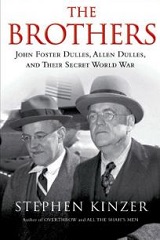 On July 26, 1947, President Harry S. Truman signs the National Security Act, establish a new intelligence agency to gather information deemed critical to the protection of the United States from foreign threats. The new agency is known as the Central Intelligence Agency and its initial members are former members of the Office of Strategic Services which had been discontinued following the allied Victory in World War II. As the Cold War heated up with the Soviet Union and new leaders came to light in several continents, the members of the new agency felt a surging sense to act preemptively to what was perceived to be direct threats to the safety and stability of the western hemisphere. Among the large number of those afraid of Communist infiltration and the end of U.S. business interest were two brothers who controlled an overwhelming majority of power over U.S. foreign policy whose names today are largely unknown to the younger generation. John Foster and Allen Welsh Dulles, the former Secretary of State and Director of the C.I.A., remain controversial and pivotal figures in 20th century American history. In this expose about their time in high posts within the U.S. government, author Stephen Kinzer reveals the dark side of the U.S. government as two brothers used the White House, military and Central Intelligence Agency to advance their financial agenda across several continents resulting in the overthrow of governments, assassination of foreign leaders and financial exploitation of smaller nations caught in the grip of U.S. occupation.
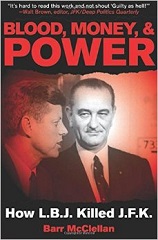 Prior to his death from cancer, Jack Ruby, the convicted murdered of Lee Harvey Oswald who executed his prey live on national television, once remarked that to get answers in the murder of John F. Kennedy, it would wise to ask the man currently in office. That man as we all know was Lyndon B. Johnson. In most history classes, Lyndon Johnson or LBJ for short, is seen as a pioneering president, responsible for the passage of the monumental Civil Rights Act of 1964. However, what is often looked over is his role in the escalation of the U.S. military in southeast Asia resulting in the Vietnam War. As the body count of American soldiers climbed, his approval rate dropped to absurdly low levels, possibly the worst in recent history. And the announcement of Robert Kennedy for candidacy for president served as a final nail in the coffin forcing Johnson to withdraw his name in the 1968 presidential race. Many years after his death, the true story of the life of Lyndon Johnson has come to light in dozens of books. And what we learn through each of these books is that there was a very dark side to the 36th President of the United States.
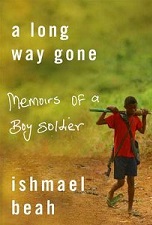 The story of the continent of Africa is one of the most beautiful and tragic we have ever seen. The mass of land that has been described as the cradle of civilization and home to some of the most beautiful places on earth, has also been subjected to severe colonization resulting in continuing poverty, tribal and cultural division and civil wars that nearly destroyed several countries as millions of people lost their lives before the genocidal campaigns were brought to a halt. The story of Rwanda is largely well-known, from books and even a feature film, ‘Hotel Rwanda’ starring Don Cheadle. Rwanda, however, is not the only country to experience a crisis of that nature and as we learn in this memoir by Ishmael Beah, Sierra Leone also has a dark history of internal conflict which caused the nation to be considered one of the most dangerous places in the world. And even to this day, their dark past continues to remain relevant.
 February 25, 1986-Philippines President Ferdinand Marcos and wife Imelda, relinquish power and flee into exile in fear of prosecution for embezzlement and election fraud. The former first couple were airlifted from the presidential palace due to growing crowds of demonstrators intent on the removal of the despotic couple. Their reign of power is still one of the most infamous in modern history and the effects of their tyrannical and avaricious administration are still being felt today in the Philippines as the country still struggles with the remnants the Marcos’ rule. Myles A. Garcia, a native of the Philippines who relocated to the United States revisits the rule of the couple and the staggering amount of corruption that occurred under their rule.
 October 8, 2017 will mark 50 years since Ernesto “Che” Guevara died in the jungles of Bolivia as he attempted to spread revolutionary ideology throughout Latin America. The legendary and iconic symbol for revolution around the world became a martyr in the process and to this day, his image can be found on posters, hats, shirts and even coffee mugs. His final campaign to bring revolution to Bolivia and the tragic fate that awaited him is one of the defining stories of the 20th century. Guevara, the razor-sharp Argentine intellectual, posed a threat to the dominance of imperialism throughout Latin America and in particular was a deadly threat to the business interests of United States businessmen. His death brings a sigh of relief to many governments around the world and deals a devastating blow the Castro regime in Cuba. Che, although no longer legally a citizen of Cuba at that point, is finally returned home 30 years after his death, when he is returned with several other revolutionaries in 1997 and buried in Santa Clara.
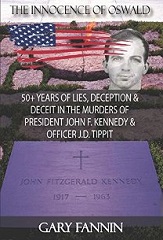 As November slowly approaches this year, the anniversary of one of America’s darkest moments will be upon us once again as we remember the tragic death of the late John F. Kennedy. His murder continues to stay with us and to this day it is technically an unsolved murder in that his alleged assassin, Lee Harvey Oswald, was never convicted in a court of law. He had been accused of murdering both President Kennedy and Dallas Police Officer J.D. Tippit, and convicted in the court of public opinion through misstatements and so-called evidence that wouldn’t hold up in a court of law. And as author Gary Fannin points out, for over 50 years, lies, deception and deceit continue to be propagated making the truth of the matter seemingly harder and harder to unravel.
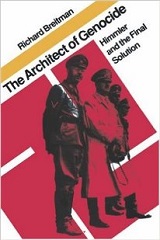 In modern history, the Holocaust ranks among the worst atrocities committed against a group of people by another. The systematic segregation and later extermination of over 6 million Jews throughout Europe brought shame, anger and retribution upon Germany. Today the Holocaust is a distant memory and survivors of the crime are now in their advance years with the number of living survivors declining each year. Recently, Elie Wiesel, the best-selling author of the classic ‘Night’ died at the age of
 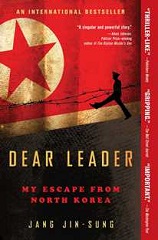 On more than one occasion during my trips abroad, I came to the realization that I had been blessed to have been born in Brooklyn, New York in the United States of America. And while my country has its share of issues that plague the nation, I do enjoy a level of freedom many people around the world would die to have. Because I was born here, it is far to easy to take for granted the rights and privileges that I enjoy as an American citizen both here at home and when I travel outside the country. I’ve always been fond of personal stories of triumph for they remind me that outside of the borders of the place I call home, many people do not have the luxuries or lifestyle that I do. In fact, in many nations in this world, there is next to nothing for millions of men, women and children.
 FREETHINKING BIBLIOPHILE
You must be logged in to post a comment.