
 Every summer, my parents make their annual visit to the Mashantucket Pequot Museum and Research Center in Ledyard, Connecticut to continue learning about the Pequot Indian tribe who lived in what is now the State of Connecticut. They are one of the many tribes that called North America home prior to the arrival of European settlers and the creation of the United States. Today, they can be found largely on reservations having been forced off of the only lands they knew to make way for a country that had liberated itself from British colonization. Far too often, their plight is ignored and history books have traditionally re-written the history of the foundation of the United States of America. This book by the late Dorris Alexander “Dee” Brown (1908-2002) challenges everything we thought we knew about our country and the scores of people often referred to simply as “the Indians”.
Hollywood has played a large part in the historical view by many of the Native Americans, the enemies of White Cowboys as depicted in Westerns and other television programs of the past. John Wayne is admired by many as the icon of the American West. The Native Americans, considered to be savages, uncivilized and dangerous became the object of the wrath of bloodthirsty soldiers filled with an ideology that could classified as genocide today. The true story was carefully and deceptively hidden from public light but it has come out in more recent times. And as the Native Americans and Indians of the Caribbean are shown in a more positive light, more of the truth will come to the surface. Several cities here in America have now replaced the holiday of Columbus Day with Indigenous People’s Day. Columbus was only a small part of the story and he never set foot on North American soil. But the actions of the municipalities were for the right reasons and I believe in time, more cities will follow suit.
In the wake of the American Revolution, a new nation was born with the desire to obtain as much land as possible under the guise of “Manifest Destiny” and its actions changed the course of history and nearly exterminated the continent’s native inhabitants. I am sure you have heard many of the names that became legends; Tecumseh (1768-1813), Sitting Bull( 1831-1890), Geronimo (1829-1909), Crazy Horse (d. 1877) and Cochise (d.1874). These leaders are revered in Native American history but are only small parts of a much larger and deadlier picture. Their lives crossed paths with American soldiers whose names have become both famous and infamous such as Kit Carson (1869-1868) and General George Armstrong Custer (1839-1876) whose last stand is sometimes fodder for situations in which a positive outcome is highly unlikely. The battles that took place across the plains of North America reveal a violent struggle as two opposing of forces sought to maintain their own ways of life. For the Native Americans, their goal was to live as they always had and not like the invaders who annexed territory and brought disease, starvation and death. For the American soldiers, the Indians were savages who needed to learn the White man’s way of life and give their hearts to Christianity. The two systems were never compatible but Washington refused to accept any deals that would preserve Native American land. The methods used to forcibly remove the natives are some of the darkest moments in American history.
It is imperative to keep in mind while reading the book that America did not yet have 50 states. In fact, the reader has to pay close attention to the location descriptions to form a picture of the region in which these events take place. In comparison to clearly marked state boundaries today, land then was sometimes loosely divided among tribes with recognized boundaries by each side. I do recommend having a map of Native American tribes while reading the book to gain a more accurate image. Brown also adds small bonuses at the beginning of each chapters as he highlights the most important events that occurred. Readers may find that they have bookmarked random facts that have nothing to do with the story at hand but are useful information to retain.
I warn the reader that the book is not always easy to read. The graphic descriptions of the atrocities committed in battle and the fate of the Native Americans are a rude awakening to any ideas about a graceful creation of America where the settlers and Indians worked side by side and everyone was friends. This is the unfiltered truth and to say it is ugly would be an understatement. Those of you who are of Native-American heritage will be familiar with the tragedies that befell your ancestors. For others, in particular Americans, this book is a chance to fully understand how violence played a crucial role in the development of what is now a superpower. We are unable to turn back the hands of time and change the course of history but what we can do moving forward is to acknowledge the tragic story of North America’s forgotten residents.
I firmly believe that this book, which was written in 1970, should be read by students in every history class across the country. These are the stories that you will not find in textbooks that seeks to portray the history of this nation in the most positive light possible. Interestingly, Native Americans are present in many of us today. Millions of American have their blood running through their veins. That heritage has sadly been forgotten or in some cases ignored. But it is never too late to learn about those who gave up so much so that we are able to enjoy the privileges afforded to us. Their lives have never been the same and their heritage was nearly destroyed. I hope that one day they too find the peace of mind that they have sought for so long. And the next time you think about wearing a Native American costume for a party, this book might make you think twice. This is the dark and ugly history of America and the mission to eradicate the Native Americans.
ASIN: B009KY5OGC
ISBN-10: 0805086846
ISBN-13: 978-0805086843
 The Second World War remains the most brutal conflict in history. The number of those who perished is still up for debate and there are many secrets of the war that have been lost to history forever. In the United States, foreign-born citizens with roots in any of the countries part of the Axis powers, found their selves under suspicion and in the case of the Japanese, placed into concentration camps. Although not as inhumane and deadly as the camps in Germany and Poland, they resulted in the rise of resentment among Japanese-Americans toward the United States Government and the country they called home. The dropping of the Atomic bombs further heightened the feeling of resentment and was the first and only time a nuclear weapon was used in warfare. Survivors of the bomb attacks can still be found today, advanced in their years but tragically familiar with the barbarity of modern warfare. Across the pacific, Japanese-American veterans of the war remember the tragedy that befell Japan, the nation to which their families trace their origins. But what happens when half of a family is in Japan and the other half is in the United States? Or what do you do when one son is part of the Japanese Imperial Army and the other is part of the United States Armed Forces? And when the war is over, how do you come to terms with the effects war has had on your family and yourself? This is the story of the Fukuhara family whose lives are the answer to those questions. Written by Pamela Rotner Sakamoto and containing snippets of interviews conducted with those relevant to the story, Midnight in Broad Daylight is a heart wrenching story of a family struggling to survive, having been affected by a war in more ways than one.
 The 2016 presidential election remains an event that bordered on the surreal and shocked not just American citizens but people around the globe. Donald J. Trump, the political outsider and least likely candidate to win, secured the Republican nomination and the electoral votes needed to become the 45th President of the United States of America. As we begin 2018 we can look back on his first year and office and reach various conclusions depending on our political outlook and beliefs about the state of the nation. What is certain, is that from the start, his administration has been plagued with allegations of collusion with nefarious figures hailing from Russia. Prior to his election, he often showed admiration for Vladimir Putin and since taking office, has taken a passive stance on the country that is believed by intelligence experts to have interfered in the elections of several nations. Former FBI Director Robert Mueller has been appointed Special Counsel to investigate the Trump campaign’s ties to Russia and as of today, the investigation is still ongoing. And while there is no fire yet, there is a lot of smoke.
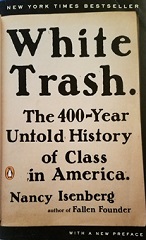 When I first saw the title of this book, I felt my body slightly recoil. In fact, the book was recommended to me by my boss who is a White-American. Previously, Amazon had placed the book on the list of recommended titles for my purchase but I had yet to take the plunge. This time around, I gave in and decided to see what was contained in the pages of this book. Having finished, I can say without a doubt that Nancy Isenberg has produced an eye-opening account of what truly is the untold 400- year history about class and race in America. At first glance, it may seem as if the book is a racist attack on people perceived to be of a lower social class. But in fact, the opposite is true. Isenberg brings light to the suffering and exploitation of a social class that is still disdained and mocked even today. The 2016 Presidential election brought the subject back into the public light provoking fierce debates about the success of the Republican Party and the election of Donald J. Trump. But the question truly remains, what does it mean to be called white trash?
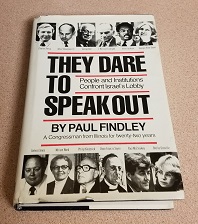 The title alone is enough to grab a person’s attention. Because of the subject matter, it was bound to stir controversy for it touches a topic that remains taboo thirty-seven years after its publication. And with the events this past week regarding the U.S. Embassy in Jerusalem, the contents of this book are as important now as they were then. Before you attempt to read this book, it is critical to understand the difference between Judaism and what is referred to as Zionism. There is a fundamental difference between the two that is often forgotten as charges of anti-Semitism and anti-Israel bias are leveled against those who dare to speak out. However, what I have learned from this book, is critical to understanding how our world functions and why peace is seemingly an impossible objective to accomplish in the Middle East.
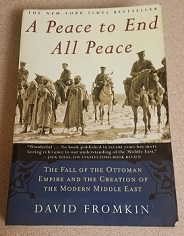 Ideology is sometimes as powerful of a tool as violence and in some cases has been the direct cause of violence. In the Middle East, ideology has maintain a stronghold as it finds itself on a crash course with modernity. Those who live outside the Middle East are at times confused and mystified by the traditions and events that occur throughout the Arab nations. In fact, many of us here in the United States do not know how the modern-day Middle East came into existence. To them, I say that the key to understanding the Middle East is to retrace its history to see why and how it developed into what we know it to be today. David Fromkin lends us a helping hand in this incredible historical investigative account of the fall of the legendary Ottoman Empire and the creation of a region that would never truly know peace.


You must be logged in to post a comment.