
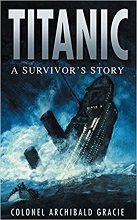
 This past April marked 108 years since the RMS Titanic collided with an iceberg on its maiden voyage from Southhampton to New York City. By the time the SS Carpathia had arrived to rescue passengers, the Titanic had sank and more than 1,500 passengers lost their lives. It is still one of the deadliest maritime disasters in history. Survivors of the Titanic have given interviews and written their memoirs. Among them was Colonel Archibald Gracie IV (1858-1912). On the night of April 14, 1912, Gracie was relaxing in his cabin when shortly before midnight, he was jarred awake and soon realized that the ship’s engines had stopped. Unaware that the ship had suffered a fatal blow, considerable time passes before the shocking reality begins to settle in. But when it did, Gracie went into action and this is his account of what he saw that night and what he did as the RMS Titanic met its doomed fate.
This book was published in 1913 but Gracie never saw the reception it received. He died on December 4, 1912 due to the injuries he suffered on the night of the collision, making him one of the earliest Titanic survivors to died in the wake of the tragedy. As the story begins, Gracie recalls what he was doing in the days before April 14. What he discloses gives no indications that anything was amiss with the ship. Passengers are passing the time with a number of activities. But on the night of April 14, all of that changed. Upon impact, Gracie relatees that:
“My stateroom was an outside one on Deck C on the starboard quarter, somewhat abaft amidships. It was No. C, 51. I was enjoying a good night’s rest when I was aroused by a sudden shock and noise forward on the starboard side, which I at once concluded was caused by a collision, with some other ship perhaps.”
It was a collision indeed, but one that none of the passengers could have ever imagined. Soon it became clear to passengers that the Titanic was in trouble and as the ship began to take on water, urgency creeped in. But even in the face of death, the majority of passengers remained relatively calm. However, ominous signs were soon upon them and forty-five minutes later, Captain Edward J. Smith (1850-1912) gave the order to lower the life boats. Gracie provides a keen observation about the distress signals launched by the Titanic’s crew:
“I was on the Boat Deck when I saw and heard the first rocket, and then successive ones sent up at intervals thereafter. These were followed by the Morse red and blue lights, which were signalled near by us on the deck where we were; but we looked in vain for any response. These signals of distress indicated to every one of us that the ship’s fate was sealed, and that she might sink before the lifeboats could be lowered.”
Soon the loading of passengers into the lifeboats was underway and Gracie provides insight as to how the process took place and his own efforts in assisting Second Officer Charles Lightoller (1874-1952). Gracie did not initially get into a boat himself but insted remained on the ship where he also makes acquaintenance with victim James Clinch Smith. His description of the ship’s final moments made the hair stand up on my neck. And it was nothing short of miraculous that Gracie eventually ended up in a lifeboat himself. And it was not until he was board the Carpathia that he realized the full extent of his injuries and his ordeal.
As a first-hand witness, Gracie found himself in a position to debunk rumors about the night’s events, in particular whether an explosion took place, if the the ship broke in tow and whether some officers shot themselves. Conspiracy theories may not believe what he has to say but as far as a I know, Gracie’s account stands as credible to this day. And there is no doubt that he was a passenger and a survivor. However, there is more to the book than just his memories and clarifying rumors. What follows in the second half of the book is a solid discussion of the events that took place on other lifeboats taht were dispatched by the White Star Line’s crew. Also included are statements provided by survivors to eithe the British of American inquiries and in appearances such as that of Lightoller, testimony is sampled from both. It is an interesting read and provides insight into what the survivors were contending with as they drifted in the middle of the Atlantic Ocean with no rescue ship in sight.
Gracie is adamant in his belief that the crew of the White Star performed admirably that night. He expresses praise for Officer Lightoller and others who rose to the challenge that night. However, he does have an interesting observation about Edward J. Smith and also provides a statement by retired Rear Admiral Alfred Thayer Mahan (1840-1914) that was submitted to the Evening Post in which the retired Navy officer shares his views on J. Bruce Ismay (1862-1937. Readers may recall that Ismay was Managing Director of the White Star Line at the time of the disaster and that he survived the disaster after getting into the last lifeboat that left the ship. Mahan minces no words about his feelings on Ismay’s actions that night but ultimately, it is up to the reader whether Ismay deserves the criticism leveled against him.
The book is quite short but still a fascinating yet tragic read. The most haunting moments are undoubtedly the Titanic’s final moments as passengers still aboard the ship realized the pending doom before them. All hope for them was lost and those who managed to find a lifeboat could only watch in disbelief and horror and what was occurring before their eyes. It is a memory that none of them would ever forget. Their memories which have been recorded for history are reminders of one of the darkest nights in maritime history. Gracie’s story here has stood the test of time as a key addition to the wealth of material regarding the RMS Titanic.
ASIN: B01KU3F6K0
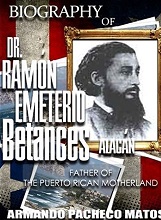 On May 12, 1898, the United States Military invaded the island of Puerto Rico, the Caribbean island once under the control of the Spanish Empire. The occupation by the United States ended hopes of an independent Puerto Rico, the dream of Dr. Ramón Emeterio Betances Alacan (1827-1898) whom author Armando Pacheco Matos calls the “Father of the Puerto Rican Motherland”. Betances died in Neuilly-sur-Seine, France on September 16, 1898, and did not live to see what would become of the island he loved. Had he lived, he would have been appalled at the annexation of Puerto Rico by the United States and its designation as a commonwealth. Betances’ goal from the start was complete independence of Puerto Rico from the bruality of the Spanish empire. Today, his name is rarely mentioned but if we want to have a discussion about Puerto Rico’s history, he must be part of the conversation. To understand why, it is necessary to read this book which captures Betances’ life and how it impacted the history and culture of Puerto Rico.
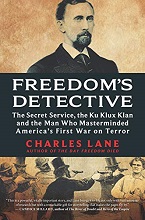 Yesterday America once again celebrated its independence from British Colonialism. Cookouts and fireworks were held all over the country as people sought out even the smallest amount of happiness during what are surreal times. The Coronavirus Pandemic and murder of George Floyd (1973-2020) have placed America at a crossroads. As a nation we are forced with both an invisible enemy that spreads from person to person and a highly visible one which has festered in our nation for far too long. But what is paramount to remember is that America has faced these enemies before but what we do moving forward will truly define what type of country we wish to have. I found this book on Amazon while browsing through a list of daily recommendations and the cover caught my attention instantly. I do confess that did not have the slightest idea who the person on the cover was and why he is important in American history. All that changed as I opened the pages of this book and learned a history lesson that I have never seen in any textbook.
 On April 30, 1945, the Soviet Union Red Army, had reached within several blocks of the Reich Chancellory. Realizing that their fates were sealed, Reich Chancellery Adolf Hitler (1889-1945) and Eva Braun (1912-1945) took their own lives instead of risking capture by Allied forces. Over the next two days, those who had chosen to remain with them in the underground bunker made their way to surface and attempted to flee Berlin. Among them was one of Hitler’s personal secretaries, Gertraud “Traudl” Junge (1920-2002). As a close assistant to the Führer, she found herself in a unique position to observe the daily routine of one of the most powerful men in world history. This is her memoir of the time she spent with the man who lit the spark for the second world war.
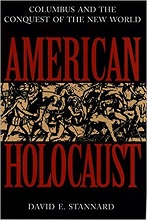 Earlier this week, my boss mentioned during a Zoom office meeting that Columbus Day needed to be re-examined. He had learned of many dark aspects of Christopher Columbus’ (1451-1506) arrival in the Caribbean. The movement to end the celebration of Columbus’ life has gained considerable traction over the past several years. Some states in America have renamed the Columbus Day to “Indigenous People’s Day”, in honor of the Native Americans who sufferend immensly at the hands of Spanish and other European explorers. It is a sound recommendation and one that may even happen here in New York City as it becomes harder for people to ignore the disturbing actions by Columbus and his group of marauders. Many of us learned in school that he was the man who “discovered America”. But is that what really happened? An uncontested fact is that Columbus never set foot on North American soil, making the claim of discovering America misleading. And we know today after many years of neglect by mainstream media, is that indigenous populations were decimated when exposed to the new visitors from abroad. The true story however, goes far beyond Columbus, who was just one of many bloodthirsty religious fanatics who favored violence over peaceful assimilation. David E. Stannard revisits the Columbus story in this eye-opening and chilling account that resulted in a stiff drink and a long moment of silence after I had finished reading.
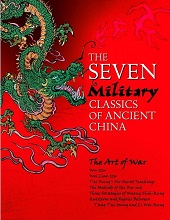 I decided to change gears and take a look at a book that had been on my to-read list for quite some time. The Seven Military Classics of Ancient China are some of the most widely studied writings in regards to conventional and unconventional warfare. Putting their age aside, the texts provide the reader with an inside look into the strategies behind armed conflict in Ancient China. And what is contained within the pages of this collection of brilliant military strategy, are dozens of lessons that military commanders can still use even today.
 In June, 1989, I vividly recall watching the newsroadcasts of the protests in Beijing’s Tiananmen Square. There was much I did know know then about the factors beind the protests but the image of a lone Chinsese man staring down the barrel of a tank was seared into my memory. He became known as “Tank Man” and his act of defiance is still one of the most moving images in history. The picture truly does speak a thousand words. The protests began on April 15, 1989 and ended on June 4, 1989. However, in order to bring the protests to an end, army troops employed a range of tactics including the firing of live ammunition resulting an a still unclear number of deaths. Estimates ranges from several hundred to several thousand. To those of us in the west, the protests were the result of years of oppression by the Chinese Communist Party (“CCP”) and incompetent officials who had closed China off to most of the world. However, there was far more to the story than many realized then. And to understand what was happening and why, we must take a look behind the scenes to see what life in China was really like in the years leading up to the summer of 1989.
 On April 30, 1975, the People’s Army of Vietnam and Viet Cong forces succeeded in the occupation of the city of Saigon in the wake of withdrawal by United States Armed Forces. America’s departure marked the end of the Vietnam War and provided the Democratic Republic of North Vietnam with the opporunity to unify North and South Vietnam. The final act of unification would have been welcomed by the first Prime Minister of North Vietnam Nyguen Ai Quoc who was known to the world as Ho Chih Minh (1890-1969). Older Vietanemse sometimes refer to him as “Uncle Ho”, a benevolent figure who’s life as devoted to completely independence in Indochina from French and Chinese rule. Ho Chih Minh has always come across as a slightly mysterious figure and some parts of his life are still unknown. However, author William Duiker provides an informative and thought-provoking biography that explains Ho’s life and the true tragedy of the Vietnam War.
 The recent Netflix series


You must be logged in to post a comment.