
 There is something about the Italian-American crime syndicate that continues to fascinate American culture. The larger than life characters that appeared on television and in newspapers have been immortalized in movies and documentaries. Their close-knit organization which we have come to know as the Mafia, became as American as apple pie. Violence, money, sex and power become staples of the gangster’s life. Many of them die before their time as the street life inevitably catches up with them. John Alite knows this all too well. The former hit man for the late Gambino Family boss John Gotti (1940-2002), served several years in prison after being extradited from Brazil in 2006. He later agreed to testify against a former associate which reduced his sentence. In 2017 he was released from supervised parole.
When I saw this book on Amazon it immediately grabbed my attention. As a New York City native, I vividly remember the time when the Mafia controlled nearly every industry in the city with an iron grip that was broken main by the RICO Act. Alite was in a unique position similar to another associate who also agreed to help prosecutors, Sammy “The Bull” Gravano. The better days of the Mafia are long past but the memories of its reign of terror remain firmly fixed in the minds of many. From the beginning, Alite’s story pulls the reader in and mainly because unlike Gotti, he his not of Italian heritage. In fact, his family comes from Albania. And his childhood is composed of a three-generation family, an environment in which I myself grew up in. Those familiar with Eastern Europe will recognized the profound differences between Italian and Albanian culture. What helps make Alite’s story interesting are the dynamics between family members and the struggle by his parents and grandparents as they adjusted to a new country with a language they had to learn later in life. To enforce the point, phrases of Albanian spoken by Alite’s parents and grandparents are peppered throughout the story. And it is clear that his Albanian heritage was and is a source of pride. However, every story has an antagonist and Alite’s is no different.
I should point out right now that this book is part one in what will surely be either a two or three book series. This story is strictly about his childhood and his slowly descent into rebelliousness and a life of crime. But perhaps, no other relationship was as critical in this development than that between him and his father Meti (Matthew). This is the crux of the book and Alite pointedly states that it was his father’s teachings that made it easy for him to end up in the life of crime later in his life. Today it would be considered abuse but back then, what went on at home often stayed at home. Under their roof existed a tyrant whose life was complicated and stressful and unfortunately led to outbursts of violence that affected each person in their own way. But ironically, love also exists at home but it is carefully guarded by some and shown in different ways. The fondness Alite had for his grandparents is endearing and an example of the importance of the bond that should exist between multiple generations. The old country lives with the new country in a land with completely rules and customs. An in a climactic scene between Alite and his father, we see the different ways of life come to a head in what could only be described as the straw that broke the camel’s back.
The story takes place in the Woodhaven section of Queens, New York. Readers that are from Queens or familiar with the neighborhood and era will nod in agreement at some of the things he recounts. Queens truly is the borough of immigrants and for this Albanian family it would prove to be a blessing and a curse for their young boys. The budding baseball player and boxer sometimes crippled with epileptic seizures grows fast and tough on the streets of Queens. At the conclusion of the book, he has begun to embark on the path that would lead him into the clutches of the Gambino Crime Family where the stakes are higher and the activities and conspirators far more deadly. If the writers continue on the path set in this first part, the second will be an even better read.
ASIN: B078NHPS3S
ISBN-10: 0997159189
ISBN-13: 978-0997159189

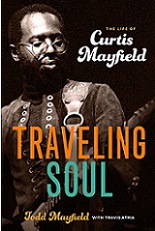 His voice was unlike any other I have ever heard. My grandparents, aunts and uncles played his music regularly and his songs are recognized as part of the soundtrack to the continuing movement for equality carried on through Black Americans. His hits We’re A Winner and Keep on Pushing are some of most iconic songs from that era and a testament to the skill and passion of the late Curtis Lee Mayfield (1942-1999). Along with his group, the Impressions, Mayfield helped redefine music as we have come to know it. His soundtrack for Super Fly is legendary and next to Isaac Hayes, the music therein was the cream of the crop for the Blaxploitation films that became the norm for African-American stars. And although he has been gone for nearly nineteen years, his music sounds as if it were recorded yesterday. On the surface, the beard, eccentric clothing, glasses and guitar tuned to F sharp gave the image of a musician larger than life. But how much of his personal life do we, his fans, know? And what was the real Curtis Mayfield like?
 On July 18, 1969, Senator Edward M. “Ted” Kennedy (1932-2009) lost control of his vehicle while crossing the Dike Bridge on Chappaquiddick Island, Massachusetts. In the passenger seat was a twenty-eight old former staff member of Robert F. Kennedy’s (1929-1968) presidential campaign and member of a group of women known as the “Boiler Room Girls”. She was later identified as Mary Jo Kopechne. In death she became a permanent part of the history of Chappaquiddick and a reminder of what happens when we are negligent in our actions. Over time she has been largely forgotten, having been overshadowed by the lives of the Kennedy family. And with regards to Chappaquiddick, she has been known as the “woman in Kennedy’s car”. But the real Mary Jo Kopechne has an interesting story of her own that was cut short at only twenty-eight years of age.
 It is not often that a former Director of the Federal Bureau of Investigation writes a book. In fact, it is almost unprecedented. In all fairness, there have been books written by former members of the Central Intelligence Agency and U.S. intelligence apparatus. When James Comey published this book, news outlets were eagerly waiting to get a copy of one of the most anticipated book releases in history. The political climate of the United States is unlike anything most of us have ever seen. There are a number of adjectives that come to mind, any of which could be rightfully applied to Washington, D.C. Time will tell what will happen in the oval office. The firing of James Comey through the media left many of us shocked, confused and even angry. For some, it was just one more act by a vindictive and childish commander-in-chief. Others believed that it was the right call as they believed the FBI was out of control. I watched broadcasts that day and found myself astonished at the day’s events and wondering if this was just the start of a regrettable trend developing in the United States government.
 But who was the real Freddie Mercury? His death on November 24, 1991 came just hours after he released a statement informing the world that he had developed AIDS after being diagnosed as HIV positive several years earlier. Those close to him were not surprised at the announcement. The press was relentless is following Mercury around London attempting to get a glimpse of the star who was rumored to be on his deathbed. I remember when Mercury died and the news broadcasts that flashed across several networks. The music world had lost one of its greats. However, like all musicians, much of his life was subject to speculation and misinformation. In fact, to this day there is much about him many people may not know. But here in Somebody to Lovem we have a complete picture of the life of the late Freddie Mercury.
 Ross was never a “in-ring talent” and spent most of his days commentating or behind a microphone and a result, he possesses an invaluable insight into the promotional side of the business and how stars and heels are created and then sold to the public. Contained within the pages of this book is a story that every pro wrestling fan should read. Some readers may be tempted to think that because he was not a “superstar” in the sense that most people used to, he does not have an amazing story to tell. I would like point out that they would be highly mistaken. In fact, Ross’ story is just as crazy as others that have been told. The reason is that not only did he know the best but partied and traveled with them as well. Like a sponge soaking up everything in its vicinity, he observed and learned over four decades what it takes to survive in the crazy world of what my father used to call “rassling”.
 Today, Venezuela finds itself at the brink of a migrant crisis that could very surpass that of Syria. The mass exodus of Venezuelans to surrounding countries in Latin America has increased as social conditions have deteriorated with food shortages, absurdly inflated currency and political suppression having become daily aspects of life. Nicolás Maduro (1962-) is the sitting President of Venezuela. His administration has come under fire both domestic and abroad for its dismal record on improving Venezuelan society. The country’s fall from grace is one of the most confusing and astounding transformations in modern history. The nation was once at the top of the petroleum export industry and under President Hugo Chávez (1954-2013), Venezuela re-merged as a country to be recognized. On March 5, 2013, he died after a two-year battle with colon cancer and with his death came the end of an era in Venezuela to which the country has been unable and in some cases unwilling to return.
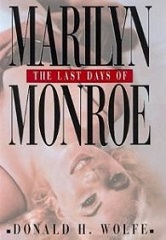 On August 5, 1962, newspapers around the world relayed the news of the death of Hollywood star Marilyn Monroe (1926-1962) the night before at her home in the Brentwood section of Los Angeles, California at the age of thirty-six. The cause of death was listed as suicide from an overdose of the drugs Pentobarbital and chloral hydrate. However, decades after her death, several question still remain regarding that tragic night of August 4, 1962. What really happened that night and why was she paid a visit by then Attorney General Robert F. Kennedy (1925-1968) and his brother-in-law Peter Lawford (1923-1984)?
 FREETHINKING BIBLIOPHILE
You must be logged in to post a comment.