
 The Second World War remains the most brutal conflict in history. The number of those who perished is still up for debate and there are many secrets of the war that have been lost to history forever. In the United States, foreign-born citizens with roots in any of the countries part of the Axis powers, found their selves under suspicion and in the case of the Japanese, placed into concentration camps. Although not as inhumane and deadly as the camps in Germany and Poland, they resulted in the rise of resentment among Japanese-Americans toward the United States Government and the country they called home. The dropping of the Atomic bombs further heightened the feeling of resentment and was the first and only time a nuclear weapon was used in warfare. Survivors of the bomb attacks can still be found today, advanced in their years but tragically familiar with the barbarity of modern warfare. Across the pacific, Japanese-American veterans of the war remember the tragedy that befell Japan, the nation to which their families trace their origins. But what happens when half of a family is in Japan and the other half is in the United States? Or what do you do when one son is part of the Japanese Imperial Army and the other is part of the United States Armed Forces? And when the war is over, how do you come to terms with the effects war has had on your family and yourself? This is the story of the Fukuhara family whose lives are the answer to those questions. Written by Pamela Rotner Sakamoto and containing snippets of interviews conducted with those relevant to the story, Midnight in Broad Daylight is a heart wrenching story of a family struggling to survive, having been affected by a war in more ways than one.
Following the death of the family patriarch, a widow is faced with the daunting challenge of raising several children on an almost non-existent budget. Her plight is compounded by the social climate of strong prejudice against Asian-Americans. Seeking a better quality of life, she makes the decision to relocate to her homeland of Japan where several other children reside. There, they are briefly reunited and their situation forms the nexus for the remainder of the story as we follow Kino, her children Harry, Victory, Frank and Mary as they move through life and encounter war on a scale unlike anything ever seen before. Harry (1925-2015) and Mary eventually move back to the United States leaving behind Kino, Victor and Frank. Life moves along for each until December 7, 1941, the day that lives in infamy, when the Japanese air force bombed Pearl Harbor bringing the United States into the war. From that point on, none of their lives would ever be the same again. Harry became the most popular of the siblings, earning his induction in the Military Intelligence Hall of Fame in 1988.
The East and West still have much ground to cover in completely understanding each other. Foreigners who move to the United States often face the challenge of enforcing native traditions on their American children. Generational and cultural gaps are formed making the path to understanding and compromise seem as if it is completely out of reach. But if we take the time to read the story of the Fukuhara’s, we can find solid footing allowing us to examine the fears and concerns about culture being lost. Today, it is probably impossible for any of us to begin to understand the inner conflict a person must have had if they were Japanese during World War II. The attacks at Pearl Harbor caught nearly all by surprise including Japanese-Americans. But following the attack and the United States entry into the conflict, life became harder and the prejudices against Japanese far much stronger. With hindsight we can easily find fault with government policy during that era but today we would be hard pressed to say if some of us would do otherwise. Regardless of whether you are a hawk or a dove, this story is moving and one that should be widely read. As I made my way through the book, I found myself rooting for the Fukuhara’s, hoping that they all make it through the war and reunite with a happy ending. This did not happen. The book is not easy to read in some parts, in particular with regards to the concentration camps and the bombs dropped on Nagasaki and Hiroshima. We should never fail to comprehend the level of devastation caused by the devices known as Fat Man and Little Boy. The effects of the blast and subsequent radiation sickness are on full display and reinforces my belief that Japan’s resurrection after the war was nothing short of miraculous.
I hope that the world never experiences a conflict on the scale of World War II. If we do, it might be the world’s final war. As the people of Japan were preparing for the Allied invasion, I am sure that they too thought that the war would be Japan’s total demise. For their relatives here in the United States, there was only waiting and uneasiness as news of the atomic bombs spread across the globe. The Fukuhara’s lives are a case study of what happens to those families caught on both sides of a conflict regardless of their personal beliefs or character. For the rest of their lives, the events of the 1940s remained with them as reminders of a dark period in world history. If you are a student of world history and/or a World War II buff, then this book a welcomed addition.
ISBN-10: 006235194X
ISBN-13: 978-0062351944
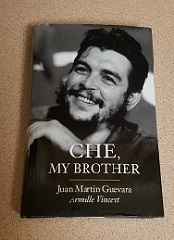 October 10, 1967 – Argentine newspaper Clarin announces that Ernesto “Che” Guevara (1928-1967) has died in Bolivia on October 9 after being capture with a group of guerrilla fighters attempting to spread revolutionary ideology throughout Latin America. In Buenos Aires, his family receives the news of his death and is completely devastated. Juan Martin, his younger brother, races to his father’s apartment where his mother and siblings have gathered as they attempt to piece together the last moments of Ernesto’s life. Che was secretly buried in an unmarked grave and his remains remained hidden for thirty years before author Jon Lee Anderson convinced a retired Bolivian general to reveal the grave’s location. His remains were returned to Havana on July 13, 1997 where he was buried with full military honors on October 17, 1997. In death, Che’s legacy grew exponentially and even today in 2017, he is the icon of revolution around the world. But after his death, what happened to his family and where did their lives take them? Juan Martin, at seventy-two years old, has decided to tell his story and reveal to us many facts about the Guevara family that have sometimes been overlooked by history.
 As a student growing up in the United States, my classmates came from many different backgrounds. Some came from as far away as India and Korea. Others from Guyana and Dominican Republic. No matter where they came from, we were equal peers studying to enhance our lives through prosperity. However, only sixty-four years ago, the ruling of
  October 1st marked forty-seven years since James Marshall “Jimi” Hendrix (1942-1970) died in the flat of Monika Danneman in the Kensington section of London at the age of twenty-seven. Today his music is still revered and Hendrix is considered one of the greatest electric guitar players in music history. In fact, there are those who believe that we was the greatest to ever live. The collection of music he left behind continues to be discovered by younger generations and maintains a place in my own collection. His cover of Bob Dylan’s All Along The Watchtower and the classic Hey Joe are among my favorites and some of Hendrix’s best works.
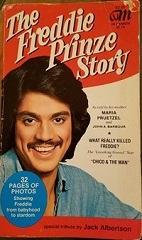 At 1 p.m. on January 29, 1977, Freddie Prinze, Sr., died at the UCLA Medical Center after suffering a self-inflicted gunshot wound the night before while talking to his manager Marvin “Dusty” Snyder. Prinze was twenty-two years old and left behind grieving parents, siblings, a widow and a son, Freddie, Jr., who would go on to have successful career of his own in Hollywood. Prinze rose to stardom at the age of 19 and in just three years went from aspiring comedian to a star on the comedy circuit and in the hit show Chico and the Man. His time on earth was brief but at the height of his career, it is estimated that his face had been seen by nearly 40 million viewers. I had often heard about Prinze and listened to my parents talk about him in conversations about their favorite shows from the past. I had always wondered what drove him to take his own life? And could it have been prevented? His late mother Maria Pruetzel (1921-2013) tells her story and the story of Freddie’s short but incredible life in this memoir of their time together as mother and son. His father Karl (1914-1979) is also in the story but in a supporting role for reasons Maria explains early in the book.
 The summer of 2017 is winding down and a new school year is nearly upon us here in the United States. Seven months have now passed since Donald J. Trump was sworn in as the 45th President of the United States. And in that time, the world has witnesses events that few can claim to have seen before. I previously reviewed
  Harlem, New York has been and still is crucial to New York City politics. The area that was home to the majority of African-Americans has been affected by the wave of gentrification that has reached nearly every major city across the nation. Musicians, actors, gangsters and politicians have found fame and fortune in the neighborhood with a storied past. And of all of the colorful characters to use Harlem as their base of activity, perhaps none is as famous as the late Adam Clayton Powell, Jr. (1908-1972) There is a street named in his honor in the area but sadly, the generation of today is largely unaware of his story and his contributions to American society. He has been described as flamboyant, stubborn, cunning and of great intelligence. He earned the affection of his congregation and millions of minorities and the wrath of presidents and senators determined to put an end to his career. Forty-five years have passed since his death on April 4, 1972. Cancer proved to be his biggest opponent, taking his life at the age of sixty-three. But who was the real Adam Clayton Powell, Jr? And why is he so important to the Civil Rights Movement and the African-American experience? Wil Haygood has researched Powell’s life and compiled this definitive account of the late congressman’s life.
 Today, sixty-four years after his death in, Joseph Stalin (1878-1953) remains one of the most polarizing and studied figures of the 20th century. As the leader of the Soviet Union during the Second World War, he enforced the legendary Red Army as it fought off a German onslaught and helped the Allies put an end to Germany’s Third Reich. Following the war, tensions between the United States and the USSR escalated giving birth to the Cold War. In 1991, the USSR collapsed and today Russia is under the control of Vladimir Putin, undoubtedly one of the world’s most controversial figures. Stalin’s reign may seem to be in Russia’s distant past but it was less than one hundred years ago that Stalin ruled with an iron fist, striking fear into the hearts of not only his enemies but those closest to him. Rumors have surfaced over the years regarding everything including his love life, health, mental state and bungled policies. But who was the real Joseph Stalin? Born Ioseb Jughashvili in Gori, Georgia on December 18, 1878 to Besarion “Beso” Jughashvili (1850-1909) and Ketevan “Keke” Geladze (1858-1937), few could have imagined that the young child would grow up to rule an entire nation. His life in later years became mysterious to those inside and outside of Russia. Misconceptions and falsehoods have spread, causing even more confusion about the truth. Stephen Kotkin has takes on the late leader’s life in a multi-part definitive biography that is simply outstanding.
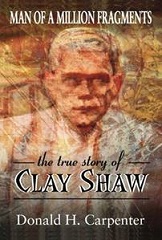 In December, 1991, Warner Brothers pictures released Oliver Stone’s JFK, the film adaptation of the investigation by New Orleans District Attorney Jim Garrison (1921-1922) into the death of President John F. Kennedy. The film is filled with an all-star cast and remains one of Stone’s greatest accomplishments. Reviews of the movie are generally favorable but there are many critics who have voiced their dissatisfaction with the film believing that Stone omitted crucial information and glorified Garrison on screen. The famed director did an incredible job of bringing the past of life and his effort paid off immensely as more records related to President Kennedy’s assassination were released to the public. The actors that took part in the landmark film all did an incredible job in making the story one that will continue to spark curiosity. From history, we know that Lee Harvey Oswald (1939-1963) was the alleged assassin but was murdered himself before he could stand trial. Several years later, Garrison began his own investigation, focusing on what he believed to be a plot in his own City of New Orleans to murder Kennedy. His investigation resulted in the arrest and prosecution of local businessman Clay L. Shaw (1913-1973). The trial became infamous for its absurdity and Shaw was exonerated in March, 1969. Garrison later tried Shaw on the charge of perjury and Shaw subsequently filed a civil suit against Garrison and others for the violations of his civil rights. These matters and others were unresolved at the time of Shaw’s death from lung cancer on August 15, 1974.
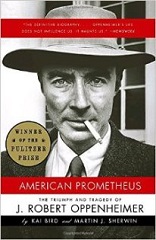 In August, 1945, the course of modern warfare was changed forever when the United States dropped two atomic bombs on Japan, striking the cities of Hiroshima and Nagasaki. Following the successful deployment of the bomb, the Soviet Union and other nations enhanced their own programs to develop a nuclear weapon. The nuclear arms race produced a fear in mankind that still exists today as war continues and dictators drunk on power set their eyes on world domination and a test of egos. It has often been said that the next major world war will be the last war mankind will ever fight. Humanity now has the absolute power to destroy itself literally at the push of a button. Thankfully, since the second world war, there has been no further use of atomic weapons in an armed conflict. But the danger still exists and there have been many who have warned against the escalation of nuclear armament. One of these voices was that of J. Robert Oppenheimer (1904-1967), referred to as the father of atomic bomb and in this excellent biography, an American Prometheus. Kali Bird and Martin J. Sherwin have captured Oppenheimer’s life splendidly making sure that his life is recorded for history.
 FREETHINKING BIBLIOPHILE
You must be logged in to post a comment.