
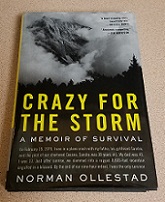
 On February 19, 1979, eleven year-old Norman Ollestad was a passenger in privately chartered Cessna aircraft. He was joined by his father Norman and his father’s girlfriend Sandra. The flight was supposed to be a routine trip but weather conditions and pilot error resulted in a series of events that climaxed with the crash of the plane in the San Gabriel mountains in Northern Los Angeles County, California. Miraculously, he was able to descend the mountain and eventually encountered a family living in the area who alerted authorities that a survivor of the crash had been found. Suddenly without his father, young Norman is forced to keep going in life without the words, wisdom and encouragement of the man he called Dad. In 2006, he began to write this book, his life story and his memories of his father while growing up in Malibu, California.
The book is not so much an autobiography in the traditional sense. In fact, Ollestad does not go into the story of his birth, all of his schooling, etc. When the book opens, he is already age eleven and like many of his peers, he possesses a passion for skateboarding. His father however, has more plans in store for him and teaches him the skills necessary for becoming a seasoned skier and surfer. And in between events, his father gives him small doses of wisdom that have remained with him throughout his life. It is clearly obvious that he adored his father and was proud that he not only had joined the FBI but the resigned a wrote a book about it titled Inside the FBI, published in 1967. Naturally, following the plane crash rumors surfaced about Hoover wanting revenge for the book but no evidence of foul play was found. The accident occurred for other reasons which are revealed in the book.
Norman’s story is pretty straightforward and nothing in it stands out at first. That all changes when Mexico becomes the next destination for father and son. Norman’s grandparents need a new washing machine so his Dad informs him that they will take the machine to Puerto Vallarta on their own and deliver it. The anecdotes from their journey are some of the deepest moments in the book, next to Ollestad’s descriptions of the crash-site and the fatalities that occurred. In the epilogue, Norman tells his son Noah that he could never do the things with him that he did with his grandfather because it would illegal. Most parents would never consider such a trip for their eleven year-old child but as we see in the book, the Ollestads did things differently, never intending to conform to anything or anyone and always with courage. This helps explain Norman’s rebellious streak that intensified after his father’s death.
Prior to reading the book, I did not have any expectations for it and I was not aware of Ollestad’s story beforehand. I do not know what some readers will expect in the book, but it is not simply a memoir about the crash. In fact, the chapters are divided between the crash and his childhood. It reminds me of the flashback to young Vito Corleone in The Godfather Part II. Some readers may find it confusing but personally, I thought it added a uniqueness to the book. It is critical to pay close attention but the flashbacks set the stage for the crash and events that follow. By some miracle, he survived the crash which surely could have killed everyone on board. Regaining his composure, he finds the courage to make his way down the mountain with a will to live. This drive and determination, was instilled in him by his father as we see in the flashbacks in which young Norman is perfecting his crafts and absorbing his father’s words. And his messages to his son Noah show that Norman learned from his father many things that were great and also some things that need to be changed with the next generation of Ollestads.
I am fortunate to have my father in my life. He is in his mid-sixties and keeps moving forward. He does not believe in sitting still and follows the mantra that you should never let any grass grow under your feet. As I read Ollestad’s book, I repeatedly thought of the importance of a strong bond between father and son. As Tupac Shakur once said, you need a man to teach you how to be a man. I could not have said it better myself. And one day if I am fortunate to have a son of my own, I will teach him how to be a man so that the lessons I have learned can be pass down through him and to future generations. Wisdom is the gift that keeps on giving.
The book is less than three-hundred pages in length so for some it would be considered a short read. I read through it quickly for the story flows very well but I think that more information about his life after the crash through adulthood would have given the book more substance. Nevertheless, it is a nice read full of emotion and the values we aim to have in our lives. And after you have finished the book, you too might be crazy for the storm.
ISBN-10: 0061766720
ISBN-13: 978-0061766725

 There is something about the Italian-American crime syndicate that continues to fascinate American culture. The larger than life characters that appeared on television and in newspapers have been immortalized in movies and documentaries. Their close-knit organization which we have come to know as the Mafia, became as American as apple pie. Violence, money, sex and power become staples of the gangster’s life. Many of them die before their time as the street life inevitably catches up with them. John Alite knows this all too well. The former hit man for the late Gambino Family boss John Gotti (1940-2002), served several years in prison after being extradited from Brazil in 2006. He later agreed to testify against a former associate which reduced his sentence. In 2017 he was released from supervised parole.
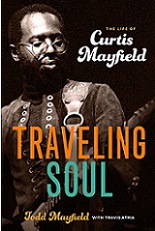 His voice was unlike any other I have ever heard. My grandparents, aunts and uncles played his music regularly and his songs are recognized as part of the soundtrack to the continuing movement for equality carried on through Black Americans. His hits We’re A Winner and Keep on Pushing are some of most iconic songs from that era and a testament to the skill and passion of the late Curtis Lee Mayfield (1942-1999). Along with his group, the Impressions, Mayfield helped redefine music as we have come to know it. His soundtrack for Super Fly is legendary and next to Isaac Hayes, the music therein was the cream of the crop for the Blaxploitation films that became the norm for African-American stars. And although he has been gone for nearly nineteen years, his music sounds as if it were recorded yesterday. On the surface, the beard, eccentric clothing, glasses and guitar tuned to F sharp gave the image of a musician larger than life. But how much of his personal life do we, his fans, know? And what was the real Curtis Mayfield like?
 On July 18, 1969, Senator Edward M. “Ted” Kennedy (1932-2009) lost control of his vehicle while crossing the Dike Bridge on Chappaquiddick Island, Massachusetts. In the passenger seat was a twenty-eight old former staff member of Robert F. Kennedy’s (1929-1968) presidential campaign and member of a group of women known as the “Boiler Room Girls”. She was later identified as Mary Jo Kopechne. In death she became a permanent part of the history of Chappaquiddick and a reminder of what happens when we are negligent in our actions. Over time she has been largely forgotten, having been overshadowed by the lives of the Kennedy family. And with regards to Chappaquiddick, she has been known as the “woman in Kennedy’s car”. But the real Mary Jo Kopechne has an interesting story of her own that was cut short at only twenty-eight years of age.
 It is not often that a former Director of the Federal Bureau of Investigation writes a book. In fact, it is almost unprecedented. In all fairness, there have been books written by former members of the Central Intelligence Agency and U.S. intelligence apparatus. When James Comey published this book, news outlets were eagerly waiting to get a copy of one of the most anticipated book releases in history. The political climate of the United States is unlike anything most of us have ever seen. There are a number of adjectives that come to mind, any of which could be rightfully applied to Washington, D.C. Time will tell what will happen in the oval office. The firing of James Comey through the media left many of us shocked, confused and even angry. For some, it was just one more act by a vindictive and childish commander-in-chief. Others believed that it was the right call as they believed the FBI was out of control. I watched broadcasts that day and found myself astonished at the day’s events and wondering if this was just the start of a regrettable trend developing in the United States government.
 But who was the real Freddie Mercury? His death on November 24, 1991 came just hours after he released a statement informing the world that he had developed AIDS after being diagnosed as HIV positive several years earlier. Those close to him were not surprised at the announcement. The press was relentless is following Mercury around London attempting to get a glimpse of the star who was rumored to be on his deathbed. I remember when Mercury died and the news broadcasts that flashed across several networks. The music world had lost one of its greats. However, like all musicians, much of his life was subject to speculation and misinformation. In fact, to this day there is much about him many people may not know. But here in Somebody to Lovem we have a complete picture of the life of the late Freddie Mercury.
 Ross was never a “in-ring talent” and spent most of his days commentating or behind a microphone and a result, he possesses an invaluable insight into the promotional side of the business and how stars and heels are created and then sold to the public. Contained within the pages of this book is a story that every pro wrestling fan should read. Some readers may be tempted to think that because he was not a “superstar” in the sense that most people used to, he does not have an amazing story to tell. I would like point out that they would be highly mistaken. In fact, Ross’ story is just as crazy as others that have been told. The reason is that not only did he know the best but partied and traveled with them as well. Like a sponge soaking up everything in its vicinity, he observed and learned over four decades what it takes to survive in the crazy world of what my father used to call “rassling”.
 Today, Venezuela finds itself at the brink of a migrant crisis that could very surpass that of Syria. The mass exodus of Venezuelans to surrounding countries in Latin America has increased as social conditions have deteriorated with food shortages, absurdly inflated currency and political suppression having become daily aspects of life. Nicolás Maduro (1962-) is the sitting President of Venezuela. His administration has come under fire both domestic and abroad for its dismal record on improving Venezuelan society. The country’s fall from grace is one of the most confusing and astounding transformations in modern history. The nation was once at the top of the petroleum export industry and under President Hugo Chávez (1954-2013), Venezuela re-merged as a country to be recognized. On March 5, 2013, he died after a two-year battle with colon cancer and with his death came the end of an era in Venezuela to which the country has been unable and in some cases unwilling to return.

You must be logged in to post a comment.