
 While reviewing my list of books to read, I did a double take as I read the title of this memoir by Pat Conroy. I had added it for a reason yet at the time, I could not recall why. But I put that aside and decided that there is no time like the present and it might be a hidden gem. It turns out that I was right in my assessment. However, I was not prepared for the incredible story within by Pat Conroy (1945-2016) that sheds light on the lives of those who have been forgotten even in the most powerful nation on earth. I knew that the story centered around education but of course, teaching is never as simple as writing on a blackboard. In fact, what is revealed in the book should remove all doubt that teaching is by any means as easy task. Some of us are naturally gifted to handle a classroom full of students, each with their own peculiar personality. In many ways, the teacher is conductor working the orchestra to fine tune all the instruments and produce a symphony that is pleasing to the ears. Conroy is the conductor here and what he accomplished on Yamacraw Island, South Carolina, will leave you sad, angry, and happy at the same time.
As I started reading the book, I asked myself where on earth is Yamacraw Island? The name is fictitious, but the land mass is known as Daufuskie Island which is located off the southeastern coast of South Carolina, close to Savannah, Georgia. It is only accessible by ferry or barge and has a population of less than one thousand people at any given time. The island has a rich history and is part of the region once home to the Gullah, African Americans who resided on the island and the nearby islands in South Carolina and Georgia. I had to take a break and look up the Gullah people as I did not know much about them. But Conroy points readers in the right direction:
“The island blacks of South Carolina are famous among linguists for their Gullah dialect. Experts have studied this patois for years and they have written several books on the subject. It is a combination of an African dialect and English; some even claim that remnants of Elizabethan English survive among the Gullah people.”
After doing some research, I came back to the book with a better understanding of the environment awaiting Conroy as he begins his teaching assignment on the island. Readers interested in the Gullah culture will find that this article contains a wealth of information. After arriving for his assignment with the blessing of Dr. Piedmont, Conroy is given a baptism by fire and soon learns that life of Yamacraw is unlike his comfortable existence in Beaufort and other parts of the South. Further, it will challenge his idea of blacks, largely formed by his middle-class background. The author is brutally honest and even discusses his own prejudice against blacks that had been cultivated in his youth. His transformation throughout the book is remarkable and it is fair to say that the kids of Yamacraw left their mark on him. Conroy also leaves his mark on the island which becomes evident as Piedmont seeks his departure from the school. The people in the book grew on me as well but there are many disturbing issues that come to the surface in the story as Conroy learns that he is really one of the very few people who cares about the island and its inhabitants.
The book is set in the 1960s and in the South, bringing the issue of race to the forefront. Race is everywhere in the story as one might expect and even those who try to appear as upstanding citizens are not free of bias that is shockingly horrific at times. The casual use of racial epithets and deranged ideas of communist hippies invading the island might make some readers recoil in disbelief and anger. Conroy feels the rage increasing within and after one unsettling experience, he remarks:
“Christ must do a lot of puking when he reflects upon the good works done in his name.”
As a Black American, I was not surprised at the attitudes in the book and even today there are people who strongly feel that way. But Conroy and others critical to the story, go above and beyond to change the lives of those students in any way possible. And although he stayed on the island just a couple of years, what he accomplishes is more than had been done previously even though the school is part of the larger Beaufort public school district. His work was not easy and on more than one occasion he crosses swords with Mrs. Brown who earns the wrath of the students. But surprisingly, some of the biggest challenges come from the natives themselves and not the administration in Beaufort. The author soon learns that he is embarking on difficult journey to break through a wall surrounding a culture that those outside of Yamacraw would never understand. Superstition, illiteracy, and the fear of whites make his job increasingly difficult as he implements an unorthodox program to help the students learn basic arithmetic, geography, reading and writing. The most basic skills a student should have are lacking and Conroy is in disbelief at how far behind the kids really are. All throughout the story, the backwardness of the island becomes hauntingly clear and changes his perception of the entire school system:
“Something was dawning on me then, an idea that seemed monstrous and unspeakable. I was beginning to think that the schools in Beaufort were glutted with black kids who did not know where to search for their behinds, who were so appallingly ignorant that their minds rotted in their skulls, and that the schools merely served as daytime detention camps for thousands of children who would never extract anything from a book, except a page to blow their noses or wipe their butts.”
The story is impossible to read without experiencing a range of emotions. But there are some beautiful moments such as their trip off the island for Halloween and the second excursion for a fair. The children absolutely love the experience and Conroy had opened their eyes to the world outside of Yamacraw. And the main characters among the children are charismatic in their own right. Mary is one of Conroy’s favorites next to Saul who is always interacting with the teacher whom they call “Mr. Conrack”. They are beautiful souls who have been failed by those closest to them and a school system that had no intention on improving their education which was virtually non-existent. When I finished the book, I wished that Conroy had written an epilogue that would have explained what did happen to the kids on the island. Some may have never moved away from it while others may have made the decision to see the rest of America and the world. If they have read this book, the memories of “Mr. Conrack” and his efforts to give them an education must surely bring back a flood of memories, some of which are quite painful. But if there is any solace to be found, it is that Conroy has put on the record, just how bad the education system in America was for many blacks living in areas that were neglected horribly.
The New York Times listed the book as a best-seller, and it is not hard to see why. It truly is an incredible story even if it seems unreal at times. However, Conroy reveals that in the United States, the “American Dream” is a myth for those whom society has forgotten about. And the account here can serve as an example of educational policies that are dismal failures. If you are looking for a good book about American society that explores a social issue which still rears its head, this is must-read.
ASIN : B003XKN65U
 It truly is amazing that a person can learn so much about the future by examining the past. In America, there are parts of our nation’s history that people find difficult to control. Race is at the top of the list and continues to find itself the topic of discussions as the country grapples with instances of systematic discrimination and overt acts by individuals. However, America is also a very great nation that has the courage to critically examine itself. The problems we have are not new but instead, more attention is now being paid to them. And I honestly believe that to remedy those issues, we must continue to look at the past for it provides many valuable lessons from which we can learn. I picked up this book because 1) I have been a fan of Lorraine Hansberry (1930-1965) for many years and 2) I knew that the book would contain a wealth of highly intellectual discussions about American society that have relevance, even today. And I can say unquestionably that this short book is a good look at Hansberry’s brilliant mind that was able to dissect America in ways that sets the stage for meaningful dialogue and change.
 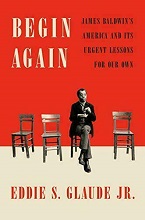 Within the past several years I have found myself becoming more and more familiar with the life and legacy of James Baldwin (1924-1987). And I have come to realize that while he is widely appreciated as an author, he is at the same time, underrated as a voice of reason with regards to the country he called home. Curiously, Baldwin spent many years of his life in Europe, finding solace and residency in France and Turkey. However, his life outside of the United States allowed him to view America from the eyes of a foreigner. That position gave him a unique opportunity to view America through the lens of a microscope where all of its social ills were readily visible. In his time he was seen as a trouble maker and rabble rouser due to his outspokenness and sadly because of his sexual orientation. But to focus on his frank dialogue and homosexuality would be misjudgment of his true genius. Baldwin possessed an uncanny ability to dissect American society and highlight where the nation was going wrong. Today America is at a crossroads with a looming presidential election in a nation fiercely divided and deeply polarized. Eddie S. Glaude, Jr. takes another look at James Baldwin, who comes back to life as a voice of reason during which are certainly difficult times.
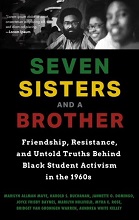 I saw this book in my list of recommendations on Amazon and decided to take a closer look. The cover caught my attention and after reading the full title, my interest peaked. On January 9, 1969 a group of students belonging to the Swarthmore Afro-American Students Society (SASS), took over the admissions office at Swarthmore College. In the months prior, a working paper regarding the recruitment and admission of black students had been released, resulting in immediately backlash from the university’s black students who felt their privacy had been violated and their experiences ignored. The animosity between the students and Dean Hargadon continued to increase and the students felt they had no option but to act. Joyce Frisby Baynes, Harold S. Buchanan, Jannette O. Domingo, Marilyn J. Holifield, Aundrea White Kelly, Marilyn Allman Maye, Myra E. Rose and Bridget Van Gronigen Warren moved into the admissions office and over the next few days, their resistance changed the course of history for Swarthmore College.
 The African-American experience is a reflection of America’s dark past and its bright future. Jim-Crow, anti-miscegenation laws and other legal conditions, provided roadblocks to the social and economic advancement of black Americans and other minorities. However, over time, individuals once considered minorities have made great strides and achieved great success. In spite of this, black America finds itself confronted with issues that cause many to wonder what is really holding black men, women and children back? When I saw this book on Amazon, I thought to myself that whoever wrote this book is beyond brave and was undoubtedly subject to attacks from all angles by those who wish to refute his conclusions. Upon closer inspection, I saw that the book was written by a black American, John McWhorter, who is a professor in English and comparative literature at Columbia University. He has also worked at the University of California, Berkeley. His experiences while tenuring at UC, Berkeley are what form the backbone of this book.
 Recently, I had been revisiting material regarding pivotal moments in the U.S. Civil Rights Movement. My focus became trained on the Black Panther Party, led by the late Huey P. Newton (1942-1989) and Bobby Seale. The Party has been viewed in both positive and negative lights depending on the view of the person assessing its rise and effect on American society. Newton, who later earned a Ph.D., was a charismatic and gifted orator who in turn used those skills in the form of the written word. His autobiography, ‘
 The cover of this book is bound to cause many to do a double take. The crossing out of the word black is far from subtle, but anyone who is familiar with the late Richard Claxton “Dick” Gregory (1932-2017), will know that subtlety was not in his character. He was known as a star comedian for many years but he was also a civil rights activist, nutrition guru, social critic, writer and occasional actor. His death marked the passing of a icon whose sharp wit and frankness earned him the respect of his peers and people across the nation. Published after his death, this book takes a look at the official history of African Americans that Americans have been told for more than a century. Gregory makes it clear early in the book that American History and Black History are one in the same. It is a valid point and for African Americans, the United States is the only home that many have ever known. The history that has been taught in classrooms across America continues to be re-examined in the pursuit of the truth by historians and independent researchers. The gift of the internet has allowed truth-seekers to reach audiences of monumental sizes as we step back in time to learn what really did happen with regards to pivotal events that shaped the modern day United States.
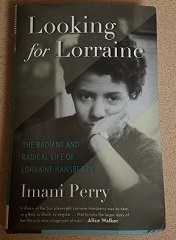 This past Saturday was the fifty-fourth anniversary of the death of the late American playwright and author Lorraine Vivian Hansberry (1930-1965). Her untimely death at the age of thirty-four silenced one of literature’s greatest voices. However, more than fifty years after her death, her masterpiece, A Raisin In the Sun, continues draw audiences curious to learn why the play is one of the longest running on Broadway. I personally attended a run starring Denzel Washington and his portrayal as Walter Lee Younger is as good as the original performance by the legendary Sidney Poitier. For some, Hansberry remains a bit of a mystery. and a throwback to an era long past. The younger generation of today largely have yet to discover her genius and her influence on the African-American experience. And what many of them are unaware of is that five decades ago, she was a voice advocating for the many freedoms they have today. Sadly, it has taken many years for her to be recognized for the gifted writer that she was. As we come to know her work more intimately, we must ask ourselves, who was the real Lorraine Hansberry? Imani Perry searched for and found her in this semi-autobiography and psychoanalysis. The book is an examination of Lorraine’s thoughts and writings while also adding recollections of historical events filled with larger than life figures who are no longer with us today. But make no mistake, this is about Lorraine, the woman who changed Broadway.
 In the United States, the month of February is dedicated to African-American history. February 21 stands out during the month as the day that el-Hajj Malik el-Shabazz better known as Malcolm X (1925-1965) was assassinated at the Audubon Ballroom in Harlem, New York City. On the radio, the eulogy given by the late Ossie Davis (1917-2005) is played taking us back to Malcolm’s final days on earth. In 1992, Warner Brothers released Malcolm X, the biopic directed by Spike Lee and starring Oscar winner Denzel Washington in the lead role. Washington lit up the screen, delivering a performance for the ages. Davis’ eulogy accompanies the closing scenes and the credits are rightly finished to the sounds of Aretha Franklin’s rendition of ‘Someday We’ll All Be Free’ and Arrested Development’s ‘Revolution’. The film has stood the test of time and is a fitting tribute to Malcolm X’s legacy. Lee did an incredible job but there was no way he could have included all of Malcolm’s speeches and writings into the final product. Malcolm was brilliant, not just as an orator but as a critical thinker who presented his arguments in an engaging and articulate manner. And some of those words can be found in this book by Dynast Amir.
 FREETHINKING BIBLIOPHILE
You must be logged in to post a comment.