
 Recently, I watched the 2002 film ‘The Pianist’ starring Adrien Brody as Wladyslaw Szpilman (1911-2000), the pianist for Polish Radio who miraculously survived in Warsaw, Poland during the Nazi occupation. The film was recommended to me by someone very close to me in Buenos Aires and to say the film left me speechless would be an understatement. After viewing the film, I decided to locate the book that inspired it and found Spzilman’s book on Amazon. The book left me just as speechless as the film and even more in awe of Szpilman, as I know in order to have written the book, it would have required an extraordinary amount of courage on his part. The film follows closely to the book with very minor liberties taken by the filmmakers. Their finished product, is one of the best film adaptations that I’ve seen.
Spzilman’s book is slightly different in that it’s one told from life inside Poland and not Germany. The book begins on August 31, 1939, the day before the Germany Army launched the planned invasion of its Polish neighbor. The invasion had been planned well in advanced and a covert operation, named “canned goods” was used to describe the false flag mission that gave provocation for the Nazi assault. The Nazi threat had been looming over Poland for some time but as we see in the book, the savagery that resulted post-invasion was never envisioned by the people of Poland. Spzilman, a musician, and his family remain in Warsaw as the Germany army approaches, refusing to leave the only place they’ve called home. Their lives would never be the same after the war and for Spzilman, he would never again see any of his family members.
The Nazis began to construct the Warsaw ghetto as they continuously redesigned territorial borders expanding the reach of the Third Reich. As Szpilman relates, the ghetto was in a way worse than a jail cell for in a jail cell there’s a concrete definition of the nature of the relationship that exists. With the ghetto, no such definitions existed giving the Jews the false sense of well-being which lead many of them to believe that they would return home after serving in the labor camps during the war. The Germans’ macabre and perverse motto of arbeit macht frei, posted at the entrance of camps, reveals the level of vindictiveness displayed by unwavering believers of Aryan-supremacy and Jewish inferiority. Painful as it may be, Szpilman recounts the daily humiliation endured by Jews and the careless acts of murder committed by the Nazi regime. The crimes committed and disregard for human life are beyond shocking but reveal the truly revolting nature of the Third Reich’s plan for the removal of Jews from Europe that culminated with the deadly “Final Solution”.
By chance, Szpilman is separated from his family and is forced to survive on the streets of Warsaw, literally hiding in plain sight. Air raids, evacuation of residents and mounting German losses in the field, resulted in the neglect of many parts of Warsaw which would serve as a refuge for Szpilman during his quest to stay alive. Death, hunger, disease and mental instability are all threats to him on a daily basis but fate was on his side and he survives through sheer determination and help in some of the most unlikeliest of places.
Following the war he returned to Polish Radio but never forgot the events of those years. His story is among many of the horrors of the Holocaust which serve to remind us of the dangers of blind patriotism and fanatical beliefs. And as we continue to move forward in life and find ourselves at a crossroads in which decency and criminality cross paths, we can turn to the story of ‘The Pianist’ to remind us of the importance of helping others which in turn, allows us to learn about ourselves and the human race.
ISBN-10: 0312263767
ISBN-13: 978-0312263768
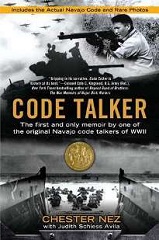
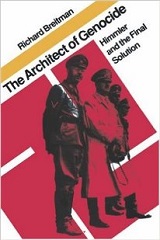 In modern history, the Holocaust ranks among the worst atrocities committed against a group of people by another. The systematic segregation and later extermination of over 6 million Jews throughout Europe brought shame, anger and retribution upon Germany. Today the Holocaust is a distant memory and survivors of the crime are now in their advance years with the number of living survivors declining each year. Recently, Elie Wiesel, the best-selling author of the classic ‘Night’ died at the age of
  The Holocaust remains one of the most regretful moments in the history of mankind. The Final Solution, engineered by Adolf Hitler’s Nazi government, resulted in the deaths of over six millions Jewish men, women and children. The many concentration camps became factories of genocide and symbols of the Third Reich’s relentless efforts to remove all Jewish citizens from Germany and the occupied territories of the Reich. As Hitler made his rise to power, many Jews fled Germany fearing the worst under the rule of the tyrannical dictator from neighboring Austria. Others were forced to seek refuge in Germany and survive in any way possible. But still there were other Jews who found help among non-Jewish Germans and were able to hide themselves right in Berlin, under the eyes and ears of the N.S.D.A.P.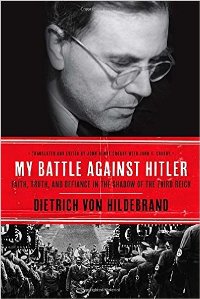

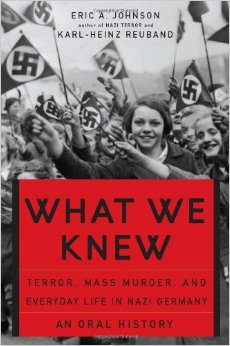

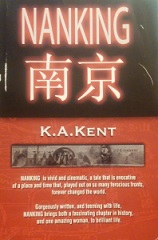 World War II is the worst conflict the earth has ever seen. It is estimated that well over 50 million people died during the war. This number will vary from source to source and the total number of casualties may never be known. The German invasion of Poland on September 1, 1939, triggered a world conflagration unlike anything mankind had ever seen. The Japanese army in seeking to establish and empire of its own, invaded mainland China, waging a path of destruction and terror with the intention on obliterating several Chinese cities from existence. Shanghai was reduced to rubble and Nanking nearly completely destroyed. In total, nearly


You must be logged in to post a comment.