
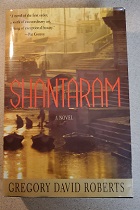
 This review will be different from my normal write-up as I have stepped back into the world of fiction. This book came as a gift, and it is one that I will cherish infinitely. But before I continue, I want to point out that this book is long. In fact, it is over nine hundred pages in length and not for the faint at heart. If the length of the book does not deter you, then you will find an incredible story that will remain with you for years to come. And by the time the story ends, readers will be eager to learn more about the lives of the characters that come to life in this spellbinding tale.
The book opens with the main character arriving in Bombay (now Mumbai), India. No one knows his real name and he is fugitive from his native Australia. His fake New Zealand passport allows him to enter the country and it is not long before he becomes aware of how life operates in Bombay. Soon he meets one of the most cheerful characters in the story, Prabaker who we come to know as Prabu. Our character needs a name and becomes Lin or more intimately, Linbaba. Prabu becomes his guide in the new city, and the locals are drawn to the new white face whose background remains a mystery. Lin is soon introduced to the group of characters that form the backbone of the book: Karla, Didier, Modena, and Maurizio. Each has their own backstory which is explained at various points in the book. Of the group, Lin quickly makes friends with Didier who is a rascal and finds himself attracted to Karla, who plays a significant role in events that come later in the book. Modena and Maurizio also play a significant role but for darker and more disturbing reasons.
Money and shelter become the primary concerns for the new arrival, but Lin is able to survive on side hustles before moving to a well-known slum. From this point on in the story, the darkest aspects of Bombay come to life and the people Lin meets while working as a “physician” in the slum, set in motion a chain of events that bring him into to the criminal underworld, However, Lin is a complex figure and performs acts of courage and kindness throughout the book while learning more about the underworld and its lucrative financial incentives. His actions as a deadly plague breaks out in the slum will remind readers of the danger that comes with living in under-developed parts of the world. However, Lin in aware that eyes are watching him as he is performing feats of courage in the slum. As a foreigner, he was destined to stand out and eventually crosses paths with Bombay’s most feared figure, Abel Khader Khan. Khader becomes a second father to Lin who calls him Khaderbai. Through his mentor, he makes the acquaintance of Abdullah and Nazeer, two pillars of strength throughout the story.
Karla is never far from Lin’s mind and one day she approaches him to assist her in solving a problem at a local establishment. It is here that we are introduced to the notorious Madame Zhou. As they leave, Karla and Lin are under the impression that all is well, but they are unaware that Lin now has a target on his back. Ulla, who is intimately involved with Modena, approaches Lin for a favor that requires they meet at a local restaurant late at night. Lin agrees but this trip turns out to be unlike any he has taken before. Things soon go wrong, and Lin finds himself in a world of trouble. To say he goes through hell would be an understatement. The savageness of human nature is put on full display and the author pulls no punches.
As the dark horrors of Bombay become a painful reality, Lin is forced to confront his own demons from his life in Australia. Readers familiar with the author’s life will recognize that the fictional Lin is based on Roberts’s real-life experiences. The other characters in the book are composites of people he knew, and parts of the story are inspired by true events. Karla is the book’s most mysterious character and Lin can never quite figure her out. However, she comes to his aid when needed and serves as a voice of reason at times. But Lin is not mentally where he needs to be and his association with Khader, Abdullah and others in the Bombay underworld, are far from over.
I mentioned before that the story has twists and turns that come of out of nowhere. Lin could not have imagined that he would become friends with Bombay’s biggest gangster or that he would follow him all the way to Afghanistan. At this part in the story, I thought I had mis-read when I learned of the group’s mission there. The story is surreal but makes sense after we learn more about Khader and another figure, Khaled. They are joined by others whose lives have been changed by the Soviet invasion in 1979. However, understanding each of them is not easy but through Lin, their lives come into focus, and we are able to see the complexity of human nature. The men know they must commit dark deed but believe that out of the darkness comes light. The relationship between Lin and Khader is put to the test and before the mission is over, Lin will be re-born. Upon returning to Bombay, Lin is a changed man but wiser to Bombay’s dark side and there remains unfinished business in the underworld. Madame Zhou reappears in what is one of the book’s crazier moments.
The characters in the story are a mix of good and bad and that is what makes it work so well. Some have committed crimes, others have turned to drugs, yet each is struggling to understand their own existence while engaged in one hustle to the next. Roberts does an excellent job of focusing on the concept of morality without directly addressing it. Instead, we learn about the characters and are able to make our own judgments. Upon learning their backgrounds, I found that I did not dislike the majority, and the duality in their nature is given close attention. The story also reminds the reader that the saying there is no honor amongst thieves has a ring of truth to it. But is that accurate in Shantaram? And is it possible that sometimes you must commit an evil act to produce a greater good? As the book shows, there are aspects of human nature that can never be erased but carefully hidden. And as Lin learns in Bombay, the heart means everything in India. The locals, despite their living conditions, are content and teach Lin valuable lessons that one might suspect cannot be found in the slums of Bombay.
As the book moves forward towards its conclusion, Lin becomes embedded in the social fabric of Bombay and well-known to everyone in the underworld. When he arrived at the beginning of the book, he could not have anticipated the road he would take. But at this point in the story, he is a seasoned gangster who has lost as much as he has gained. He comes to terms with the actions and lives of those around him and their effect on his life. Karla remains close, as do Didier and others such as Lisa, Vikram, Lisa and Kavita. Linbaba completes a long journey and along the way we learn why the name Shantaram is so fitting. There is far more the story than I have mentioned here and readers will enjoy reading the book. It is long but written very well and the story is easy to follow. Highly recommended.
ISBN-10 : 0312330529
ISBN-13 : 978-0312330521
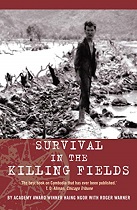 On March 25, 1985, the 57th Academy Awards ceremony was held at the Dorothy Chandler Pavilion, Los Angeles. During the ceremony, the category of best supporting actor was called, and the winner was Haing S. Ngor (1940-1996), a doctor born and raised in Cambodia, who had survived the Khmer Rouge dictatorship under the notorious Pol Pot (1925-1998). Ngor had starred as Cambodian journalist Dith Pran (1942-2008) in the 1984 film
  The history of America is dark at times, and those moments have been omitted or neglected for many years. However, they are crucial to understanding how and why the United States developed into the nation that it is today. As an American, I am constantly seeking to understand my own country and clarify the myths that have propagated with regards to its past. I am learning uncomfortable truths, but they have not diminished the love that I have for America. In the history of this country, the name of Frederick Douglass (1818-1895) remains a reminder of the institution of slavery that degraded human beings, served as the backbone of an economic system, and led America towards a civil war. Douglass was born into the slave system and became a free man as an adult. This is his story of his time in bondage, freedom from oppression and evolution into a public speaker.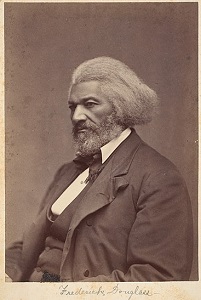
 During a recent flight from San Francisco to New York, the aircraft encountered rough air while making its descent into John F. Kennedy (JFK) Airport. The flight attendant began to speak on the intercom and informed all passengers to return to their seats and fasten their seat belts. He also added “don’t worry, the pilots are trained for this”. I thought to myself that it is good because if they are not, then we have a big problem on this plane. Thinking back on it today, I have come to realize that passengers place an enormous amount of trust in the hands of pilots across the globe every day. When we board an aircraft, we are confident that the people in the cockpit are sufficiently trained to do the job required of them. Air travel in the United States is the safest it has ever been with incidents becoming rarer by the day. But the reality is that there is always a certain level of risk associated with flying. On January 30, 1974, ninety-one passengers boarded Pan American (“Pan Am”) Flight 806 at Auckland International Airport in New Zealand for the short flight to Pago Pago International Airport, American Samoa. The aircraft was staffed with ten-person flight crew who were seasoned employees in the aviation industry. As the aircraft made its final approach to Pago Pago, it crashed short of the runway. Though the passengers survived the crash landing, eighty-seven of them perished as fire and smoke engulfed the plane. The disaster remains one of the worst accidents in commercial aviation history. This is the story of that crash and its relevance to air travel today.
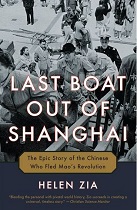 Throughout history, war and destruction have been constant reminders of the fragility of peace. On September 1, 1939, Nazi Germany’s army invaded its neighbor country Poland and ignited the Second World War, the conflict that changed the world in ways one could have imagined. Adolf Hitler’s (1889-1945) quest for world domination inspired other nations to launch their own offensives. National Fascist Party leader Benito Mussolini (1883-1945) plunged Italy into the conflict and in Japan, Hirohito (Emperor Shōwa)(1901-1989) initiated the Japanese campaign to completely control all of Asia. Prior to the conflict, China found itself the target of Japanese invasion and amid internal civil war between the Chinese Communist Party led by Mao Zedong (1893-1976) and Kuomintang under the control of Chiang Kai-Shek (1887-1975). While Hitler’s army was marching across Europe, death and destruction accelerated across Asia and in China, the horror escalated to unthinkable heights. Chinese who were able to leave, fled their homes in search of a new life. This book is the story of that exodus and four individuals who risked it all for freedom. The lives of B
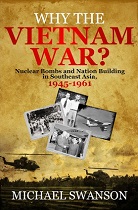 Fifteen days from now, the fifty-eight anniversary of President John F. Kennedy’s (1917-1963) murder will be upon us. His death continues to remind America of a lost opportunity and leader taken before his time. His presidency inspires debate to this day with some believing that he brought the country dangerously close to nuclear war with the Soviet Union. Others feel that he had yet to reach his full potential as a leader. The truth is far more complicated and both sides often omit the difficulties Kennedy faced behind the scenes from those within his own administration. After the disastrous Bay of Pigs invasion which led to Kennedy firing top officials of the Central Intelligence Agency, he then found himself under pressure to intervene in the nation of Laos. Again, Kennedy resisted, drawing the ire of the Joint Chiefs of Staff and Cold-War hawks in Washington. But the hawks were determined and saw Vietnam as the next battlefield to confront “Soviet influence”. But the question that has always haunted this nation is why did we get involved in Vietnam? What threat did North Vietnam pose to the United States even though it is more than thirteen thousand miles away from American soil? My uncle who served in Vietnam has only spoken of his experiences a handful of times. He keeps the war suppressed in his memory and does his best to stay secluded during July 4th celebrations as the fireworks remind him of being in combat. I often wondered if he has asked himself why he was deployed thousands of miles away from home to a country some Americans did not know existed prior to the conflict. Michael Swanson asked himself about Vietnam and has explored the war paying close attention to its origins and this book is the first of what will be a multi volume set about America’s involvement in Southeast Asia.
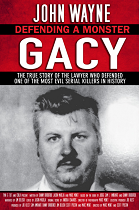 On May 19, 1994, American serial killer John Wayne Gacy (1942-1994) was executed by lethal injection at Stateville Correctional Center in Joliet, Ill, after being convicted of multiple murder charges. It is believed by some people that there were more victims of Gacy that have never been identified. The truth went to the grave with Gacy but what is on the record are the thirty-three homicides attributed to Gacy during his reign of terror. His attorney, Sam Amirante, had just started his own private defense practice when Gacy sought him out for legal representation. Amirante could not have known that his first client would catapult him into the public spotlight in ways none one could have imagined. This is the story of how it happened and how Amirante’s life changed while he defended one of America’s deadliest serial killers.
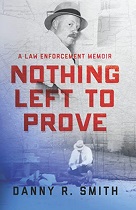 A friend whom I have known since elementary school recently finished twenty years with the New York City Police Department. Though eligible for retirement, he continues to serve the city where he was born. I and other friends have never failed to remind him to be careful on the dangerous streets of New York. Long hours, dangerous criminals and bureaucratic obstacles can sometimes make being a police officer a difficult and thankless job. And when I watch the hit show

You must be logged in to post a comment.