
 The murder of John F. Kennedy (1917-1963) continues to maintain its place among the greatest crimes in American history. The official story as published by the Warren Commission is that former Marine Lee Harvey Oswald (1939-1963) fired three shots in six seconds from the sixty floor of the Texas School Book Depository, fatally wounding Kennedy and severely wounding Texas Governor John Connally (1917-1993). To many, including the author of this book, David Lifton, the government version seemed to be the best and final explanation. But over time Lifton came to doubt the official story and after obtaining a set of the twenty-six volumes that composed the Commission’s investigation, his doubt turned into disbelief and lead him down the path that culminated with this national bestseller.
At the time his odyssey began, Lifton was a law student at UCLA. Working on campus was a law professor by the name of Wesley J. Liebeler who served as a Warren Commission attorney. Disillusioned by the official report, he decided to confront Liebeler about the many discrepancies he found in the final report. Over the next several years, the two men would become more closely acquainted as Lifton dived deeper into the murder and Liebeler sought to preserve the Commission’s report. Ironically Liebeler is the person that suggested to Lifton that he should one day write a book. He eventually did and this is book is a must read for anyone with unanswered questions about the murder of John F. Kennedy.
Having read multiple books on the assassination, I would like to point out that Lifton focuses on the medical evidence surrounding Kennedy’s murder. He does not go into great detail about Oswald’s life, murder or the life and murder of J.D. Tippit. This is strictly about the postmortem events from the time Kennedy was declared dead at Parkland Hospital until the official autopsy report was published by the physicians who were on call at Bethesda Naval Hospital when Kennedy’s body was brought in. I warn readers that the subject matter graphic as it pertains to the autopsy and a large number of anomalies with Kennedy’s body that by all appearances, occurred before the official autopsy even began. Almost like a horror movie, the body tells signs of makeshift surgical procedures, unexplained bruising and conflicting testimony between doctors in Dallas and Maryland. But as Lifton explains, the body is the evidence. Skeptics might be tempted to ask how on earth could such changes have been made to Kennedy’s body before it arrived at Bethesda? Well Lifton asked himself the same question and many others that have been answered through exhaustive research and due diligence in the most plausible manner to date. But what is even more sound about Lifton’s work is that he supports his conclusion based off of evidence that is publicly available and in some cases, was hiding in plain sight. His case is further supported by statements he obtained from numerous individuals who were at either Parkland Hospital, Bethesda or part of Kennedy’s entourage that escorted the body all the way back to Washington.
There are those of us who will refuse to believe that the Government could engage in such nefarious activity. On the surface it simply seems absurd. But we soon learn that there is far more than meets the eye. As Lifton is continue to develop his case for a frontal shot a key event takes place changing his life forever. On a FBI report filed by Agents Francis O’Neill and James Siebert is a section in which they state that surgery had been performed on the president’s head prior to the autopsy. I confess that as I read that section of the book I nearly jumped out of my seat. This statement served as the catalyst for Lifton to change gears and become one of the most respected researchers to date. As I continued through the book I noticed that at times chills ran down my spine. As the story progresses, the macabre becomes a reality and it dawns on the reader that there was more to that day that had nothing to do with Lee Harvey Oswald. This is a story that the Government did not want its citizens to hear. But like Oswald’s murder, it refuses to be put to rest and leaves many unanswered questions.
There are many books about JFK’s murder, each taking a slightly different approach. To get an idea of the overall picture of what happened that day, I always recommend to new readers Crossfire: The Plot That Killed Kennedy by the late Jim Marrs (1943-2017). For others that have passed beyond that point, Lifton’s work is a critical addition to every researcher’s library. The narrative is chilling: unexplained changes to the president’s head indicating prior dissection, two ambulances, two caskets, a helicopter and other mind-boggling postmortem incidents reveal a darker and more sinister plan in effect that most could not begin to fathom. However, there are still many interviews that were classified and thousands of pages of others that remained classified. When they finally are released we can only guess or shudder as to what they might reveal. Until then, we have authors such as David Lifton that force us to take a close look at what is considered to be best evidence.
ISBN-10: 0881844381
ISBN-13: 978-0881844382
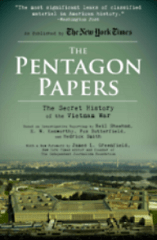 The names of the 58,000 Americans who died in the Vietnam War that are found on the memorial in Washington, D.C., are a reminder of a conflict deemed by many to be the worst the United States has ever been involved in. The withdrawal of U.S. forces in March, 1973, brought a sigh of relief to the American public which had long grown tired of a war with no end in sight. The dark truth which we now know is that we did not by any means accomplish the mission. And the mighty American war machine failed to secure a victory. I have met many veterans of the war and have an uncle who served. What I recall most about all of them is that they do not speak of their experiences while in combat. I know the memories are there and for some of them, they were unable to leave parts of the war behind. Today we call it PTSD, but back then you simply found a way to move forward in life. But why were they in Vietnam to being with? Was the domino effect really a threat to the United States?
 On September 9, 1971, inmates at the Attica Correctional Facility in Attica, New York, staged a revolt in protest of the treatment they received by prison officials and the living conditions employed therein. Several days later, New York State Troopers regained control of the prison after approval from Governor Nelson Rockefeller (1908-1979). The siege had tragic consequences and ended with the deaths of nine hostages and twenty-nine inmates. The fallout from the retaking was swift and to this day the story of Attica is considered the worst prison uprising in American history. The riot caused sharp division among people with some believing in the inmates’ actions and others supporting the State of New York. In fact, among Rockefeller’s most ardent supporters was President Richard M. Nixon (1913-1994) who would himself resign in 1974 due to the Watergate scandal. The riot and its aftermath were so powerful that even Hollywood became interested and produced the television series Attica (1980) starring Morgan Freeman and Against the Wall (1994) starring Samuel L. Jackson (1948-) and Kyle MacLachlan (1959-). Both film productions earned award nominations and the stars in each film would go on to have successful careers in Hollywood. However, the questions always remain, how much did the producers get right, how much did they get wrong and how much did they leave out? Further, how much do we, the public know about one of New York State’s darkest days?
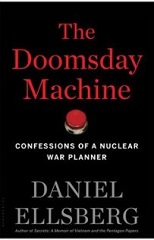 Between August 5 and August 9, 1945, the United States Air Force changed the course of history when the B-29 pilots dropped atomic bombs on the Japanese cities of Hiroshima and Nagasaki. Today, more than seventy years later, the debate regarding whether President Harry Truman (1884-1972) was right to give the final order to drop the bombs rages on. The images taken in Japan following the bombings are still shocking even today and upsetting for many viewers. And for many others, the concern remains that the world could once again see a nuclear weapon used in warfare. It is commonly believed that August, 1945, was the only time atomic weapons had been used in combat. But what actually constitutes “use”? That is a question Daniel Ellsberg addresses in this chilling and eye-opening account his time as a nuclear war planner. Some readers may be familiar with Ellsberg’s name due to his surrender, trial and the dismissal of all charges related to the Pentagon Papers which revealed the mistakes and poor judgment that allowed the United States to go to war against North Vietnam. In fact, Ellsberg’s papers were the target of the crew of burglars that would go on to be discovered at the Watergate Complex. Their arrest and the cover-up by Washington helped lead to the resignation of Richard Nixon. Incredibly, Ellsberg has outlived many of the major figures from that era and what he has accomplished, learned and ultimately disclosed are facts that should concern and be known to every American.
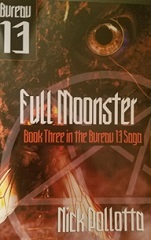 In volume two of this three-part series, Bureau 13 saved mankind for a second time as they battled a crafty villain on the USS Intrepid and New York City’s West Side Highway. At the conclusion of the book, we were able to breathe a sigh of relief as Special Agent Ed Alvarez and his team prevailed. However, for Bureau 13, there is no such thing as the end and they are back again as a new enemy threatens to obliterate the City of Chicago and turn the United States in a land of werewolves. At first, the mere mention of werewolves sounds implausible. But we must remember that this is Bureau 13 where the impossible becomes possible on a daily basis.
 Today, Venezuela finds itself at the brink of a migrant crisis that could very surpass that of Syria. The mass exodus of Venezuelans to surrounding countries in Latin America has increased as social conditions have deteriorated with food shortages, absurdly inflated currency and political suppression having become daily aspects of life. Nicolás Maduro (1962-) is the sitting President of Venezuela. His administration has come under fire both domestic and abroad for its dismal record on improving Venezuelan society. The country’s fall from grace is one of the most confusing and astounding transformations in modern history. The nation was once at the top of the petroleum export industry and under President Hugo Chávez (1954-2013), Venezuela re-merged as a country to be recognized. On March 5, 2013, he died after a two-year battle with colon cancer and with his death came the end of an era in Venezuela to which the country has been unable and in some cases unwilling to return.
 Author Nick Pollotta returns with this second installment in the trilogy of the story of Bureau 13, the secret agency within the U.S. Department of Justice responsible for the tracking and apprehension of all supernatural creatures that pose a treat to the safety of the nation. In
  Nearly all of the reviews I have written have been of books that are classified as non-fiction. This review will be different as I have a taken a short break from the normal material to let my mind have some fun with this book that was recommended to me by a co-worker. It is book one in a trilogy and the review for the second book will follow shortly. The cover of the book gives the reader the indication that it is a novel of horror of the most unspeakable kind. However, I can assure that is not the case but the book is a non-stop ride from beginning to end. If I had to give it a definite classification, I would reply that it is a place where the Men In Black meets The Suicide Squad, Harry Potter with a touch of Fallout added. But what exactly is the book about? And what on earth is Bureau 13?
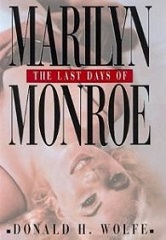 On August 5, 1962, newspapers around the world relayed the news of the death of Hollywood star Marilyn Monroe (1926-1962) the night before at her home in the Brentwood section of Los Angeles, California at the age of thirty-six. The cause of death was listed as suicide from an overdose of the drugs Pentobarbital and chloral hydrate. However, decades after her death, several question still remain regarding that tragic night of August 4, 1962. What really happened that night and why was she paid a visit by then Attorney General Robert F. Kennedy (1925-1968) and his brother-in-law Peter Lawford (1923-1984)?

You must be logged in to post a comment.