
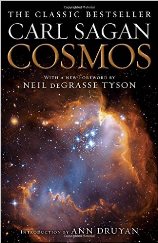
All of us at some point in our lives, have looked up at the night sky and observed the moon and stars that compose what we have come to know as the galaxy. This world beyond the earth remains intriguing and mysterious to mankind. The possibility of other forms of life and planets that might be able to sustain the human race have fueled the fires of exploration. Our desire to answer many of these questions, resonates with the quest to answer the biggest questions, how and why are we here? Religion has attempted through time to provide those answers and for many believers, the scriptures are the final word. But for other curious minds who believe there is more than can be found in a religious text, continue to explore and learn more about the world we all inhabit and the worlds beyond. Each comes together to form what the late Carl Sagan (1934-1996) called the cosmos. Sagan, of Brooklyn, New York, remains possibly the greatest astrophysicists in history. He was also an astronomer, cosmologist, astrobiologist and author. Younger readers may recall that he is remembered fondly by Neil Degrasse Tyson, a protegé of Sagan who has hosted a show also called the Cosmos. This book and the show explore our origins and the complicated yet fascinating process of evolution.
Those of us who are deeply religions might be initially put off by the book because of the subject matter. Sagan does not leave anything to fate or belief, the sciences are on center stage here as we open our minds and go back in time throughout human history. Neil Degrasse Tyson provides a foreword and Sagan’s widow Ann Druyan provides a loving introduction. As we begin the book, it is clear that Sagan is the teacher and we are the students with much to learn. At times, it felt as is I had been transplanted back it time to grade school science. However, Sagan explores material that I did not learn in school and only became familiar with as an adult. In fact, it was through Sagan that I learned the story of Johannes Kepler, who remains largely ignored in mainstream science books. Sagan gives him a proper acknowledgment as a brilliant man whose contributions to what we know today cannot be overlooked.
Kepler is just one of many names in the book that should never be forgotten. The path to knowledge over the past several thousand years has been long and arduous with many obstacles faced by those who dared to speak out against what was thought to be “common knowledge”. Their stories are intriguing and I wonder if any of them could have imagined society would have advanced to this point in 2018. Perhaps they might disappointed that we have not made even further progress. Regardless of what they might believe, the fact is man has evolved drastically and what we know today is in a sense light years ahead of our ancestors.
The book is appropriately titled the cosmos and it is in this area that Sagan truly shines. Forget about science fiction films about space and shows about Martians. Here he takes us on a voyage as we explore the known planets in our solar system. The vivid and detailed descriptions of the planets we have named, vindicate Johannes Kepler, Nicholas Copernicus and others who understood that the earth rotates around the sun. The amount of information that is known about the galaxy is nothing short of incredible. And even more impressive is that there remains much more to discover.
Sagan is a good author and never lets the material become too complicated. The information is presented thoroughly but in an easy to read format. From the start, the book pulled me in deep an I committed myself to blocking out any ideas I may have had about the universe. At times in the book, I felt as if I were learning science all over again in a refresher course before a highly important exam. But this is no exam, this is our world and our role in it. Our planet is at least four billions years old. But if that is true, what life forms existed then and what happened to them? And are we the only species of humans that have ever existed? Could there be a species on another planet in the galaxy that resembles humans? Finally, if other species do exist, are they aware of earth and have previously discovered out planet? The possibilities are endless and that is what makes science so interesting and Sagan’s death a tragic loss. Yes, science continues even though he has gone but his vision and accomplishments can never be denied. And as he firmly explains, in exploring the cosmos, we explore ourselves for we are a part of the cosmos.
I firmly believe that this book should be read by everyone. This is the world’s history in science as it relates to the origins of mankind and our understanding of the worlds around us. Sagan is gone but far from forgotten and this gift he gave us is one that continues to give. If you have the time and are willing, take a journey with him and explore the cosmos with a mind that is irreplaceable.
ISBN-10: 1531888062
ISBN-13: 978-1531888060
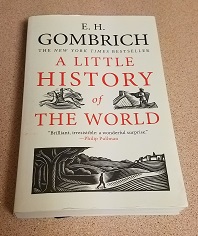 Can you imagine several thousand years of world history compressed into three hundred four pages? Before reading this book, I certainly did not and I believe the same applies to many others. However, that is exactly what Ernst Han Josef Gombrich (1909-2001) has done in this history book that came into existence as a result of challenge issued to the author to write a better history book than the one he was editing at the time. The book was written in 1935 and subsequently re-published bringing it up to date with modern history events. Gombrich never intended for the book to replace all of the history textbooks in use by teachers and professors. However, the book does serve as a complement to dozens of study aids used by students across the globe. Interestingly, the book is geared towards the ages of seven to nine years but I think that readers of all ages will find it to be quite informative.
 When I think back on the history classes I attended in elementary school, high school and then college, I remember that it seemed as if it took forever to go through any topic. And that says a lot for someone like myself who has always loved the subject and still does. For most people, history is beyond mind-numbing and often revisits events in the past to which most people do not give a second thought. But as we are often reminded through history, we need to know our past in order to reach our future. In comparison to the history of Europe, Asia and other parts of the world, the United States is a very young nation that has been in existence less than three hundred years. Incredibly, in that short amount of time on the world stage, some of the most memorable events in modern history have taken place in North America and had reverberating effects across the planet. If we were to study American in its entirety, that would be a course that would last a couple of years at least. But what happens when you cram that history into a book that is three hundred nine pages long?
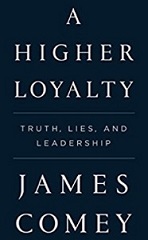 It is not often that a former Director of the Federal Bureau of Investigation writes a book. In fact, it is almost unprecedented. In all fairness, there have been books written by former members of the Central Intelligence Agency and U.S. intelligence apparatus. When James Comey published this book, news outlets were eagerly waiting to get a copy of one of the most anticipated book releases in history. The political climate of the United States is unlike anything most of us have ever seen. There are a number of adjectives that come to mind, any of which could be rightfully applied to Washington, D.C. Time will tell what will happen in the oval office. The firing of James Comey through the media left many of us shocked, confused and even angry. For some, it was just one more act by a vindictive and childish commander-in-chief. Others believed that it was the right call as they believed the FBI was out of control. I watched broadcasts that day and found myself astonished at the day’s events and wondering if this was just the start of a regrettable trend developing in the United States government.
 The title of this book is enough to cause a range of emotions in deist, agnostics and atheist. Next to politics, religion is a subject which unites or divides, sometimes through the use of extreme violence. Today, when we think of religious fundamentalism, images of Islamic radicals readily come to mind causing us to forget that extremism exist is nearly every religion known to man. In the United States, most deists are followers of monotheistic faiths. Others are followers of polytheistic faiths and the remainder could be classified as agnostic, spiritual or even atheist. Those who are atheist remain firm in their belief that God does not exist. But for deists, God does exist and is present all around us at all times. But what if is there is no such thing as God? Believers will find the mere mention of such a concept preposterous. But in all fairness, no one has ever come back from the dead to tell humanity what really happens when we die. Furthermore, non-believers point to the world’s many ills as proof that an all-loving God is nothing more than make-believe. Christopher Hitchens (1949-2011) wrote at least thirty books, some of which like this, addressed religious faith. Here, he takes on God and puts forth his argument that religion itself is the cause of many of the world’s ills. One look at the cover will cause some to claim blasphemy and write Hitchens off as doomed and demented soul who surely found out when he died, that God does in fact exist. Regardless of what side of the fence you are on, the book is a good discussion on the effect religion truly has on our lives.
 But who was the real Freddie Mercury? His death on November 24, 1991 came just hours after he released a statement informing the world that he had developed AIDS after being diagnosed as HIV positive several years earlier. Those close to him were not surprised at the announcement. The press was relentless is following Mercury around London attempting to get a glimpse of the star who was rumored to be on his deathbed. I remember when Mercury died and the news broadcasts that flashed across several networks. The music world had lost one of its greats. However, like all musicians, much of his life was subject to speculation and misinformation. In fact, to this day there is much about him many people may not know. But here in Somebody to Lovem we have a complete picture of the life of the late Freddie Mercury.
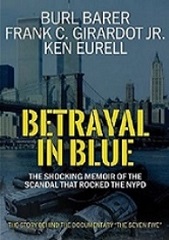 Nearly twenty-six years ago, New York City Police Officer Michael Dowd was arrested by the Suffolk County Police Department in cooperation with the U.S. Drug Enforcement Agency for the possession and distribution on narcotics. His arrest, trial before Judge Kimba Wood of the Southern District of New York and testimony before the Mollen Commission solidified Dowd’s reputation as the dirtiest cop in NYPD history. Arrested with him were other officers, drug dealers and other participants. Ken Eurell was retired at the time of his arrest but during his active tenure, he patrolled the streets of the Seventh-Fifth precinct with Dowd and embarked on a path of corruption that is still unbelievable to this day. The duo recounted their life of crime in the 2015 documentary The Seven Five. Undoubtedly, Dowd is the main focus and his recollections are backed up by Eurell and the other former officers. This is the story from Eurell’s point of view about how and why he found himself more deeply immersed in crime with Dowd.
 Ross was never a “in-ring talent” and spent most of his days commentating or behind a microphone and a result, he possesses an invaluable insight into the promotional side of the business and how stars and heels are created and then sold to the public. Contained within the pages of this book is a story that every pro wrestling fan should read. Some readers may be tempted to think that because he was not a “superstar” in the sense that most people used to, he does not have an amazing story to tell. I would like point out that they would be highly mistaken. In fact, Ross’ story is just as crazy as others that have been told. The reason is that not only did he know the best but partied and traveled with them as well. Like a sponge soaking up everything in its vicinity, he observed and learned over four decades what it takes to survive in the crazy world of what my father used to call “rassling”.
 The murder of John F. Kennedy (1917-1963) continues to maintain its place among the greatest crimes in American history. The official story as published by the Warren Commission is that former Marine Lee Harvey Oswald (1939-1963) fired three shots in six seconds from the sixty floor of the Texas School Book Depository, fatally wounding Kennedy and severely wounding Texas Governor John Connally (1917-1993). To many, including the author of this book, David Lifton, the government version seemed to be the best and final explanation. But over time Lifton came to doubt the official story and after obtaining a set of the twenty-six volumes that composed the Commission’s investigation, his doubt turned into disbelief and lead him down the path that culminated with this national bestseller.
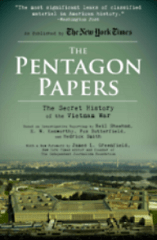 The names of the 58,000 Americans who died in the Vietnam War that are found on the memorial in Washington, D.C., are a reminder of a conflict deemed by many to be the worst the United States has ever been involved in. The withdrawal of U.S. forces in March, 1973, brought a sigh of relief to the American public which had long grown tired of a war with no end in sight. The dark truth which we now know is that we did not by any means accomplish the mission. And the mighty American war machine failed to secure a victory. I have met many veterans of the war and have an uncle who served. What I recall most about all of them is that they do not speak of their experiences while in combat. I know the memories are there and for some of them, they were unable to leave parts of the war behind. Today we call it PTSD, but back then you simply found a way to move forward in life. But why were they in Vietnam to being with? Was the domino effect really a threat to the United States?

You must be logged in to post a comment.