Robert Kennedy In His Own Words: The Unpublished Recollections of the Kennedy Years-Robert F. Kennedy, edited by Edwin O. Guthman and Jeffrey Schulman

20180603_134806.jpgThe election of Barack Obama to the office of President of the United States marked a turning point in American history.   His successful campaign and subsequent eight years in office vindicated the late Robert F. Kennedy who in 1961 said he believed that in forty years a negro could be president.  At the time the thought seemed absurd as American struggle with social division fueled by ethnic discrimination.  But if we look back on his words, we can see that his foresight was not only accurate but uncanny.  From time to time I think back on the many quotes from him regarding his views on society.   His assassination during the 1968 presidential race left a void in the United States that has never been filled. He remains one of the most popular, unpopular and tragic figures in the history of this nation.

Following the death of John F. Kennedy, life took on a different meaning for the former Attorney General.   He became the patriarch of the Kennedy family and struggled with his own future and emotions resulting from the untimely death of his older brother.  As a member of the president’s cabinet and younger sibling, he was present during ever major crisis faced by the new administration. The wisdom and insight that he gained from his time in service of the country makes him one of history’s wisest witnesses.  The Kennedys have always been controversial. Most people either love them or hate them.  No matter which side of the fence you find yourself on, one thing that is true is that the election of John F. Kennedy was one of the brightest moments in world history.   From 1964-1967, Kennedy gave closed-door interviews to Anthony Lewis (1927-2013)who worked as a columnist for the New York Times, John Bartlow Martin (1915-1987) who served as an Ambassador to the Dominican Republic, Arthur M. Schlesinger, Jr. (1917-2007) who served as JFK’s special assistant and John Francis Stewart who was chief of the Oral History Project at the John F. Kennedy Library from 1966-1969.   The interviews sat dormant for over 20 years before this book was published in 1988. They were then edited and composed into this insightful account of the workings behind the scene in the Kennedy administration.

Kennedy was always very frank in his statements and never one to sugar coat anything. This book is no different.  In fact, he is even more frank and I believe part of the reason is because not much time had passed between the assassination in Dallas and when he began to sit down for these interviews.  The wounds were still open and many raw emotions were in play.  However to his credit, he answers each question directly and quite extensive. Only on a handful of times does he express disinterest in speaking about a certain topic. Considering what had just happened to his brother, it was remarkable that he was able to sit down and open up about a lot of topics.  But the one topic he does not discuss at all is the assassination itself.  He does talk about a few events following the murder and in particular his encounters with the new president Lyndon Johnson. It is no secret that the two did not get along and Kennedy does not hide his contempt for Johnson.  He gives clear reasons for his dislike for Johnson and leaves it up to the reader to decide whether they’re justified or not.

In addition to Johnson, Kennedy is asked his opinion about many other political figures at the time and he gives his honest opinion on all of them.  What I came to find in Kennedy was a man rigidly principled in a world where things were either right or wrong but not so much in between.  In his eyes either you were effective at your job or you were of no use.  As cold as it sounds to the reader, for a new administration that survived one of the closest elections in history, a senate filled with rabid Democratic southerners opposed to the “Catholics”and civil rights, a tight ship was needed in order for the new president to enact domestic legislation and compose effective foreign policy.  When his brother appointed him as Attorney General, even he thought it was a mistake.  But as we can see in hindsight, it was one of the best decisions made by John F. Kennedy.   The level of trust and dedication exemplified by Robert Kennedy to his brother, the administration and the country are inspiring.  Of course, we could point out many errors made along the way.  The same could be done with every administration.  However, their vision to steer America on a new path was bold and unprecedented a time when America was still struggling with a dark and violent past.  The challenges they faced through opposition and inefficiency are cleared explained by Kennedy giving us a sense of the staggering amount of difficulty JFK faced in dealing with the Senate and House of Representatives.  Incredibly, in spite of the opposition, they succeeded on many fronts and would have continued on the same path.

President Kennedy served in office less than three years.  But in those three years, he faced some of the biggest threats to the safety of the United States. Berlin, Cuba, Laos and Vietnam put the world on edge as democracy in the west came face to face with communism in the east, backed by the ideology of the Soviet Union, the nation’s fiercest opponent.  As they weathered each storm, they stood side to side making critical decisions to carefully avoid the outbreak of a nuclear confrontation.  And it may scare some readers to learn just how close we came to war with the Soviet Union. The place where it would have happened might surprise you as well.  There are other small tidbits of information revealed by Kennedy that cast light of the severity of maintaining world peace.

The questions he was asked were strictly about the administration. There are nearly no discussions about the personal lives of anyone except for a question regarding the rumor that JFK had been married prior to meeting Jackie. The reason is that the interviews were done for the JFK Library and needed to be as exact as possible. Furthermore, there are plenty of books that tackle the personal lives of the Kennedys.  The most popular being Seymour Hersh’s The Dark Side of Camelot. This book is Kennedy’s show and he shines in his assessment of what it was like helping his brother run the country and the many challenges and successes they had.

ISBN-10: 055334661X
ISBN-13: 978-0553346619

Trumped! The Inside story of The Real Donald Trump – His Cunning Rise and Spectacular Fall-John R. O’Donnell with James Rutherford

51nrsryomzl-_sy346_On October 10, 2016, the Taj Mahal Casino in Atlantic City, New Jersey, closed its doors after 21 years in business and just hours after the second debate in the 2016 presidential race.  The casino was the vision of Donald J. Trump that became a reality.  At the time it opened, it was the largest casino in Atlantic City and rivaled the highlights of the Las Vegas Strip.  Its closing closed another chapter in the sad history of Atlantic City, the coastal town that was once the gambling mecca of the east coast of the United States and home to many of the greatest boxing events during the 1980s.  Today, the town is a remnant of its former self. Several well-known casinos closed years ago never to be replaced resulting in large sections of Atlantic City having no structures in place at all. The life that was once the backbone is now gone having been replaced by a feeling of dread and desertion. Only time will tell what will happen to the struggling city and it remains to be seen if the current president will do anything to help the place in which he earned and lost millions of dollars.
As a kid, I always looked forward to the times when my grandmother and mother would take my brother and I on a multi-day stay at Bally’s on the boardwalk.  Only a little over two hours from New York City, Atlantic City was a top destination for many people in New York, northern New Jersey and other parts of the tri-state area.  It also attracted millionaires, billionaires and scores of celebrities. To be honest, I never saw Donald Trump there and as a kid, he was the last thing going through my mind.  But I did walk past the Taj Mahal and stand in awe of its size.  To think that it is no longer a functional part of the famed boardwalk is both heartbreaking and a sad reality of the repercussions of financial mismanagement.  And for the reader to understand how and why Atlantic City has been on the decline, it is necessary to revisit the actions of one of its greatest and worst entrepreneurs.  John R. O’Donnell worked for the Trump Organization for three years before handing in his resignation.  In 1991, this book was released to the public and re-released in 2016 as Trump began to focus his efforts to win the oval office.

From the cover of the book it is hard to get an idea of what the book is about. This is not a biography of Trump.  O’Donnell does provide some biographical information but it is brief and in no way critical to the story being told.  This book is strictly about the casinos in Atlantic City under Trump’s control and O’Donnell’s experiences while working there.  There are those who will tempted to write off the book as an attempt to defame Trump’s character and cast judgment on his ability to lead the country. I disagree.  O’Donnell never says he hates Trump but only reports what he saw , heard and observed while running Trump’s casinos.  In fact, O’Donnell primarily worked at the Trump Plaza but also gets dragged into the debacle that became the Taj Mahal. He enjoyed his work but found himself not enjoying his environment and his decision to leave clearly reflects this.  But even as he resigns he does not go out of his way to bury Trump in the book.

No one can deny that Donald Trump has had success in the financial industry.  His name has been attached to some of the biggest projects we have seen in the last 30 years. But the truth about his involvement in those affairs and how much he really did do has always remained shrouded in mystery.  O’Donnell lifts the veil on some of these things allowing the reader to see what the real Trump is like behind the scenes. And what we see is a businessman who is calculating, cunning, insensitive, unrealistic and ultimately supremely overconfident. At times he is his own worst enemy and his casino empire borders on collapse in only a few short years. His personal life is marked with scandals, infidelity,  personal shortcomings and the deaths of several people close to him as acquaintances and business associates.  Gossip seekers will not find any smoking guns here but O’Donnell does touch on the Marla Maples situation that helped caused one of the biggest divorces in history between Trump and his then wife Ivanka.

The book almost reads like a tragic play at times with the main character, the emperor, unable to see all that is around him although is eyes are wide open.  O’Donnell is the voice of reason throughout the book but in the final analysis, he is resolved to make his exit stage left.  Many years have passed since Trump dominated and manipulated Atlantic City. Today he holds the highest office in the nation. But the question remains, has he learned from his days as a casino mogul or will he continue to make the same mistakes and hold on to his beliefs about himself and others that contributed to his prior failings?   Further, what will happen to the United States now that he is in office?  Time will answer these questions  and others that arise and for the voters and readers of this book, only they can decided what type of leader they believe he will be.

ASIN: B01DD2P5DI

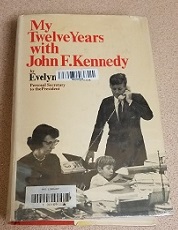
My Twelve Years With John F. Kennedy-Evenlyn Lincoln

jfkNovember 22, 1963 remains a day seared into the minds of millions of people around the world.  Known informally in the United States as the day Kennedy died, each year it reminds of the tragic events of that day in Dallas, Texas.  The spirit of John F. Kennedy has remained with America and today, decades after his death, his legacy continues to gain in strength.  The debate regarding his accomplishments while in office has raged continuously.  But what cannot be denied is his impact of the conscience of the United States and his status as a symbol of hope for an entire generation.  When he died, he left behind not only a widow and two children, but millions of fans, friends and his personal secretary of twelve years, Evelyn Lincoln.
Kennedy’s administration, named “Camelot” by the press, has been the source of inquisitive researchers and those enamored with his charm and intellectually sharp personality.  In this book, Lincoln has recorded her memories of what it was like for the mythical and tragic young president.   Some readers may be familiar with her other book Kennedy and Johnsonher memoir regarding the relationship between Kennedy and Vice President Lyndon Johnson.  In comparison, Johnson is not seen frequently in this book. In fact, he is hardly mentioned but only a handful of times.  This book is strictly about the relationship between Kennedy and his secretary who devoted twelve long years of her life in service to him.

The book begins as she reflects on the aftermath of the trip to Dallas.  But it should be noted that this book is not about his murder and there is no smoking gun in the book. Researchers and assassination buffs will not find anything of value in here.   Where the book does shine however, is showing Kennedy’s personal side.  In stark contrast to the clean-cut and smooth image presented in public, behind the scenes, the senator and later president is revealed to be as forgetful as the next person,  unorganized as most businessmen and as kind as some of the greatest people I have ever met in life.  Lincoln’s book does an excellent job of showing how and why so many people were inspired to work with and for him.  Furthermore, it adds to his prestige as one of the most different individuals to ever occupy the oval office.

I am sure that some readers will find it interesting that she makes no mention of any of Kennedy’s major shortcomings, particularly his extramarital affairs.   For some it will be hard to accept that his secretary who surely would have been privy to such knowledge makes no mention of it at all.   I firmly believe it was not needed and was not the point of her book.  Similar to Arthur Schlesinger, she makes note of her working relationship with Kennedy which was the goal of the book.   And on this level, she succeeds without question.   The book was published in 1965, roughly two years after his murder.  I can only imagine the amount of grief she endured at the time and the challenge she faced in writing this memoir.  Its publication and existence are a testament to her will and are a fitting tribute to the slain leader.

Anyone who has ever worked as a secretary will appreciate this book.  I personally have worked as a secretarial assistant and found myself nodding my head at times during the book when she relates one of Kennedy’s quirks.  All bosses have them and in all different forms. But their quirks are also what helps to make the unique and unforgettable. Kennedy and Lincoln are both deceased but they shared a time together that stands out in American history both for great reasons and unfortunately for tragic reasons.   Her tribute to her former boss is heartfelt and will be warmly received in any library about the life and political career of John Fitzgerald Kennedy.

ASIN: B000UCF0V2

Bellevue: Three Centuries Of Medicine And Mayhem At America’s Most Storied Hospital-David Oshinsky

1

The evolution of medical care in the United States is as scary as it is fascinating.  Today it is hard to fathom the once draconian methods physicians used to treatment even the most common ailments.  In fact, methods were so primitive, a patient was more likely to die at a hospital than at home. Of course now, the opposite is most likely to happen. America is home for some of the best hospitals in the world and cutting edge medical care.  But the path taken to reach this point was long, torturous and in some cases, shocking beyond belief.  At the center of the development in hospital care was a facility that became an icon in New York City, Bellevue Hospital.  The hospital which is still open today, has a long history that is largely unknown.  And the patients admitted there today are most likely highly unaware of the hospital’s storied past and how it came one of the City’s leading medical facilities.

Pulitzer Prize winner David Oshinksy has compiled this incredible investigative report into the history of Bellevue.  And it is all here; the good, the bad and the extreme ugly.   Through exhaustive research, he has carefully reconstructed the history of the hospital and others in the City of New York.  And although Bellevue is the subject of the book, the provides fascinating details about the origins of other hospitals in the City, some of which are no longer in existence.  St. Vincent’s is the first to come to mind.   The founders of these hospitals and the early pioneers of treatment there have been forgotten over time but Oshinsky brings them all back to life as he examines their lives and their contributions to the field of medicine. The book feels like a step back into time to an era in which emergency care often resulted in an emergency itself.

As a native New Yorker, I have passed Bellevue both on foot and by car dozens of times. In fact, my mother had a brief admission there several years ago.  However at no time was I even vaguely aware of the importance of the place in which I stood.  The history contained within the walls of the hospital is nothing short of astounding.  And having read this phenomenal work, I can exclaim that I had grateful for all of the advancements made in the field of medicine.  And I know that I do have to go to Bellevue, I will be in the care of the some of the best physicians New York City has to offer.  But as Oshinsky shows us, Bellevue also has a very dark past that often bordered on the unreal.

It will be hard for readers to imagine what medical care used to be like during a time when doctors were still learning how to treat even common conditions.  In an era before anesthesia, antibiotics and even proper sanity conditions, most patients entered the hospital and never left.   Those who did die, ran the risk of ending up in potter’s field which at the time existed in more than one location in the city.   As plagues swept through the City, the death toll mounted as doctors struggled to keep up.   Their attempts to treat the conditions and the solutions employed were beyond surreal and today they would be considered criminal.  Bellevue, while an early pioneer for above standard medical care, was not exempt and carries to this day, a fair number of its own horror stories that turned a blossoming hospital into the scorn of the City.  These stories included horrific medical practices, insufficient security and criminal neglect.  However, through every major crisis faced by the City of New York, Bellevue’s doors were always open and have remained so to this day. Even in times when ethnicity determined where you received medical treatment and mental institutions could not contain the sick, Bellevue took in all comers and that tradition has continued.

For those who are history lovers and want to know about the City of New York and in particular Bellevue hospital, this is the place to start.  Not only will you learn about Bellevue, but you will also learn about the history of the medical field in the United States and see how far society has come and how are we still have to go for the past is always prologue .

ISBN-10: 038552336X
ISBN-13: 978-0385523363

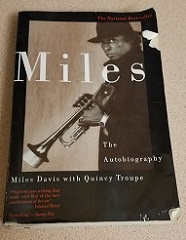
Miles: The Autobiography-Miles Davis with Quincy Troupe

MIlesIn July, 1992, my father purchased the album Doo Bop, the last studio album completed by the late Miles Dewey Davis, III.   Through my father and uncles, I had been exposed to jazz music and knew the names of many of the greatest artists to ever perform.  I grew to love the music and that has not changed to this day.  In fact, I still listen to the album when I get in the mood to hear Miles’ songs.  When he died on September 28, 1991, I remember my uncle and dad being devastated.  Both he and my father were huge fans of Davis but were also aware of the chaotic life Davis had led. They would often spend hours discussion Miles, jazz and the other legends of the genre over wine, rum and cigars.  When Miles he died he was less than 70 years of age and his death seemed surreal at the time.  Today, many years after his death, his legacy lives on and his music continues to be study for inspiration and analysis.  In 2016, the movie Miles Ahead starring Don Cheadle was released to select theaters to mixed reviews.  I saw the film and thought that Cheadle captured Miles’ character quite well. There were points in the film where I had to remind myself that it was actually Cheadle on screen and not Davis himself. However, the film moves around too much and the story line fails to deliver.  The result is a haphazard biopic that does not help the viewer to understand the life of one of jazz’s greatest musicians.  Hollywood is always prone to taking liberties when making films and with on 90 minutes of film to work with, it would be quite challenging to capture all of his life on the silver screen.   A saving grace is this autobiography which was written with the assistance of Quincy Troupe, who conducted extensive interviews with Davis and those who knew him.  And the rest is one of the best autobiographies I have ever read.   Miles is frank by nature and he holds nearly nothing back in the book regarding his life.  His story is so engaging that I finished the book in only two days. Simply put, his story is quite the experience and we can be eternally grateful that he did tell his story before he died.
So just who was Miles Davis?  And why is he so important to the history of jazz?  Well, those two questions and more are answered in this book which is guaranteed to keep you entertained.  From his beginnings in Alton, Illinois to his death in Santa Monica, California, his life was one situation after another that sometimes defied logic. But such was his life and one that few people will live.  From the start, he is very open about his childhood and his relationships with his parents and siblings.  Incredibly, from a very young age, music is in his blood and he never wavers in his quest to become a pioneer and change jazz music, something he did more than once during a career that spanned more than 40 years.

Davis was a very blunt speaker and as a result, his words are laced with profanity.   So for those who cringe at foul language,  be warned that he does not speak to sound comforting but talks the way he always has.  At first, I thought it was a bit much but as I made my way through the book, it became an afterthought and overshadowed by the incredible story he was telling.  Aside from his salty language, he had a great ability to analyze himself and open up about where he went wrong in life.  It seems almost absurd that someone who was so successful in music, led a wild and tormented life at home. But his life mimics that of other creative geniuses who often straddle the fine line between genius and insanity.  As we learn in the book, he constantly tried to pick up as much as he could from other great artists around him and I believe that it was helped him become the legend that he is today. He never stopped learning or changing and even says during the book that “knowledge is freedom and ignorance is slavery”.

His story is incredible but what makes the book even more outstanding is that Davis either knew or worked with the major names in the jazz music at the time.   His friendship and working partnership with Charlie “Bird” Parker is both eye-opening and tragic but sheds light on the many dangers faced by performers and Parker’s downfall and death.  Bird is just one of many characters to appear in the book, he is joined by Dizzy Gillespie, Charles Mingus,  Thelonious Monk,  John Coltrane, Gil Evans and Clark Terry.  In addition there are many others involved with the emerging bebop genre that appear in the book as they come in and out of Miles’ life adding to his experiences and wisdom.

Although deeply personal,  he opens up about his medical conditions and demons in particular that nearly ended his life.   As a father of several children, he struggled being a parent and is brutally honest about his relationship with them as his former wives.   His marriage to actress Cicely Tyson is the best known of the three but the other two are the marriages that had the biggest impacts in his life as the reader will see. Nonetheless, his words are intoxicating and even as the book concluded, I found myself wishing for just a few more chapters in the book to see what else would happen or what he had learned as he aged.   However, I am grateful to him for leaving us with these memories.  Show business is rough, drugs are hard and marriage is tough.  Some artists balance all three but for many that is not the case.  He had his addictions and failings but was also a creative genius. And throughout the book, he is the coolest person in the room. This is Miles as raw as it gets.

ISBN-10: 0330313827
ISBN-13: 978-0330313827


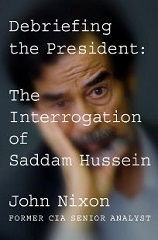
Debriefing the President: The Interrogation of Saddam Hussein-John Nixon

saddamOn March 20, 2003, the United States military invaded the Republic of Iraq.  The invasion marked the second time US and Iraqi forces faced off in armed conflict.  Saddam Hussein, the ruler of Iraq was deposed and fled into hiding.  He was captured several months later on December 10, 2003 and three years later, executed by hanging.  Over 10 years have passed since his death and Iraq continues to struggle with stability in the face of internal factions divided along tribal and religions lines and the emergence of ISIS intent of claiming their portion of territory across the Middle East.  After he was captured, he was debriefed by American forces. The man who many Americans had seen as a powerful dictator on television, was reduced to another captured fugitive on a most wanted list.  His appearance before cameras with a full beard and unkempt hear, remains one of the most popular images from that decade.   However, it was a stark contrast from the man who allegedly had his mind-set on the destruction of America.  But is that was Saddam Hussein really wanted? And what were his thoughts leading up to and during the invasion?  John Nixon served as a former Senior Analyst with the Central Intelligence Agency and was tasked with debriefing the fallen dictator.  This book is a recap of his career and the conversations he had with Hussein following his historic capture.
I believe that in order to truly enjoy this book, it is necessary for the reader to abandon any pre-conceived notions he or she might have about Hussein.  While he was in fact a brutal tyrant, he did serve as Iraq’s head of state and provides insight to the decisions and non-decisions prior to the U.S. invasion.  Prior to reading the book, I knew that Hussein was one of the worst rulers the world had seen. But I was curious as to what he truly thought about U.S. foreign policy towards his country.    His answers a lot of questions and also clears up a few long-standing rumors.   After finishing the book, I did not come away with a favorable impression of Hussein. Neither did I feel any more antipathy towards him.   I do empathize with the men and women of Iraq who suffered under his reign.    And I do feel that he was either unable or unwilling to see the error in his ways.   At one point during the book he makes it clear that ruling Iraq was no easy task because of several factors and fears.   Perhaps he is right, after all he would know better than any of us. I did find it easier to understand why he did not fully prepare for the invasion but found it increasing difficult to find any justification for the invasion.  I never believed in the invasion and after reading Hussein’s answers, it seems even more bizarre and highlights a terrible moment in U.S. foreign policy.

It may sound ridiculous to some but during the book, it seemed absurd that the Hussein that is captured was the leader of Iraq.   Perhaps his capture served to humble him slightly but I had trouble looking at him in the same way.   Was he naive about some things? Absolutely.   Was he also defiant? Yes he was.  But the real question is was he a threat to American security and did he plan to kill both George H.W. Bush and the daughters of George W. Bush?  Nixon touches on those topics and the answers just might surprise you. Nixon did an excellent job of remaining unbiased throughout the book.  At no time does he praise of show disdain for Hussein.  He does point out errors in Hussein’s answers and does make comments about his character but he gives a balanced account and lets the former ruler speak for himself.

Saddam is by far the highlight and main topic of the book. But where the book also piques interest is in Nixon’s account of the meetings with President Bush.   His memories help shed light on what the White House was thinking and willing to believe as the events were taking place.  And although I’m sure the book was heavily vetted by the CIA and perhaps the Obama administration, Nixon is quite frank in his assessment of both cabinets. He also points out where the ball was dropped and the difficulty America has in understanding our counterparts in the Middle East and in particular, Iraq. The book is not the end all account of the story of the invasion but it is a great read to understanding the mind of Saddam Hussein.

ISBN-10: 0399575812
ISBN-13: 978-0399575815


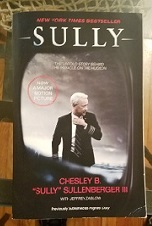
Sully-Chesley B.”Sully” Sullenberger with Jeffrey Zaslow

20180602_215650On January 15, 2009, US Airways Flight 1549, commanded by Captain Chesley B. “Sully” Sullenberger and first officer Jeffrey B. Skiles, made an emergency landing in New York City’s Hudson River.  The successful landing and evacuation of all passengers and crew became known as the miracle on the Hudson.   Sullenberger is now retired from US Airways but remains involved in the aviation industry.   His efforts that day in conjunction with those of Skiles remain a classic example of the necessity of extensive training and extraordinary ability to focus on the issues at hand.  Sullenberger has said that he does not consider himself a hero.  In his mind, he was doing what a well-trained pilot was supposed to do; fly the plane and try to land it while preserving the lives of everyone on board.   And on that day, that is exactly what happened.   Prior to the incident, his name was largely unknown outside of US Airways.  His face just another pilot that thousands of passengers walk past each day as they leave their flights.  The men and women who travel the skies are rarely acknowledged for a job that requires tremendous sacrifice, patience and dedication. But just who is Chesley Sullenberger?  And why is his story so amazing?
In this autobiography and memoir about the flight, Sullenberger opens up about his life that began in a small town called Denison, Texas. He realizes at an early age that flying is his passion and makes it his life’s mission.  As we know now, he accomplished that goal and will be remembered as one of the greatest pilots we’ve come to know.  But behind the skilled aviator is a simple man who leads a simple life who has been dedicated to aviation for nearly his whole life. And that is the true beauty of the book.  Sullenberger makes it easy to relate to him and does go out of his way to bring undue praise to himself.   His comments about the life of a pilot and bits of information about the airline industry are interesting and highlight the tremendous sacrifice pilots often have to make both personally and professionally.

After reading the book, I felt as if I knew Sullenberger personally.  And if I met him person, I would probably be tempted to call him simply “Sully”.   To the passengers of flight 1549, he will always be the best pilot they have ever flown with.  And while nearly none of them will probably ever see him again in person,  they are forever bonded by the events of that day.  What I truly loved about his story is that he remains a humble person in spite of the fame and notoriety.  And when he is not in the cockpit, he is a father and husband who struggles as he continues to learn how to be both.  His story is one that nearly all pilots can relate to and in telling his story, he is telling their story as well.

His mind is truly one of a seasoned aviator and his ability to analyze all components of a flight and the dynamics required to a successful flight are a testament to his career and accomplishments.   And because of this story, I have a deeper appreciation for all of the work that is required for a commercial aircraft to make it from one airport to the next.  I will be sure to say thank you as I pass the cockpit before exiting my flight. Each time I sit down before taking off, I will think back to his story and remind myself that the pilots at the controls have put their lives on hold so that I may enjoy mine.

ISBN-10: 0062564323
ISBN-13: 978-0062564320


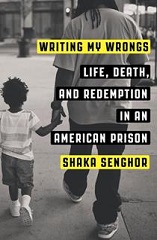
Writing My Wrongs: Life, Death, and Redemption in an American Prison- Shaka Senghor

12

Shaka Senghor spent 19 years of his life in prison after being convicted for murder.   At the time of his release, he was 38 years old and had spent nearly half his life behind bars.  The Detroit native became a writer in prison and turned his thoughts and memories into this incredible autobiography of his life  which could be a case study of the path a young man takes in a life of crime and the redemption that can be found inside the walls of a prison. The City of Detroit stands out as one of America’s greatest tragedies.  The one time mecca of the automobile industry, Detroit has steadily declined and become a haven for crime, poverty and lack of hope. And as new president takes office, some are filled with optimism that Detroit can rebound from its dismal state and regain the prominence it once had.

Stories about life in prison are never easy to listen to.   The recollections told by former inmates reveal the brutal life inside of a correctional facility.  Murder, assault, rape and extortion are daily realities that test the sanity of even the most balanced prisoner. But what happens when a young man who is barely old enough to drink, enters the American penal system?  Shaka Senghor’s story is gripping from beginning to end and helps the reader to understand the true nature of incarceration and its devastating effects on the prisoners and their loved ones.    Senghor could have easily become just another statistic inside the penal system.  Thousands of young African-American men enter prison at a young age and spend a majority of their lives behind bars.  And when they are released later in life, several decades has passed and they struggle with integration back into society.   No doubt, his story is one of success but his battle for freedom did not come easily and I assure you that once you begin this book, you will find it nearly impossible to put down.

To say that it is incredible that he is still alive today is an understatement. By all estimates, he should have died many years ago.  But I believe that his fate was not to die a senseless death but to survive and write this phenomenal book that just might change the lives of those who read it whether they are on the streets in a life of crime or currently incarcerated.  As he traces his beginnings to his childhood , we see the chain of events that are put into place beginning with the separation of his parents.   He is introduced to the streets and before 16 years of age, a known drug dealer in the neighborhood.  Fast money, status and power are in his hands but a chance encounter with a regular customer changes his life forever and for many years, he would struggle to come to terms with the events of that day.

Those who remember the HBO drama Oz will feel reminded of that show as they read this book.  His memories show the ugliest parts of prison life and the descriptions of what happened are frank and to the point.  Some may shy away but in order to feel the power behind his words, it was necessary on his part to tell the stories as they happened with their gritty details involved.  By telling the stories in this way,  his transformation into the man we see today becomes even more remarkable. I cannot imagine that it was easy for Senghor to write this book but as he explains, writing became one of the tools he used to maintain his sanity and express his emotions.  And he would use writing as a means to gain his freedom after a long 19 years behind bars.

The beauty in this book is not only that he earned and gained his freedom, but in the process he reinvented himself and dives into the many social issues that have plagued minority communities for decades.  As a product of a broken home, he maintains a distinction as a first hand witness to the tragic results of dysfunction in the home. His entry into a prison system with disproportionate demographics,  helps to reinforce the notion that young Black and Hispanic men and women far too often fall victim to the prison system and its draconian design that attempts to strip individuals of their human existence.  Senghor spent nearly five years in solitary confinement, a punishment which is purely designed for isolation and to break the mind and spirit of the inmate.  Miraculously, he does not break and strengthens his resolve to one day walk out of prison a free man. His discovery of literature is a shining moment in the book.  Authors and figures such as Huey P. Newton, George Jackson, Assata Shakur and Angela Davis flood his consciousness with words that help him understand his existence in prison and his life in America.  Their writings prove to be invaluable in his transformation and emotional development as they provide a source of pride and hope in an environment full of toxic elements and deadly characters. His discovery of he Muslim faith is a story similar to that of other men of color who have experienced life inside of a prison and in search of an eternal creator.

Having found this book by accident, I can say that it is one of my best mistakes. His life is an incredible journey so if you have time to spare, grab a seat and follow Shaka from his childhood in Detroit to his life on the street, fatherhood, incarceration, awakening and finally redemption with success mixed in.  In the end it is a feel good story that originates on the worst of circumstances. But he reminds us that we have control over our actions, words and destiny.  The key is that we have to be willing to open our eyes, expand our horizons and reevaluate the path that we have taken in life.

ISBN-10: 1101907312
ISBN-13: 978-1101907313

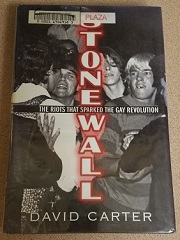
Stonewall: The Riots That Changed the Gay Revolution-David Carter

20181205_225544On the nights of June 27 and June 28, 1969, riots occurred that changed the history of New York City and gave strength to the movement for equality and legal rights for gay men, lesbian women, transgender and transsexual people.  The incidents became known as the Stonewall riots, and took place in and outside of the Stonewall bar in Manhattan’s West Village neighborhood. The bar is no longer there, but on those hot summer nights in 1969, the LGBT community made a stand that shocked not only the New York City P0lice Department but an entire city.  The episode stands out as one of the movement’s most powerful moments that has never been forgotten. David Carter presents to us an investigative report of what really happened during the Stonewall riots and allows us to understand why and how they came to be.

Today it is hard for some to imagine the enormous struggle faced by gay men and lesbian women in their search for equality.   Same-sex marriage and strides in all sectors of society have removed the early struggle from public awareness.  However, less than 50 years ago, a new revolution based on the civil rights movement and inspired by its fallen heroes emerged as the LGBT community stood up and said no more.  Carter exhaustive researched the riots and spoke with many of the first hand witnesses including the late Seymour Pine, a former Inspector for the New York City Police Department, whose raids on the Stonewall served as the catalyst for the riots to follow.  Pine provided invaluable insight into the raids and up until the time of his death, made it clear the he was following orders and not a personal vendetta.

The beauty is Carter’s book is his ability to take us back into time to see what it was like to be a gay man or lesbian woman in New York City at a time when harassment, imprisonment, discrimination and acts of violence occurred regularly.  The incidents that take place in the book prior to the riots are ugly and shocking but reveal the true nature of the officers who patrolled the streets and the unfavorable light in which homosexuals were placed.  Carter also introduces us to the major characters in the book, some of whom are still alive today and serve as a part of the past which we should not forget.  The youth of today will not recognize their names but to an older generation of activists, the names of Harry Hay, Dick Leitsch, Randy Wicker, Frank Kameny and Martha Shelley are among the pioneers of an exceptional movement.   Their efforts and visions paved the way for the rise of  organizations that would play a central role such as the Mattachine Society, Homosexual League of New York, Gay Liberation Front and Gay Activists Alliance.

Sadly, many of the pioneers of the movement are no longer with us. The emergence of HIV and AIDS resulted in the deaths of thousands of gay men.  The gay cancer as it was known initially, claimed lives unrelentingly before Washington finally addressed the growing crisis. The epidemic served as one more major obstacle to be overcome by the LGBT community in their quest for equality.   The advancement of LGBT people today is a testament to the hard work and tireless efforts of thousands of men and women who risked their lives in the name of freedom.  Their struggle continues and as they continue to make strides and face uphill struggles, the events of Stonewall will remain fresh in the mind as a reminder of the power of resistance. Further, the events of those nights force us to examine our own actions and beliefs towards those who are different.

The village of today in New York City is a stronghold for the LGBT community.  For those who visit, it is to be understood that it is their haven and you are a visitor.  Their lifestyles are sometimes unconventional and in some cases shocking and in others, flamboyant.  But they do not ask for approval, only respect and understanding.  And if we are to forget that, then we run the risk of seeing the events of Stonewall replayed before our eyes.  This book is a good place to start for anyone seeking to understand the beginnings of the gay rights movement in New York City.

ISBN-10: 0312200250
ISBN-13: 978-0312200251


The Fabulous Sylvester: The Legend, The Music, The Seventies in San Francisco-Joshua Gamson

syl1

December 16, 1988-Surrounded by family and close friends, Sylvester James, Jr., takes his last breath, having succumbed from AIDS related complications at the age of 41.  The singer is another victim of the deadly outbreak of Kaposi Sarcoma, the disease which shook the United States to its core and served as the focus of Randy Shilts’ classic “And The Band Played On“.  James, who was known publicly as simply “Sylvester” rose to fame during the era of disco and gay liberation in San Francisco.  As Harvey Milk evolved into the Mayor of Castro Street and challenged Anita Bryant and John Briggs, Sylvester evolved as well and provided the anthem for the movement when he recorded the disco classic Mighty Real.   The song remains one of the best from the disco era and can be heard in Rob Epstein’s The Times of Harvey Milk, the documentary of Harvey’s life.  By the time of his death, Sylvester’s star as a disco legend had faded as the music industry changed gears and ushered in new genres of music. But for many people, he represented a time that was special, unique and composed of a sexual and personal freedom that had yet to be seen.  But just who was the real Sylvester? Who was the man behind the drag?

Joshua Gamson brings to us the story of Sylvester’s life, put together through interviews with those who knew him, interviews given by Sylvester on various occasions and public records. The result is a definitive biography of an unorthodox star who lived life on his own terms and faced death with unrelenting stoicism.  The temptation to label Sylvester is strong but as we make our way through the book, we come to see that he is not defined by any particular adjective.  His odyssey from cabaret singer to superstar was  a course not without adversity.  Yet his ability to see beyond the limitations placed upon him by society and willingness to step outside of social constrictions earned him a following and a legacy that continues even today.

His musical recordings speak on their own but his personal life rife with his struggle to find himself, love and a sense of being, reveal a side to his life that often went unnoticed. It has been said that artists of all types live in a different world from the average person. For Sylvester this rings true and is exemplified in the book in his relationships and encounters on the gay scene.   And the true tragedy is that for a man who brought love to so many and helped people discover their own happiness, his own life was one marred by sadness and rejection.  Up to the time of his death, he struggled to find that everlasting peace which so many of us seek to find.  Yet he remained the iconic Sylvester, a queen of the disco era and the man who supported the gay revolution with music that reigned supreme.

Enormous progress has been made for the LGBT community in the decades since Sylvester’s death.  Had he lived I think he would be satisfied by what he would see today.  His music and voice are still part of the revolution and he is truly one of the music industry’s most memorable stars, not only for his outlandish wardrobe but incredible singing voice that was like no other.  This is Sylvester, his story, the good, the bad and the tragic.  Gamson invites you to take a seat and partake on the ride that is the life of Sylvester.  In the end you will come to know another side of a music legend and understand why it is so important that you feel mighty real.

“Until I call you up and tell you that I’m dead, don’t believe it” -Sylvester

ISBN-10: 0312425694
ISBN-13: 978-0312425692