
 It truly is amazing that a person can learn so much about the future by examining the past. In America, there are parts of our nation’s history that people find difficult to control. Race is at the top of the list and continues to find itself the topic of discussions as the country grapples with instances of systematic discrimination and overt acts by individuals. However, America is also a very great nation that has the courage to critically examine itself. The problems we have are not new but instead, more attention is now being paid to them. And I honestly believe that to remedy those issues, we must continue to look at the past for it provides many valuable lessons from which we can learn. I picked up this book because 1) I have been a fan of Lorraine Hansberry (1930-1965) for many years and 2) I knew that the book would contain a wealth of highly intellectual discussions about American society that have relevance, even today. And I can say unquestionably that this short book is a good look at Hansberry’s brilliant mind that was able to dissect America in ways that sets the stage for meaningful dialogue and change.
The title may give the impression that it is a one-on-one session with Hansberry but in fact, it is a collection of interviews and articles she wrote during the height of her fame. Some interviews were recorded for television and the audio for the discussion with Studs Turkel (1912-2008) in particular, can be found on YouTube. Further, she is sometimes a participant in group discussions that include a range of voices such as James Baldwin (1924-1987) and Langston Hughes (1902-1967). When they are all together, you can feel the energy in the text and each speaker shines in their assessment of being a Negro author and the social climate in America. Baldwin shines bright as always and his words are hauntingly accurate of the America he loved and sought to change during his lifetime. Those who are in the process of writing themselves will absolutely love the group discussion. But the focus here is on Lorraine and she is given her own platform so to speak to share her thoughts which are numerous and enlightening. What I found to be highly appealing is her ability to reveal herself in a way that instantly makes you feel as if you know her well. While I read through the book, I picked up a few things that I was not aware of before that added to the Hansberry story which truly is remarkable. And considering that she is now recognized as a great playwright, this quote might surprise some readers:
“I was not a particularly bright student. I had some popularity, and a premature desire, probably irritating, to be accepted in my circle on my terms. My dormitory years, which numbered only two at the University of Wisconsin, were spent in heated discussion on everything from politics to the nature of art, and I was typically impatient at people who couldn’t see the truth- as I saw it. It must have been a horror”
There are a couple of discussions where her role is quite minor. Whether they should have been included or not is not for me to say but I did find myself hoping that Hansberry would have more to say. But, putting that aside, I was more than satisfied with the statements and written words that came from Hansberry herself. If I had to find a crux in the book, it would definitely be her play A Raisin in the Sun, which is still one of the longest running plays in Broadway history. And in 2014, I had the honor of seeing Denzel Washington live as he took on the role of Walter Lee Younger. He was truly remarkable and captured the essence of Walter just as Sidney Poitier did many years ago. Here, she explains the back story to the play and her intentions when creating what became a masterpiece. And make no mistake, getting the play to Broadway was a feat. And surprisingly, it almost did not happen. In fact, what eventually came to be did so because of encouragement to become a dramatist by her former husband Robert B. Nemiroff (1929-1991), who preserved her works after her death. As Lorraine speaks, it can be seen just how simple of a person she was at times. She never comes across as superficial, egotistical or unrelatable. In fact, as she speaks, you cannot help but to like her even more. Physically she stood roughly five feet tall but, in this book, she is certainly larger than life. And when it comes to the Civil Rights Movement, she is spot on in her observations and honestly believed in peace. The constant struggle for civil rights was exhausting and this quote sums up the frustration and sense of depression that many found within it:
“The most shocking aspect of the whole thing”, Miss Hansberry concluded, ” is the waist of our youth – when they should be in school, or working, or just having fun, instead of having to ride Freedom buses, be subject to police brutality, go to jail, to get rights that should be unquestioned.”
The “Movement” as it is sometimes called, forced America to look in the mirror and make amends for a long and brutal history. Today in 2021, we are still confronting many dark aspects of our past, but the future truly is bright. America is changing again, and I always hope for the better. Hansberry, along with Baldwin, believed that in the future, America could be a place where anyone could live freely. And although she did not live to see just how far society has come, I believe that if she were alive, she would be both optimistic and dismayed at some of the things we see taking place. As someone who experienced racial violence firsthand, she knew all too well of the dangers that come with extremism. Throughout her life, she always believed that it was those dangers that caused her father’s demise. When discussing her past, she is frank about his last days:
“My father left the South as a young man, and then he went back there and got himself and education. He was a wonderful and very special kind of man. He died in 1945, at the age of fifty-one, of a cerebral hemorrhage, supposedly, but American racism helped kill him. He died in Mexico, where he was making preparations to move all of us out of the United States”
The family remained in the United States after his death and Lorraine soon found a home in New York City. And that move changed her life forever and resulted in the abundance of material she left behind. Her tragic and untimely death at only age thirty-four, silenced one of the movement’s strongest voices. However, the movement will never end for any of us regardless of what we look like or where we come from. The oppression of one human being by another is a constant blemish on mankind but it does not deter us from continuing to do right by each other and set examples for future generations. And no matter many years pass by, Lorraine’s voice will be as loud then as it is here and was many years ago.
ISBN-10 : 1496829646
ISBN-13 : 978-1496829641
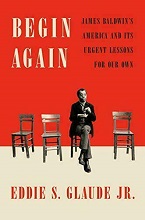 Within the past several years I have found myself becoming more and more familiar with the life and legacy of James Baldwin (1924-1987). And I have come to realize that while he is widely appreciated as an author, he is at the same time, underrated as a voice of reason with regards to the country he called home. Curiously, Baldwin spent many years of his life in Europe, finding solace and residency in France and Turkey. However, his life outside of the United States allowed him to view America from the eyes of a foreigner. That position gave him a unique opportunity to view America through the lens of a microscope where all of its social ills were readily visible. In his time he was seen as a trouble maker and rabble rouser due to his outspokenness and sadly because of his sexual orientation. But to focus on his frank dialogue and homosexuality would be misjudgment of his true genius. Baldwin possessed an uncanny ability to dissect American society and highlight where the nation was going wrong. Today America is at a crossroads with a looming presidential election in a nation fiercely divided and deeply polarized. Eddie S. Glaude, Jr. takes another look at James Baldwin, who comes back to life as a voice of reason during which are certainly difficult times.
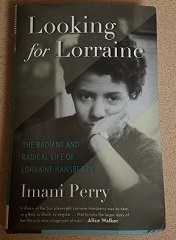 This past Saturday was the fifty-fourth anniversary of the death of the late American playwright and author Lorraine Vivian Hansberry (1930-1965). Her untimely death at the age of thirty-four silenced one of literature’s greatest voices. However, more than fifty years after her death, her masterpiece, A Raisin In the Sun, continues draw audiences curious to learn why the play is one of the longest running on Broadway. I personally attended a run starring Denzel Washington and his portrayal as Walter Lee Younger is as good as the original performance by the legendary Sidney Poitier. For some, Hansberry remains a bit of a mystery. and a throwback to an era long past. The younger generation of today largely have yet to discover her genius and her influence on the African-American experience. And what many of them are unaware of is that five decades ago, she was a voice advocating for the many freedoms they have today. Sadly, it has taken many years for her to be recognized for the gifted writer that she was. As we come to know her work more intimately, we must ask ourselves, who was the real Lorraine Hansberry? Imani Perry searched for and found her in this semi-autobiography and psychoanalysis. The book is an examination of Lorraine’s thoughts and writings while also adding recollections of historical events filled with larger than life figures who are no longer with us today. But make no mistake, this is about Lorraine, the woman who changed Broadway.
 The story begins in Harlem, New York as we are introduced to a musician named Rufus Scott. He has just met a recent transplant to New York City from Georgia named Leona. Sparks fly between the two and Rufus invites her to an after party at the apartment of a friend. It is there that they come intimate and that encounter sets into motion a chain of events that affects nearly every single character in the book. Rufus’ best friend in Vivaldo, a young Italian from Brooklyn. He is involved with an older woman named Jane, who has a drinking problem but somehow manages to function and continue painting. At first, Rufus and Leona are on the path to love but reality quickly sets in. You see, Rufus is a Black American and Leona, a white woman from the South. And this is before laws against interracial marriage were ruled unconstitutional by the Supreme Court. Their trials and tribulations are heartbreaking and Rufus struggles with Leona and himself all the way to the end. Incredibly, the two of them only take up a third of book, the rest is devoted to Rufus’ friends and former flame, who all converge to add unexpected twist and turns to each other’s lives.
 Every year that I age, I have noticed that I have a growing appreciation for classic literature and the works of other authors that are no longer with us. James Baldwin (1924-1987) is near the top of my list of authors whose books are critical to American history and the current day state of affairs in the United States. The Harlem native who took his last breath in France, stands out as a commentator on race in America. His observations which he then put into words, were sharp, analytical and deeply profound. Baldwin lived what could only be described as an eventful but complicated life. He was a Black American and homosexual in a time in which both were considered to be crimes of the highest nature. America had yet to see the passing of the Civil Rights Act of 1964 and homosexuality was still considered a crime against nature in many states. Baldwin was both and carried himself with an aura of confidence and intellect that has remained impressive many years after his death. In this short but intriguing book, Baldwin comments on race in America based off of his experience and encounters with White Americans and even Elijah Muhammad and the Nation of Islam. He never joined the nation but his account of his meeting with Muhammad is one of the highlights of the book. Racial discrimination is never an easy topic to discuss and many of us would prefer to discuss more pleasant issues. But Baldwin was a master of taking a explosive topic and relaying it to the reader in a way that forces one to do deep soul-searching if they are not African-American and reevaluate their own existence if they are.
 James Baldwin once remarked that the story of Black America was America’s story and believe that it was impossible to separate the two. Nearly all of this nation’s major events are in some way related to the plight of America’s minorities. The country that is the land of immigrants becomes more of a melting pot with each passing week. The recent documentary “13th” highlighted the system of mass incarceration that has resulted in America having the largest prison population of anywhere in the world and millions of young Black and Hispanic men and women being placed behind bars for extended sentences based on convictions for trivial crimes. At the heart of the African-American experience is the precarious state of the immediate family structure and the constant discord that exist.
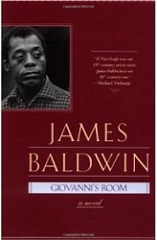 The late James Baldwin (1924-1987), remains one of America’s most gifted authors. He is also remembered as an icon of the civil rights movement who was fiercely outspoken against the injustices committed against African-Americans. Similar to Bayard Rustin, his homosexuality resulted in a life long inner turmoil in a quest to find true love and happiness. When he died in France in December, 1987, he left this world as a bachelor and without children. It could be argued that his children are the writings he left behind that examined society, human nature and emotions. One of these stories is Giovanni’s Room, Baldwin’s masterpiece about the complexities of the human heart and the burden of living with repressed sexuality.
 On May 24, 1963, Attorney General Robert F. Kennedy met with a group composed of authors and civil rights icons at his Central Park South apartment. Among those in attendance were Lorraine Hansberry and her friend and fellow author, James Baldwin (1924-1987). The meeting quickly became volatile as the activists accused the Kennedy administration of dragging its feet on civil rights legislation. Their frustrations at the rampant discrimination in the United States and the inability of the government to take action, boiled over and Kennedy found himself in a hornet’s nest of raw emotion. The meeting left a permanent mark in his memory but in time he would become a vocal advocate for equal rights for all American regardless of race, creed or gender. His resurgence as the candidate of the poor and the downtrodden became the basis for his 1968 president campaign that ended tragically with his assassination in Los Angeles on June 5 ,1968. Baldwin outlived Kennedy by nineteen years and today both are remember for their efforts to transform the American conscious and way of thinking. In recent years, his work has been rediscovered and studied for its messages that were accurate then and are accurate now. Baldwin’s public stance of many topics was blunt and non-confusing. He did not mince his words and his delivery was direct and always mean to stir thought. But for all of his public actions, his private life is a story on its own that shows the author in a completely different light. His friend for many years, David Leeming, wrote this biography of his late friend to show the world who the real James Baldwin was. And what he has composed is a definitive account of the life of the late author.
 FREETHINKING BIBLIOPHILE
You must be logged in to post a comment.