
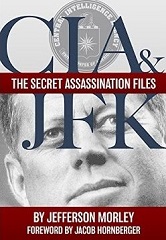
 October, 2017, will mark a turning point in American history. Pursuant to the JFK Records Act of 1992, all remaining classified files relating to the assassination of President John Kennedy are slated to be released to the American public. If no opposition is received from the FBI, CIA or any government agency with a vested interest in the files, more than 3,000 pages of once classified documents will be disclosed more than 50 years after Kennedy’s tragic death on the streets of Dallas, Texas.
While the news of this possible release of thousands of documents is uplifting, it also raises concerns about the U.S. intelligence community and its prior actions under Kennedy’s administration. Researchers of JFK’s murder have long suspected the involvement of the CIA of having a role in the murder. And although no one at the CIA was ever officially charged or prosecuted for Kennedy’s death, there were many actions of the agency that were not only strange but deeply disturbing. The House Select Committee on Assassinations served to shed light on the mysterious agency whose cover had been slowly lifted as a result of the Watergate investigation and the failed counterintelligence activities James J. Angleton, arguably the most mysterious figure in CIA history. The American public learned of the infamous actions of the agency in places such as Nazi Germany, Iraq, Guatemala and Cuba. The alliance with Italian-American gangsters and the smuggling of arms and ammunition to Cuban rebels opened the eyes of many Americans unaware of the true activities of the secretive agency. If the documents are released next October, just what exactly could that mean for the CIA and the American public? Jefferson Morley seeks to answer those questions in this short analysis of the many unanswered questions regarding the CIA and the death of John F. Kennedy.
A study of the assassination produces an endless amount of names, places, times and locations. Like a never-ending puzzle, it’s a mystery that has grown deeper over time. But as the layers of complexity have been peeled off, names and faces have been matched putting together crucial pieces of the crime. Among those faces which are known to long-term investigators, assassination researchers and mentioned in this book are David Morales, David Atlee Phillips, Richard Helms, and the legendary and infamous William Harvey. While none of the aforementioned were ever charged with any crime relating to Kennedy’s death, their names have come up more than once over the years as suspects who may have taken part in the plan to murder Kennedy or in the actions to cover up the crime. The documents slated for release contain pages of information relating to most of these complex figures. Morley touches briefly on the lives of these former intelligence legends giving a primer of what could possibly come forth with the release of the once classified records.
The murder of John F. Kennedy continues to haunt the United States and is by far the most infamous murder of a government official in United States history. To the young generation of America, Kennedy is a remnant of a very distant past, but for older Americans, his death was a turning point in the direction and history of the United States. Some have speculated that the truth about JFK’s murder would never been known, at least not in this lifetime. The release of the records in October, 2017 gives hope that the truth may eventually come out and possibly in this lifetime. And as Morley has pointed out, the CIA may have serious cause for concern.
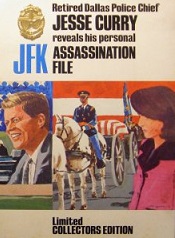 Chief Curry had been in the lead car of the motorcade making him a crucial eye-witness to the events in Dealey Plaza. He gave his testimony before the Warren Commission on April 15, 1964. This limited collector’s edition of Curry’s book reveals the beliefs of the former chief and sheds slight on several interesting parts of the crime that have never been fully explained. Curry is frank and to the point making it clear that the book is not intended to support the Warren Commission’s conclusions or any other conclusions that have been made about the crime. He further states that it is up to each person to make up their mind on what they think really happened on that day. Provided in the book are miscellaneous pieces of evidence such as documentation taken off of Oswald, homicide reports and statements of officers of the force regarding the custody of Oswald and the alleged relationship between Jack Ruby and the Dallas Police.

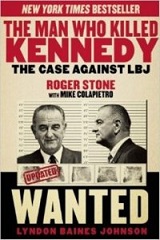 On November 22, 1963, a shift of government occurred in the United States that permanently altered the course of history taken by this nation. Aboard Air Force One, Lyndon Baines Johnson is sworn in as the 36th President of the United States following the assassination of John F. Kennedy in Dallas, Texas. Rumors and speculation about the alleged assassin, Lee Harvey Oswald and possible conspirators, began to grow exponentially following Oswald’s arrest. And after Oswald’s murder at the hands of Jack Ruby on Sunday, November 24, the nature of the crime took a darker and more sinister turn. The murders of the President, Lee Harvey Oswald and Dallas Polices Officer J.D. Tippitt, transfixed the nation and resembled events often seen in nations thought of as nothing more than Banana Republics. And Kennedy’s murder is considered by many, to this day, to be the most notorious crime and unsolved murder in American history.

 FREETHINKING BIBLIOPHILE
You must be logged in to post a comment.