
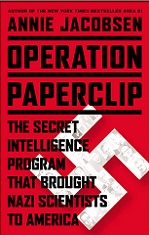
 On April 30, 1945, Adolf Hitler fatally shot his wife Eva Braun and then turned the gun on himself as it became evidently clear that allied forces were closing on the führerbunker. The fear of falling into Russian hands and a subsequent trial for war crimes proved to be too much for the top echelon of the Third Reich that remained in Berlin. Many top-ranking officials had previously fled and others had left Germany after realizing that all hope for a victory in the war had been lost. As allied forces move in and occupied the country, the true horrors of the Nazi reign became clear and soldiers were faced with the grim discoveries of concentration camps, emaciated and dead prisoners. The Final Solution had been revealed for the entire world to see. In the aftermath of the war, several hundred Nazi party members were executed by allied forces. Others were acquitted or had their death sentences commuted to long-term imprisonment. Another group consisting of scientists and doctors, found their way to America with the help of the United States Government in what became known as Operation Paperclip. Their story is the focus of this incredible book by author Annie Jacobsen.
Government files regarding the secret operation had been marked classified and would have remained hidden if not for the Freedom of Information Act (FOIA) which gave Americans a tool to learn the truth about many of the Government’s secrets. This tool was thoroughly employed by Jacobsen in discovering the truth of this story that was first disclosed by the New York Times. Jacobsen explains herself that some of her FOIA requests are still pending and it is unknown if or when they will be answered. Nevertheless, she has written the story that will shock anyone who decides to open the pages of this book. Her focus is on selected former doctors and scientists of the Reich who had worked on the V-2 rocket program at Nordhausen and concentration camps in which medical and biological experiments had been conducted, with Auschwitz and Ravensbrück being high on the list. I warn readers that this book is not for the faint at heart . The atrocities that are revealed defy logic and reveal the very dark side of human nature. And as the book progresses, the names of the former scientist and doctors will be seared into the reader’s memory as a reminder of the many secrets the Third Reich tried to hide as the military collapsed. As horrible as the actions of the Reich were, the crux of the book is the courting and resettlement of former Nazis by the United States Government through a program that will cause consternation, shock and even anger in some readers.
The book begins as the German military collapses in defeat and allied forces are scouring Berlin and other parts of Germany on intelligence missions to discover the secrets of the Reich. Britain and Russia are also conducting their own intelligence missions and a race against time develops as the three nations each seek to obtain as much information as they can from their defeated enemy. As the author explains, the Cold War was looming in the distance and in the name of “national security”, government officials were more than willing to recruit former Nazis out of fears they would be recruited and resettled in the Soviet Union. The V-2 rocket and nerve agents Tabun and Sarin, became hot items as superpowers prepared for the next world war which they believed would include the use of biological weapons. The United States spared no expense and would not let Joseph Stalin have the upper hand. The brilliant German minds behind innovations that exceeded allied capacity were to be recruited at all costs, even at the expense of morality. Annie Jacobsen has captured the emotion and tense battles that raged as the State Department battled the military over a program that it found to be appalling. The American public slowly became aware of this nefarious program and mounting opposition forced the Government to act in what could described as a war against itself.
The main focus is rightly on the secret intelligence operation but the author also includes a stead stream of facts about other members of the Reich and actions that were being taken behind the scenes throughout Germany as the tide of the war changed and defeat became a stark reality. The entire cast of characters makes an appearance in the story. Some would escape Germany, fleeing to South America and others took their own lives rather than be tried, convicted and executed in a military trial. Before the collapse of the Reich, officials went to great lengths to hide as much information as possible from the allied forces. Today there is a strong possibility that secret tombs exist containing secrets of the Reich are still hidden across Germany. Time will tell if all of them will be discovered or if they will continue to fade from public consciousness.
The amount of research that was conducted in order to produce this book is staggering. Yet, there is still much we do not know about Operation paperclip as the Government claims files were lost or destroyed. Some are still classified with no release date on the horizon. At some point in time, someone will find out the truth about what truly did happened in the wake of World War II as America embraced German talent. By then, anyone who participated in World War II will be long gone, rendering any type of prosecution or accountability null. But the public will finally know just how complicit American officials and the White House were in recruiting war criminals for the technological advancement of the United States. Jacobsen has given us a detailed roadmap with which to start and this book will undoubtedly stand the test of times as one of the finest works on the Third Reich. My only complaint about this book is that I wished it had never ended. I found myself glued to the book from the beginning and was unable to put it down. The is the true story of Operation Paperclip, one of World War II’s darkest secrets.
ASIN: B00BAXFBI
 On September 1, 1939, the Second World War began as the German army invaded Poland as part of Adolf Hitler’s quest for world domination. Britain had warned Germany that any military action against Poland would result in England coming to the aid of its ally. Interestingly, Adolf Hitler (1889-1945) did not want to go to war with England, preferring to accomplish the annexation of Poland through diplomatic methods after having successfully partitioned Czechoslovakia in what is infamously referred to as the “appeasement at Munich”. But if Hitler did not want to wage war against Britain, knowing their intention to save Poland, then why did he give approval to the invasion that plunged the world into a major conflict? The answer to that question lies in the story of his Foreign Minister and Nuremberg defendant, Ulrich Friedrich Wilhelm Joachim von Ribbentrop (1893-1946).
 The Second World War remains the most brutal conflict in history. The number of those who perished is still up for debate and there are many secrets of the war that have been lost to history forever. In the United States, foreign-born citizens with roots in any of the countries part of the Axis powers, found their selves under suspicion and in the case of the Japanese, placed into concentration camps. Although not as inhumane and deadly as the camps in Germany and Poland, they resulted in the rise of resentment among Japanese-Americans toward the United States Government and the country they called home. The dropping of the Atomic bombs further heightened the feeling of resentment and was the first and only time a nuclear weapon was used in warfare. Survivors of the bomb attacks can still be found today, advanced in their years but tragically familiar with the barbarity of modern warfare. Across the pacific, Japanese-American veterans of the war remember the tragedy that befell Japan, the nation to which their families trace their origins. But what happens when half of a family is in Japan and the other half is in the United States? Or what do you do when one son is part of the Japanese Imperial Army and the other is part of the United States Armed Forces? And when the war is over, how do you come to terms with the effects war has had on your family and yourself? This is the story of the Fukuhara family whose lives are the answer to those questions. Written by Pamela Rotner Sakamoto and containing snippets of interviews conducted with those relevant to the story, Midnight in Broad Daylight is a heart wrenching story of a family struggling to survive, having been affected by a war in more ways than one.
 On September 1, 1939, Adolf Hitler’s Third Reich invaded Poland and started the Second World War. In violation of the terms of the Treaty of Versailles, Germany had rearmed itself and under the determination of Hitler, set its eyes upon conquering all of Europe. The looming threat of German domination had been lingering for quite some time before the outbreak of the war. But sadly, many of the nations that would later be opposed to Germany did not think that Hitler would be brazen enough or have the resources to initiate a world conflict. In hindsight, we know that way of thinking was short-sighted and later highly regrettable. The actions of the British government in response to Hitler’s annexation of Czechoslovakia, resulted in the condemnation of Prime Minister Neville Chamberlain and established Germany as a legitimate threat to world peace. The episode has been recalled in history books and documentaries and continues to provoke discussion about how Hitler could have been stopped before his army invaded neighboring Poland.
 The Holocaust remains one of the most regretful moments in the history of mankind. The Final Solution, engineered by Adolf Hitler’s Nazi government, resulted in the deaths of over six millions Jewish men, women and children. The many concentration camps became factories of genocide and symbols of the Third Reich’s relentless efforts to remove all Jewish citizens from Germany and the occupied territories of the Reich. As Hitler made his rise to power, many Jews fled Germany fearing the worst under the rule of the tyrannical dictator from neighboring Austria. Others were forced to seek refuge in Germany and survive in any way possible. But still there were other Jews who found help among non-Jewish Germans and were able to hide themselves right in Berlin, under the eyes and ears of the N.S.D.A.P.


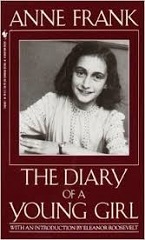 The stories of those who survived the Holocaust have been read by millions and their words a reminder of one of history’s darkest times. Their will to live and courage in reliving their experiences have given the world invaluable treasures in books that have stood and will continue to stand the test of time. Among them is the story Annelies Marine “Anne” Frank (1929-1945), whose diary kept while hiding from the Third Reich, became one of the most popular books in the world. In June, 2013 while visiting The Netherlands, I paid a visit to the Anne Frank Museum. As I entered the museum and made my way up to the attic, I was overcome by chills at just how small it really is. Pictures and words do not suffice, it is something to be seen in person. And it continues to boggle my mind that several people lived in such a compact space. But their will to survive kept them focused on their surroundings and remaining in the attack for as long as possible. Their hiding place was eventually discovered and for many years it was believed that the family was betrayed. However, historians have never found conclusive proof that the family’s location was given to the Sicherheitsdienst (SD) in the form of an anonymous phone call as is widely believed. The truth may remain lost to history. Frank was sent to the Bergen-Belsen camp where she died of Typhus in February, 1945, several days after her sister Margot and would have been simply another victim of the Final Solution if not for her father Otto, who survived the war and returned to Amsterdam where he found her diary. Believing his daughter’s words to be important to future generations, he found a publisher willing to put the words in print. And the result is a literary masterpiece that is read each year by growing numbers of young students across the world.
 FREETHINKING BIBLIOPHILE
You must be logged in to post a comment.