
 As a student growing up in the United States, my classmates came from many different backgrounds. Some came from as far away as India and Korea. Others from Guyana and Dominican Republic. No matter where they came from, we were equal peers studying to enhance our lives through prosperity. However, only sixty-four years ago, the ruling of Plessy v. Ferguson was still the law of the land which mandated that separate but equal facilities for White Americans and minorities were permitted under the constitution. One year later in 1964, events in Topeka, Kansas would change the course of United States history and catapult a young lawyer to legendary status. The case was Brown v. Board of Education and the lawyer was Thurgood Marshall (1908-1993), the late civil rights icon who attacked segregation and served on the United States Supreme Court for twenty-four years before retiring in 1991. The decision reversed the court’s earlier ruling in Brown and declared that separate but equal facilities were in fact unconstitutional in the United States. Today is name is rarely mentioned and the younger generation of Black Americans are growing up in an era vastly different from the one in which he was born and raised. But his life should be a case study for students of all backgrounds as a reminder of the enormous effort that was required to break the back of Jim Crow and move the Unites States forward.
Outside of classes in school, I never heard many discussions about Marshall. In college, a class I took revisited the Brown decision so that we could see the development of the privileges that I and others took for granted on a daily basis. But who was Thurgood Marshall? And behind the legal victories and appointment to the Supreme Court, what were the detail of his personal life? Juan Williams has composed this biography of what he appropriately calls an American Revolutionary. And what is contained in the pages of this book, is a story that lies at the heart of American society. Today, decades after the Brown decisions, millions of students in America attend classes with peers who come from different ethnic backgrounds and have the ability to enroll in schools which in prior times would have denied them entrance based on the color of their skin or the spelling and sound of their names.
The book is well researched and contains quotes by Marshall himself. From the beginning of his life to the end, Williams shows the good, bad and at times ugly of Marshall’s behavior. Like all great figures, he was also a man with flaws. But his dedication to his cause and victories in the courtroom propelled him forward as a champion of civil rights and earned him his appointment to the Supreme Court by then President Lyndon B. Johnson (1908-1973). It is an incredible story written in a thoroughly engaging fashion that leaves no stone un-turned and compels the reader to keep going. However, for all of Marshall’s victories, the regrettable moments in the book are his indiscretions and the brutal climate of prejudice that once encompassed the majority of the United States. The stories, particularly those in the Jim Crow era are heartbreaking and may cause the reader to wonder how human beings could treat others in such horrific ways. And the actions and courage of Marshall is commendable and inspiring.
As a sub-story to Marshall’s life, readers will pick up on the behind-the-scenes political battles that waged between Liberals, Conservatives, Democrats and Republicans. Promises, side deals and political agendas all take center stage as a brilliant African-American civil rights lawyer battled his way to the top, destined to cross paths with some of America’s most widely regarded historical figures such as Adam Clayton Powell (1908-1972), late FBI Director J. Edgar Hoover (1895-1972), Dr. Martin Luther King, Jr. (1929-1968), former Attorney General Robert F. Kennedy (1925-1968) and former President John F. Kennedy (1917-1963).
When Marshall died, he had been in failing health and considered a “relic” by many of a dark distant past in America. At the time of his death, he might have been past his prime, but he remained until his last day, a living part of history and a first hand witness to the legal battles needed to challenge the establishment and ask what the constitution truly means to Americans of all colors. Juan Williams has chronicled and manifested Marshall’s life in this definitive biography of an American icon. Currently, America finds itself at another crossroads with division, mistrust and suspicion sowing chords of discontent. But as in previous times, the nation will survive and continue to move forward for there are many Thurgood Marshalls today, waging similar battles the many that he fought during his life. And in order to understand his life, Williams’ book is the place to start.
ISBN-10: 0812932994
ISBN-13: 978-0812932997
 Author Frank previously published his spellbinding investigative account,
  October 1st marked forty-seven years since James Marshall “Jimi” Hendrix (1942-1970) died in the flat of Monika Danneman in the Kensington section of London at the age of twenty-seven. Today his music is still revered and Hendrix is considered one of the greatest electric guitar players in music history. In fact, there are those who believe that we was the greatest to ever live. The collection of music he left behind continues to be discovered by younger generations and maintains a place in my own collection. His cover of Bob Dylan’s All Along The Watchtower and the classic Hey Joe are among my favorites and some of Hendrix’s best works.
 Eighty years after her disappearance and death, the life and tragic ending of Amelia Earhart (1897-1937) continues to incite curiosity not only among researchers but the general public in the United States. She is remembered as one of aviation’s true female pioneers and her ill-fated trip with navigator Fred Noonan (1893-1937) in July, 1937, is considered one of history’s greatest unsolved mysteries. Similar to the deaths of John F. Kennedy and James R. Hoffa, myths, half-truths , conspiracy theories and fabrications have plagued the investigations into their final moments. Officially, their disappearance remains unsolved but there are many who believe that the U.S. Government knows far more than it is willing to admit.
 Nestled between Brazil and Argentina is the small Latin American nation of the Oriental Republic of Uruguay (República Oriental del Uruguay). The nation is the second smallest on the continent next to Suriname and boasts one of the highest
  The resignation of Richard M. Nixon (1913-1994) as President of the United States on August 9, 1974, remains one of America’s darkest political moments. The revelation of the break-ins at the Democratic National Committee office in the Watergate complex and the subsequent attempted cover up, riveted American citizens and resulted in the downfall of a political icon. Through the years, myths and disinformation about the Watergate scandal have been propagated causing an aura of mystique over a crime of monumental proportions. I picked up this investigative account by Fred Emery to learn what really happened on June 17, 1972 and the process behind the scenes that led to Nixon’s resignation. And what I found is a book that dives deep into the Watergate scandal to show the reader what really happened from start to finish.
 The wars that have been fought by mankind contain many secrets that have survived the test of time. Hindsight has become society’s treasured tool in investigating the past to learn what really happened. The Vietnam War is among the most unpopular conflicts in American history. The war continues to haunt the United States as a reminder of failed foreign policy and according to some as a premonition of the 2003 invasion of Iraq. As we look back on the Vietnam War, we come to learn about the very dark side of the American involvement in Southeast Asia and the devastation that occurred when two nations collided in a struggle that pitted ideology against weapons at war. Douglas Valentine, author of
 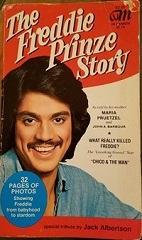 At 1 p.m. on January 29, 1977, Freddie Prinze, Sr., died at the UCLA Medical Center after suffering a self-inflicted gunshot wound the night before while talking to his manager Marvin “Dusty” Snyder. Prinze was twenty-two years old and left behind grieving parents, siblings, a widow and a son, Freddie, Jr., who would go on to have successful career of his own in Hollywood. Prinze rose to stardom at the age of 19 and in just three years went from aspiring comedian to a star on the comedy circuit and in the hit show Chico and the Man. His time on earth was brief but at the height of his career, it is estimated that his face had been seen by nearly 40 million viewers. I had often heard about Prinze and listened to my parents talk about him in conversations about their favorite shows from the past. I had always wondered what drove him to take his own life? And could it have been prevented? His late mother Maria Pruetzel (1921-2013) tells her story and the story of Freddie’s short but incredible life in this memoir of their time together as mother and son. His father Karl (1914-1979) is also in the story but in a supporting role for reasons Maria explains early in the book.
 The summer of 2017 is winding down and a new school year is nearly upon us here in the United States. Seven months have now passed since Donald J. Trump was sworn in as the 45th President of the United States. And in that time, the world has witnesses events that few can claim to have seen before. I previously reviewed
  Currently, in the Midwestern United States, Opioid addiction is causing the deaths of hundreds of men and women. Their deaths and the rise of Heroin use is a direct affront to the long-standing war on drugs. Former First Lady Nancy Reagan is fondly remembered for her eternal slogan “just say no”. Narcotics are still largely illegal but more states have begun to decriminalize the recreational use of marijuana which has allowed entrepreneurs to invest their savings into a new and profitable industry. The story of America’s war on drugs is long and often misunderstood. Allegations , rumors and explosive revelations have all contributed to cast the dark cloud over the battle against narcotics. Douglas Valentine decided to explore the history of the war on drugs and in this eye-opening book, he tells the story of the history of America’s battle against drugs and the rise and fall of the legendary and infamous Federal Bureau of Narcotics (FBN).

You must be logged in to post a comment.