
 Nestled between Brazil and Argentina is the small Latin American nation of the Oriental Republic of Uruguay (República Oriental del Uruguay). The nation is the second smallest on the continent next to Suriname and boasts one of the highest literacy rates in the world. To foreign visitors, it may seem a like destination that is too good to be true. Currently, the nation enjoys peace and shows no signs of the conflicts that once plagued Uruguayan society. Revisiting the past, Lindsey Churchill tells the story of the Tupamaros, the left-wing revolutionary faction that captivated a country and earned the admiration of revolutionaries abroad.
The world is intimately familiar with the revolutionary campaigns in Cuba, Russia, China and Vietnam. Names such Castro, Guevara, Mao, Stalin and Ho Chih Minh, have become cemented in the ideology of left-wing movements . Uruguay also has a story to tell, one that contains all of the elements found in the narratives of Latin American politics saturated with military dictatorships. Churchill takes us back in time to understand the development of the Tupamaro faction, their relationship with revolutionary groups in the United States and their inner-struggled with gender, the topic that plagued revolutionary efforts around the world. Named after Tupac Amaru II (José Gabriel Condorcanqui), the revolutionary warrior who led a revolt against the Spanish empire, the group evolved from a political party into an organization that resorted to fear through violence as they advanced their agenda of transforming Uruguayan society. Their story begins in the 1960s and in particular 1968, when Uruguayan President Jorge Pacheco (1920-1998) suspended the constitution and unleashed a wave of oppression. Fueled by the successful revolution in Cuba and the spirit of the American Civil-Rights Movement, the Tupamaros and the became the foremost revolutionary party whose actions sometimes had deadly consequences.
Although the book is only two hundred and sixty pages, I literally could not put it down. Prior to reading it, I was unfamiliar with the Tupamaros and the reign of Pacheco’s successor, Juan Maria Bordaberry (1928-2011) whose twelve-year dictatorship following a coup, marked the darkest period in the history of the nation. Political oppression, false imprisonment supplemented with torture and in some cases sexual assault, combined to fuel the drive for social reform through any means necessary. Churchill shines as she explores the purpose behind the movement, their relationship to U.S. revolutionaries and the complicated manner in which race in Uruguay is addresses or in some cases ignored completely. In contrast to the images we find in the media, Afro-Uruguayans make up a sizeable portion of the country and in this book, their plight is not forgotten. Through Churchill’s words, we become witnesses to the intricate and reciprocal relationship between American and Uruguayan revolutionaries who actively supported and encouraged each other in their struggles.
If you stand outside the local city airport in Buenos Aires, you can see the shores of Uruguay in the distance. It might be hard to imagine for some, that the small nation largely forgotten in the media was once home to one of the world’s strongest political movements. Society was divided, violence became a tool and the United States found itself involved in yet another controversial situation involving a Latin American dictatorship. Many years have passed since the Tupamaros last embraced their revolutionary tactics but they remain a part of the nation’s social fabric. In fact, the former President José Mujica (1936-), is a former member of the Tupamaros and served thirteen years in prison for his deeds. He was succeeded by Tabaré Vázquez (1938-) who still holds office today.
For those interested in the story of the Tupamaros , this is a great read and critical in understanding their history and the development of politics in modern-day Uruguay.
ISBN-10: 082651944X
ISBN-13: 978-0826519443
 The resignation of Richard M. Nixon (1913-1994) as President of the United States on August 9, 1974, remains one of America’s darkest political moments. The revelation of the break-ins at the Democratic National Committee office in the Watergate complex and the subsequent attempted cover up, riveted American citizens and resulted in the downfall of a political icon. Through the years, myths and disinformation about the Watergate scandal have been propagated causing an aura of mystique over a crime of monumental proportions. I picked up this investigative account by Fred Emery to learn what really happened on June 17, 1972 and the process behind the scenes that led to Nixon’s resignation. And what I found is a book that dives deep into the Watergate scandal to show the reader what really happened from start to finish.
 The wars that have been fought by mankind contain many secrets that have survived the test of time. Hindsight has become society’s treasured tool in investigating the past to learn what really happened. The Vietnam War is among the most unpopular conflicts in American history. The war continues to haunt the United States as a reminder of failed foreign policy and according to some as a premonition of the 2003 invasion of Iraq. As we look back on the Vietnam War, we come to learn about the very dark side of the American involvement in Southeast Asia and the devastation that occurred when two nations collided in a struggle that pitted ideology against weapons at war. Douglas Valentine, author of
 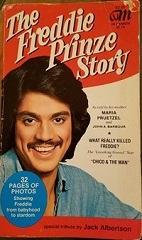 At 1 p.m. on January 29, 1977, Freddie Prinze, Sr., died at the UCLA Medical Center after suffering a self-inflicted gunshot wound the night before while talking to his manager Marvin “Dusty” Snyder. Prinze was twenty-two years old and left behind grieving parents, siblings, a widow and a son, Freddie, Jr., who would go on to have successful career of his own in Hollywood. Prinze rose to stardom at the age of 19 and in just three years went from aspiring comedian to a star on the comedy circuit and in the hit show Chico and the Man. His time on earth was brief but at the height of his career, it is estimated that his face had been seen by nearly 40 million viewers. I had often heard about Prinze and listened to my parents talk about him in conversations about their favorite shows from the past. I had always wondered what drove him to take his own life? And could it have been prevented? His late mother Maria Pruetzel (1921-2013) tells her story and the story of Freddie’s short but incredible life in this memoir of their time together as mother and son. His father Karl (1914-1979) is also in the story but in a supporting role for reasons Maria explains early in the book.
 The summer of 2017 is winding down and a new school year is nearly upon us here in the United States. Seven months have now passed since Donald J. Trump was sworn in as the 45th President of the United States. And in that time, the world has witnesses events that few can claim to have seen before. I previously reviewed
  Currently, in the Midwestern United States, Opioid addiction is causing the deaths of hundreds of men and women. Their deaths and the rise of Heroin use is a direct affront to the long-standing war on drugs. Former First Lady Nancy Reagan is fondly remembered for her eternal slogan “just say no”. Narcotics are still largely illegal but more states have begun to decriminalize the recreational use of marijuana which has allowed entrepreneurs to invest their savings into a new and profitable industry. The story of America’s war on drugs is long and often misunderstood. Allegations , rumors and explosive revelations have all contributed to cast the dark cloud over the battle against narcotics. Douglas Valentine decided to explore the history of the war on drugs and in this eye-opening book, he tells the story of the history of America’s battle against drugs and the rise and fall of the legendary and infamous Federal Bureau of Narcotics (FBN).
 The story begins in Harlem, New York as we are introduced to a musician named Rufus Scott. He has just met a recent transplant to New York City from Georgia named Leona. Sparks fly between the two and Rufus invites her to an after party at the apartment of a friend. It is there that they come intimate and that encounter sets into motion a chain of events that affects nearly every single character in the book. Rufus’ best friend in Vivaldo, a young Italian from Brooklyn. He is involved with an older woman named Jane, who has a drinking problem but somehow manages to function and continue painting. At first, Rufus and Leona are on the path to love but reality quickly sets in. You see, Rufus is a Black American and Leona, a white woman from the South. And this is before laws against interracial marriage were ruled unconstitutional by the Supreme Court. Their trials and tribulations are heartbreaking and Rufus struggles with Leona and himself all the way to the end. Incredibly, the two of them only take up a third of book, the rest is devoted to Rufus’ friends and former flame, who all converge to add unexpected twist and turns to each other’s lives.
 Every year that I age, I have noticed that I have a growing appreciation for classic literature and the works of other authors that are no longer with us. James Baldwin (1924-1987) is near the top of my list of authors whose books are critical to American history and the current day state of affairs in the United States. The Harlem native who took his last breath in France, stands out as a commentator on race in America. His observations which he then put into words, were sharp, analytical and deeply profound. Baldwin lived what could only be described as an eventful but complicated life. He was a Black American and homosexual in a time in which both were considered to be crimes of the highest nature. America had yet to see the passing of the Civil Rights Act of 1964 and homosexuality was still considered a crime against nature in many states. Baldwin was both and carried himself with an aura of confidence and intellect that has remained impressive many years after his death. In this short but intriguing book, Baldwin comments on race in America based off of his experience and encounters with White Americans and even Elijah Muhammad and the Nation of Islam. He never joined the nation but his account of his meeting with Muhammad is one of the highlights of the book. Racial discrimination is never an easy topic to discuss and many of us would prefer to discuss more pleasant issues. But Baldwin was a master of taking a explosive topic and relaying it to the reader in a way that forces one to do deep soul-searching if they are not African-American and reevaluate their own existence if they are.
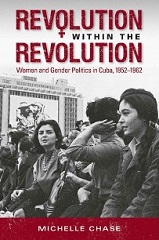 The Cuban Revolution has served as a blueprint as a successful campaign for independence from imperialism. Fidel Castro (1926-2016), Ernesto Che Guevara (1928-1967) and Raul Castro (1931-) became legendary figures in Cuba and around the world. Raul is remaining member of the trio and is currently the President of the Council of State of Cuba and the President of the Council of Ministers of Cuba following Fidel’s retirement in 2008. In March, 2016, United States President Barack Obama made a historic visit to the island in an effort to restore severely strained diplomatic relations between the two nations. Time will tell if Washington and Havana continue down that path.
 Harlem, New York has been and still is crucial to New York City politics. The area that was home to the majority of African-Americans has been affected by the wave of gentrification that has reached nearly every major city across the nation. Musicians, actors, gangsters and politicians have found fame and fortune in the neighborhood with a storied past. And of all of the colorful characters to use Harlem as their base of activity, perhaps none is as famous as the late Adam Clayton Powell, Jr. (1908-1972) There is a street named in his honor in the area but sadly, the generation of today is largely unaware of his story and his contributions to American society. He has been described as flamboyant, stubborn, cunning and of great intelligence. He earned the affection of his congregation and millions of minorities and the wrath of presidents and senators determined to put an end to his career. Forty-five years have passed since his death on April 4, 1972. Cancer proved to be his biggest opponent, taking his life at the age of sixty-three. But who was the real Adam Clayton Powell, Jr? And why is he so important to the Civil Rights Movement and the African-American experience? Wil Haygood has researched Powell’s life and compiled this definitive account of the late congressman’s life.
 FREETHINKING BIBLIOPHILE
You must be logged in to post a comment.