
 When this book came up as a recommendation, I thought back to the movie ‘Platoon‘ (Orion Pictures, 1986) by Oliver Stone. There is a scene before the final battle in which Bunny (Kevin Dillon) and Junior (Reggie Johnson) have been instructed by Sgt. Barnes (Tom Berenger) to get back in their fox holes. Junior is at his breaking point but Bunny is getting warmed up and says to him “don’t you worry my man, you’re hanging with Audie Murphy now“. I had heard of Audie Murphy before mainly through my father, who was quite familiar with his story and the 1955 film of the same name. This is the story behind the film of the most decorated soldier to return from World War II.
The book opens with a foreword famed NBC journalist Tom Brokaw before moving to Murphy’s story which begins in Kingston, Texas where we quickly learn that his father has walked out on the family. He is one of twelve children born to Emmett Berry Murphy and Josie Bell Killian. At the age sixteen, his mother dies and the young teenager is forced to grow up literally overnight. At the age of eighteen, he reports to the Marine Corps recruiting station but is initially refused enlistment because of his weight and age. Murphy is determined to sign up and eventually succeeds in his quest. His thirst for action is soon quenched as he finds himself on the front lines in the Mediterranean Theater off the shores of Morocco. As the story progresses, we are quickly thrown into the mix of the action as Murphy and his platoon are actively engaged in fierce combat. Soliders enter and exit the story quickly, some having been felled by a sharpshooter’s bullet and others having fell victim to shells and rockets. The scenes are graphic and death lingers over them like a storm cloud that breaks without any hint of warning.
The Marines needed killers and Murphy eagerly signed for the task. Yet the savagery of war is not lost on him and this quote sheds light on the humanity that resides in all soldiers: “But it is not easy to shed the idea that human life is sacred . The lieutenant has not yet accepted the fact that we have been put into the field to deal out death“. To say that war is hell is an understatment. Murphy understood the darkness of it all but make no mistake he believed in the job he was assigned to do and he takes pride in being a leatherneck. He is a killer but one who sees the dysfunction of war and realizes that death is everywhere at all times. Bravery is his speciality but not idiocy. Further, he was not invincible to the dangers of infantry including malaria which catches him in its grip on more than one occasion. His time in the infirmary where he meets the nurse known only as “Helen” is a needed relief from the constant descriptions of the last moments of fellow Marines.
The European Theater is undoubtedly where the story picks up pace and as they march across Italy, Murphy fills the book with recreation of battle scenes and hilarious anecdotes through the likes of fellow soldiers such as Novak, Swope and Kerrigan, whom Murphy calls the “Irishman”. He and Kerrigan develop a lasting friendship built upon the time they spend facing death and dishing it out to German forces. At the book’s closing, Murphy remarks “but I also believe in men like Brandon and Novak and Swope and Kerrigan ; and all the men who stood up against the enemy , taking their beatings without whimper and their triumphs without boasting . The men who went and would go again to hell and back to preserve what our country thinks right and decent “. Between the soldiers is a sense of humor that some readers may find to be somewhat macabre. But in war, the rules of reality and morality are changed in ways some of us cannot comprehend.
The book is less than three hundred pages but it is by far one of the best memoirs of war I have read. It is dark, humorous and enlightening at the same time. War creates a separate world in which soldiers navigate while trying to hold onto their morals and sanity. Both are sometimes sacrificed and no one who leaves alive, leaves the same. There are many books on World War II but to see the war from the grunt’s point of view is a separate experience and Murphy delivered the goods. Highly recommended.
ASIN: B008VDJGDA
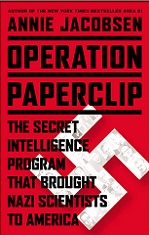 On April 30, 1945, Adolf Hitler fatally shot his wife Eva Braun and then turned the gun on himself as it became evidently clear that allied forces were closing on the führerbunker. The fear of falling into Russian hands and a subsequent trial for war crimes proved to be too much for the top echelon of the Third Reich that remained in Berlin. Many top-ranking officials had previously fled and others had left Germany after realizing that all hope for a victory in the war had been lost. As allied forces move in and occupied the country, the true horrors of the Nazi reign became clear and soldiers were faced with the grim discoveries of concentration camps, emaciated and dead prisoners. The Final Solution had been revealed for the entire world to see. In the aftermath of the war, several hundred Nazi party members were executed by allied forces. Others were acquitted or had their death sentences commuted to long-term imprisonment. Another group consisting of scientists and doctors, found their way to America with the help of the United States Government in what became known as Operation Paperclip. Their story is the focus of this incredible book by author Annie Jacobsen.
 On September 1, 1939, the Second World War began as the German army invaded Poland as part of Adolf Hitler’s quest for world domination. Britain had warned Germany that any military action against Poland would result in England coming to the aid of its ally. Interestingly, Adolf Hitler (1889-1945) did not want to go to war with England, preferring to accomplish the annexation of Poland through diplomatic methods after having successfully partitioned Czechoslovakia in what is infamously referred to as the “appeasement at Munich”. But if Hitler did not want to wage war against Britain, knowing their intention to save Poland, then why did he give approval to the invasion that plunged the world into a major conflict? The answer to that question lies in the story of his Foreign Minister and Nuremberg defendant, Ulrich Friedrich Wilhelm Joachim von Ribbentrop (1893-1946).
 The Second World War remains the most brutal conflict in history. The number of those who perished is still up for debate and there are many secrets of the war that have been lost to history forever. In the United States, foreign-born citizens with roots in any of the countries part of the Axis powers, found their selves under suspicion and in the case of the Japanese, placed into concentration camps. Although not as inhumane and deadly as the camps in Germany and Poland, they resulted in the rise of resentment among Japanese-Americans toward the United States Government and the country they called home. The dropping of the Atomic bombs further heightened the feeling of resentment and was the first and only time a nuclear weapon was used in warfare. Survivors of the bomb attacks can still be found today, advanced in their years but tragically familiar with the barbarity of modern warfare. Across the pacific, Japanese-American veterans of the war remember the tragedy that befell Japan, the nation to which their families trace their origins. But what happens when half of a family is in Japan and the other half is in the United States? Or what do you do when one son is part of the Japanese Imperial Army and the other is part of the United States Armed Forces? And when the war is over, how do you come to terms with the effects war has had on your family and yourself? This is the story of the Fukuhara family whose lives are the answer to those questions. Written by Pamela Rotner Sakamoto and containing snippets of interviews conducted with those relevant to the story, Midnight in Broad Daylight is a heart wrenching story of a family struggling to survive, having been affected by a war in more ways than one.
 On September 1, 1939, Adolf Hitler’s Third Reich invaded Poland and started the Second World War. In violation of the terms of the Treaty of Versailles, Germany had rearmed itself and under the determination of Hitler, set its eyes upon conquering all of Europe. The looming threat of German domination had been lingering for quite some time before the outbreak of the war. But sadly, many of the nations that would later be opposed to Germany did not think that Hitler would be brazen enough or have the resources to initiate a world conflict. In hindsight, we know that way of thinking was short-sighted and later highly regrettable. The actions of the British government in response to Hitler’s annexation of Czechoslovakia, resulted in the condemnation of Prime Minister Neville Chamberlain and established Germany as a legitimate threat to world peace. The episode has been recalled in history books and documentaries and continues to provoke discussion about how Hitler could have been stopped before his army invaded neighboring Poland.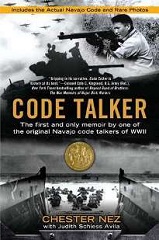
 The Holocaust remains one of the most regretful moments in the history of mankind. The Final Solution, engineered by Adolf Hitler’s Nazi government, resulted in the deaths of over six millions Jewish men, women and children. The many concentration camps became factories of genocide and symbols of the Third Reich’s relentless efforts to remove all Jewish citizens from Germany and the occupied territories of the Reich. As Hitler made his rise to power, many Jews fled Germany fearing the worst under the rule of the tyrannical dictator from neighboring Austria. Others were forced to seek refuge in Germany and survive in any way possible. But still there were other Jews who found help among non-Jewish Germans and were able to hide themselves right in Berlin, under the eyes and ears of the N.S.D.A.P.


You must be logged in to post a comment.